La Motte Castle in Joué-du-Plain: A Former Stronghold and Estate
Site at a Glance
- Popularity
- Medium
- Country
- France
- Primary era
- Modern
- Eras represented
- Medieval, Early Modern, Modern
- Civilizations
- French, Norman, Norse
- Site type
- Domestic
- Remains
- Castle
On this page14 sections
History
La Motte Castle is a historic estate at Joué-du-Plain in Normandy, France. Its origins lie in a motte-and-bailey stronghold, built around an elevated earthen mound with a lower enclosed courtyard, though its foundation date is uncertain. Norman fortifications in the region are associated with the 10th and 11th centuries, while La Motte itself may have begun closer to 1217. For much of the 10th century, the Orne marked Normandy’s southern boundary, defended in part by a chain of mounds against incursions from Maine and Brittany.
Frontier origins and medieval records
The earliest known written reference to La Motte is a 1217 letter by Guillaume Lesor, who sought to become a vassal of King Philip II of France. A vassal entered a formal bond of allegiance and service to a lord. The letter followed King John of England’s defeat at Bouvines in 1214 and the English withdrawal from Normandy.
In a letter dated 21 September 1417, Fralin de la Motte asked the French king for protection during Henry V’s invasion of Normandy. English control of the region continued until 1449.
Noble families and the Ango estate
La Motte passed between several families. In 1553, Catherine Lelievre left it to her daughter Françoise. Françoise’s daughter Louise married Jean de Bouquetot in 1570, and their daughter Suzanne married Gabriel de Montgommery II in 1593. Through this marriage Gabriel became lord of La Motte and baron of Écouché. His father, Gabriel de Montgommery I, had accidentally killed King Henry II of France during a joust in 1559. Gabriel II was a Protestant military commander in Normandy. The Montgommerys visited the area but probably did not build at La Motte.
Jaques de Montgommery inherited the château in 1641. Catherine Cochon, the widow of Nicolas Ango, bought it from him in 1654 and began developing the farm. The following year, an Ango child identified as Jean or Jacques married Marie Le Fèver de Lézeau and acquired four partial fiefs, or lands held under obligations to a superior lord, in Joué-du-Plain. The estate consequently also became known as La Motte-Lézeau. After the family acquired sufficient land, Jean-Baptiste Ango gained the title of marquis, a high-ranking noble title. He built the principal residence around 1700 and probably added other buildings and walls.
Voltaire visited La Motte in 1734 and had financial dealings with Marquis Ango, including an annuity arrangement made the year before. He later pressed for overdue payments and, in 1741, raised the possibility of taking possession of the marquis’s land. In 1758, he complained that four years of annuity payments remained unpaid.
Revolution and rebuilding
On 15 April 1791, Jean-Baptiste IV Ango sold the estate to Louis-Omer-Félicité, Marquis d’Estampes, for 620,000 francs. D’Estampes had left France by 1793. During the Revolution, the château was probably looted but not burned. An interim manager sold stone from the main house to nearby farms.
The Deschamps family acquired La Motte around 1820 and undertook a substantial rebuilding. Their descendants included André de Champrepus, the last marquis, who died at the outbreak of the Second World War.
The estate during the Second World War
Honoré Noel bought the château in 1939. He used it as a country retreat for employees, and the property was officially used as both a dairy and a rest home for Parisian prostitutes. Noel rented much of the farmland and its buildings. Animal dealer Émile Buffon leased the farm and sublet the farmhouse to a boarding school attended by about 20 girls aged 8 to 14. Jacques and Yvonne Bachelier operated a dairy in two outbuildings. Noel also served as secretary to the mayor and distributed food and fuel coupons during and after the war, continuing until 1950.
During the German occupation, the château became a Resistance arms depot and a hiding place for Allied airmen. Charles Moore’s P-51 fighter was shot down on 30 April 1944. His postwar memoirs placed him at La Motte, although he could not recall every place where he had hidden. Denise Bachelier helped move him elsewhere. German forces found her at home and deported her and her younger brother to concentration camps; her brother died soon after his release.
The discovery of the weapons led German authorities to accuse Émile Buffon of collaboration. He was assassinated, possibly on his brother’s orders. On 16 July, a German Messerschmitt Bf 109 crashed into the estate’s large pond during a dogfight, killing its pilot, Haibt Oswald. Canadian airman Michael O’Kelly also died in the fighting.
After the arms depot was discovered, German troops occupied the estate. Soldiers lodged in the farmhouse, officers took over the main house, and a bakery was established on the farm. German forces continued to occupy the farm into the final months before the Liberation in August 1944.
Later ownership and restoration
A Peugeot executive and his family bought the château sometime between the late 1960s and the 1970s. Rhoisin Beresford acquired it in the 1980s and began restoration; the farm was sold to a former caretaker and the orchard to a Dutch businessman. The present owner bought the main château in 2014.
Storm Lothar struck the estate’s trees on 26 December 1999, destroying most of the remaining heritage trees from 18th-century plantings. In 2017, the 900-metre avenue leading to the château was renewed with support from a local heritage association.
Remains
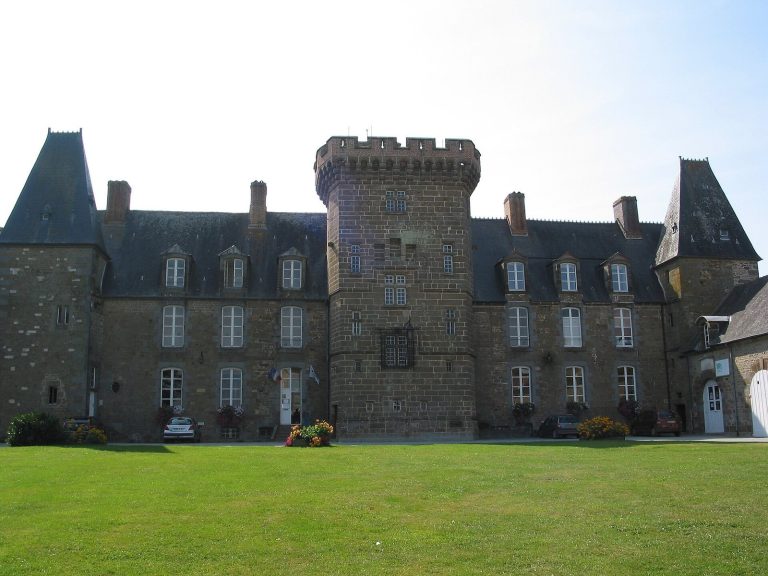
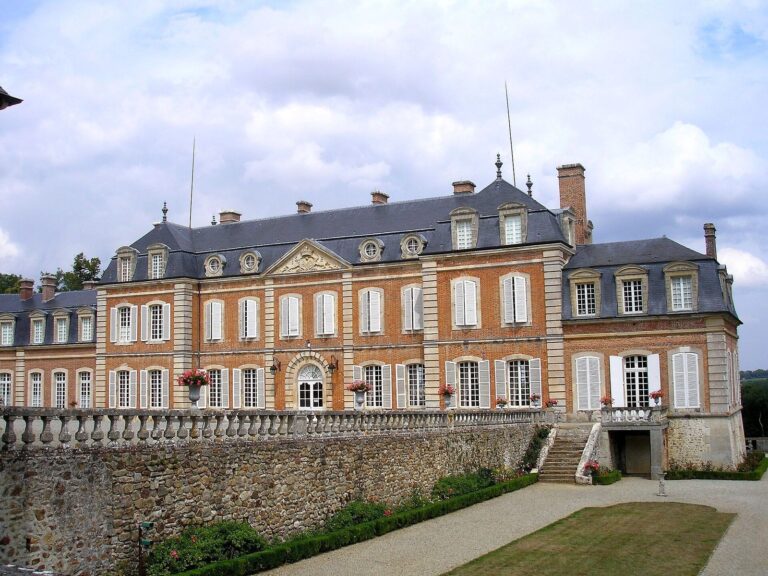
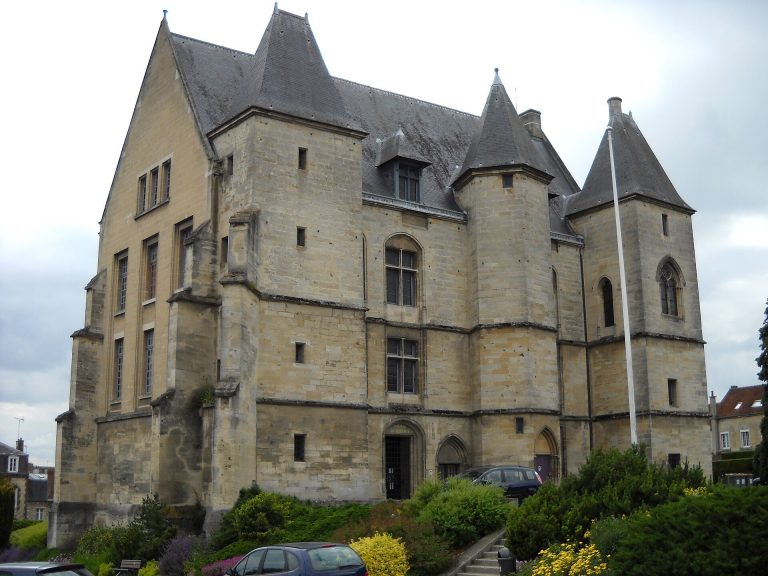
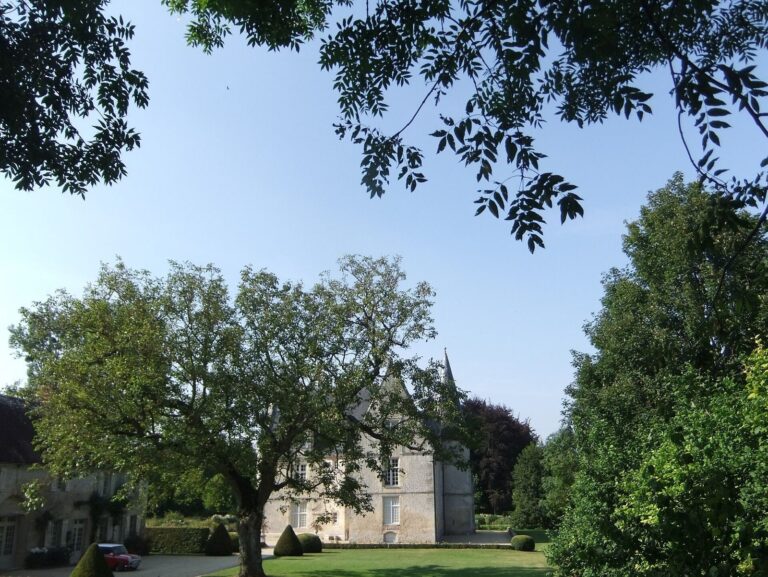
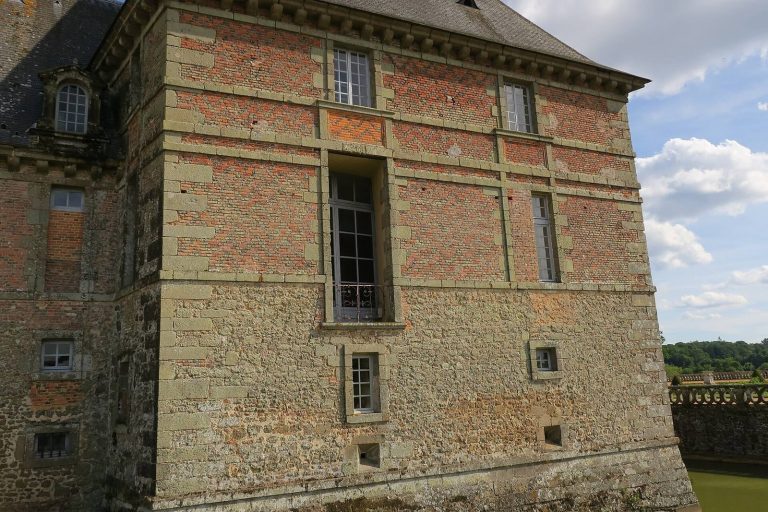
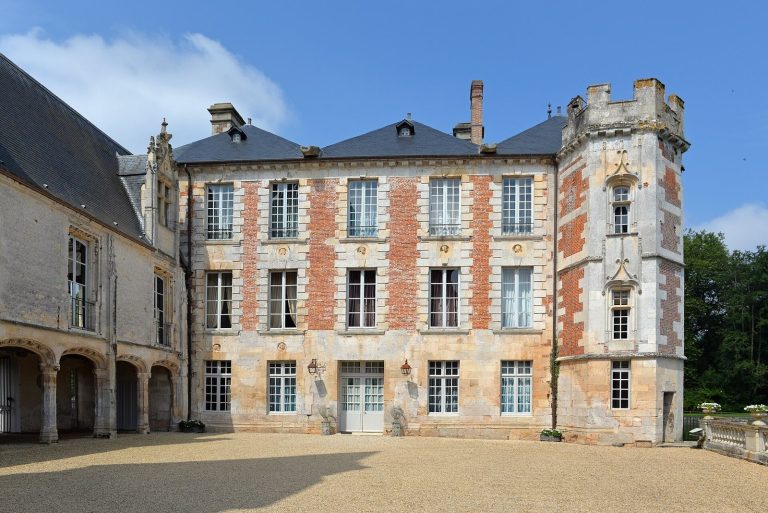
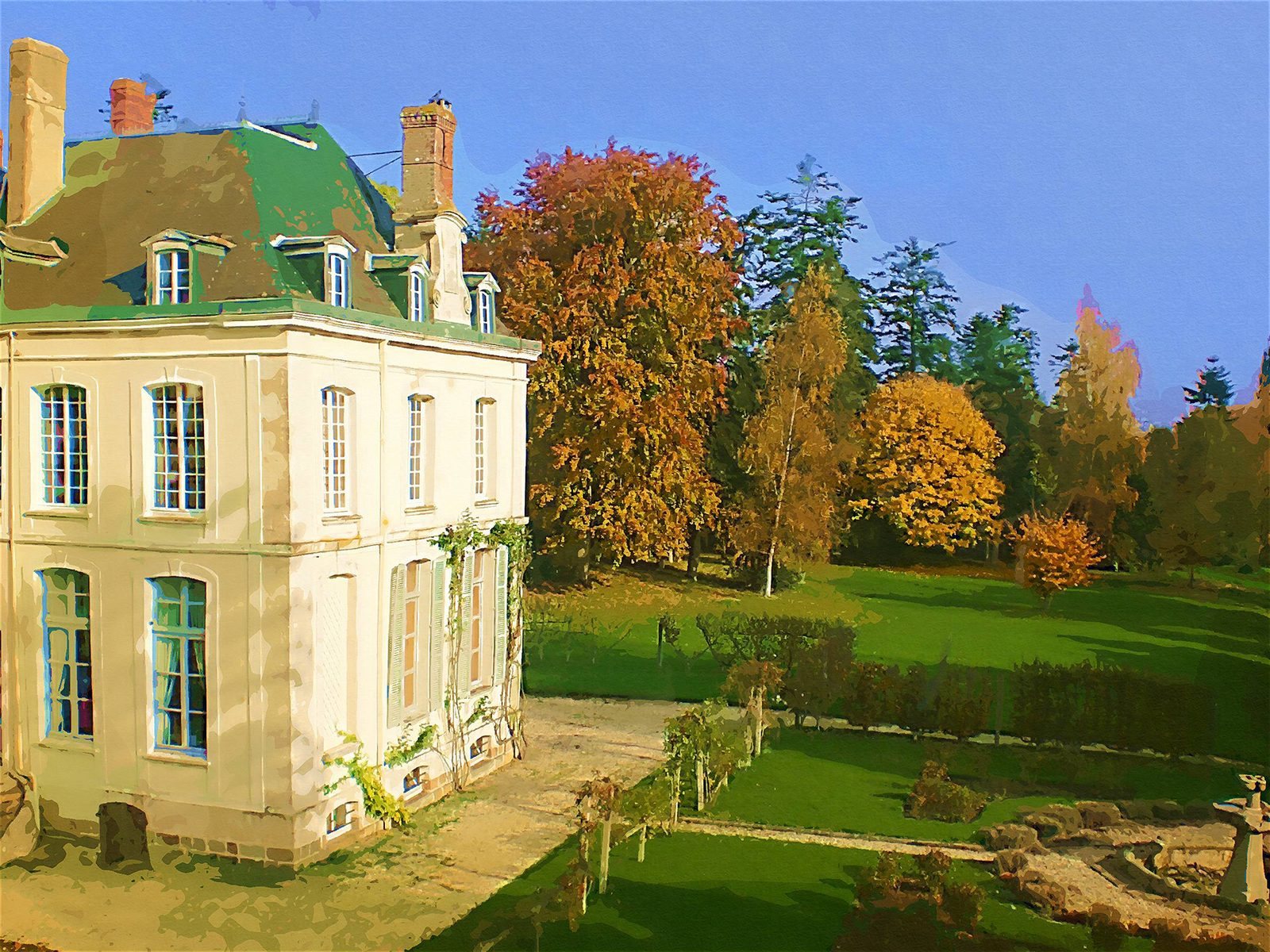
The estate brings together an 18th- and 19th-century château, surviving earthworks, older outbuildings, farm buildings, an orchard, and landscaped grounds. A small wooded rise beside the present house marks the remains of the motte, while moats also survive. The buildings and landscape reflect the property’s development from a fortified site into a working estate.
Residence and estate buildings
Main residence
The present main house dates to 1821–22, during the rebuilding by the Deschamps family. An earlier principal residence had been erected around 1700 under Jean-Baptiste Ango. The estate’s main house was substantially altered again in the 19th century.
Farm and service buildings
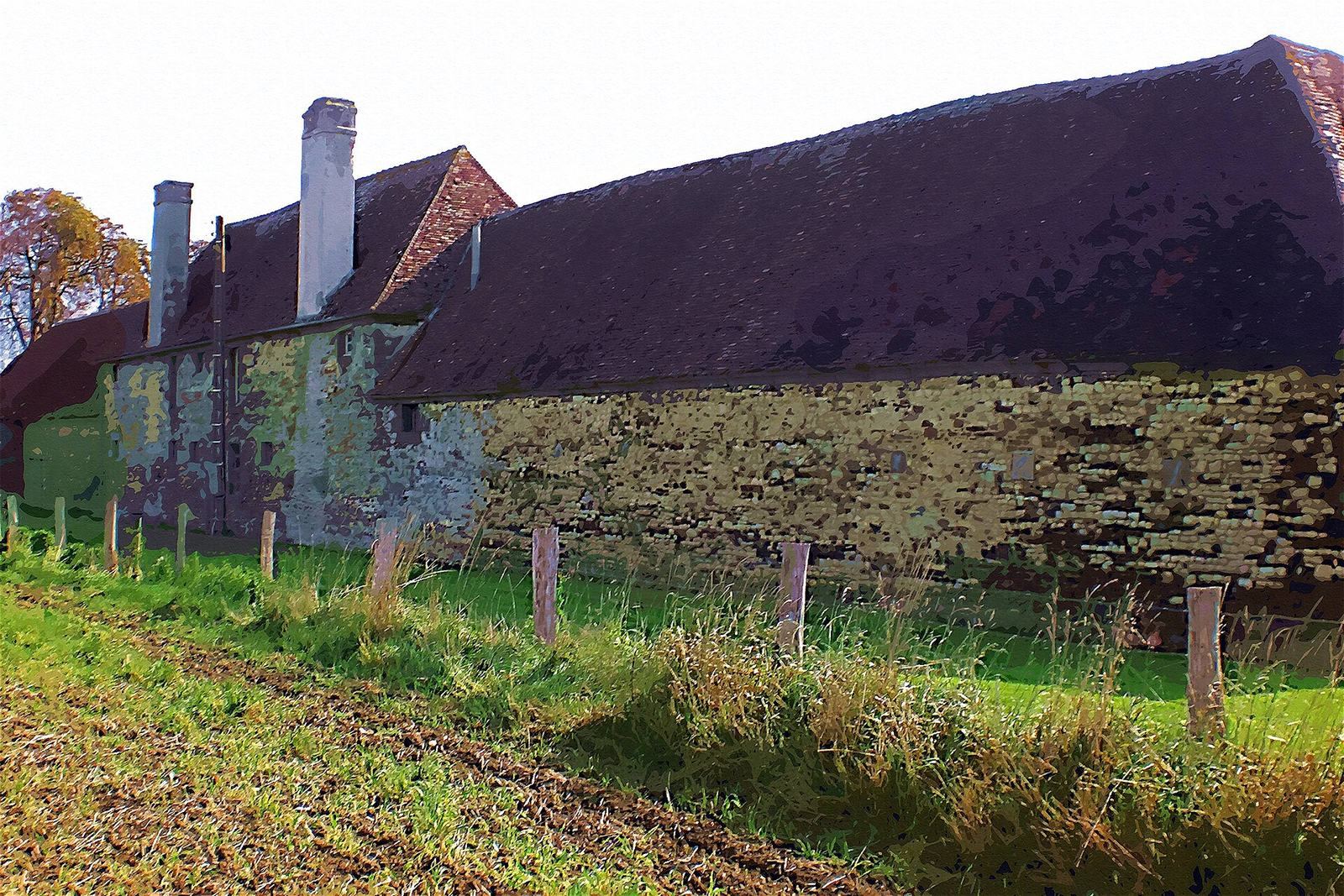
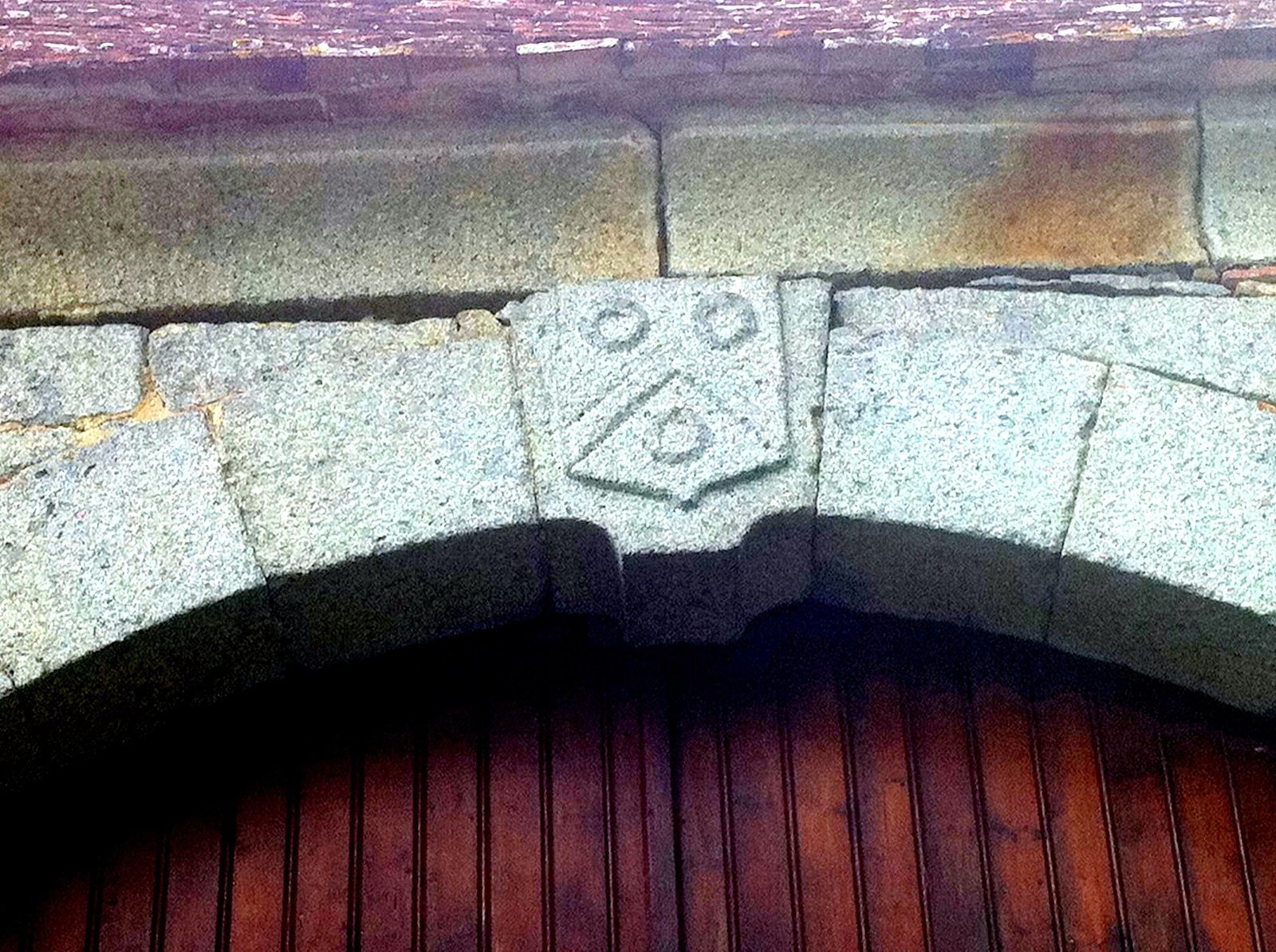
The former farm has an arched entrance bearing a coat of arms. It may be the site of the original château, thought to have been built in the 1660s. The barn and orchard house carry dates above their entrances close to those of the main residence, indicating substantial rebuilding during the Deschamps period. Large service buildings stand north of the château and shelter it from the weather. Built during the reign of Louis XIV, they were designed by architects from Argentan associated with the Place de la Concorde.
Water, avenues, and garden features
Water features
The grounds, including the orchard and farm, contain seven water sources. A large pond is another feature of the estate.
Avenues and trees
A chestnut avenue of about 900 metres connects the château with Joué-du-Plain and Écouché. It has been described as the longest avenue still surviving in Normandy. An older hedge line or avenue of trees extends from the château gates toward the Forest of La Motte. Lime trees near the house and ponds may be original plantings or descendants of trees planted by earlier lords.
Orangery and vine-support wall
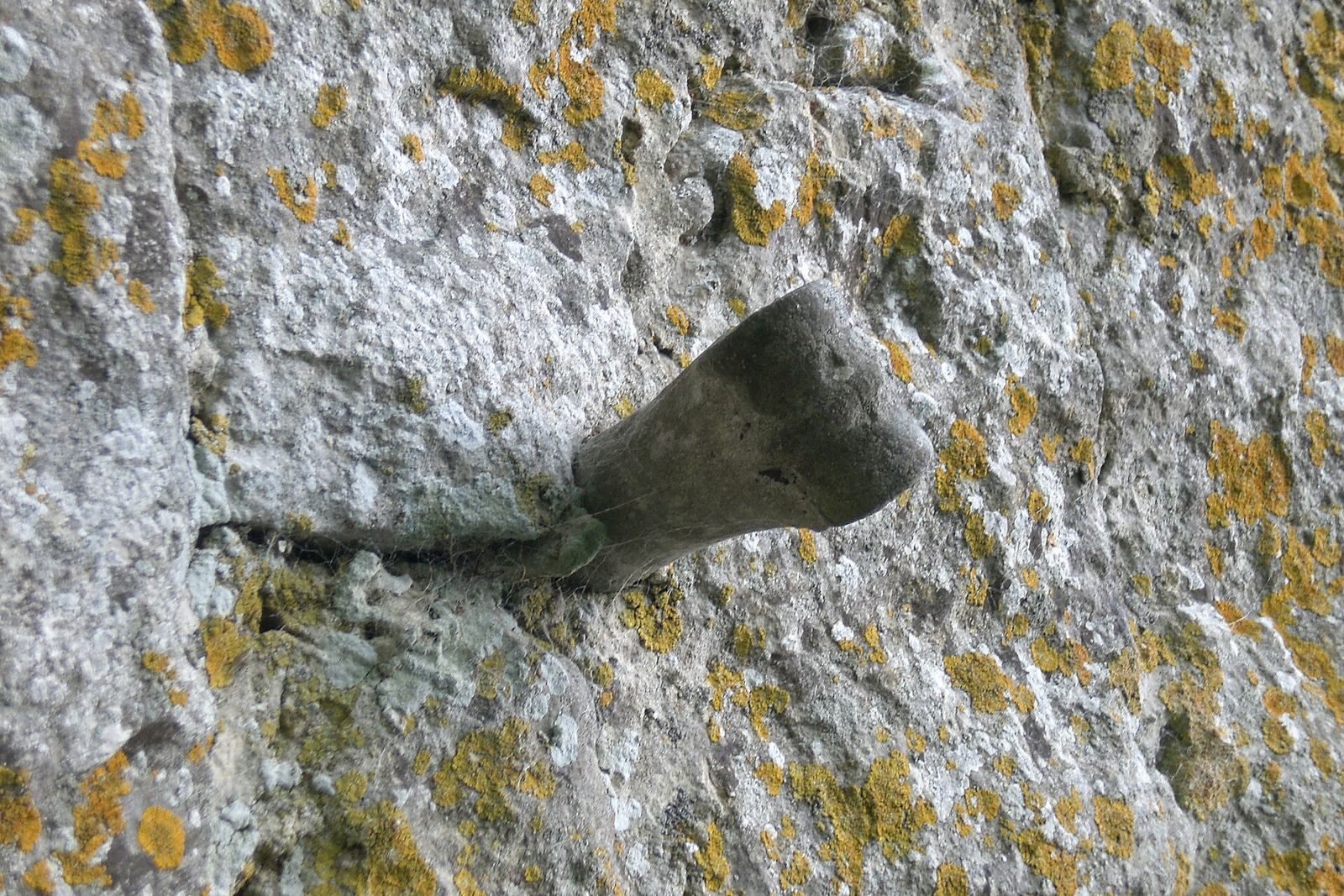
The estate’s orangery has been destroyed. An 1884 description ranked it among France’s finest, behind those belonging to the emperor and princes. A wall on the estate incorporates sheep bones to support vines. The bones were used in place of wood, which rotted, and iron, which rusted and stained the stone.