Björketorp Runestone: A Seventh-Century Runic Monument in Sweden
Site at a Glance
- Popularity
- High
- Country
- Sweden
- Primary era
- Medieval
- Eras represented
- Medieval
- Civilizations
- Unclassified
- Site type
- Civic
- Remains
- Monument
On this page9 sections
History
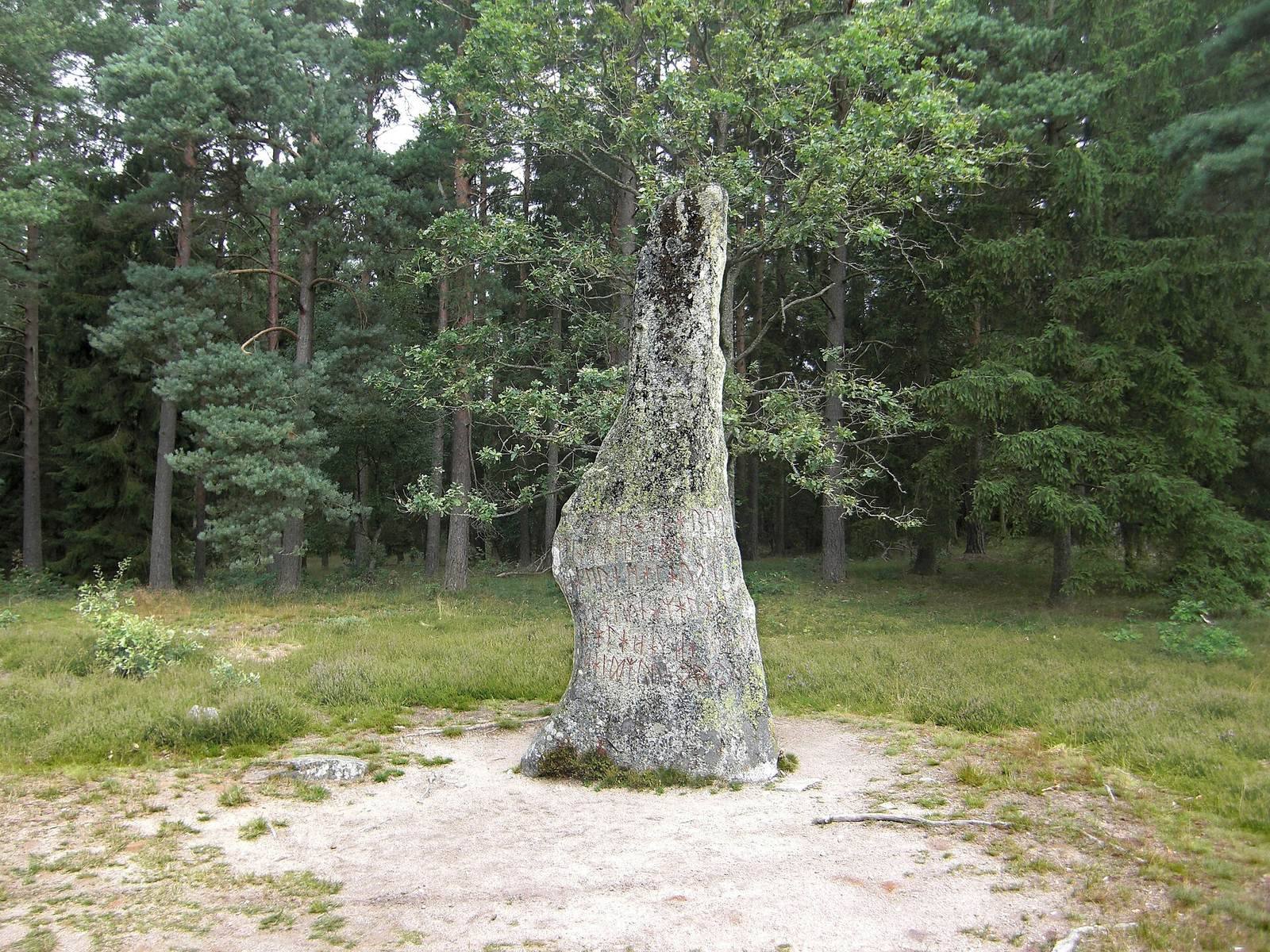
The Björketorp Runestone is a granite monument about seven kilometres east of Ronneby, Sweden. Its inscription is dated to the sixth or seventh century, with most scholars placing it in the seventh.
Regional runic tradition
Björketorp belongs to a runic tradition in Blekinge that also includes inscriptions at Stentoften, Istaby, and Gummarp. Those three inscriptions name people associated with the same clan. Björketorp is linked to this group by its transitional rune forms and a message also found at Stentoften, although its inscription was carved by a different hand.
Proposed purpose
The monument’s original function is disputed. One interpretation treats it as a grave marker, with its curse intended to protect the burial. After excavations in 1914, a cenotaph, a memorial located away from the actual burial, was proposed instead. Other interpretations suggest a shrine dedicated to Odin, a major Norse deity, or to fertility, or a boundary between the Swedes and Danes. Runologist Thorgunn Snædal, a specialist in runes and inscriptions, considered the stones part of a seventh-century cult site devoted to Odin.
Later records and legend
Written descriptions of the monument date to the fifteenth century. A local legend tells of a man who tried to break the stone to gain more farmland. He piled wood around it and lit a fire to heat the granite before dousing it with water. A sudden gust drove the flames onto him, and he burned to death. In the tale, the fire around the monument then went out as if a huge hand had protected it.
The monument stands within an area of national interest for cultural heritage that includes archaeological remains from prehistoric and historic periods.
Remains
Stone setting
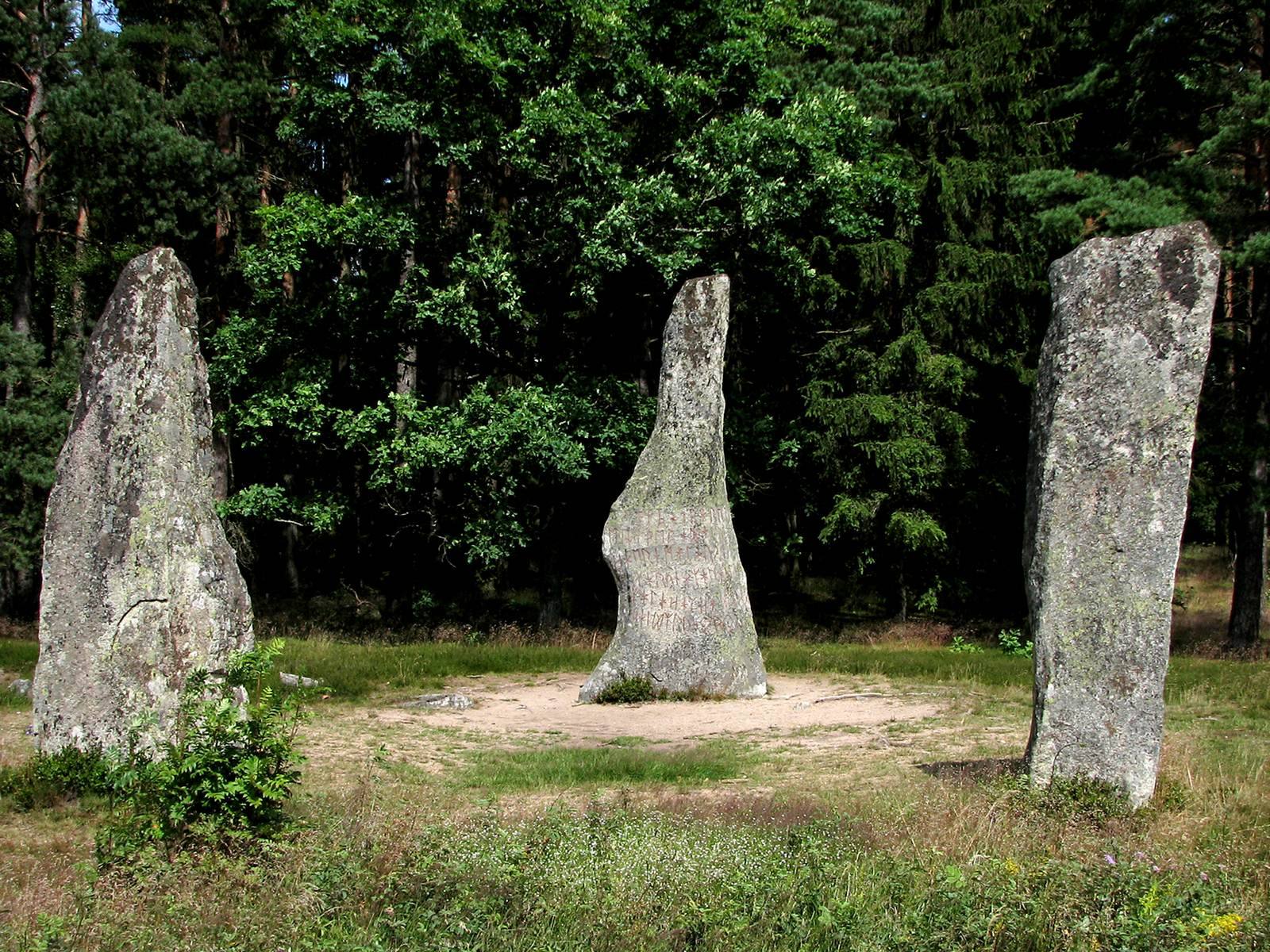
The granite runestone, about 4.2 metres high and containing quartz, stands with two tall, uninscribed stones to form a prehistoric monument. The group is beside a burial field from the later Iron Age, and a stone circle is adjacent. Björketorp is among the tallest runestones in Sweden and the world. Its catalogued style is RAK, a classification used for runestones.
Inscribed faces
The longer inscription
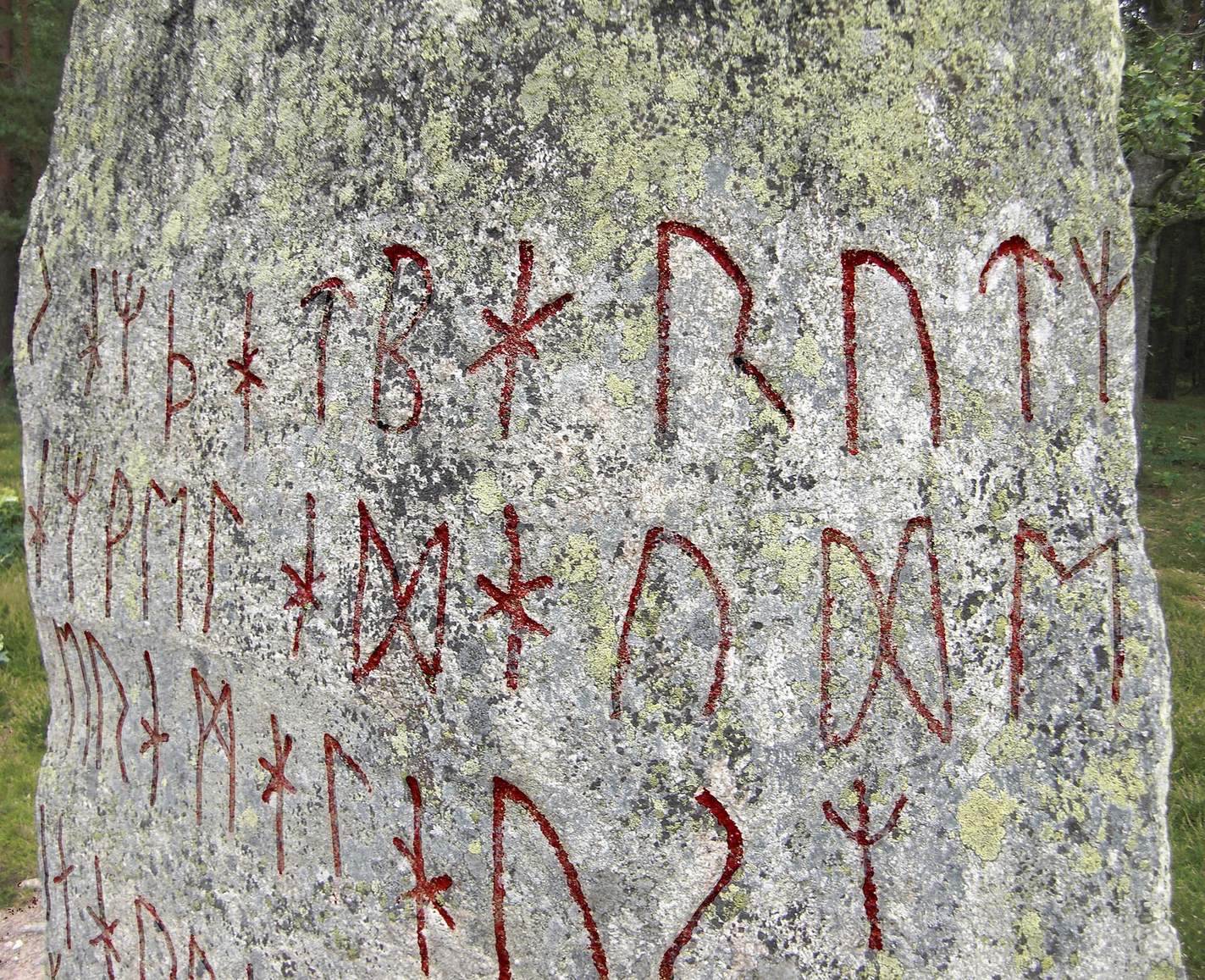
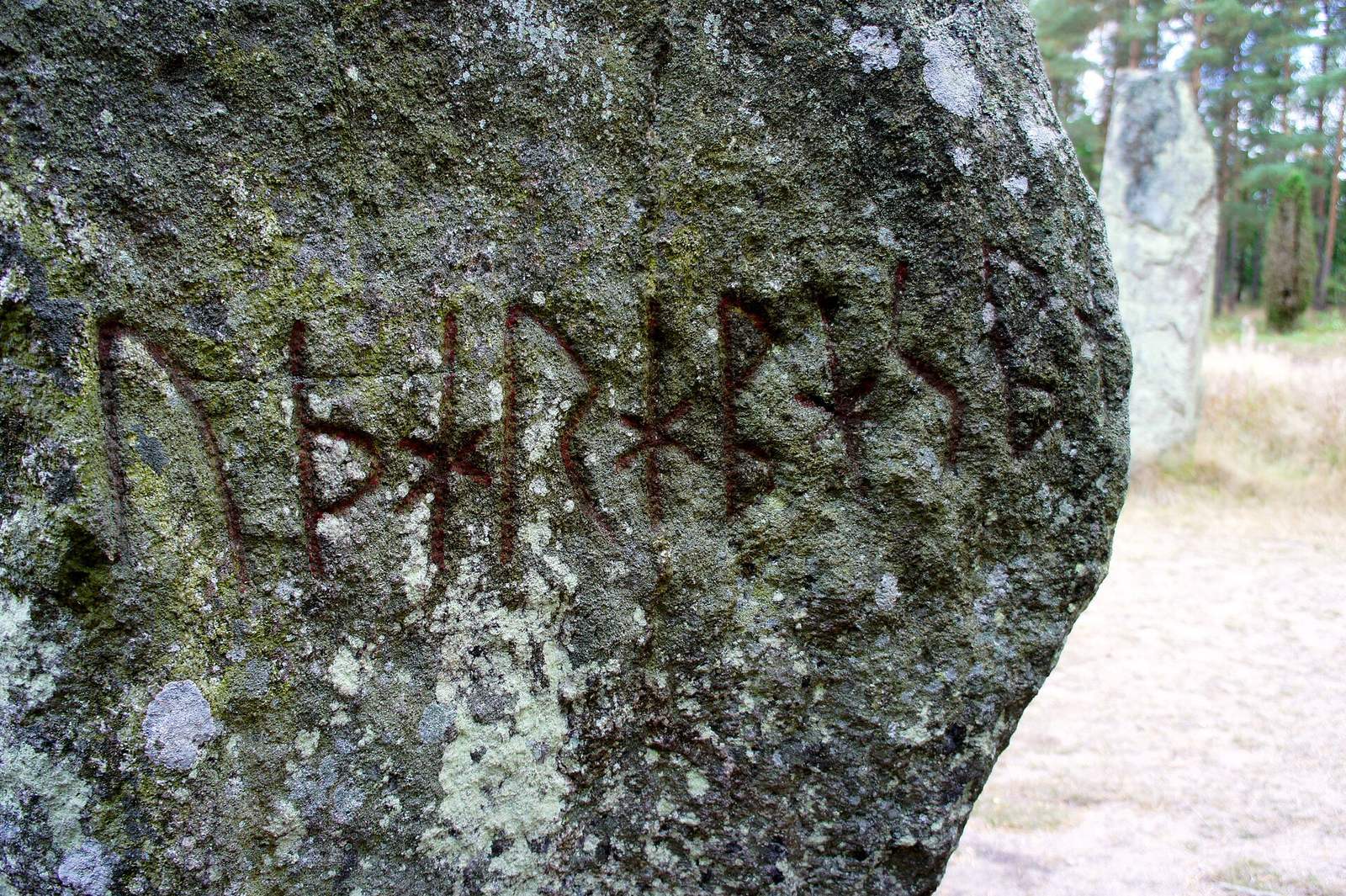
The longer text is carved on one face in Proto-Norse, an early North Germanic language. Its rune forms bridge the Elder Futhark, a 24-rune alphabet of the early runic period, and the later Younger Futhark. The rune transliterated as a resembles the Younger Futhark h, while k has a transitional form likened to a Y. A common translation has the speaker say that powerful runes are concealed there, though the identification of the speaker as a rune-master is uncertain. The text warns that anyone who breaks the monument will face harm and a treacherous death. Wolfgang Krause’s 1966 reading describes shining runes derived from heavenly powers as well as magical runes, and interprets the curse as predicting a treacherous death abroad. The Old Norse word ergi, rendered as arghet in a Swedish interpretation, means unmanliness or cowardice.
The shorter inscription
The other face bears a shorter text, translated either as “I prophesy destruction” or “prophecy of destruction.” Its meaning remains debated. Compared with the Stentoften inscription, the Björketorp text is fuller and more formal, and uses less archaic language.