Drackenstein: A Medieval Spur Castle in Germany
Site at a Glance
- Popularity
- Medium
- Country
- Germany
- Primary era
- Medieval
- Eras represented
- Medieval
- Civilizations
- Holy Roman Empire
- Site type
- Military
- Remains
- Castle
On this page5 sections
History
Drackenstein is a ruined spur castle, a fortification built on a projecting ridge, on a 520-metre hill near Laimnau in Tettnang, Germany. Its first phase was probably an early medieval fortification, followed by renewed occupation and rebuilding during the High Middle Ages, the central medieval period commonly dated to the 11th through 13th centuries. The site is thought to have developed in two phases, but its chronology remains broad because it is based largely on topographical evidence. Further archaeological evidence could refine the dating.
In 1480, the site was recorded as Trackenstein, described as a castle ruin. Archaeological study of Drackenstein is relevant to understanding the history of the Tettnang area and the development of castles.
Remains
Fortifications and interior
Ramparts and enclosure
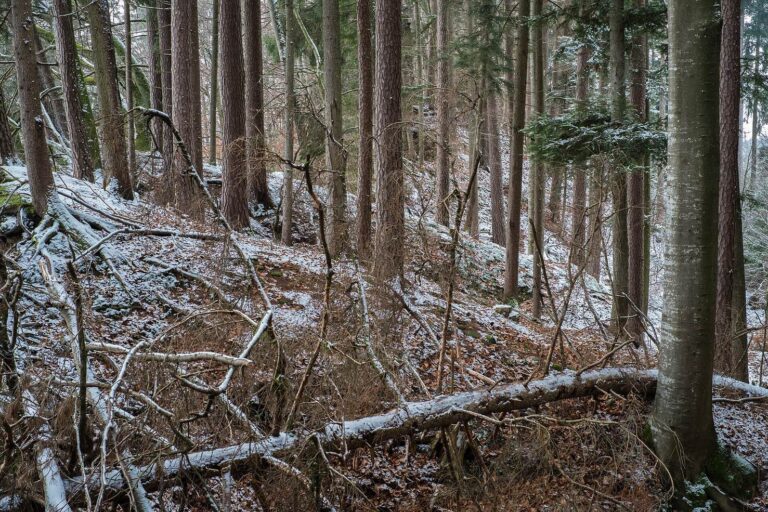
The defensive complex stands about 500 metres north of the church in Laimnau. Surviving ramparts and ditches enclose a roughly quadrilateral interior with strongly rounded corners. The complex extended about 130 metres overall, and its enclosed area measures up to 18 metres across and 53 metres long.
Erratic block
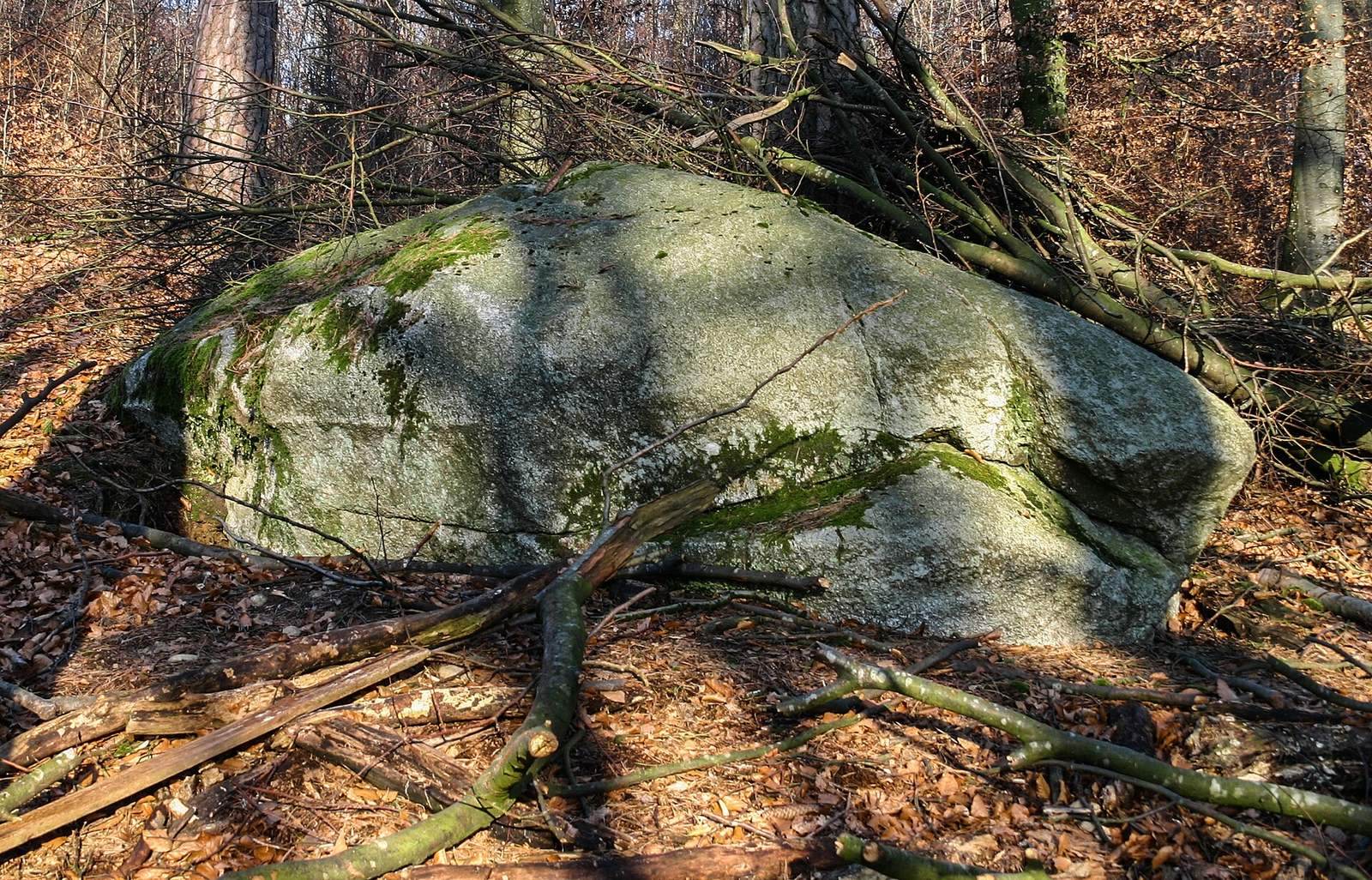
A conspicuous gneiss block lies within the ramparts. Gneiss is a metamorphic rock, and an erratic block is one found away from its original geological setting, commonly after transport by ice. The block is known locally as the Drackenstein.