Neusummerau Castle Ruin: A Medieval Castle in Neukirch, Germany
Site at a Glance
- Rating
- 3
- Popularity
- Very Low
- Country
- Germany
- Primary era
- Medieval
- Eras represented
- Medieval
- Civilizations
- Holy Roman Empire
- Site type
- Military
- Remains
- Castle
On this page4 sections
History
Neusummerau Castle Ruin is a medieval castle site in Neukirch, Germany. The Lords of Summerau, a medieval noble family, probably built it as their family seat in the second half of the 13th century, although the precise construction date is uncertain. Neusummerau is also thought to predate Altsummerau, near Tettnang-Rattenweiler.
Summerau family and early records
In 1171, Kuno, Friedrich, and Albert of Summerau witnessed a charter for Salem Abbey, a Cistercian monastery. A document dated 1222/30 names the castle as castrum Sumerow, meaning the castle of Summerau, and mentions the brothers Albert, Kuno, and Heinrich of Summerau. Since the castle already appears in this early record, its proposed construction in the second half of the 13th century remains uncertain.
Ownership and later references
The castle passed to the Bishopric of Constance. In 1298, Albert I of Habsburg, a medieval German king, confirmed its possession to Heinrich II of Klingenberg, bishop of Constance. By 1309, the Counts of Montfort, a medieval noble house, held it.
A partition deed of 1354 distinguished between Lower Summerau and Upper Summerau. In 1430, a member of the Sürg of Sürgenstein family appears to have lived at the castle.
Remains
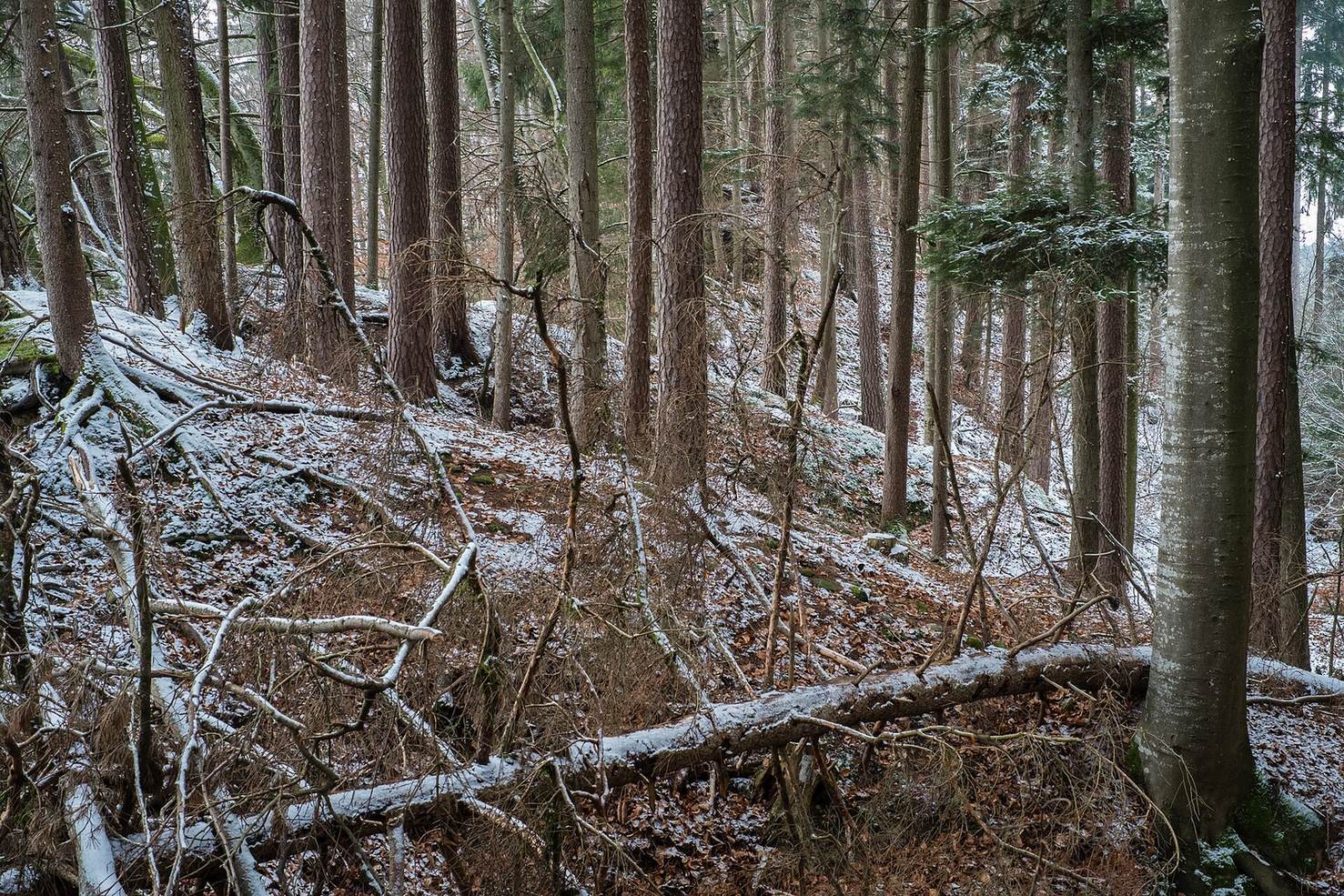
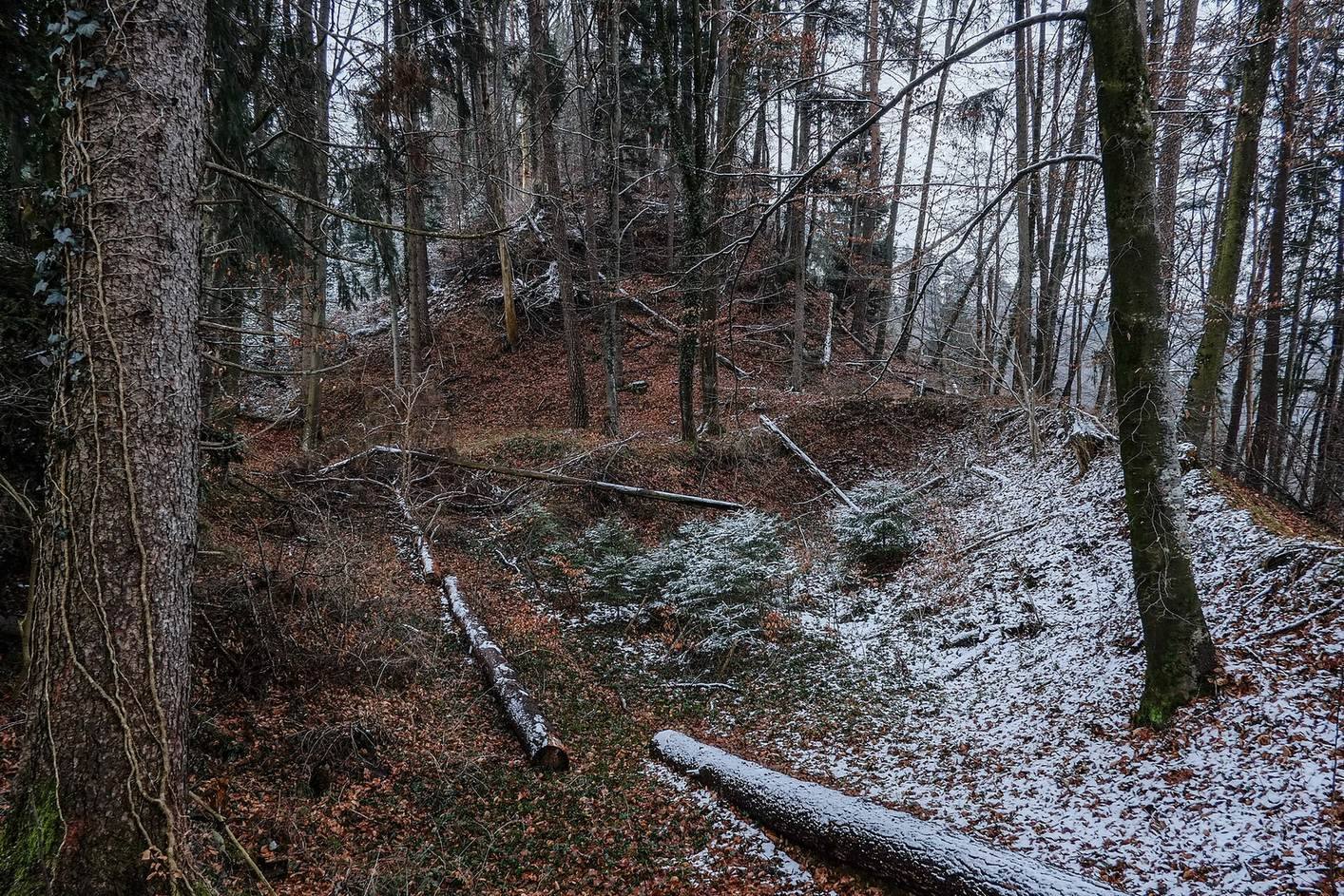
The ruin stands east of the hamlet of Summerau, on the route toward Flunau and above both settlements. It occupies a slope edge about 450 metres above sea level and around 65 metres above the Argen River. The steep slope to the south once protected the castle, while the western slope was made artificially steep as a defence. Ditches and earth banks protected the northern and eastern sides. To the north, fortification remains extend to the bank of a stream running roughly parallel to the Argen.
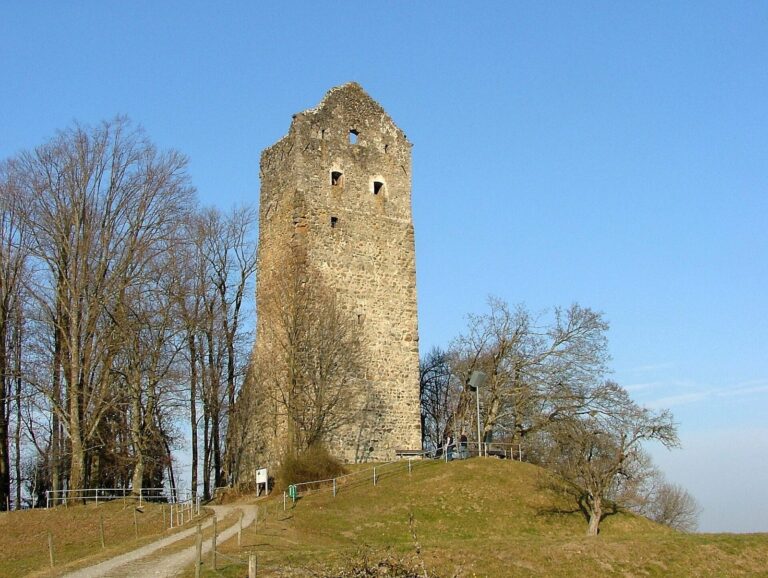
The earthworks survive in varying condition. Some sections remain in very good shape, while paths have worn down or cut through others. Within the inner castle, a high-standing corner of wall remains on the east, alongside ground-level masonry that probably formed part of an outer defensive wall and a building. A major slide of the gravelly slope toward the river destroyed a corner-wall remnant in the western part of the inner castle. Further landslides threaten the remains, and the slope cannot be stabilized.