National Museum of Antiquities Leiden: The Netherlands’ National Archaeological Museum
Site at a Glance
- Rating
- 4.5
- Popularity
- Medium
- Country
- Netherlands
- Primary era
- Classical
- External website
- Open
- Eras represented
- Stone Age, Bronze Age, Iron Age, Classical, Medieval
- Civilizations
- Akkadian, Ancient Greek, Assyrian, Babylonian, Egyptian, Etruscan, Hittite, Roman, Sumerian
- Site type
- Museum
On this page18 sections
History
The National Museum of Antiquities Leiden is the Netherlands’ national archaeological museum in Leiden, founded in 1818 by King Willem I and Caspar Reuvens. Its history reaches back to an antiquities bequest made to Leiden University in 1744, and the institution later became a national centre for the archaeology of Egypt and Nubia, the ancient Near East, the Greek, Etruscan, and Roman worlds, and the Netherlands from prehistory through the Middle Ages.
From university collection to national museum
The museum’s earliest foundation was the collection of Gerard van Papenbroek. After his death in 1743, about 150 antiquities passed to Leiden University in 1744. The university published the collection in 1746 and placed it on public display, although the objects remained inadequately cared for for roughly half a century.
Caspar Reuvens became curator of the university’s antiquities and the world’s first professor of archaeology. He enlarged the collection with material from the Netherlands and other countries, helping transform a university holding into a national archaeological institution. Objects from the Rijksmuseum in Amsterdam arrived with government support in 1825, prehistoric material was transferred from the Museum of Natural History in 1826, and further pieces from the Thoms Collection followed in 1844.
Early collecting campaigns
The government acquired the first Rottiers Collection in 1820 for 12,000 guilders to strengthen the museum’s Greek holdings. It had been assembled in Athens by a retired Flemish colonel. A second Rottiers collection, obtained in 1822, included a marble head later recognized as a modern forgery. The origins of objects in both collections remained uncertain, and Rottiers and his son probably bought at least some pieces that they presented as excavated finds.
Between 1824 and 1826, Rottiers travelled through the Mediterranean at ministerial expense to acquire antiquities. He excavated on Melos and made drawings of medieval architecture on Rhodes. Much of the architecture he depicted was later destroyed, giving the drawings lasting value as records of buildings that no longer survived. The objects he delivered to the museum in March and September 1826 came with inadequate descriptions, and Reuvens considered most of the acquisitions unimpressive.
Jean Emile Humbert excavated in Tunisia from 1822 to 1824 and brought eight statues to Leiden. On a later expedition he acquired the Etruscan Museo Corazzi collection for more than 30,000 guilders and negotiated the purchase of the large d’Anastasy Egyptian collection for about 115,000 guilders. The Egyptian acquisition was the largest transaction of Humbert’s and Reuvens’ careers and gave the museum an internationally recognized Egyptian collection.
Reuvens, Leemans, and the museum building
Government support declined during Reuvens’ final years as the Netherlands faced the financial consequences of the Belgian revolt and secession of 1830. Reuvens died in 1835 after a severe stroke. He left a collection that included Egyptian, Etruscan, Carthaginian, Roman, Greek, and other antiquities, alongside the earlier Papenbroek holdings.
Reuvens’ student Conradus Leemans succeeded him as curator and later became director. Through the official gazette, Leemans appealed to private collectors, Dutch ambassadors, and consuls for donations and assistance, allowing acquisitions to continue from across the world. In 1839 he used royal funds to acquire about 100 Italian vases from a collection once owned by Lucien Bonaparte. From the same year onward, he published catalogues and descriptions of the collections, bringing greater order after the museum’s early collecting campaigns.
Before the museum gained its present home, the collection moved repeatedly. It was first housed in the university botanical garden, where damp damaged sculptures and overcrowding forced some statues outdoors. In 1821 the objects were transferred to a new wing of the Museum of Natural History, but lighting and space remained inadequate. Reuvens proposed a purpose-built national museum in 1824, including a lecture hall and facilities for restoring objects, but the plan was rejected as too costly. Brussels, Amsterdam, and The Hague were considered as alternatives, while Reuvens argued that Leiden’s academic environment justified keeping the collection there. Amsterdam became the leading alternative after Brussels and the rest of Belgium seceded from the Netherlands, but Reuvens’ death brought the relocation debate to an end.
In November 1835, Leiden University purchased an eighteenth-century mansion for the museum. Leemans directed its refurbishment and the transfer of the collection, and the National Museum of Antiquities opened to the public in August 1838. The institution later received the title European Museum of the Year in 2003 and is designated a National Monument of the Netherlands.
Remains
The mansion and Egyptian centrepieces
The eighteenth-century mansion
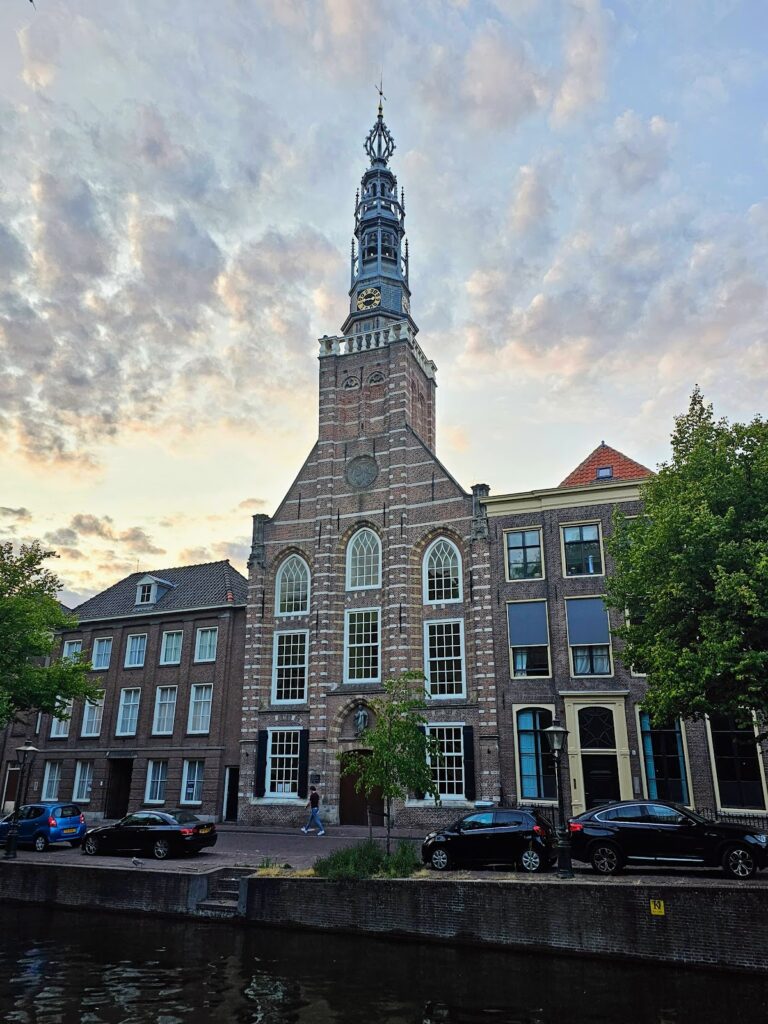
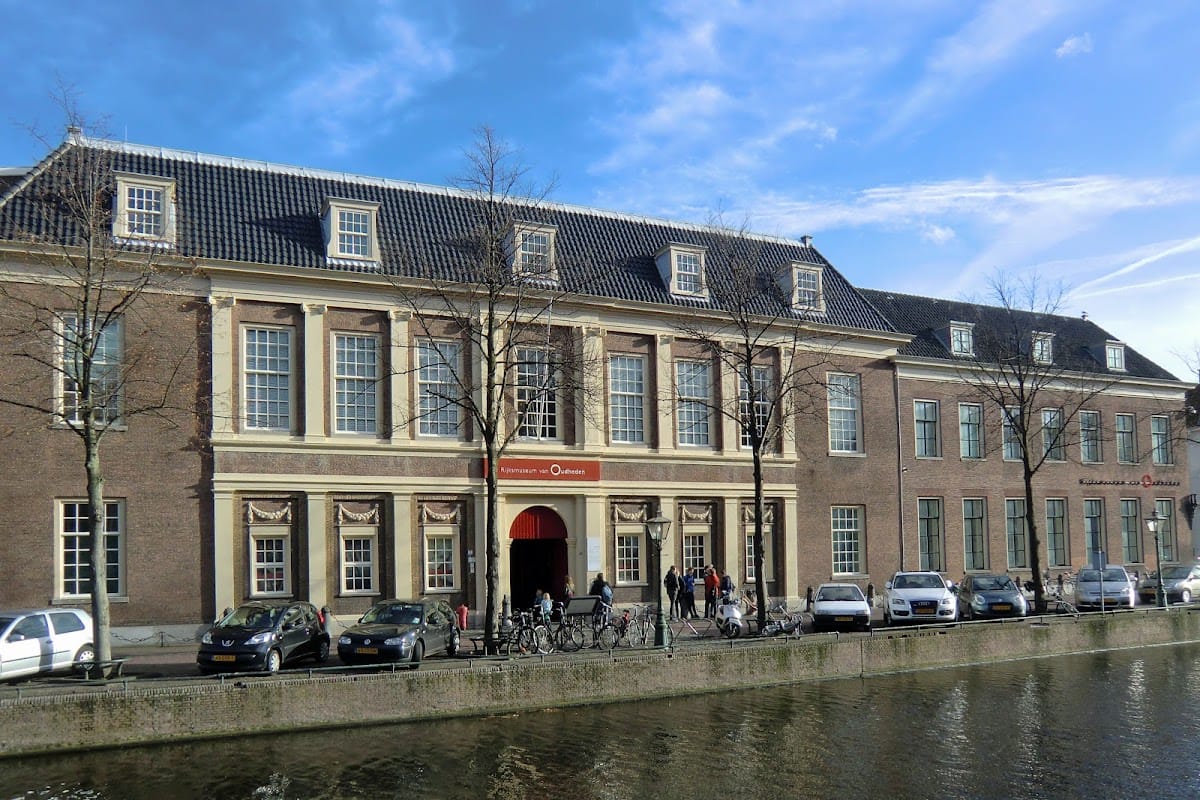
The museum occupies an eighteenth-century mansion at Rapenburg 28. Leiden University acquired the building in November 1835, and Conradus Leemans supervised its adaptation for the expanding archaeological collections. The building’s rooms now organize material from several major regions and historical periods within a single museum complex.
The Temple of Taffeh
The central hall contains the original Temple of Taffeh, an Egyptian temple dating to about 25 BC and belonging to the temple tradition of Nubia. The temple was dismantled in Egypt and reconstructed inside the museum during the international campaign to rescue monuments threatened by the creation of Lake Nasser during construction of the Aswan Dam. The Egyptian government gave it to the Netherlands in recognition of Dutch assistance in saving those monuments.
Egyptian collections
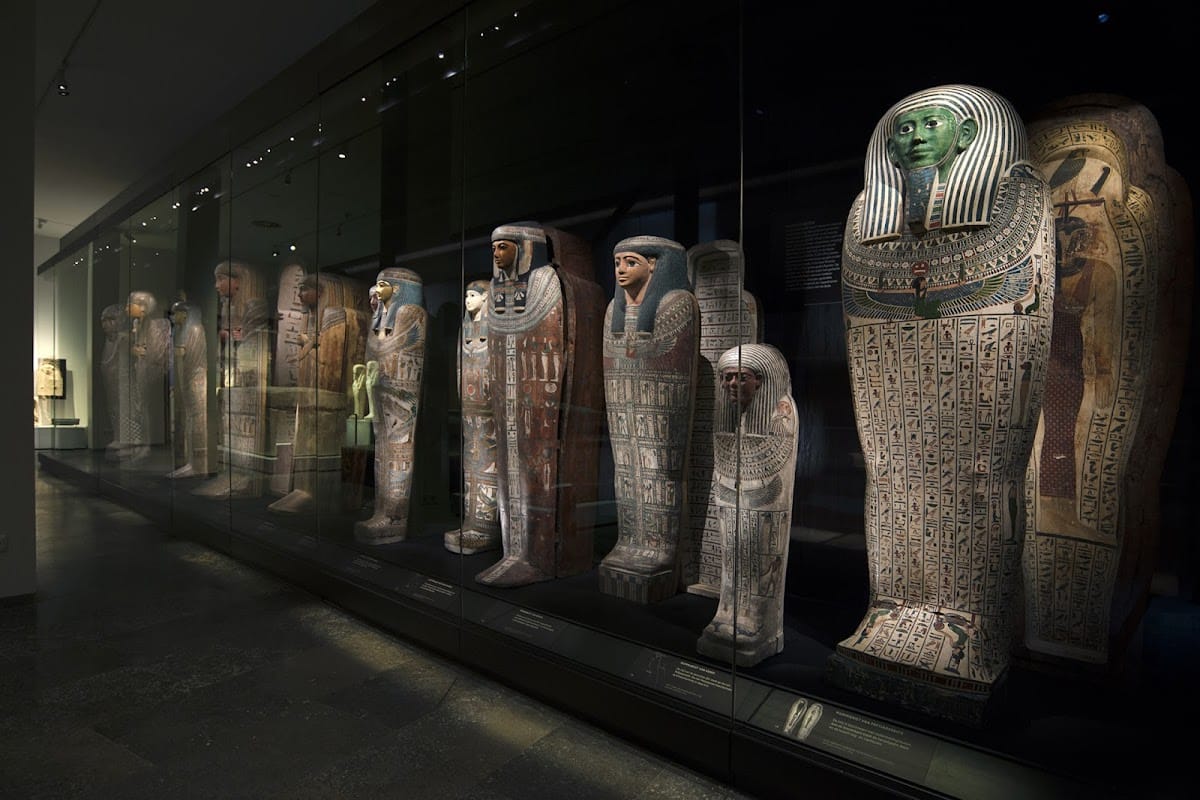
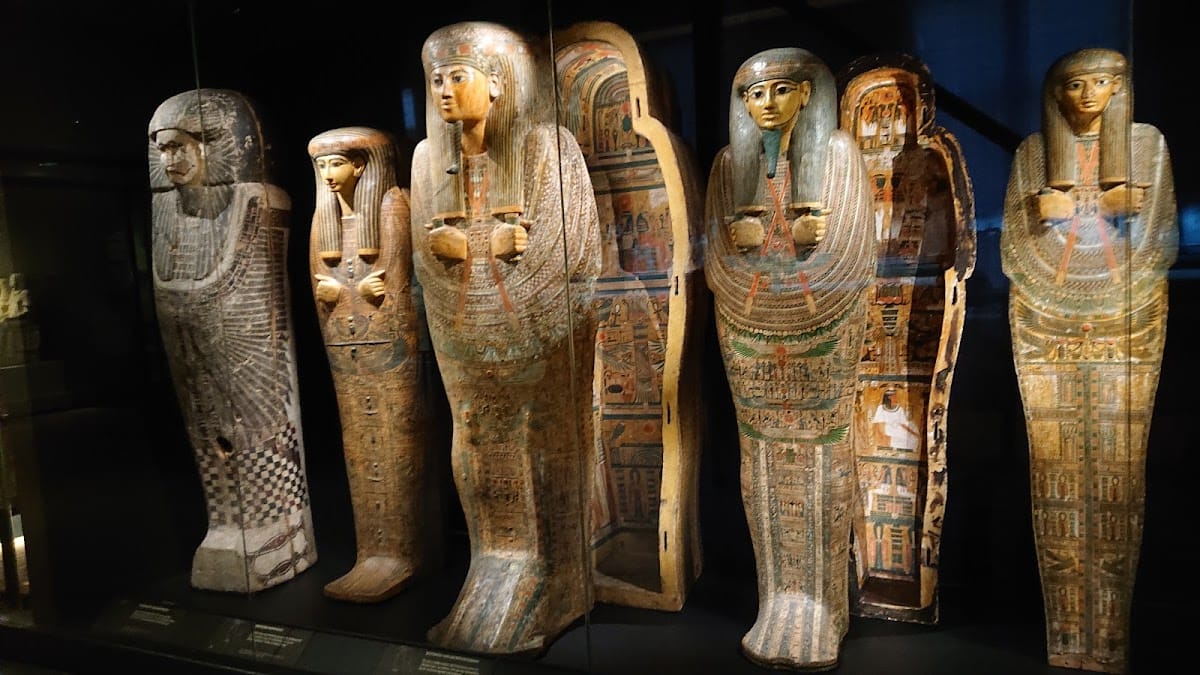
Other Egyptian displays include a vizier’s sarcophagus formed by an outer granite coffin and an inner limestone coffin. They also contain the Fifth-Dynasty mastaba of Hetephereshet, a rectangular monumental tomb with sloping sides and a flat roof, and three sets of images representing Maya and Merit, which date to the fourteenth century BC.
Near Eastern and classical collections
Ancient Near Eastern objects
Objects from the ancient Near East are displayed on the first floor and cover cultures dating from 3000 BC to AD 301. The collection includes material associated with the Sumerians, Akkadians, Babylonians, Assyrians, Hittites, and Persians. Among its notable pieces are statuettes of Gudea, ruler of Lagash, and a Sumerian praying figure dating to about 2200 BC.
Greek and Etruscan material
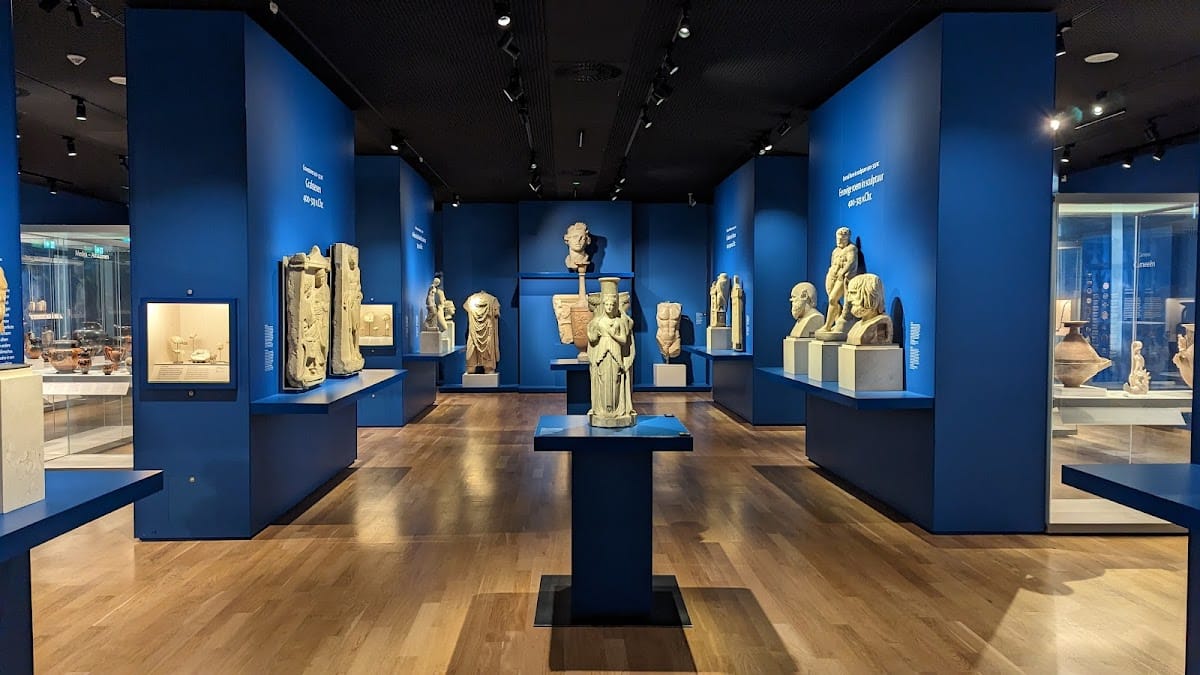
The classical displays contain Greek vases, sculpture, ceramics, and equipment dating to the fourth century BC. The Etruscan section presents bronze objects including a boy with a goose and a 37-centimetre warrior, together with votive objects, gold fibulae, ceramics, black burnished bucchero pottery, ornamental roof-edge antefixes, Villanovan culture urns, and a terracotta sarcophagus. Part of the Etruscan collection remains in storage.
Roman and Tunisian material
Roman collections
Roman material occupies two floors. One presents artefacts from Rome, while the other examines the period of Roman rule in the territory of the modern Netherlands. The displays include a model of a wealthy Pompeian house and a columbarium, a structure or chamber with niches for funerary urns, associated with the emperor Trajan. The columbarium was found at Utica near Tunis.
Humbert’s Tunisian statues
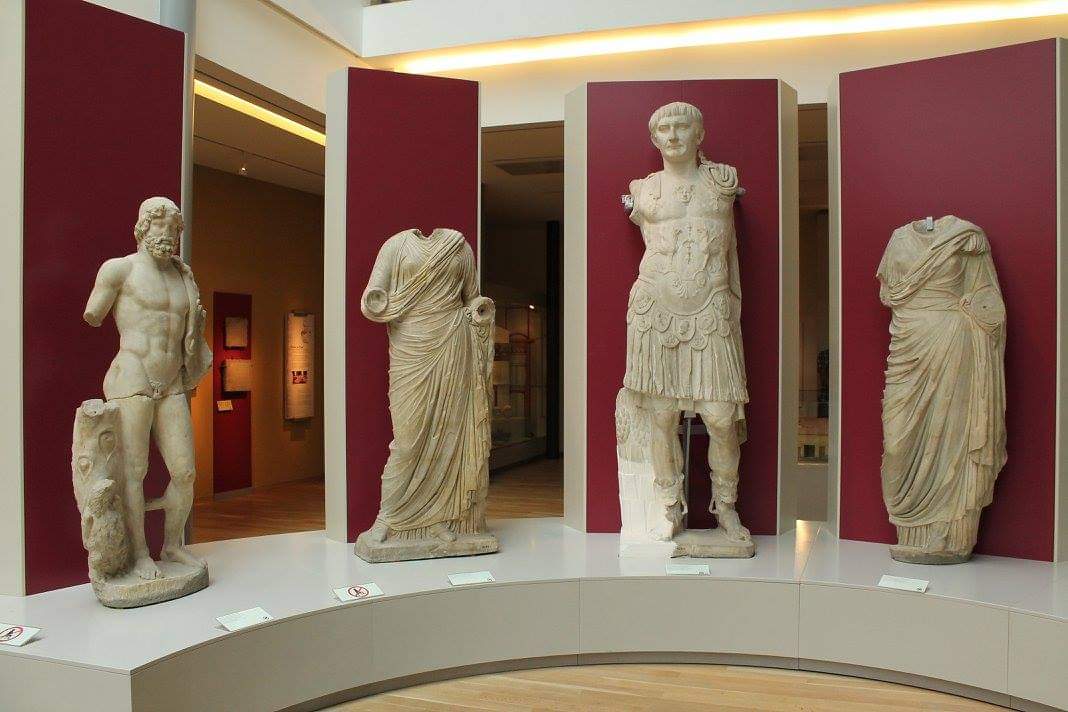
Eight statues acquired during Jean Emile Humbert’s first expedition in Tunisia stand as prominent centrepieces in the museum. Their presence reflects the early nineteenth-century expeditions that enlarged the institution’s holdings beyond the collections inherited from Leiden University.
Archaeology of the Netherlands
Prehistory and the Middle Ages
The Dutch-history displays use material culture to trace the Netherlands from prehistory through the Middle Ages. They include the approximately 6,500-year-old Willemstad Man, a reconstruction of Trijntje from Hardinxveld-Giessendam, and graves of tribal leaders from Oss and Wijchen. Viking silver objects from Wieringen and a precious fibula, an ancient brooch used to fasten clothing, from Dorestad extend the collection into the medieval period.
Roman-period Netherlands
The Roman-history section is arranged around weapons, everyday objects, and material connected with Roman-period religion. It includes the sarcophagus from Simpelveld and altars dedicated to Nehalennia, a deity worshipped in the Roman-period Netherlands, particularly in the coastal region. Together these objects present the material culture of the Roman period within the territory of the modern country.