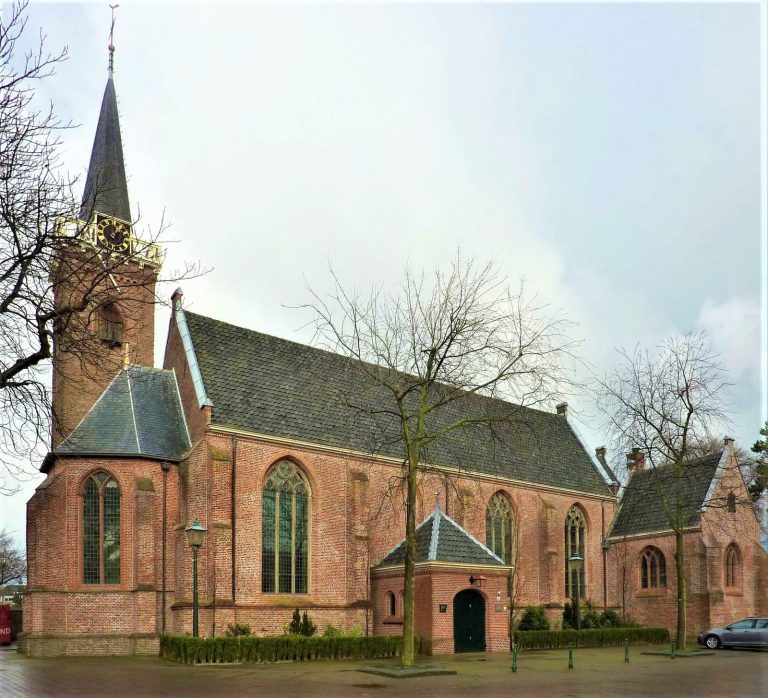
Sint-Lodewijkskerk: A Roman Catholic Church in Leiden
Site at a Glance
- Rating
- 4.6
- Popularity
- Very Low
- Country
- Netherlands
- Primary era
- Modern
- External website
- Open
- Eras represented
- Medieval, Early Modern, Modern
- Civilizations
- Dutch
- Site type
- Religious
- Remains
- Church
On this page7 sections
History
Sint-Lodewijkskerk is a Roman Catholic church in Leiden, Netherlands, whose origins reach back to 1477, when it was founded as the Chapel of Saint James. It belonged to the Saint James Guesthouse, which sheltered pilgrims travelling to Santiago de Compostela, and was dedicated to Saint James the Great. The church forms part of the Parish of Saints Peter and Paul in the Diocese of Rotterdam.
From pilgrim chapel to civic building
The chapel and its guesthouse were sold to the parish of Pieterskerk in 1547. In 1567, ownership passed to the municipality of Leiden. The city first used the former chapel as a grain store and later converted it into a hall for testing textiles. This municipal use was known as the Saaihal, or Hallae Textorum, linking the building to Leiden’s textile industry.
Rebuilding after the 1807 disaster
In 1807, a ship carrying gunpowder exploded in Leiden. The blast devastated much of the city centre and destroyed the Catholic church on the Nieuwe Rijn. The former Saint James Chapel was severely damaged, although its tower remained standing.
At the request of Louis Bonaparte, also called Louis Napoleon, the chapel was rebuilt and converted into a Catholic church for worshippers displaced by the destruction on the Nieuwe Rijn. Louis Bonaparte was Napoleon Bonaparte’s younger brother and served as King of Holland from 1806 to 1810. The reconstruction and the new interior were entrusted to the architect Jan Giudici. After the rebuilding, the church was dedicated to Saint Louis, the usual designation of Louis IX of France, a thirteenth-century king later canonized as a saint. It consequently became known as the Heilige Lodewijkkerk.
Restoration and parish life
The church was restored and expanded in 1957, when it housed the Parish of Saint Louis. Since October 2012, the Saint Louis community has served as a parish centre within the Parish of Saints Peter and Paul. Mass is celebrated daily, with traditional liturgy in Dutch, English, and Latin.
Both the church and its tower are Dutch national monuments, or rijksmonumenten, a designation that legally protects structures recognized for national historical or cultural value. The church’s monument number is 25593.
Remains
The surviving church stands at Steenschuur 19 and is built primarily of brick. Its physical remains combine a sixteenth-century front facade and tower with the rebuilt Catholic interior created after the 1807 explosion. The tower retains the building’s earlier association with Saint James, while the church contains an organ whose case and pipework came from several earlier settings.
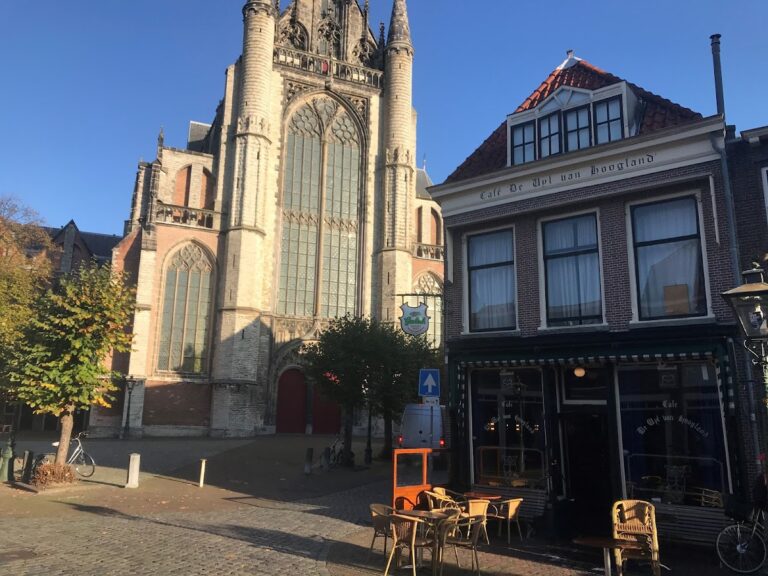
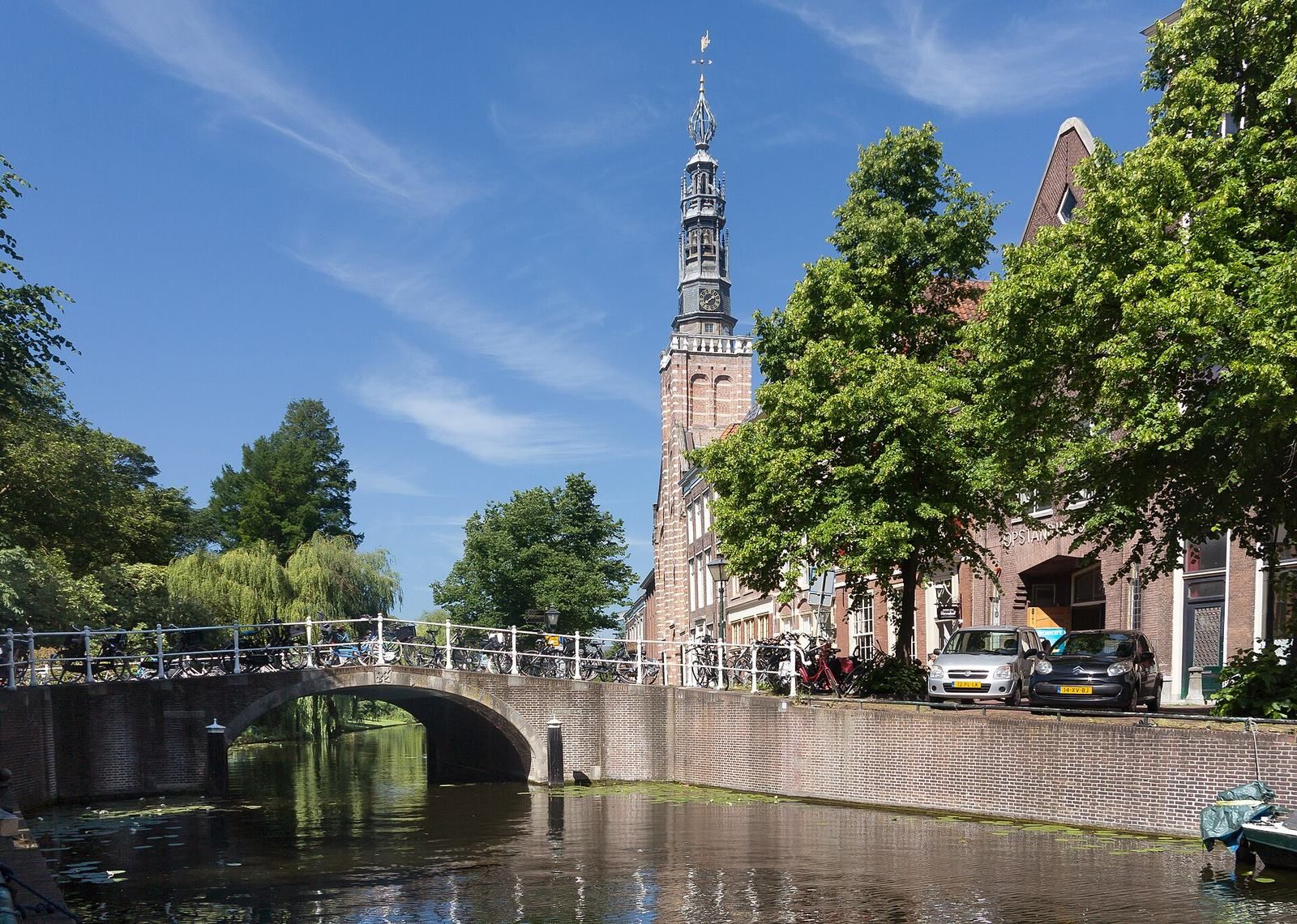
Facade and Saint James Tower
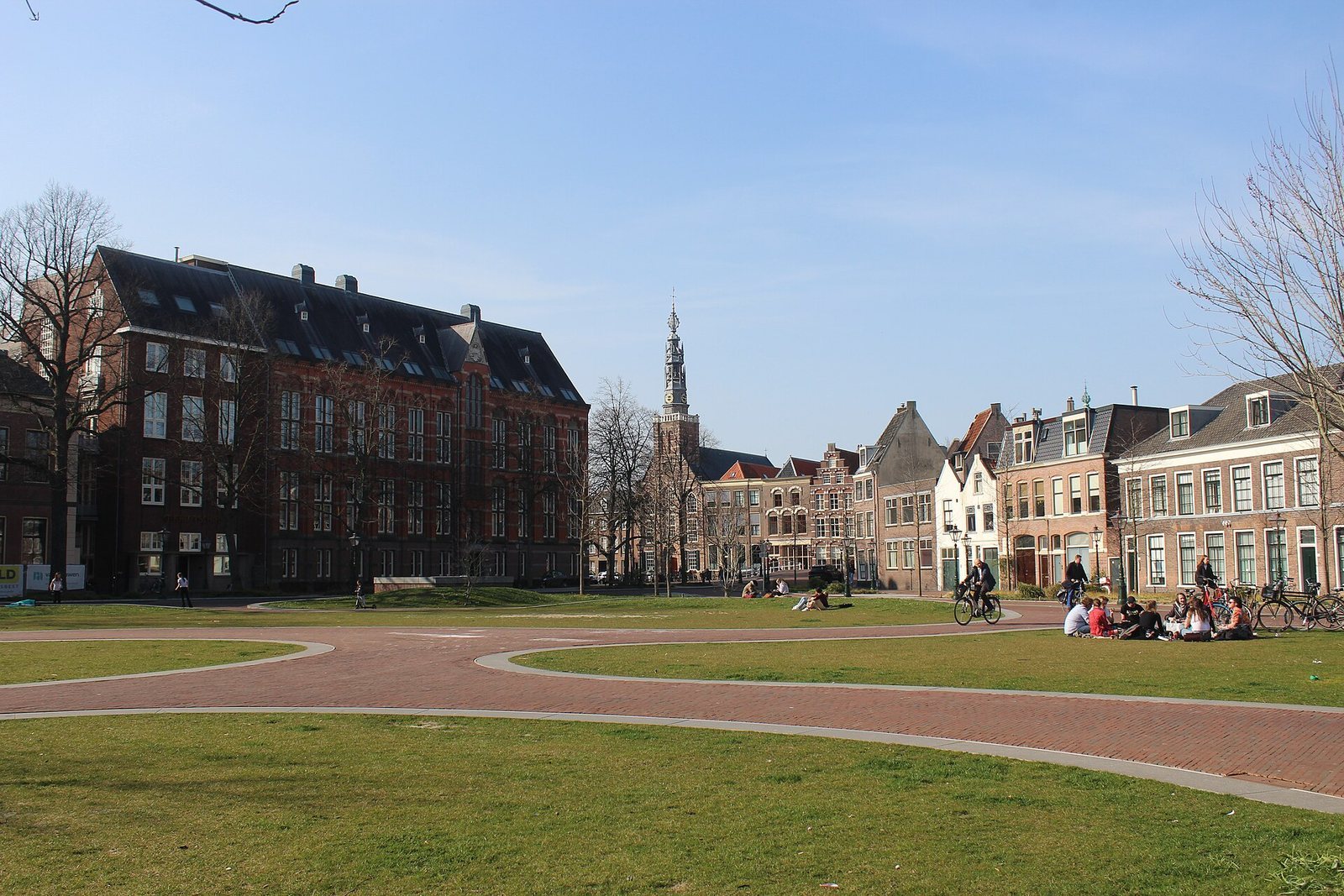
The present front facade dates from 1538. The tower, known as the Saint James Tower because it retained the dedication to Saint James, was built in 1594. It survived the gunpowder explosion of 1807 and was restored afterward. A carillon was installed in the tower in 1598. The earlier instrument comprised a 16-bell chime and an hour bell, with the bells cast in Mechelen by Peter van den Ghein. A playing drum operated the mechanism and announced the striking of the clock.
Each bell of that earlier carillon carried part of a poem concerning Leiden’s textile trades, the prosperity of merchants and craftspeople, and the city’s economic well-being. The Van den Ghein carillon was sold as scrap in 1742 or earlier. Eijsbouts supplied an automatically playing 17-bell chime for the church in 1961, and the instrument was enlarged to 22 bells in 2021. A carillon is a group of tuned bells arranged for musical performance, operated by a keyboard or an automatic mechanism.
Organ and interior furnishings
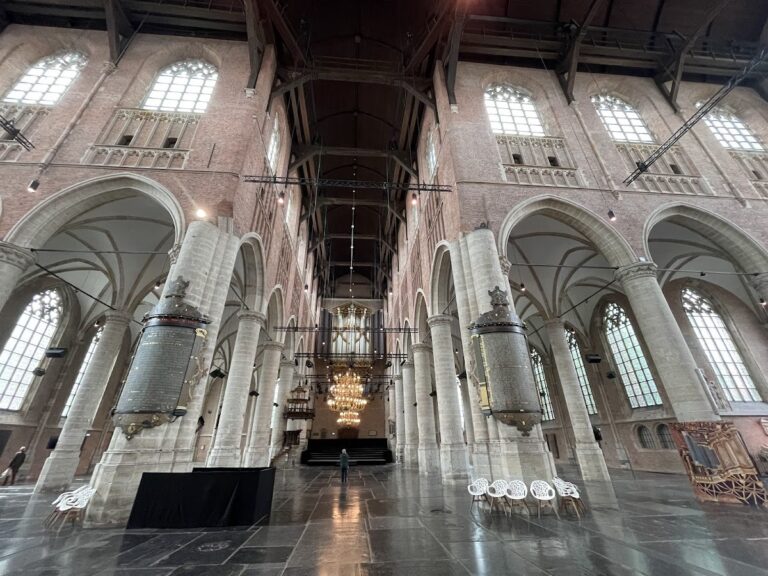
The organ stands on the second level of the organ loft. Johannes Mitterreither built it in 1769, giving it fifteen stops, two manuals, and an attached pedal. Some of its pipework dates from around 1700 and was made by Hans Wolff Schonat and Johannes Duyschot.
Joachim Reichner made the organ case in 1805 for the Remonstrant Church in The Hague. It was installed in the Roman Catholic church at Krommenie in 1864 and transferred to Sint-Lodewijkskerk by the Vermeulen firm in 1957. In 2005, Orgelmakerij Reil installed a second console on the first level. A switching mechanism allows the organist to select either console.
The main division on the second level includes Prestant 8, Holpyp 8, Fluyt Travers 8 D, Octaav 4, Quint 3 B/D, Octaav 2, Cornet in three ranks, Cremona 8 D, and Tremulant. Its secondary division contains Holpyp 8, Viola di Gamba 8, Fluyt 4, Sexquialter in one or two ranks, and Dulciaan 8 B/D. The pedal has a Bourdon 16, while the secondary division on the first level includes Holpijp 8 B/D, Prestant 8 D, Fluit 4, and Gemshoorn 2.