Leaning Tower of Toruń: A Medieval Defensive Tower
Site at a Glance
- Rating
- 4.6
- Popularity
- Very High
- Country
- Poland
- Primary era
- Medieval
- Eras represented
- Medieval, Early Modern, Modern
- Civilizations
- Crusader, Teutonic Order
- Site type
- Military
- Remains
- Tower
On this page8 sections
History
Medieval defenses and later conversion
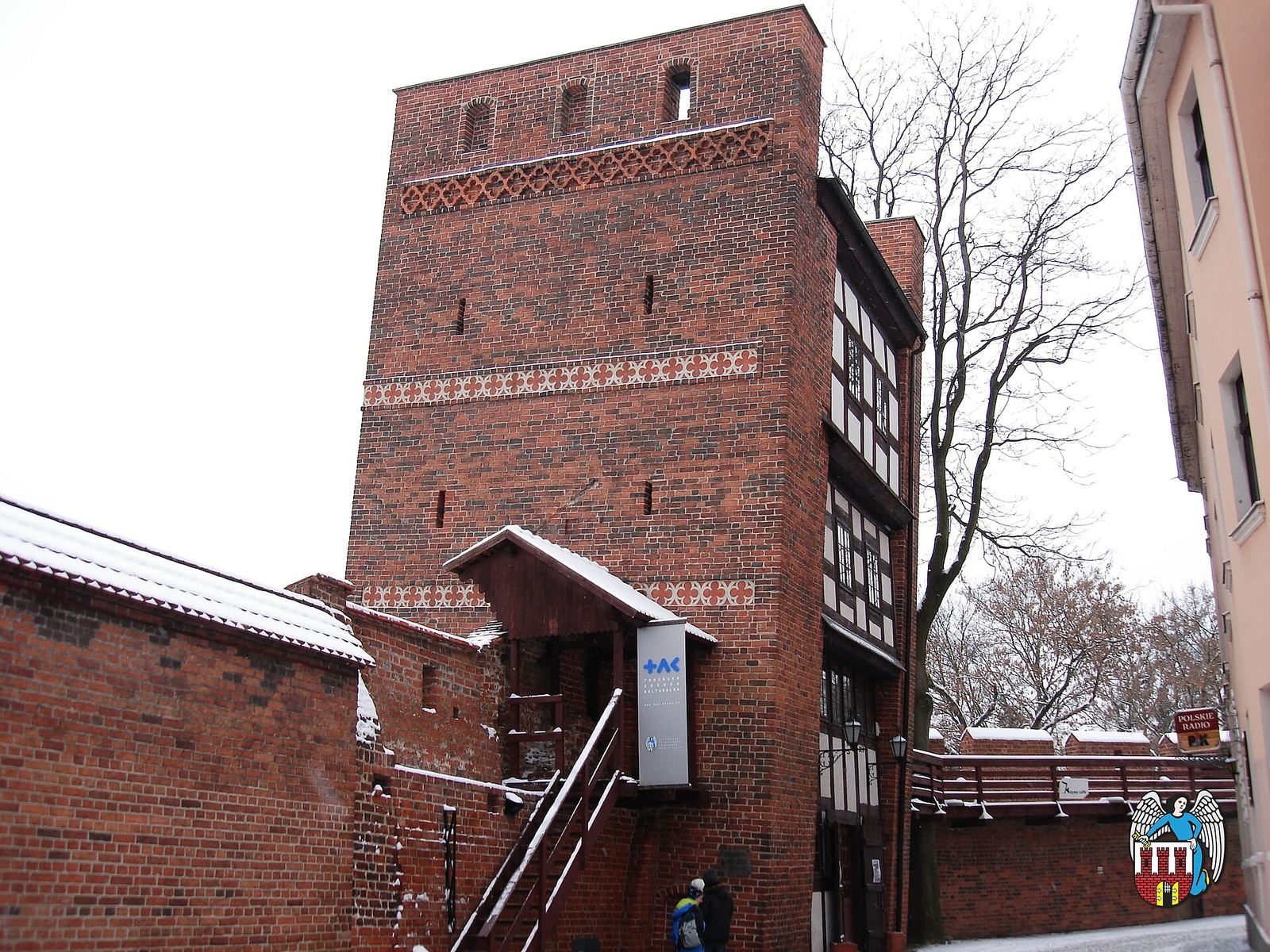
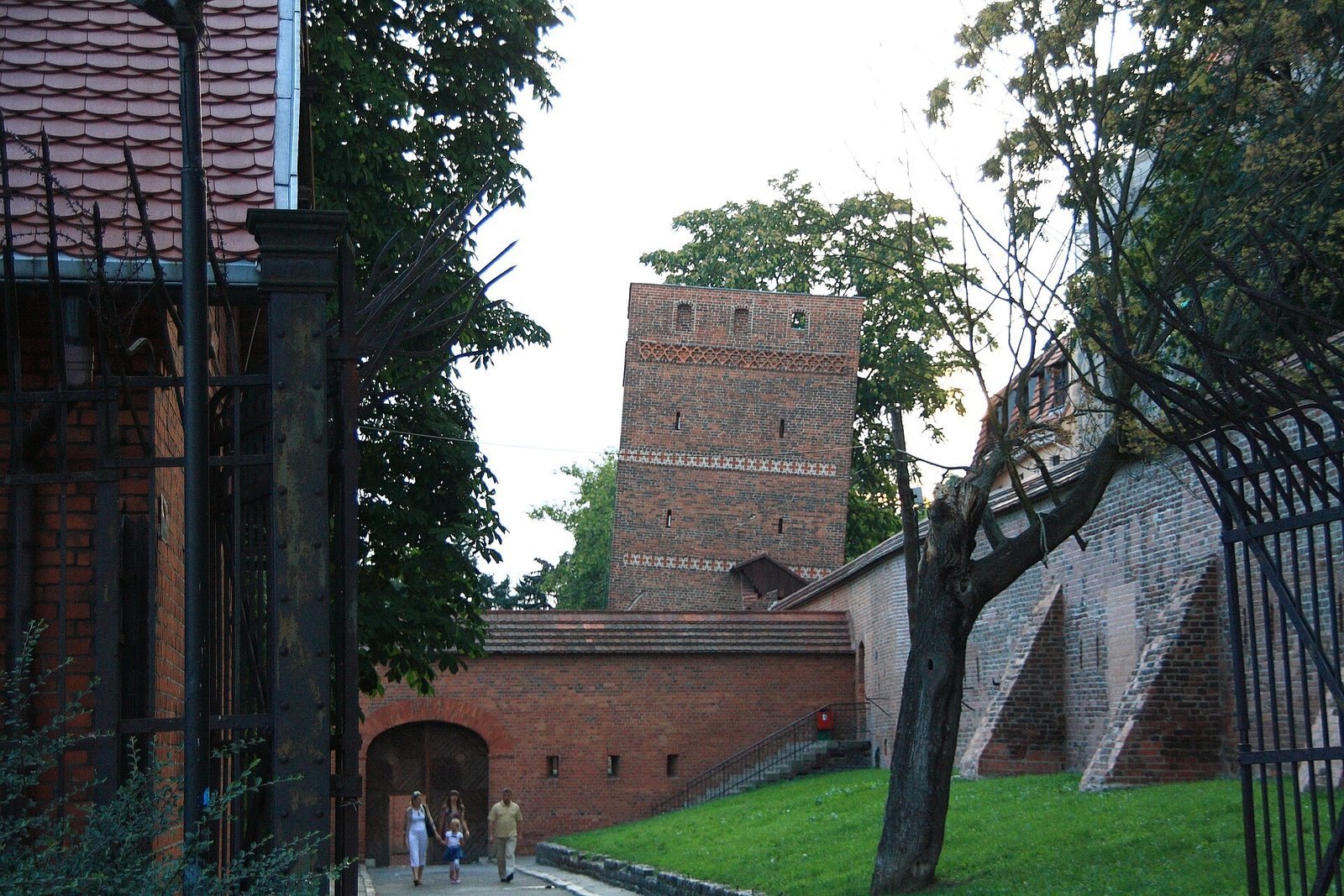
The Leaning Tower of Toruń, in Poland, is a defensive tower built in the second half of the thirteenth century in the Gothic style, a medieval architectural tradition that could be expressed in brick. It formed part of Toruń’s town walls. The tower was originally upright, but its lean developed later, probably during the thirteenth century.
A major rebuilding in the eighteenth century ended the tower’s defensive use, and it became a women’s prison. In the nineteenth century, it was used first as a blacksmith’s shop, then as a gunsmith’s residence, and later as ordinary housing.
Civic uses and recognition
During the twentieth century, the tower housed cultural organizations, including Toruń’s local-history society. A café and souvenir shop operated there in the 1970s and 1980s. The Toruń Cultural Department now occupies the building. Restoration work took place in the 1970s and again in 2008.
The tower is included in the UNESCO World Heritage Site of the Medieval Town of Toruń and is designated a Historic Monument of Poland.
Legends and religious beliefs
One local tale links the tower’s lean to the sins of a disorderly Teutonic knight, a member of a medieval Catholic religious and military order. After the townspeople demanded that he build a tower crooked like his sins, the knight supposedly completed it in fifteen months, raising no more than a metre each month. Each centimetre of its lean was said to represent one sin. In a related test of conscience, a person who could stand with their back and heels against the wall, arms outstretched, and count to ten was thought to be free of sin.
A different story describes twelve Teutonic knights living under a rule that forbade meetings with women. One knight’s secret relationship with a wealthy merchant’s daughter was discovered. The lovers were fined, the woman was sentenced to twenty-five lashes, and the knight was ordered to build a leaning tower as punishment. In this version, people who had sinned could not keep their balance beneath it.
Another former belief treated the tower’s lean as divine punishment for Nicolaus Copernicus’s supposedly blasphemous discovery. Copernicus, a Renaissance astronomer born in Toruń, advanced the view that Earth and the other planets orbit the Sun. The belief reached Rome and was among the reasons given for placing his writings on the Roman Catholic Church’s Index of Forbidden Books, a list of works prohibited to Catholics.
A separate legend explains the name Toruń through a quarrel between the tower and the Vistula. As the river threatened to erode the tower, it warned it to fall. The tower replied, “So fall!” Passing merchants supposedly heard the words and recorded them as the city’s name.
Remains
The tower’s form and setting
Masonry and inclination
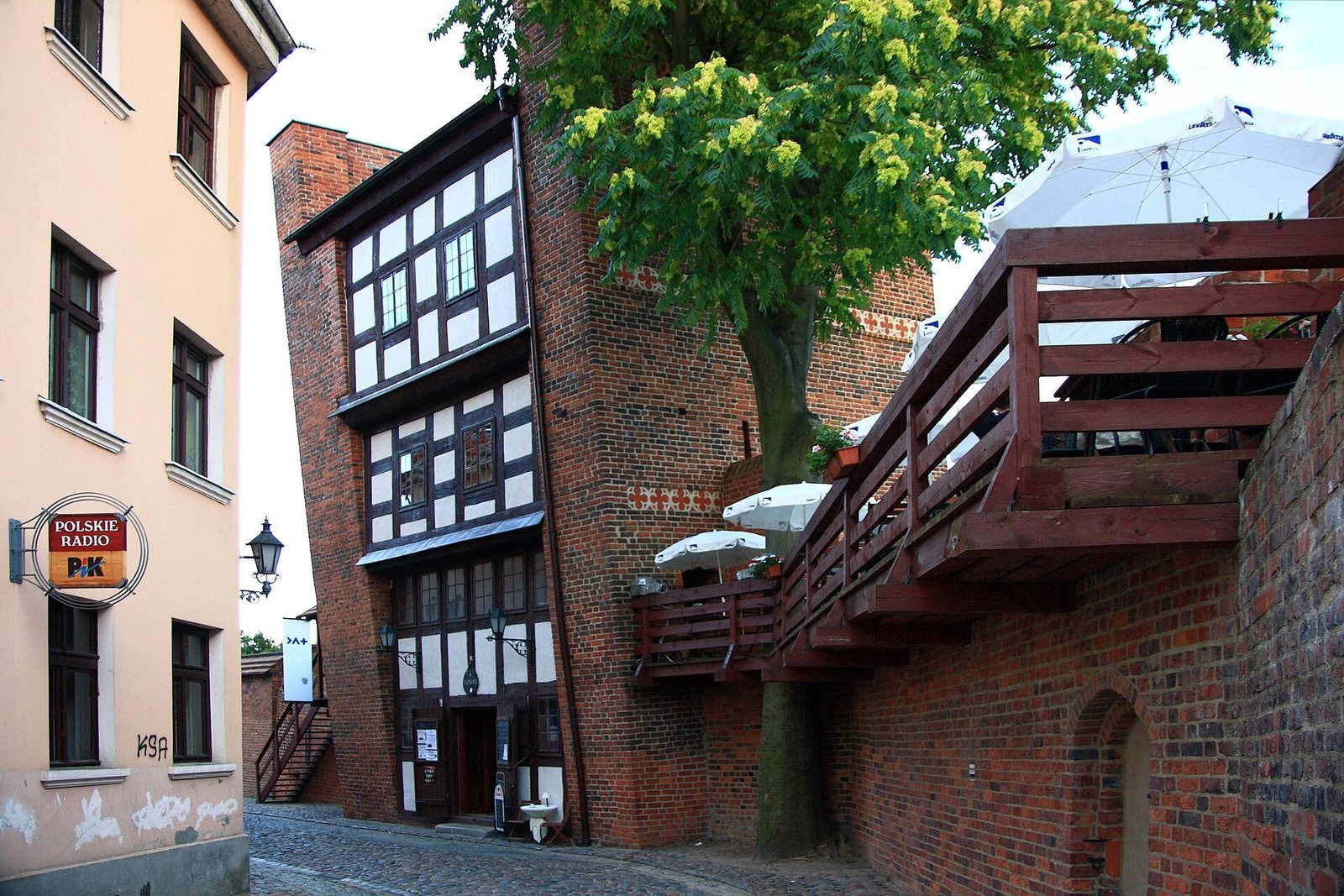
The red-brick tower stands in Toruń’s Old Town near the Vistula, on the street known in English as Under the Leaning Tower. It is fifteen metres high and now has four sides; when first built, it resembled the other towers in the town walls. Its fourth wall was added during the eighteenth-century rebuilding. Subsidence in the sandy-clayey ground caused the structure to lean. Its top is displaced 1.46 metres from the vertical, giving it an inclination of 5° 13′ 15″.
Later alterations and interior
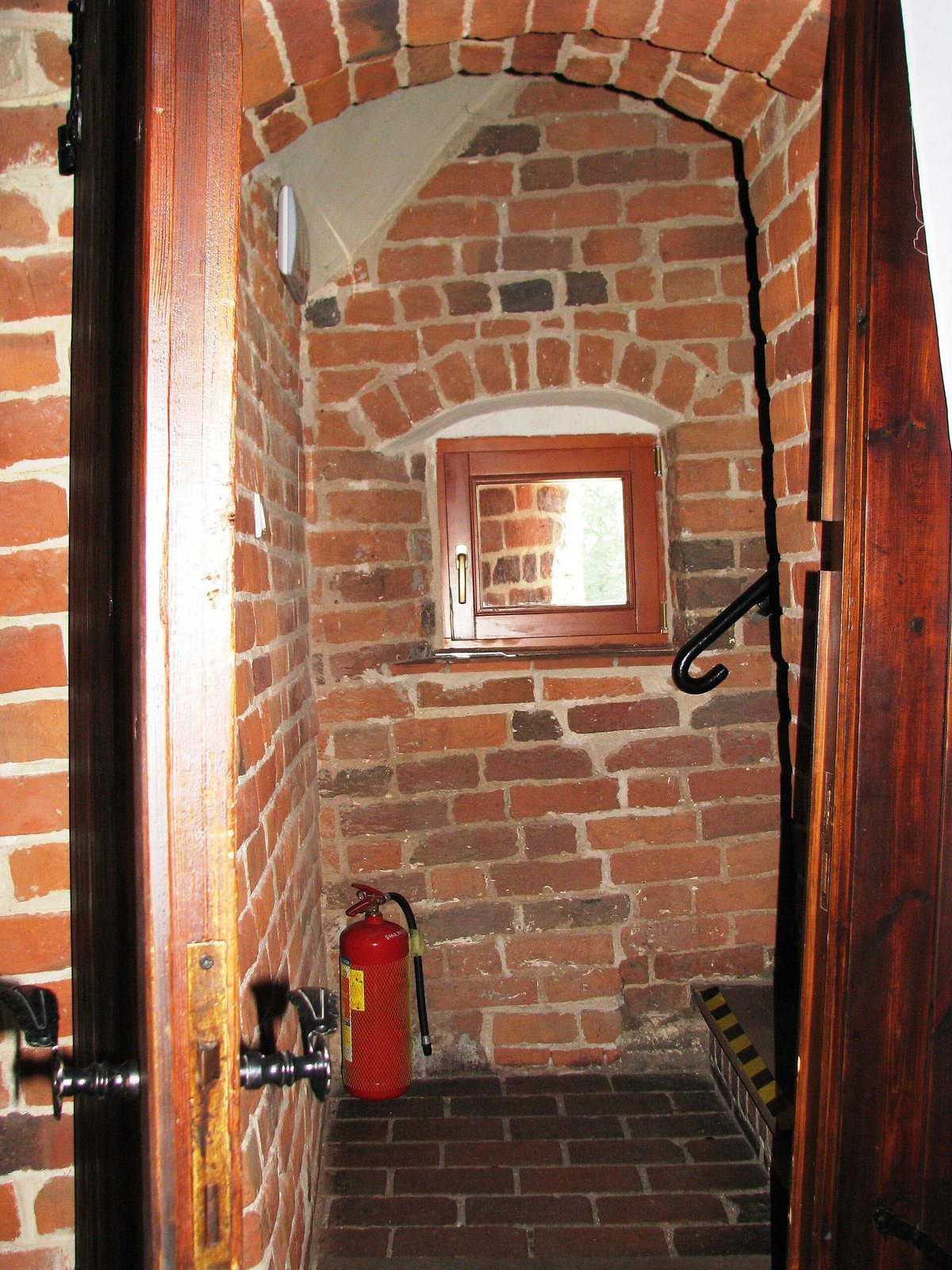
In the nineteenth century, the original Gothic tented roof was replaced with a pitched roof. During the 2008 restoration, paintings were uncovered on a frieze and recreated in their original colors, while the interior was completely renewed. The tower also has a viewing terrace overlooking the Vistula embankment.