Dąmbski Palace in Toruń: A Baroque Urban Residence
Site at a Glance
- Popularity
- Medium
- Country
- Poland
- Primary era
- Early Modern
- Eras represented
- Medieval, Early Modern, Modern
- Civilizations
- German, Polish–Lithuanian Commonwealth
- Site type
- Domestic
- Remains
- Elite Residence
On this page6 sections
History
Family residence
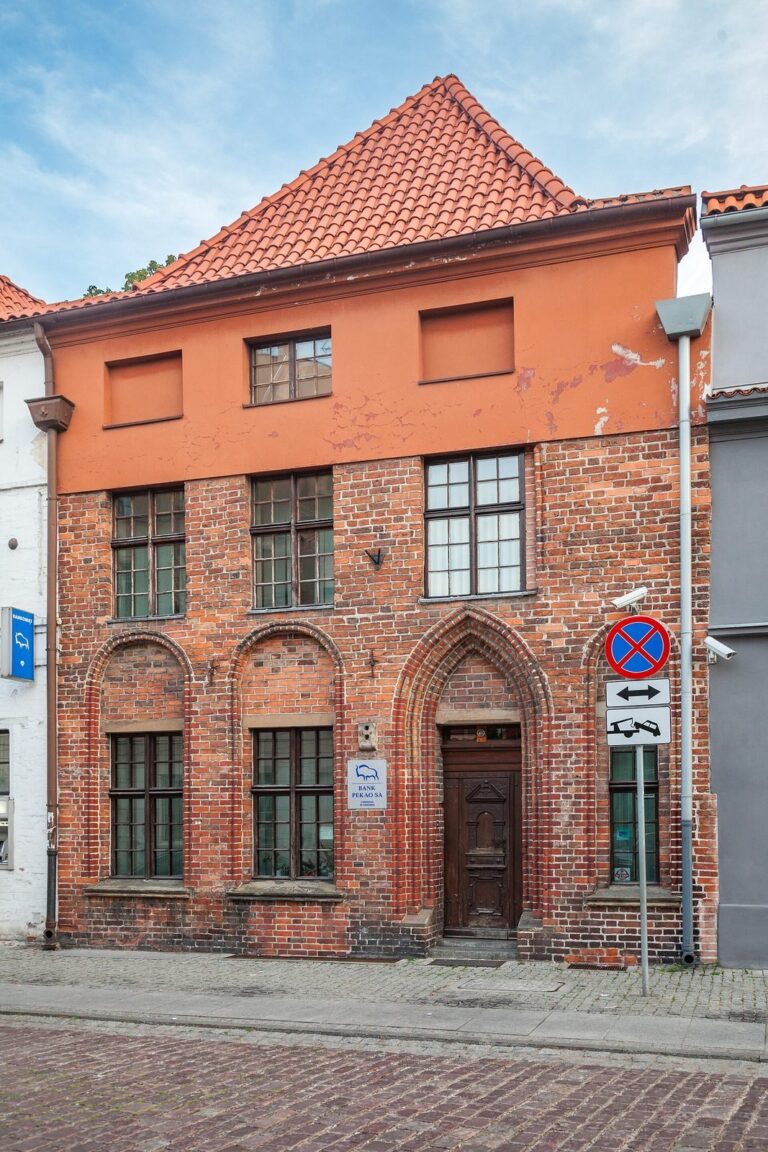
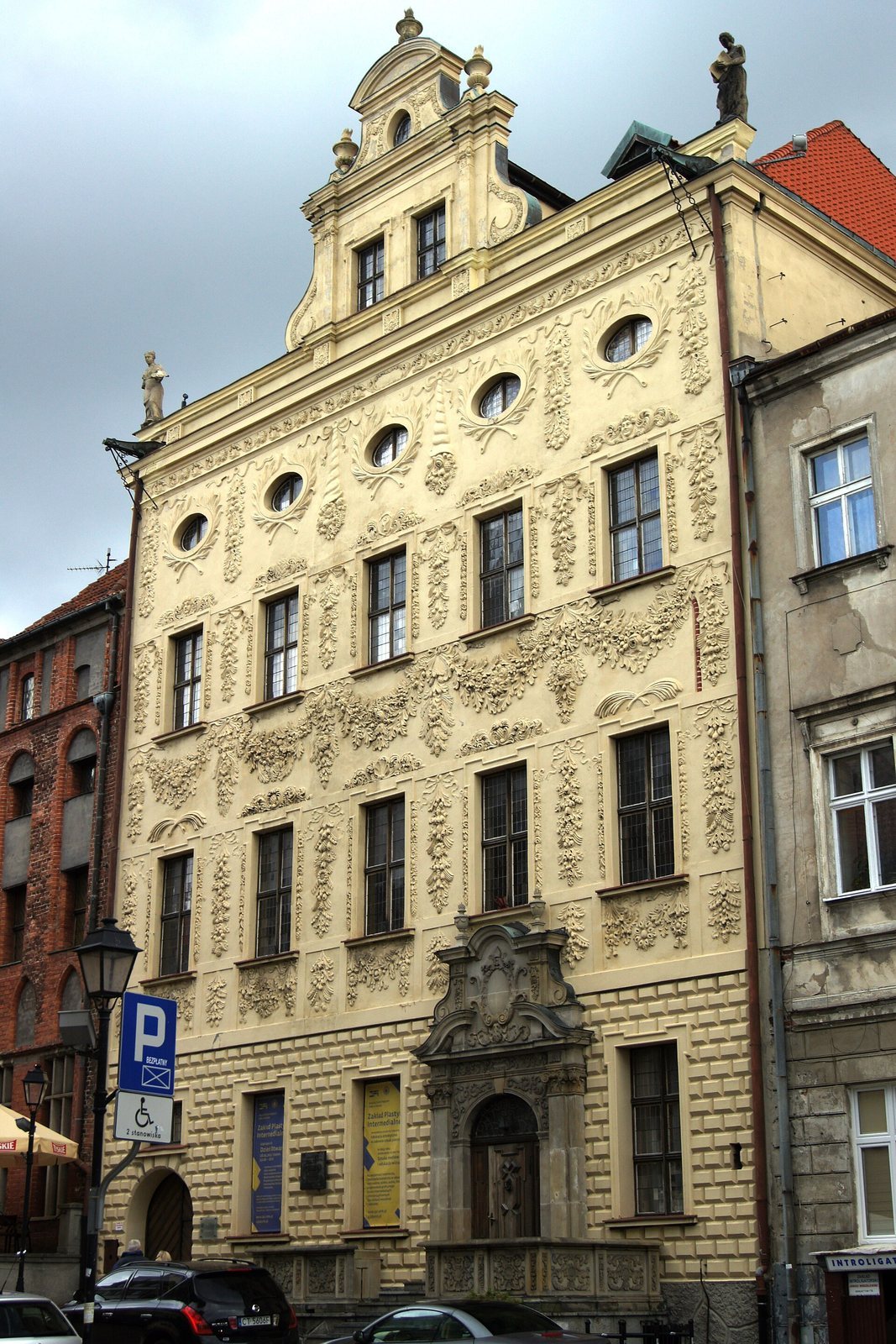
Dąmbski Palace in Toruń is a Baroque urban residence in Poland, built in 1693 by Stanisław Kazimierz Dąmbski, a Polish Catholic prelate and bishop of Kuyavia, a historic region in north-central Poland. It served as a residence for the Dąmbski family, whose heraldic emblem was the Godziemba coat of arms. The palace remained in the family until the end of the eighteenth century.
Changing uses
In 1800, the palace was sold to an official of Prussia, a historic German kingdom and state. The Gdańsk Hotel opened in the building in 1815. The Prussian army took it over in 1870, and the palace was remodelled between 1874 and 1887. From 1920, it housed the State Police and later the management of the Pomeranian Museum. In 1924, the Polish army took over the building for use as an officers’ club.
University and cultural use
The palace passed to Nicolaus Copernicus University in 1957, and its Faculty of Fine Arts occupied the building. It currently houses the Kuyavian-Pomeranian Musical Theatre.
Remains
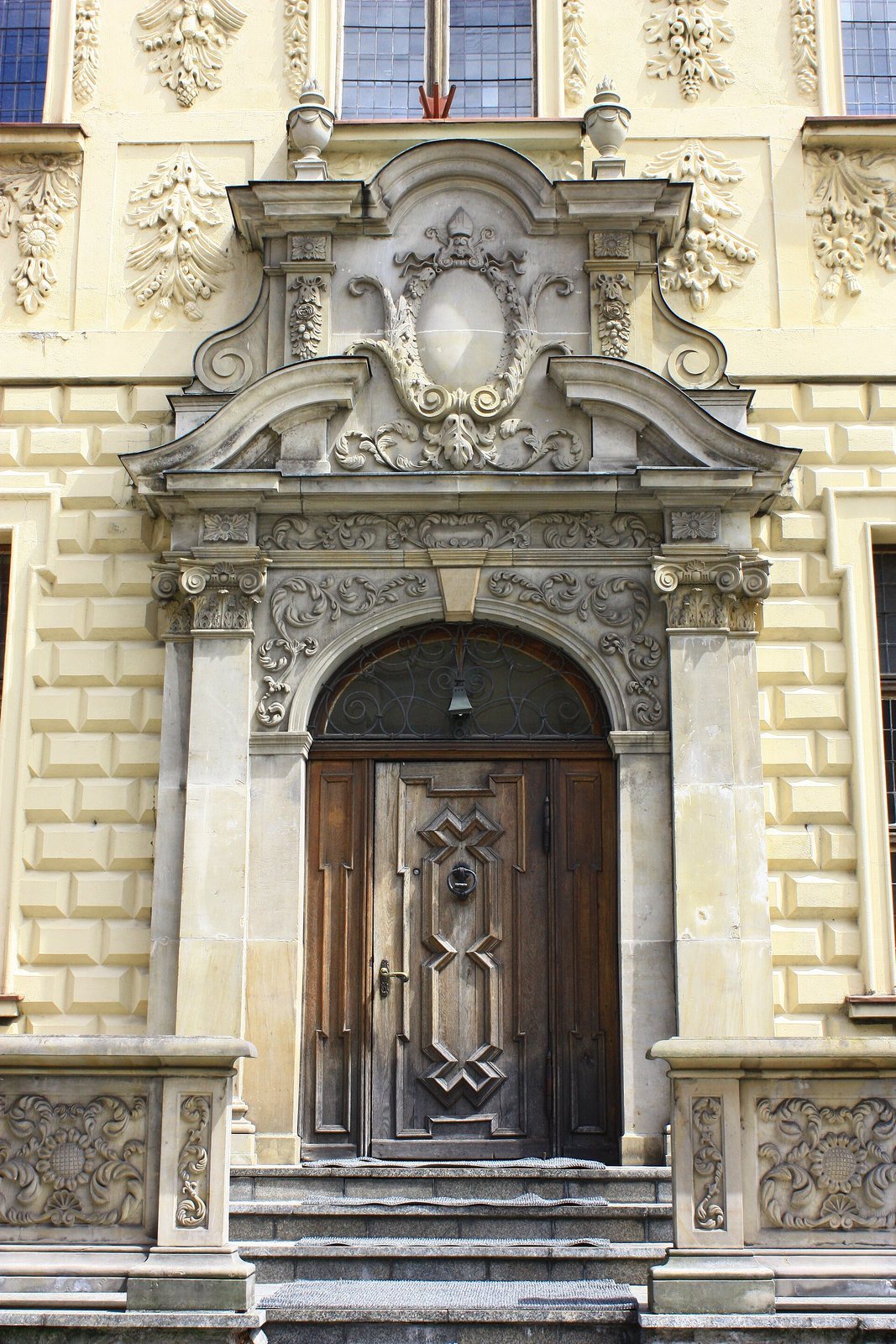
Building and alterations
The Baroque palace stands on Żeglarska Street in Toruń’s Old Town, built over the remains of two Gothic townhouses. During the remodelling of 1874–1887, workers removed the Baroque entrance and gable (the triangular upper wall beneath a roof), as well as the high hipped roof (which slopes on all sides). An oval roof made of corrugated sheet metal replaced the earlier roof.