Langar Ota Mausoleum: A Fifteenth-Century Sufi Shrine in Uzbekistan
Site at a Glance
- Rating
- 4.4
- Popularity
- Very Low
- Country
- Uzbekistan
- Primary era
- Medieval
- Eras represented
- Medieval
- Civilizations
- Timurid
- Site type
- Religious
- Remains
- Tomb
On this page9 sections
History
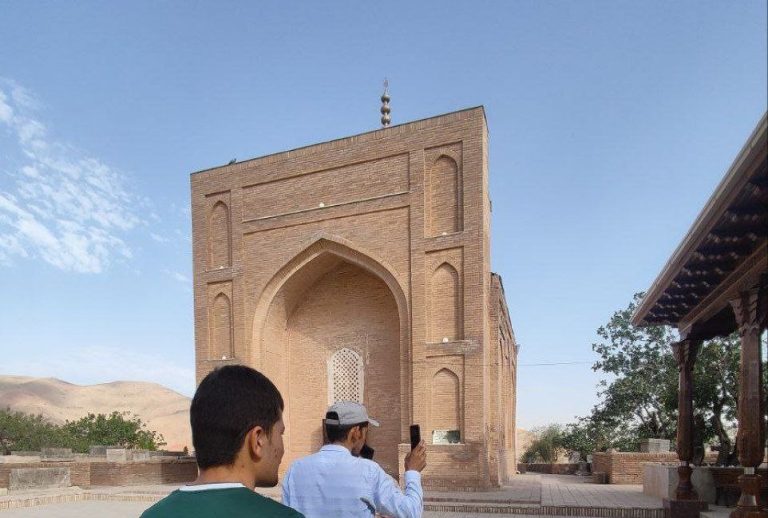
Langar Ota Mausoleum is a fifteenth-century mausoleum in Uzbekistan, located within the Langar Ota pilgrimage site in Qamashi District, Qashqadaryo Region. Also known as the Shaykh Abulhasan Mausoleum, it is an ancient place of worship traditionally associated with Muhammad Sadiq, a great pir, or Sufi spiritual master, of the Ishqiya order, a branch associated with spiritual love. Its architectural style is described as closely resembling that of the Khwaja Ahmad Yasawi Mausoleum, the shrine of a twelfth-century Central Asian Sufi teacher.
Origins and Sacred Tradition
Langar Ota is associated with a tradition surrounding Muhammad Sadiq. According to the legend, he came from Mecca carrying a Quran and a hair of the Prophet. He stopped at the place where his camel lay down, and the site later became a shrine and pilgrimage place. The word langar can refer to a shrine, cemetery, pilgrimage destination, caravan stop, or place of blessing, reflecting the range of meanings attached to the site.
The mausoleum was built a century after the Langarota Mosque, which stands within the same pilgrimage complex. A khilkhona, a place for solitary meditation or spiritual retreat, lies 100 metres from the tomb. The mausoleum is surrounded by the graves of more than 300 Sufis, disciples, and followers of Muhammad Sadiq, making the wider site a major setting for religious remembrance.
The Ishqiya Burials
Historian Abdusobir Rayimkulov identified three of the burials as Shaykh Abulhasan Ishqi, his son Shaykhzoda Muhammad Sadiq, and his grandson Abulhasan Okhund. All three are associated with the Ishqiya Sufi order. Local tradition identifies another grave as that of a daughter of Amir Timur, the Central Asian ruler and conqueror who founded the Timurid dynasty in the late fourteenth century. A further grave is attributed to Abulhasan, described as a Yemeni shaykh, or Sufi religious leader, who renounced rulership and became a recluse. One grave has no tombstone and remains unidentified.
Seven pages attributed to the Quran of Uthman were formerly kept at the mausoleum. Uthman was the third caliph of Islam, and the name refers to the tradition that he sponsored the standardization and distribution of early Quranic codices. The pages were later transferred to the Institute of Oriental Studies in Tashkent.
Repairs and Protection
During the Soviet period, local authorities attempted to repair the mausoleum, but the work was partial and unprofessional. The portal arch was reinforced with concrete, standard fired bricks were laid above it, and a niche inside the building was supported with a wooden prop. The mausoleum was restored in 2007. Its external doors were replaced with modern ones, while the internal doors were left untouched.
On 4 October 2019, a decision of Uzbekistan’s Cabinet of Ministers placed the mausoleum on the national register of immovable cultural-heritage objects. It is under state protection and remains state property, managed operationally by the Kashkadarya Regional Department of Cultural Heritage. The site has also been assigned to the Waqf charitable public foundation under a free-use agreement.
The Qamashi mausoleum is separate from other places called Langar Ota. Another pilgrimage site in Chiroqchi District is popularly known as New Langar and is locally regarded as the second langar. A monument in Koshtepa District of Fergana Region appeared as “Langar” in archival documents from 1872.
Remains
Hilltop Setting and Construction
Building and Landscape
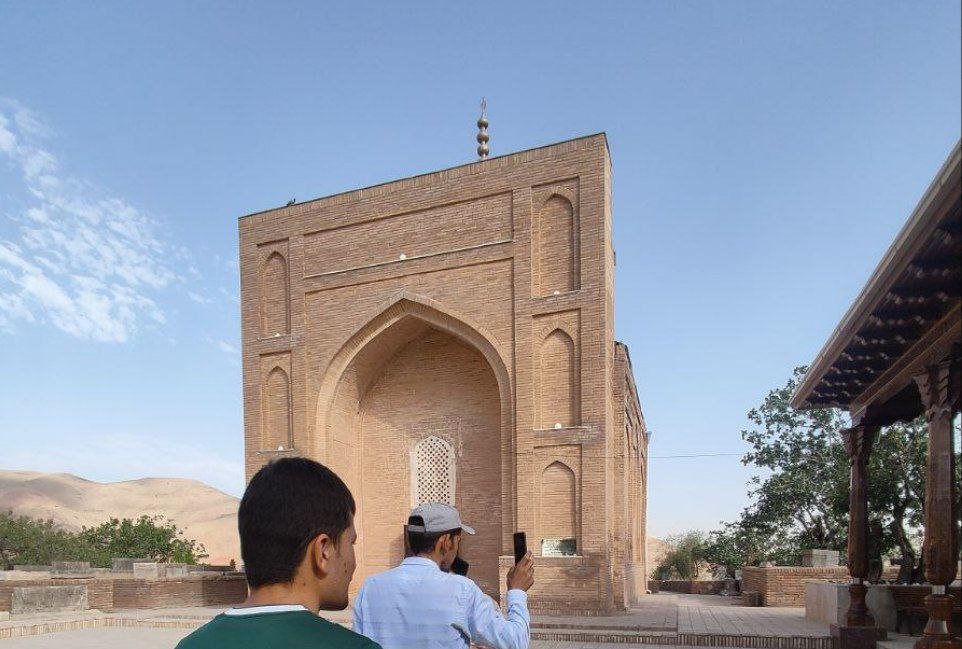
The mausoleum stands on a hill beside a local cemetery, near Shahrisabz, within the Langar Ota pilgrimage site. The Langarota Mosque belongs to the same complex, although a ravine separates it from the hill carrying the mausoleum. The building is made of baked brick. Intricate patterns decorate the arches over its doors and windows, and the overall architectural treatment is considered very similar to that of the Khwaja Ahmad Yasawi Mausoleum.
Entrance and Interior Features
Nine stones, each weighing one tonne or more, are set on both sides of the entrance. The mausoleum’s finial carries four balls. Their symbolism refers to four stages of Sufi enlightenment: shariat, strict observance of religious commandments; tariqat, dedicated striving toward spiritual perfection; maarifat, spiritual knowledge of the universe’s unity in God; and haqiqat, apprehension of ultimate truth and the highest stage of spiritual perfection.
Inscriptions inside the mausoleum are described as unique among the inscriptions found in shrines in Uzbekistan. A niche within the building was supported by a wooden prop during the Soviet-period repairs, while the portal arch received concrete reinforcement and additional fired bricks.
Graves and Tombstones
The mausoleum contains five graves, three of which are marked by tombstones. The stones stand vertically at the head of the graves and are roughly 1 by 2 in size. They are highly skillfully made. The stone marking Muhammad Sadiq’s grave is decorated with gold, while the stone belonging to his son is decorated with silver.