Iwatoyama Kofun: A Keyhole-Shaped Burial Mound in Japan
Site at a Glance
- Rating
- 4.6
- Popularity
- Very Low
- Country
- Japan
- Primary era
- Classical
- External website
- Open
- Eras represented
- Classical
- Civilizations
- Yamato
- Site type
- Burial
- Remains
- Burial Mound
On this page10 sections
History
Iwatoyama Kofun is a keyhole-shaped burial mound in Yame, Japan, probably constructed during the first half of the sixth century in the late Kofun period. A keyhole-shaped kofun combines a circular rear mound with a projecting rectangular front section. The tomb forms part of the Yame Kofun Group, an extensive collection of burial mounds in the Yame Hills, and is traditionally associated with Chikushi no Iwai, a sixth-century regional ruler of northern Kyushu.
The Yame Kofun Group
The Yame Hills extend for more than 10 kilometers from east to west and contain about 300 tombs. The wider group dates from the early fourth to the early seventh century, although most of its examples belong to the fifth and sixth centuries. It includes 12 keyhole-shaped tombs and three decorated tombs. Iwatoyama Kofun was probably built within this later phase, a dating supported by the chronology of Sue ware, a high-fired gray pottery used during the Kofun period.
Chikushi no Iwai and the tomb’s attribution
The burial is traditionally attributed to Chikushi no Iwai, also identified as Iwai, who held the office of kuni no miyatsuko, a hereditary regional administrative position in early Japan. Early Japanese historical traditions preserved in the Kojiki and Nihon Shoki describe his rebellion against the central Yamato court. A surviving fragment of the Chikugo Fudoki refers to Iwatoyama Kofun, its location, and activities connected with its auxiliary enclosure, including a scene suggestive of a trial.
The same tradition states that Iwai began constructing his tomb during his lifetime but abandoned it after losing a war. Iwatoyama Kofun is one of the few Japanese tombs for which both the presumed occupant and the construction period can be estimated through written traditions and archaeological chronology. Another kofun was formerly identified as Iwai’s burial place, but Morisada Jiro proposed Iwatoyama Kofun in 1956, and this interpretation became accepted.
Protection as a Historic Site
Iwatoyama Kofun became a national Historic Site on December 23, 1955. On March 24, 1978, it was incorporated with other designated tombs, along with three additional tombs, into the Yame Kofun Group Historic Site.
Remains
Mound and auxiliary enclosure
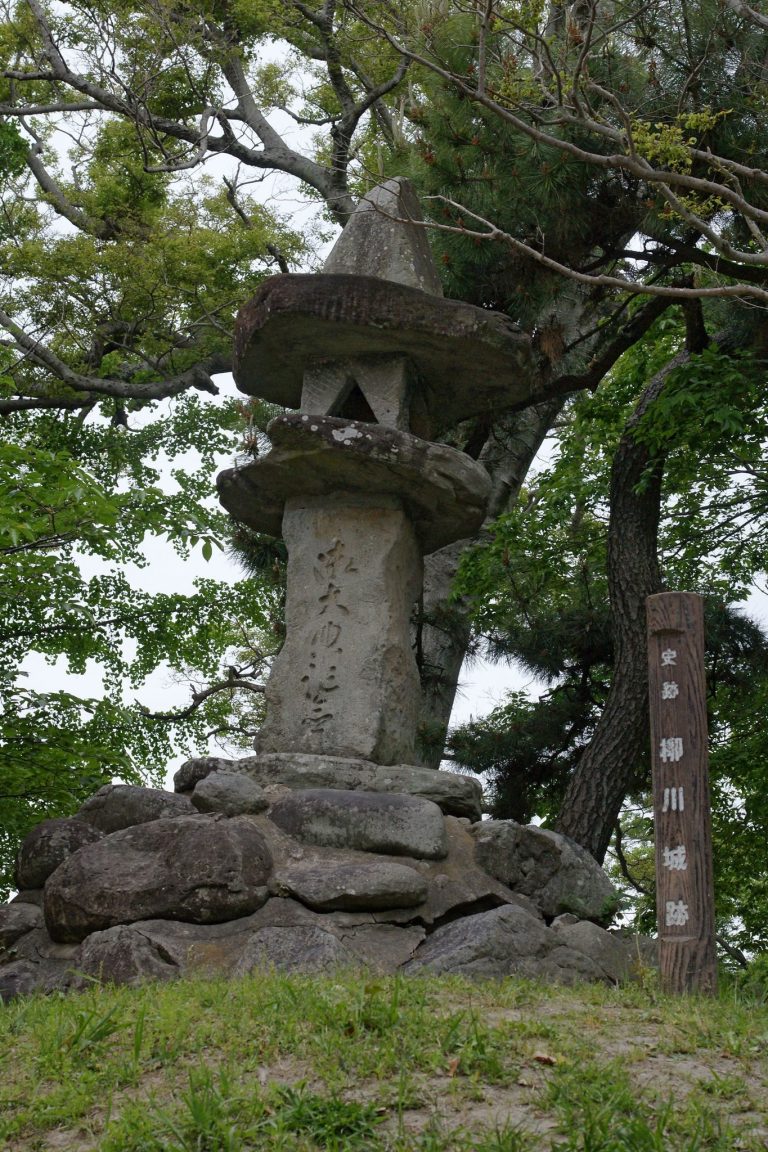
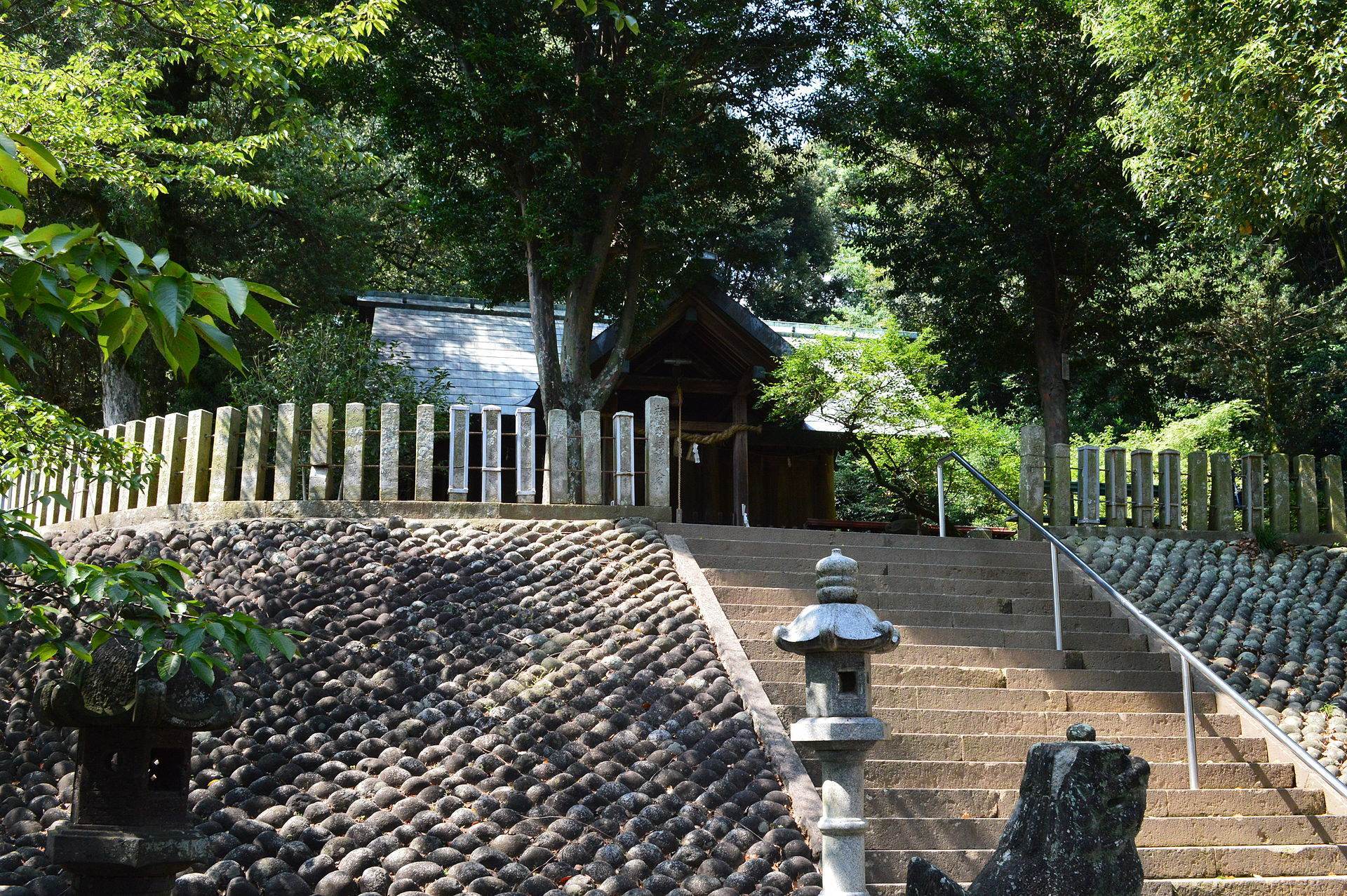
Iwatoyama Kofun has an east-west principal axis, with its circular rear section on the east. The two-stage mound measures 135 meters in total length, making it the largest known kofun in northern Kyushu. A moat and its surrounding embankment encircle the tomb, together forming a zone approximately 20 meters wide.
Auxiliary enclosure
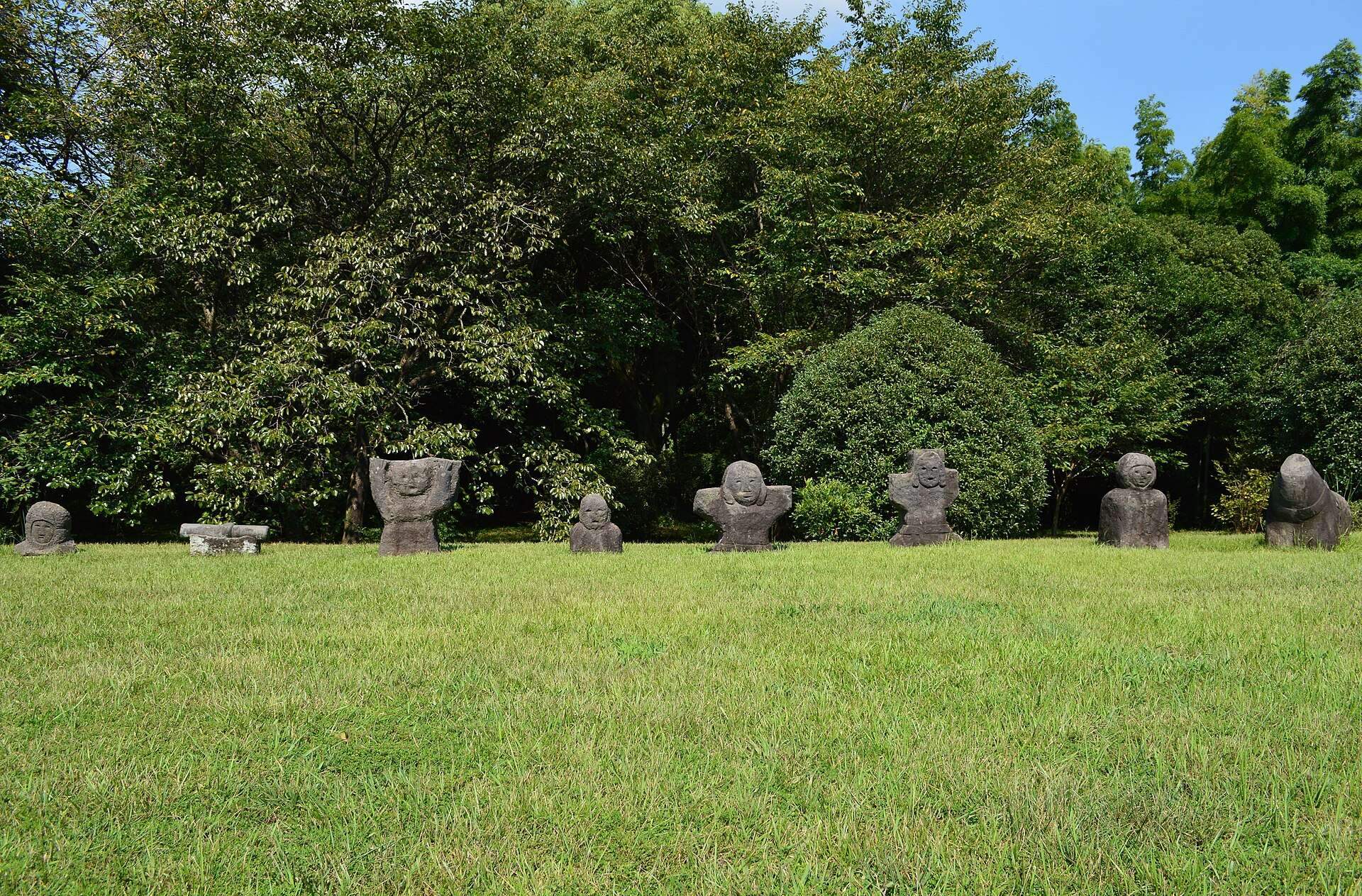
A square auxiliary enclosure stands at the northeastern corner of the mound. Known as a bekku, a distinct subsidiary enclosure adjoining a burial mound, it measures approximately 43 meters on each side. The enclosure is associated with activities described in the fragment of the Chikugo Fudoki. Reduced-scale replicas of the recovered stone objects now stand within it.
Burial facility and shrine
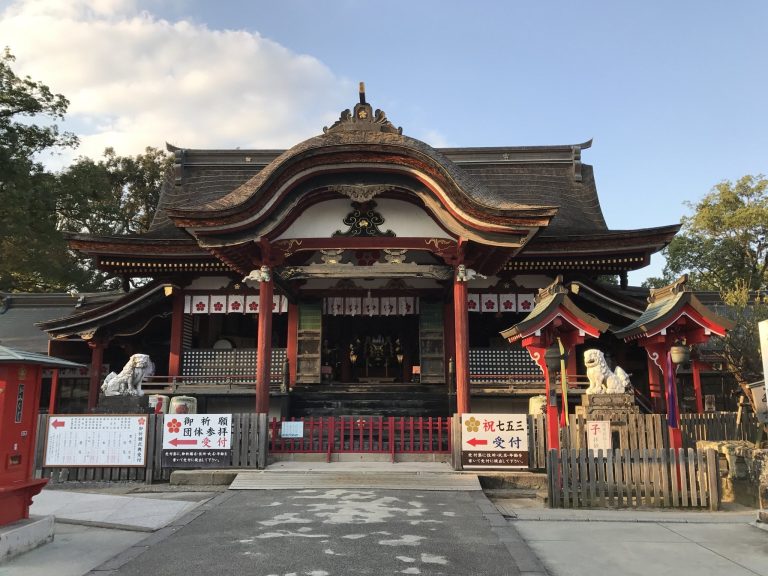
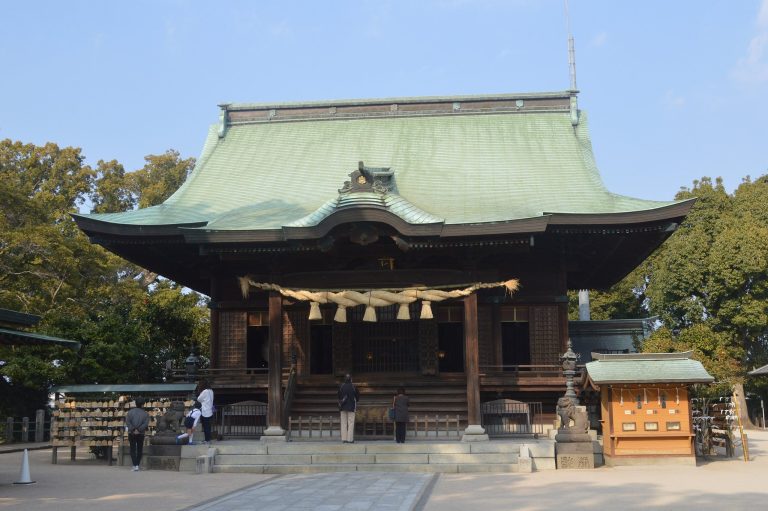
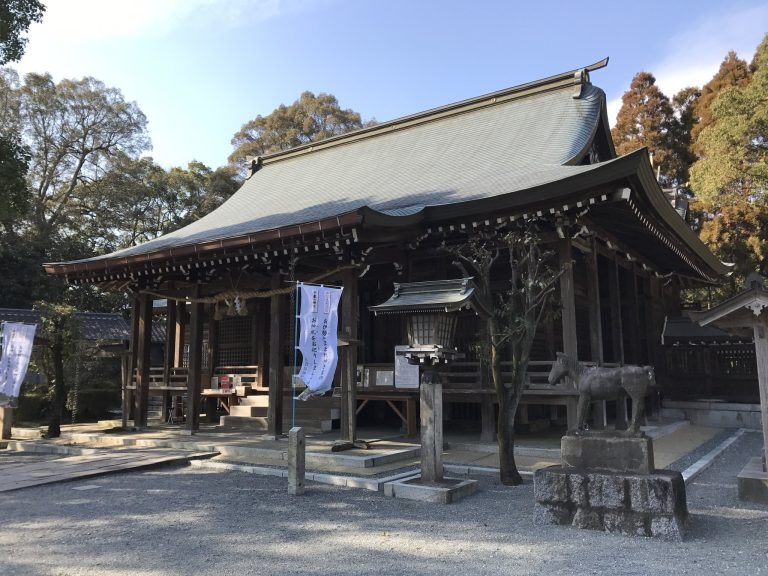
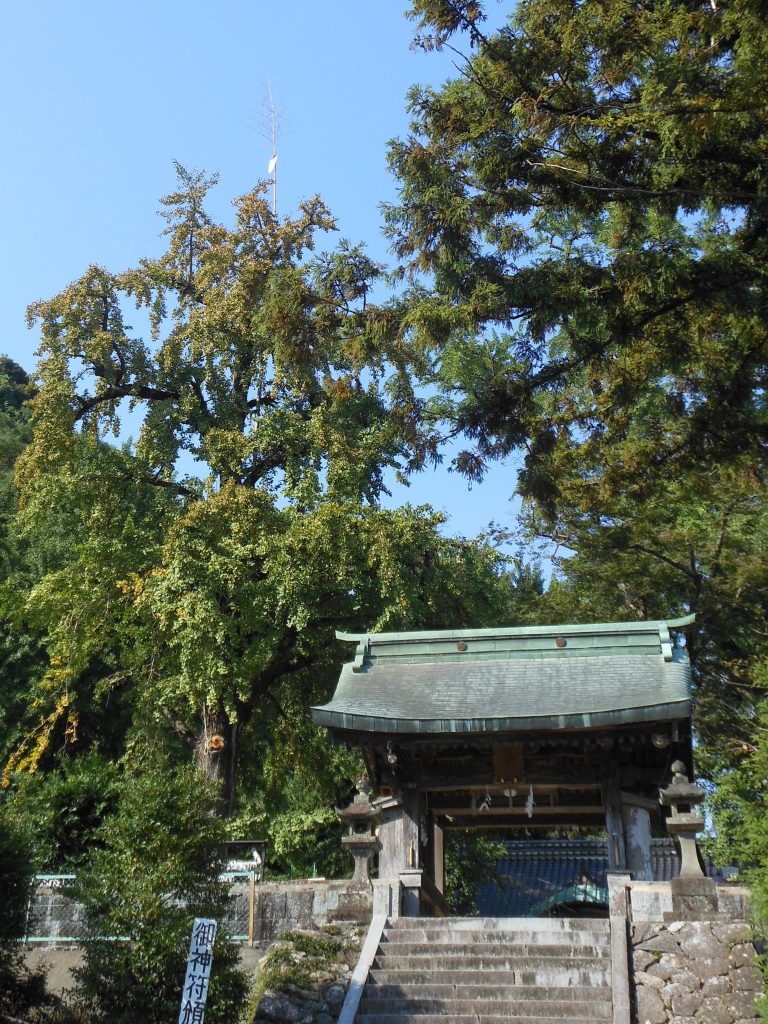
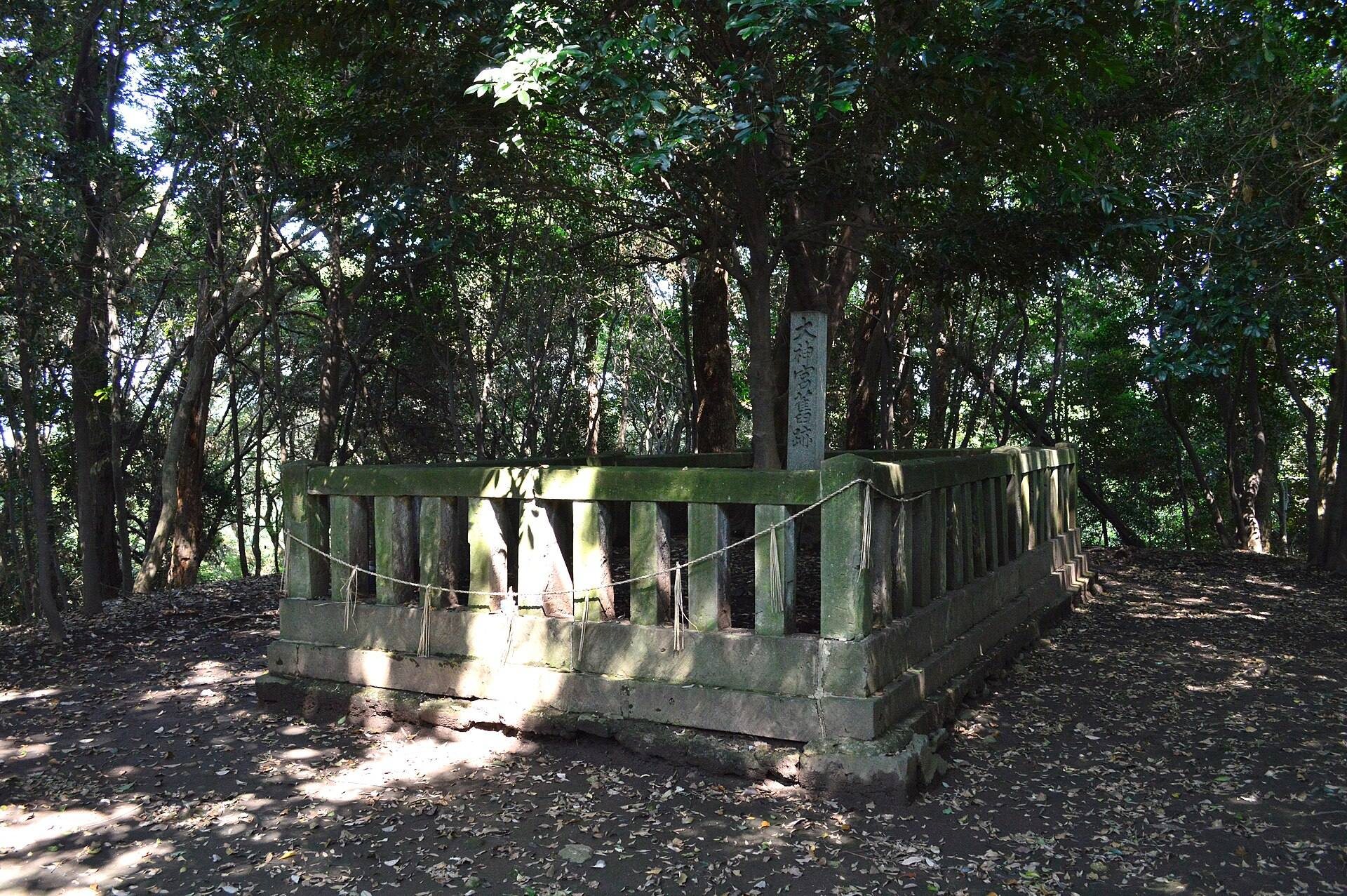
Geophysical investigations, including electrical surveys, have detected a structure interpreted as a possible horizontal stone chamber. This type of burial chamber is entered through a passage extending laterally into the mound. The burial facility itself has not been definitively identified. A shrine now stands beside the mound; it formerly occupied the summit of the circular rear section.
Stone figures and horses
More than 100 stone objects were recovered from the mound, the surrounding embankment, and the auxiliary enclosure. Collectively called stone figures and stone horses, they are divided broadly into human figures, animals, and representations of implements or equipment. Most were made at approximately life size, and their exceptional number and variety distinguish Iwatoyama Kofun from other tombs in the region.
Preserved archaeological objects
Nationally designated objects from the tomb include two stone human figures, a stone quiver, two stone shields, and 57 associated fragments. They are preserved at the Yame Iwatoyama Historical and Cultural Exchange Center. An additional stone human figure from the former site collection is held by the Tokyo National Museum.
Objects attributed to the tomb and designated at prefectural level include a stone horse, the head of an armed stone figure, and two fragments of stone human figures. These are owned by Shofukuji and preserved at the Yame Iwatoyama Historical and Cultural Exchange Center.