Village Church Lichtenberg (Neuruppin): A Medieval Hall Church in Germany
Site at a Glance
- Rating
- 4.6
- Popularity
- Very Low
- Country
- Germany
- Primary era
- Medieval
- Eras represented
- Medieval, Early Modern
- Civilizations
- Holy Roman Empire, Kingdom of Prussia, Margraviate of Brandenburg
- Site type
- Religious
- Remains
- Church
On this page7 sections
History
Village Church Lichtenberg (Neuruppin) is a medieval church in Germany, originally built in the second half of the thirteenth century. Its present form reflects major building phases in the late Middle Ages and the nineteenth century. The church first stood under the patronage of the Cistercian nunnery at Lindow, a women’s religious community of the Cistercian order.
Parish and patronage
In 1541, the church was described as a mother church, meaning a principal parish church with dependent congregations. From 1828, it was classified as a daughter church of Karwe, a subordinate church attached to a larger ecclesiastical centre. Its patronage later passed from Lindow to the territorial ruler through the Electoral Office of Alt Ruppin, the administrative office used to exercise the Brandenburg elector’s authority.
Today, the church belongs to the united Protzen-Wustrau-Radensleben parish in the Wittstock-Ruppin church district of the Evangelical Church of Berlin-Brandenburg-Silesian Upper Lusatia.
Nineteenth-century alterations and later care
The nineteenth century brought substantial changes to the building. Windows were enlarged and a sacristy was added in 1845–1846. The same alteration included the installation of the gallery and pews. Repairs carried out in 1869, 1933, 1937, and 1967 concentrated especially on the tower and roof. The interior was restored in 1963, when a winter church was created beneath the west gallery.
Village Church Lichtenberg is listed as a protected monument in the state monument register under number 09170298. In 2020, the churchyard received a bench-shaped sculpture titled “Eleven Churches.” Made by the Lichtenberg-based artist Matthias Zágon Hohl-Stein from about 600 kilograms of Corten steel, weathering steel that develops a stable rust-like surface, it represents the eleven churches of the united parish and can be rotated.
Remains
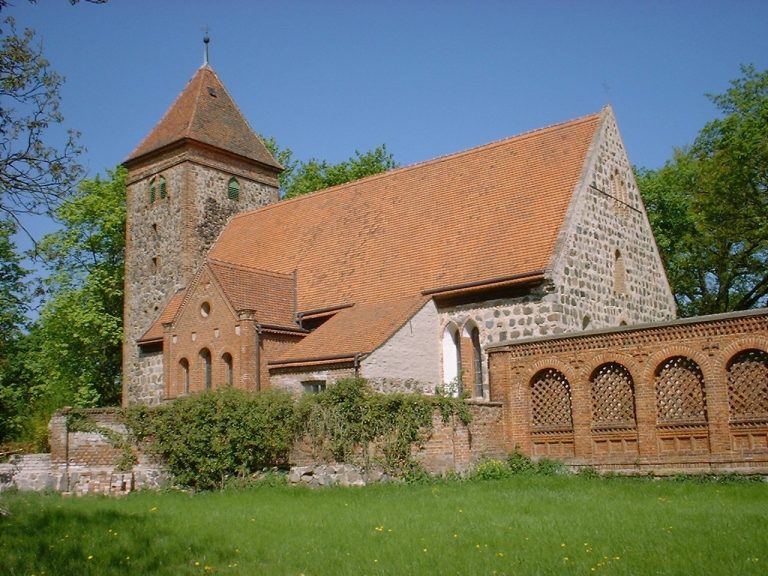
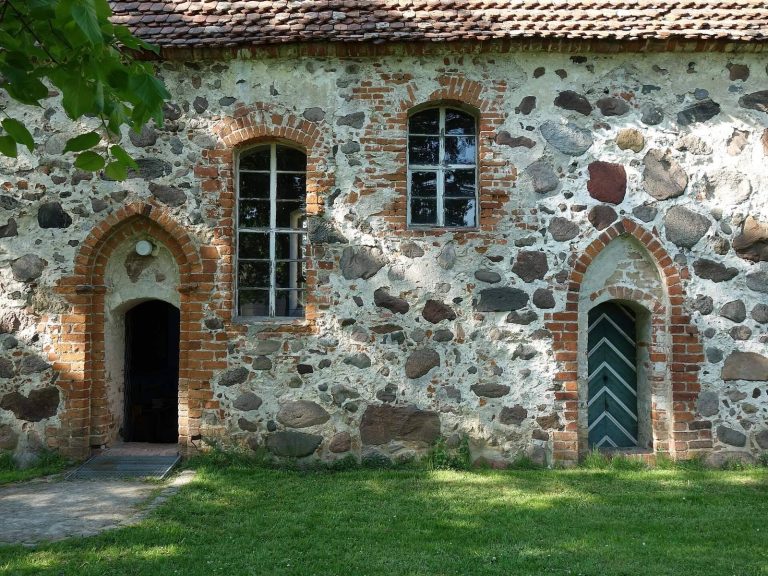
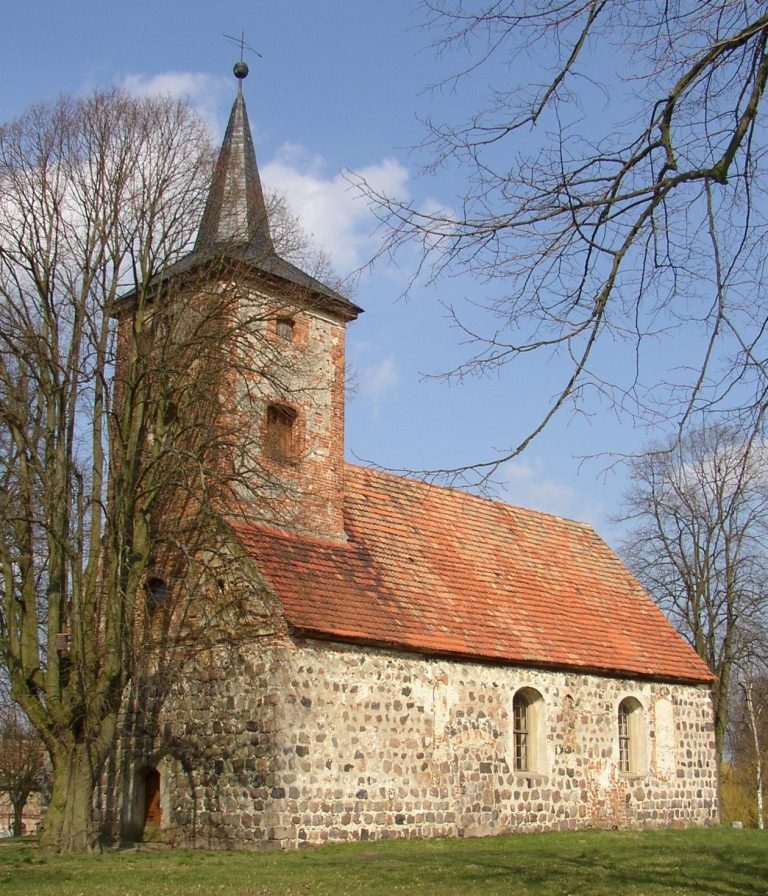
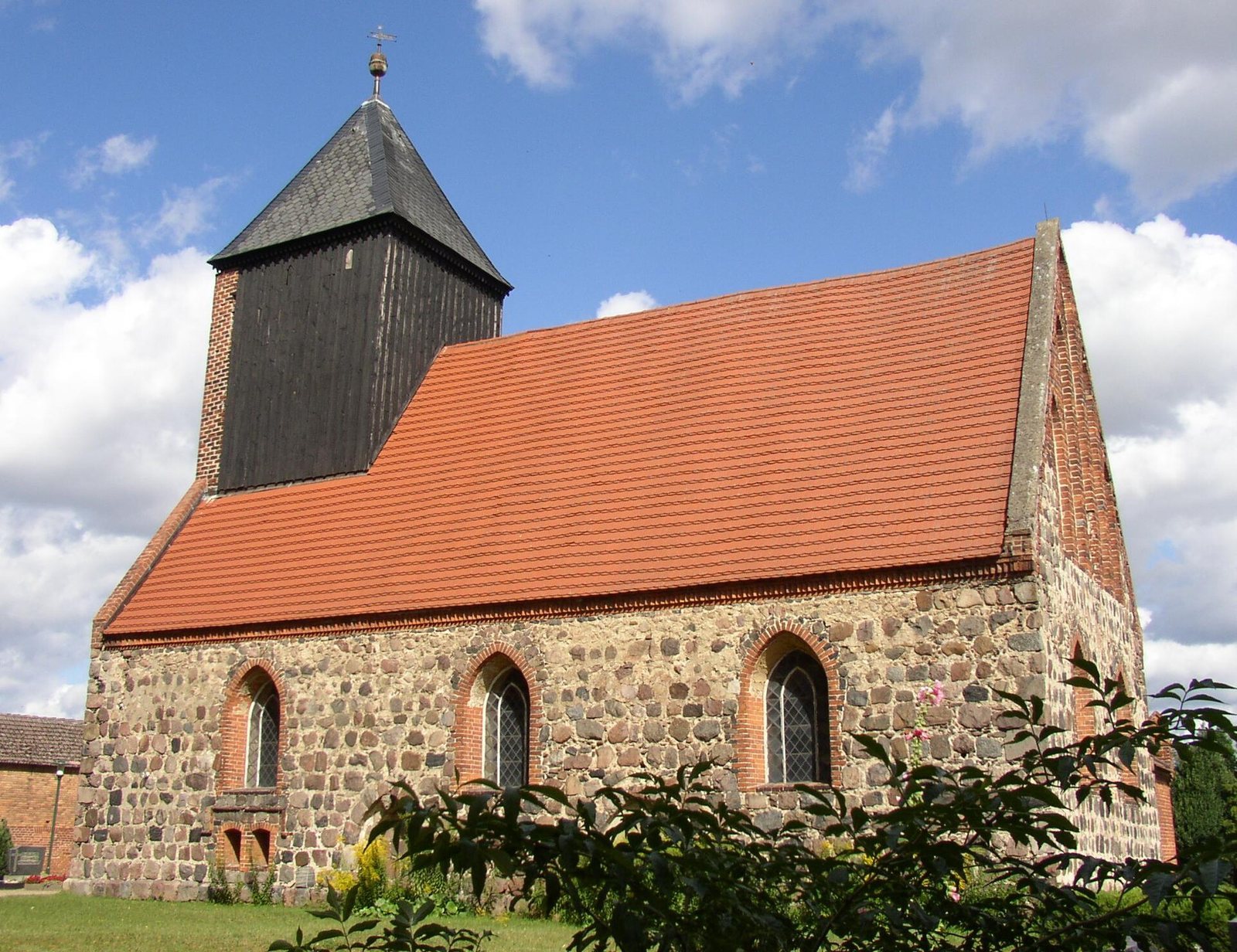
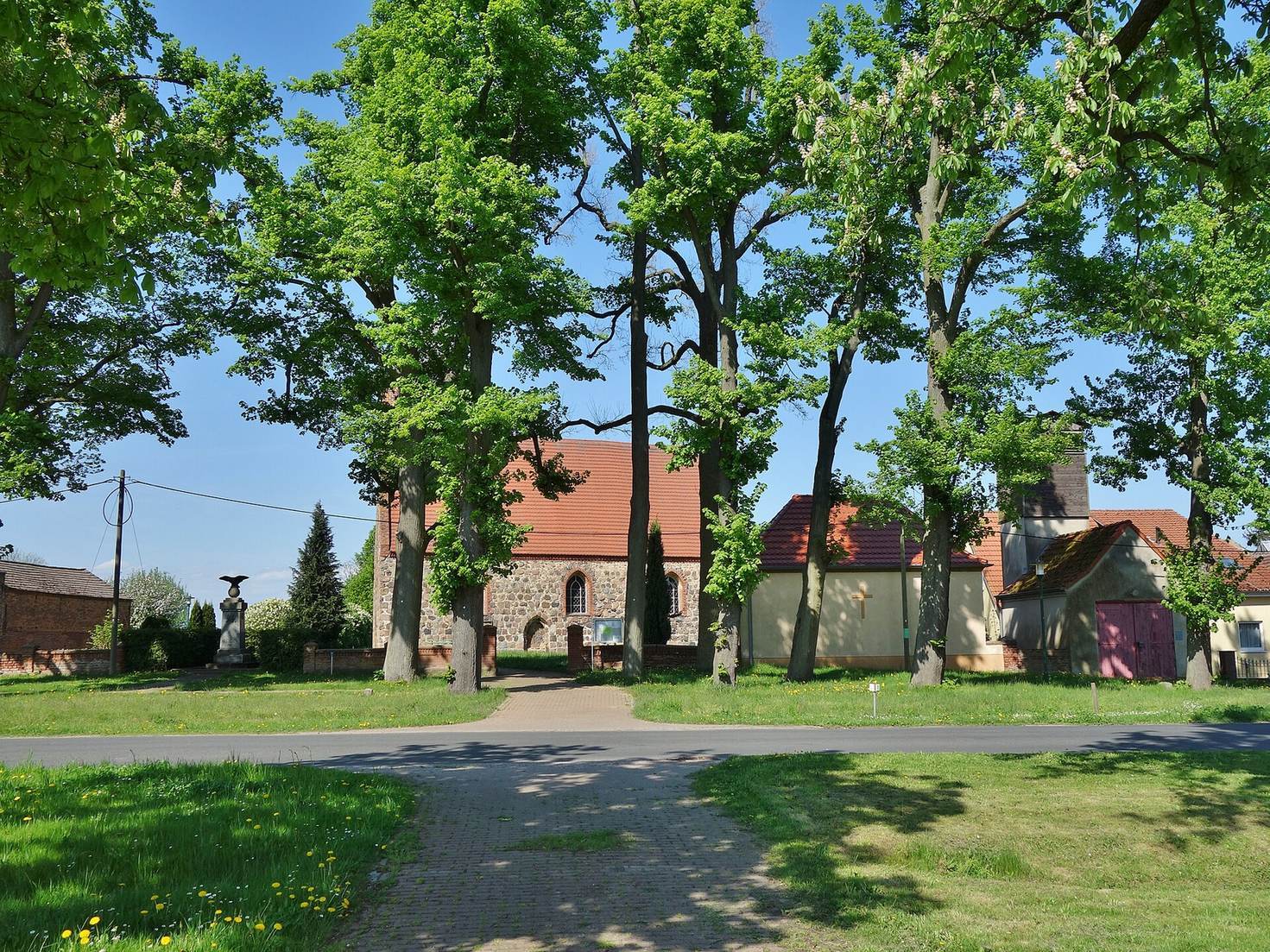
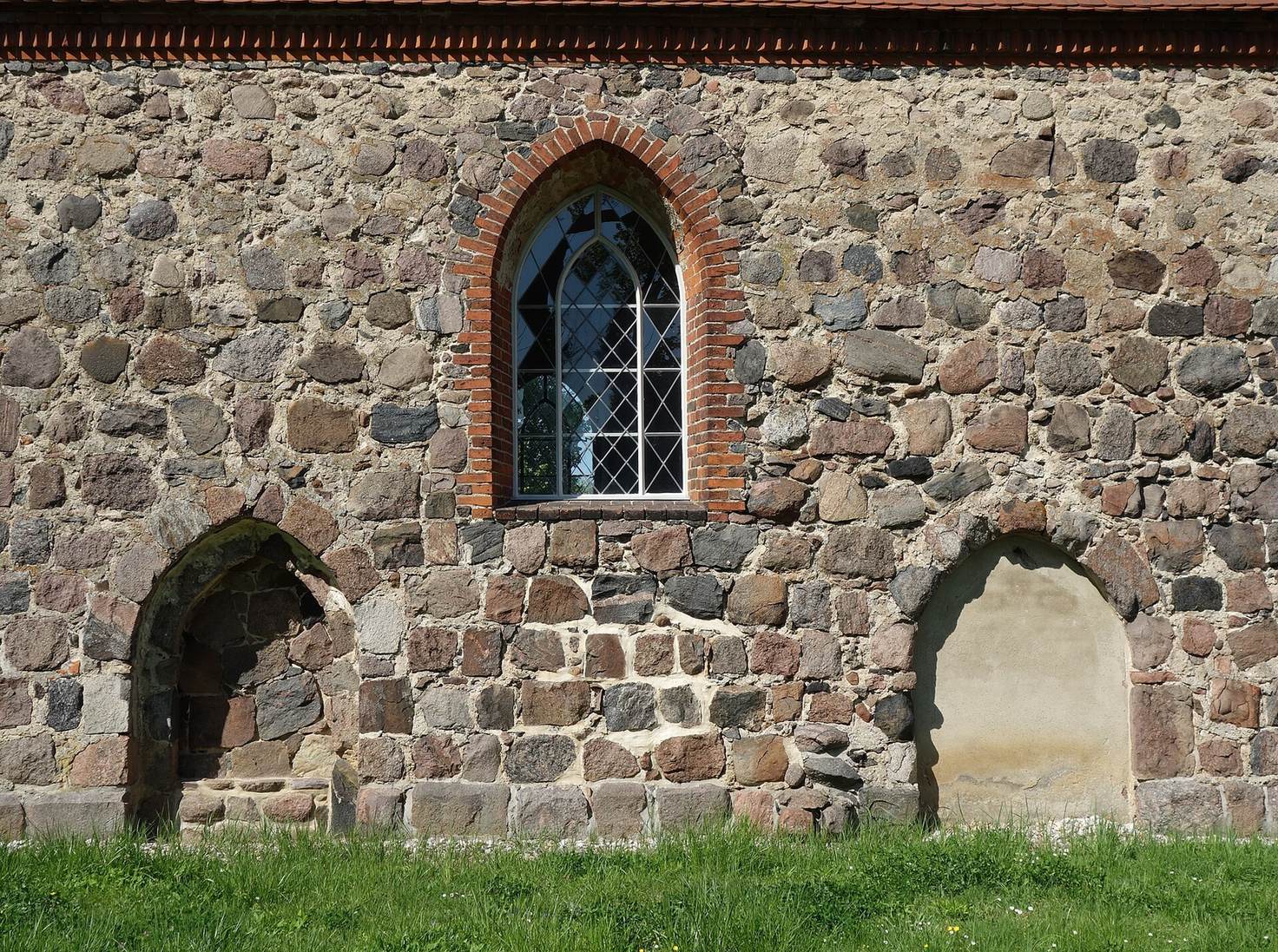
The church stands at the centre of the village within an enclosed churchyard. A brick wall surrounds the grounds, which contain nineteenth- and twentieth-century graves, a memorial to soldiers of the First World War, and a mortuary. The building is a hall church, with one unified main interior space rather than a central nave flanked by lower aisles. It was originally constructed of fieldstone and has an integrated tower covered in boards, with a pyramidal roof, while the church itself has a gabled roof.
Exterior and entrances
Brickwork marks several parts of the building. These include the late-Gothic west wall of the tower, the east gable with blind architectural ornament, and the nineteenth-century neo-Gothic sacristy. Blind ornament consists of recessed or applied decorative panels that do not form openings. The entrance beneath the tower is formed by a pointed-arch west portal with a stepped reveal. Two further portals on the south side have been bricked up.
Altar and furnishings
The two-storey altar retable, an ornamental structure behind the altar, dates from the second half of the seventeenth century. Its lower oil painting shows the Last Supper, while the upper painting depicts the Crucifixion of Jesus. Pairs of twisted columns and scrollwork panels frame the paintings. Other furnishings include a nineteenth-century crucifix, two pewter chandeliers dated 1641, and a sacrament niche, a recessed space for storing or displaying the consecrated Eucharistic elements.
The simple wooden baptismal font carries an inscription dated 1651. The base supporting its present basin was added in either 1961 or 1963. The font formerly stood in Dabergotz Church.
Organ and bells
The west gallery formerly held an organ case dated 1862, probably made by Friedrich Hermann Lütkemüller of Wittstock. Albert Hollenbach produced the surviving organ components, including a mechanical slider chest, a windchest in which movable sliders admit air to selected groups of pipes, together with seven stops, one manual, and a pedal. The pipes were handed over during the First World War in 1917 and later replaced with tin pipes. Since 2003, the organ has been stored in the attic.
Several bells are individually protected as monument components. The oldest was cast in 1779 by Johann Friedrich Thiele and remains in use. Two younger and larger bells, dating from 1927, are also preserved as part of the bell group.