Kuksaray Palace: Amir Timur’s Palace in Samarkand
Site at a Glance
- Rating
- 5
- Popularity
- Very Low
- Country
- Uzbekistan
- Primary era
- Unclassified
- Eras represented
- Unclassified
- Civilizations
- Unclassified
- Site type
- Domestic
- Remains
- Palace
On this page7 sections
History
Kuksaray Palace is a ruined palace in Samarkand, Uzbekistan, built by Amir Timur in 1370 shortly after he became ruler. Its name means “Blue Palace” in Turkic, and it may have served as Amir Timur’s principal residence in the city. Among the several dozen palaces around Samarkand, Kuksaray was one of his favored residences.
Timurid Residence
Amir Timur stayed at Kuksaray for the last time in autumn 1404, before setting out on his campaign against Ming China. After his death, his descendants continued to use the palace. Ulugh Beg, a Timurid ruler, scholar, and grandson of Amir Timur, is specifically associated with its later use. In November 1497, the Timurid prince Babur stayed at the neighboring Bustansaray Palace. Babur later founded the Mughal dynasty in South Asia.
The Kuktash Ceremonies
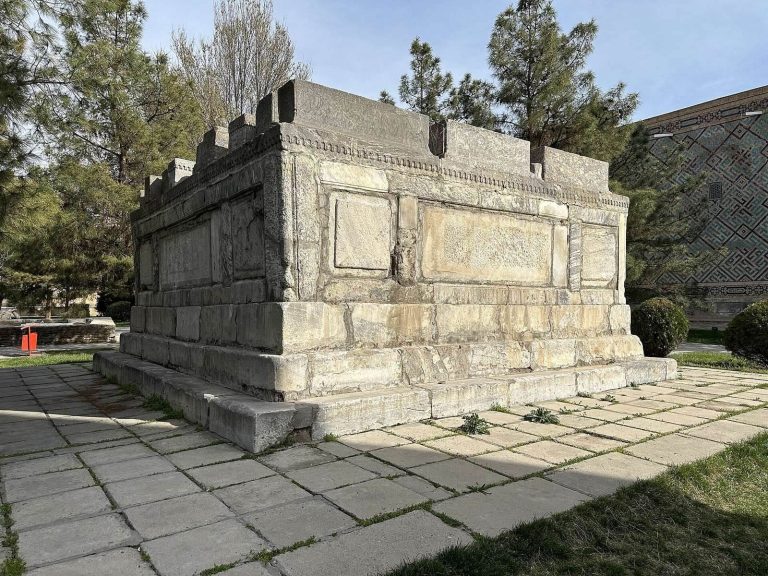
From the fifteenth through the nineteenth centuries, Kuksaray’s Kuktash, or “Blue Stone,” served as the ceremonial throne stone for the accession ceremonies of Central Asian rulers from several dynasties. These included the Timurids and the Manghits, the ruling dynasty of the later Bukhara Emirate. Although Bukhara was the emirate’s capital, the Bukharan emirs Haydar, Nasrullah, and Muzaffar held their accession ceremonies at Kuktash in Samarkand. Muzaffar’s ceremony in 1861 was the last.
Destruction and Later History
The palace’s principal buildings were destroyed during the political conflicts and crisis of the first half of the eighteenth century. Manghit rulers partially restored Kuksaray during the nineteenth century. The Russian painter Vasily Vereshchagin recorded views of the palace and its doors in his Turkestan series.
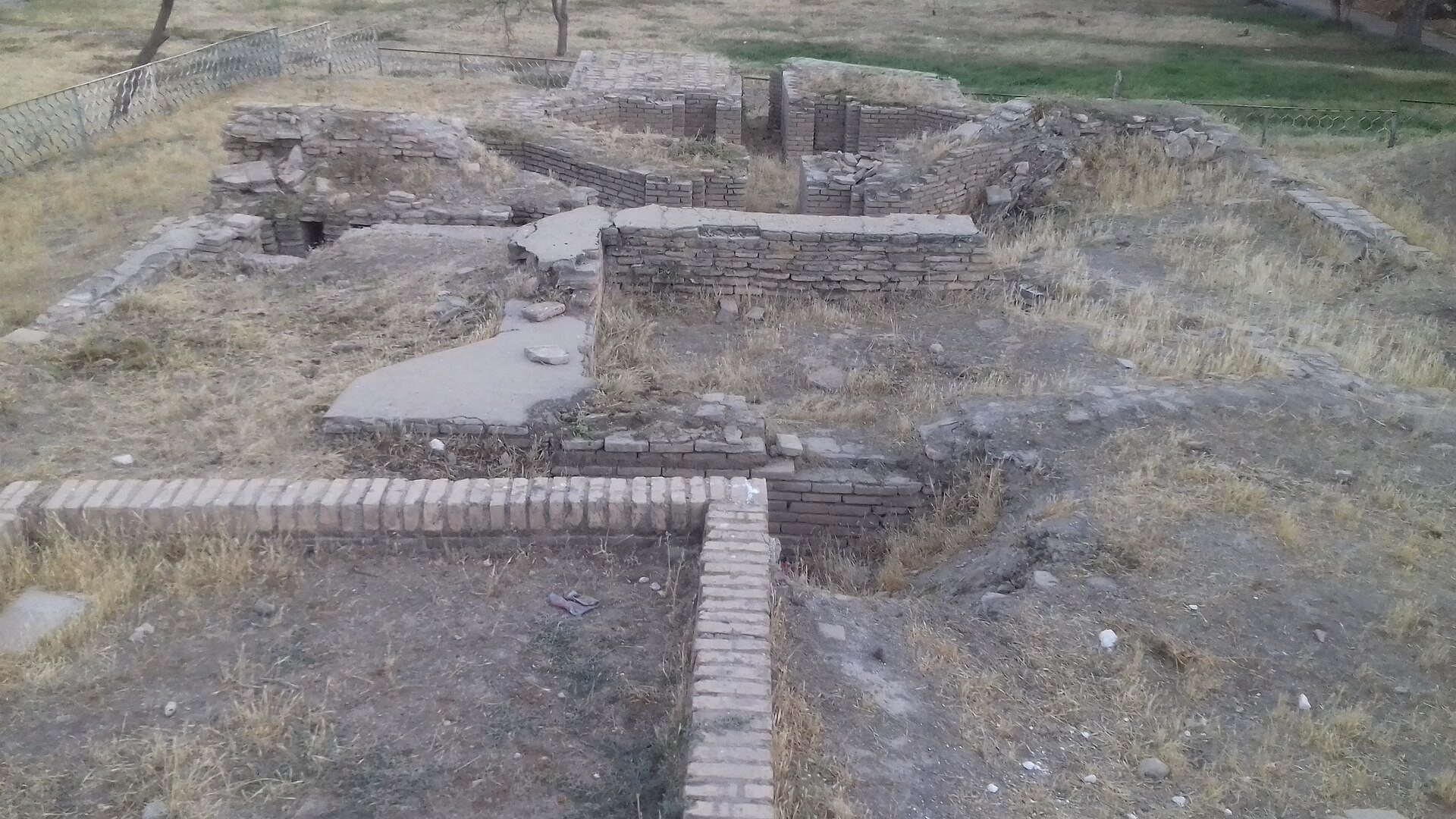
After Samarkand was conquered and incorporated into the Russian Empire in 1868, the authorities decided to destroy Kuksaray completely. The surviving remains of Kuksaray and the nearby Bustansaray were then covered with earth and have remained archaeologically unexplored. They form part of Samarkand’s historic center, whose historical, cultural, religious, architectural, and archaeological monuments are inscribed on the UNESCO World Heritage List as “Samarkand–Crossroads of Cultures.”
Remains
Palace Setting and Construction
Kuksaray was a substantial four-storey palace for its time. It stood on a raised elevation enclosed by walls faced with glazed ceramic tiles. The buried remains are believed to lie in the eastern part of Kuksaray Square, near the main building of the Samarkand regional administration and a bridge over Dagbitskaya Street. A second palace, Bustansaray, meaning “Palace Garden,” was built nearby at a later date.
Kuktash Throne Stone
The palace’s throne room contained Kuktash until 1868. This ceremonial stone is the only surviving element specifically identified from Kuksaray. It is now displayed in the courtyard of the Gur-e Amir Mausoleum, while the palace itself has been demolished, covered with soil, and left unexplored.