Shaybanid Mausoleum: A Sixteenth-Century Family Burial Monument in Samarkand
Site at a Glance
- Rating
- 4.5
- Popularity
- Very Low
- Country
- Uzbekistan
- Primary era
- Early Modern
- Eras represented
- Early Modern
- Civilizations
- Unclassified
- Site type
- Burial
- Remains
- Tomb
On this page5 sections
History
The Shaybanid Mausoleum is a medieval family burial monument in Samarkand, Uzbekistan, built by the Uzbek Shaybanid dynasty in the early sixteenth century. Its design was commissioned from Princess Mehr Sultan-khanum, who ordered graves in the courtyard of the Shaybani Khan madrasah, an Islamic educational institution, to be transformed into a separate burial monument for the dynasty.
Formation of the Shaybanid family monument
Mahmud Sultan, who died in 1504, was the first person buried at the monument. In 1509, Aq Kozi Begim brought the body of Muhammad Shaybani’s mother from Bukhara for burial there. Muhammad Shaybani, the Uzbek ruler who established Shaybanid power across much of Central Asia, was buried at the monument in 1510.
The family burial ground continued to receive members of the ruling house. Mahdi, Hamza, and Abulkhair Sultan were buried there in 1511, followed by Muhammad Temur Sultan in 1514 and Yadgor Sultan in 1526. Later burials included Shah Sultan-khanum in 1530, Shahribunu-khanum in 1535, Sultan Qutlugh Muhammad in 1545, and Sultan Suyunch Muhammad in 1586. Other Shaybanid sultans and female members of the dynasty were also interred at the site.
Relocation and present status
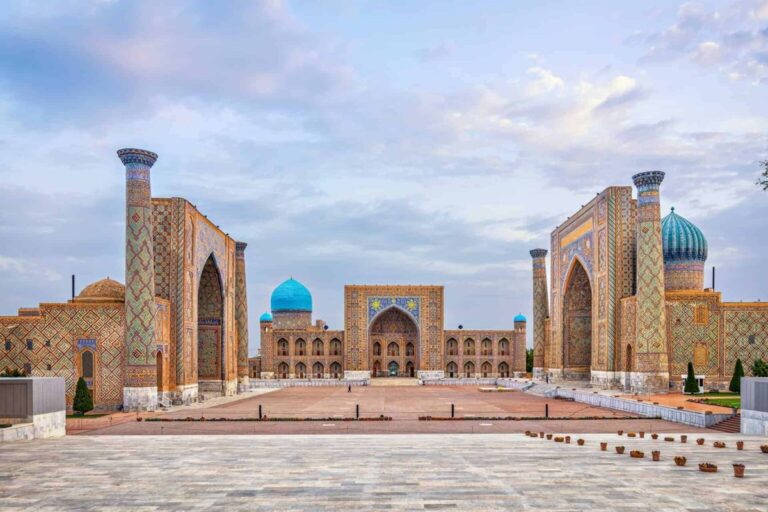
The monument was first moved when a road to the Bibikhanim Mosque was opened. It was transferred 70 to 80 metres southeast, and the area occupied by the burial monument was substantially reduced. During the reconstruction of Samarkand in 1960–1962, it was moved again, this time to Registan Square.
The burial structure is now empty. The remains of Shaybanid family members are held elsewhere and were apparently reburied when the mausoleum was relocated in the 1870s. The monument is included on Uzbekistan’s national list of immovable material and cultural heritage and remains under state protection.
Remains
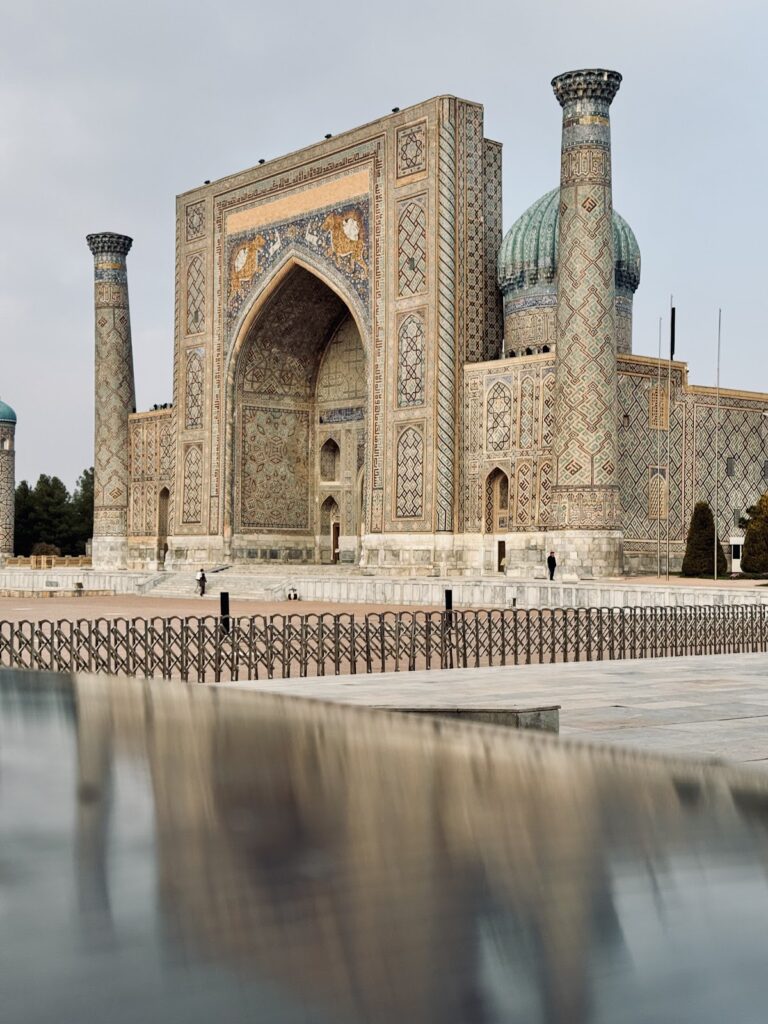
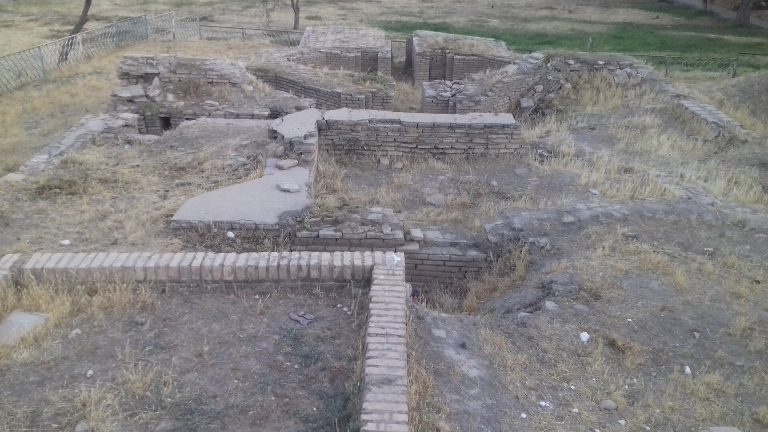
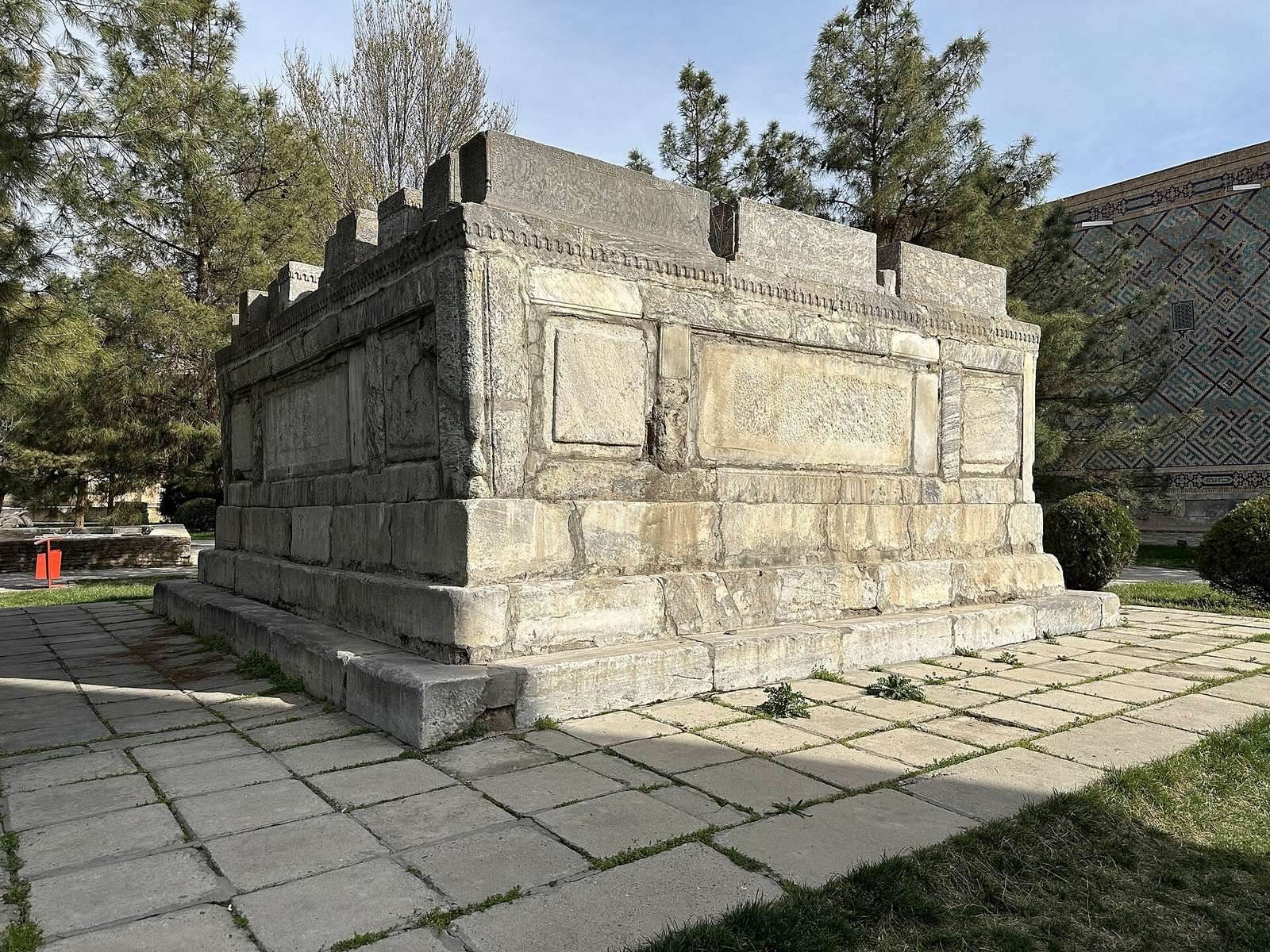
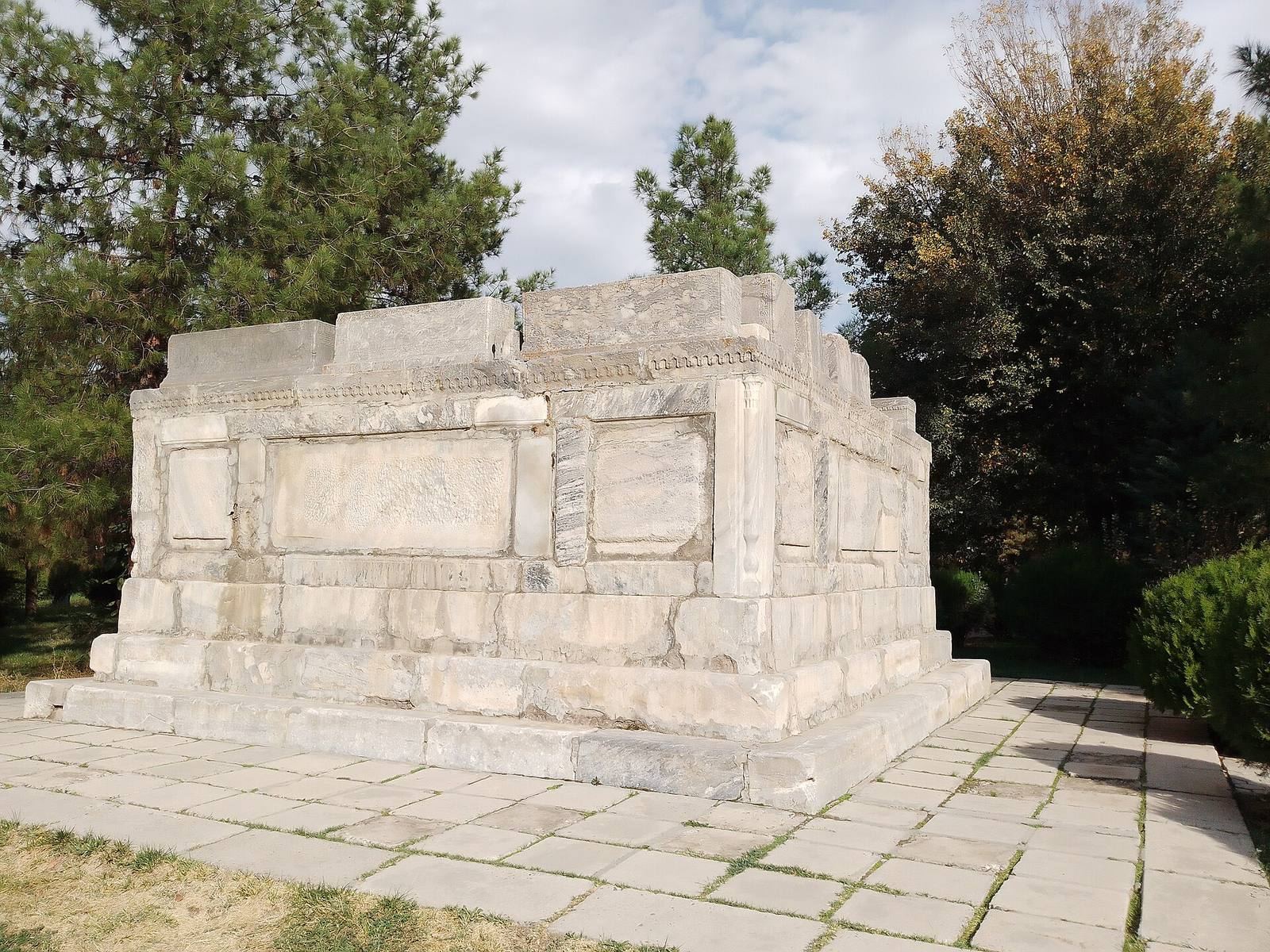
The Shaybanid Mausoleum stands in Registan Square as a raised family burial structure built from marble, including gray marble, and fired brick. Its principal element is a high marble sufa, a raised platform or bench-like structure that formed the physical basis of the monument. Each side measured approximately 10 to 11 metres, and the structure held 36 tombstones.
The burial platform
The monument survives as an empty burial structure following the removal of its tombstones and human remains. Its platform, masonry, and overall form remain as the physical remnants of the family monument created for members of the Shaybanid dynasty.