Kraví Hora Castle: A Medieval Rock Castle in Czechia


Site at a Glance
- Rating
- 4.5
- Popularity
- Very Low
- Country
- Czechia
- Primary era
- Medieval
- External website
- Open
- Eras represented
- Medieval
- Civilizations
- Holy Roman Empire, Margraviate of Moravia
- Site type
- Military
- Remains
- Castle
On this page6 sections
History
Kraví Hora Castle is a former medieval rock castle in Czechia, near Kuroslepy. It was first recorded in 1367 as the possession of Ješek of Náchod, who also used the byname “of Kraví Hora.” A tradition recorded by the chronicler Václav Hájek of Libočany connected the name with Moravians who supposedly took refuge there during the fall of the Great Moravian Empire, the ninth-century Slavic polity in Central Europe. This tradition is separate from the castle’s known history.
The Náchod and Schellenberg owners
Ješek’s son, who used the same name, later sold Kraví Hora and the village to the Lords of Schellenberg, owners of Šelmberk Castle. During the Moravian civil war between Jobst and Prokop of Moravia, rival Luxembourg rulers who held power in Moravia, the castle’s garrison raided the estates of Třebíč Benedictine Monastery. In 1409, the people of Znojmo besieged Kraví Hora.
The castle and the Březník estate subsequently passed from the Schellenbergs to their relative Jan Komorovský of Komorovice, who died after 1459. King George of Poděbrady then assigned his possessions to Matěj of Náchod and Březník, while the Kralice vladiks, members of the lower medieval nobility, received part of the estates. Feuds followed between Matěj and the Kralický family of Kralice.
Mercenaries and demolition
After the Hussite Wars, the fifteenth-century religious and political conflicts in Bohemia and Moravia associated with the followers of Jan Hus, marauding mercenaries of Albert V passed through the region. Following Albert’s death, Burghart Kienberger’s company occupied Levnov and other castles while demanding unpaid wages.
A Moravian Landtag, the representative assembly of the estates of the Margraviate of Moravia, met at Velké Meziříčí and ordered that Levnov, Kraví Hora, Lamberk, Sedlecký hrad, Holoubek, and Kufštejn, together with the town of Pohořelice, be redeemed by their rightful owners and then destroyed by the militia of the Moravian estates. The Kienberger company later withdrew toward Austria, probably after receiving an assurance of safe conduct.
Once the castles had been redeemed, the estates’ militia began demolishing them in 1442. Brno, Ivančice, Znojmo, Třebíč, and Jihlava were required to compensate the rightful owners for the destruction. After the deaths of Matěj of Náchod and Březník, the estates passed in 1492 to his former opponents, the Kralický family of Kralice.
Remains
Setting and defenses
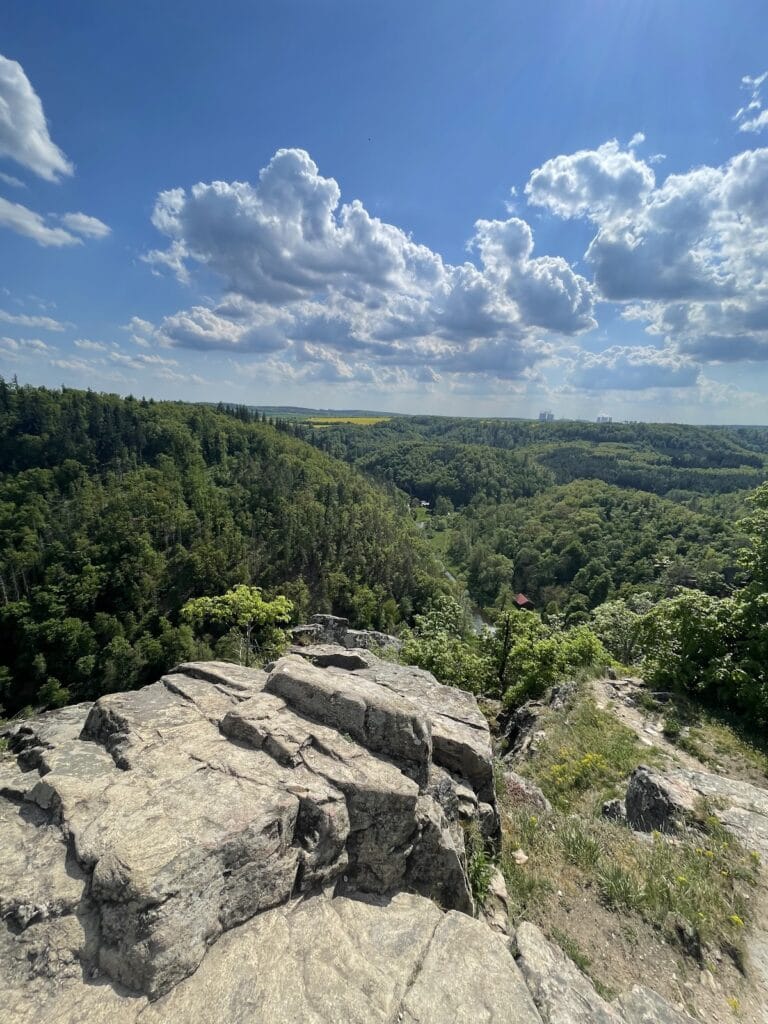
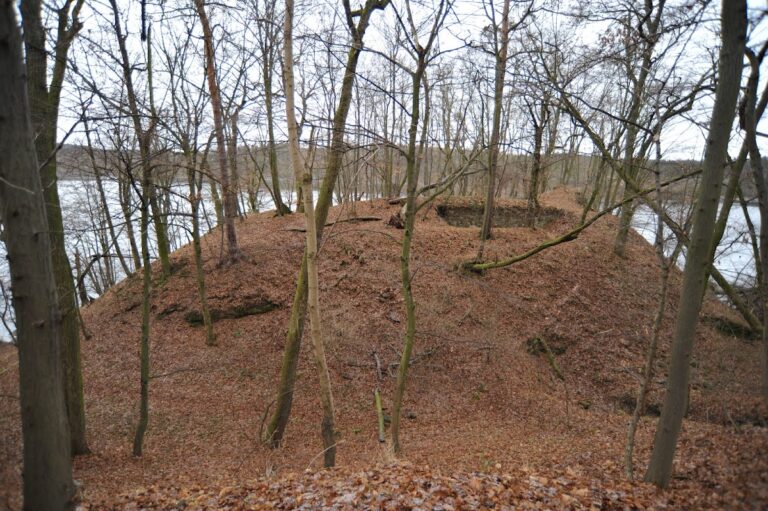
The ruins occupy a wooded rocky spur on the left bank above the Oslava River, near its confluence with the Chvojnice in the southeastern Jevišovice Uplands. The valleys of these rivers protected the hilltop castle to the south and east. Kraví Hora had a trapezoidal plan, while a rampart, an earthwork defensive embankment, and a ditch enclosed it on the other sides. The entrance was on the north. Levnov Castle lies opposite across the Oslava valley, with Senoradský Mlýn below and the Šance castle site to the west.
Keep and surviving fabric
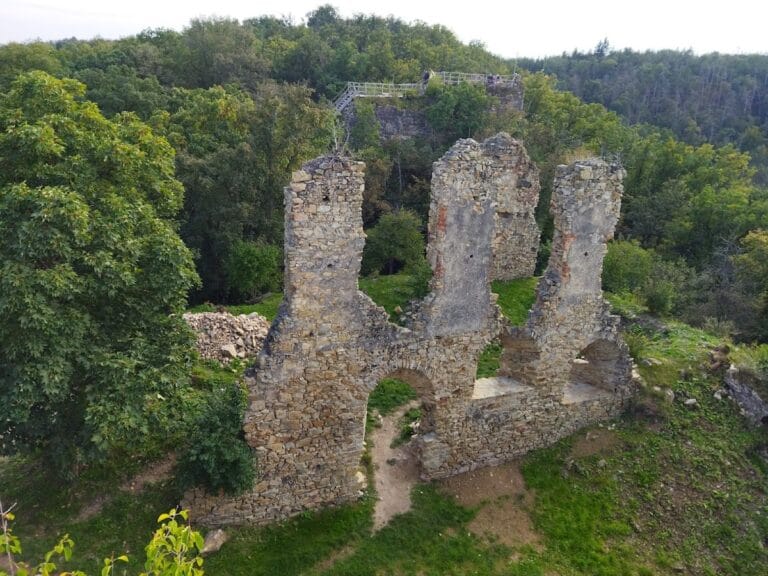
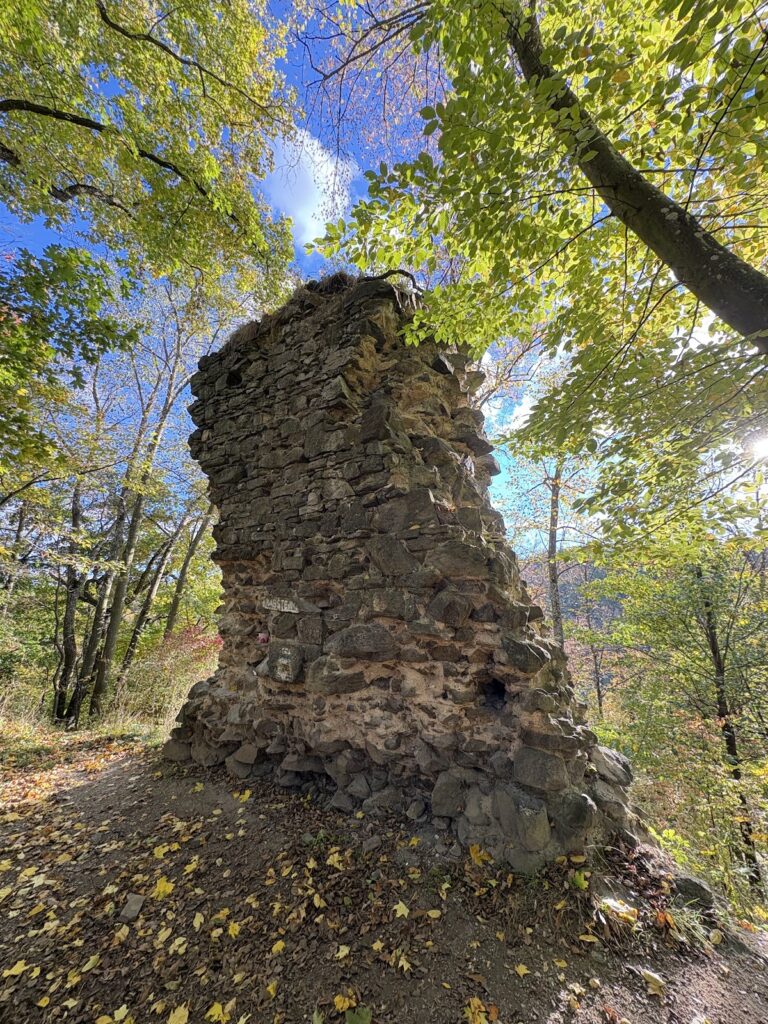
The surviving masonry includes a semicircular stump of the keep, the principal fortified tower of a medieval castle. It rises to about five metres and stands together with the castle ditch as part of the preserved ruin.
Nearby sites