Kongō-ji Temple: A Buddhist Temple and Peony Garden in Gojo, Nara


Site at a Glance
- Rating
- 4
- Popularity
- Low
- Country
- Japan
- Primary era
- Early Modern
- External website
- Open
- Eras represented
- Early Modern, Modern
- Civilizations
- Japanese, Tokugawa
- Site type
- Religious
- Remains
- Monastery
On this page13 sections
History
Kongō-ji Temple is a Buddhist temple in Gojo, Nara, Japan, founded in 1173 by Taira no Shigemori, a prominent warrior and court official of the late Heian period. Its formal name is Komatsuyama Fukuju-in Kongō-ji, and it belongs to the Kōyasan Shingon school of Buddhism. The temple’s principal image is Yakushi Nyorai, the Buddha associated with healing and medicine.
Early religious associations
Kongō-ji was also connected with the veneration of the vengeful spirits of Empress Inoue and her son, Prince Oto. Exiled and confined in the area at the end of the Nara period, Inoue died there on April 27, 775. The temple later flourished as a central institution directly affiliated with Ninnaji in Kyoto, a major Shingon temple historically associated with the imperial house.
Regional memorial temple
During the early Edo period, Kongō-ji was restored as the family memorial temple of Hatakeyama Yoshiharu, a regional military lord and the lord of Nohara Castle. This restoration strengthened the temple’s local role while preserving its place within wider Buddhist networks.
In 1822, the resident priest Honjō planted peonies to obtain medicinal ingredients. The practice gave Kongō-ji the name “Peony Temple.” A peony festival is held each year from late April to early May, while chrysanthemums and a small-chrysanthemum festival are associated with autumn. The temple is also the ninth temple of the Saigoku Forty-nine Yakushi Pilgrimage and the twenty-third temple of the Kansai Twenty-five Flower Temples pilgrimage.
Separation of Buddhism and Shinto
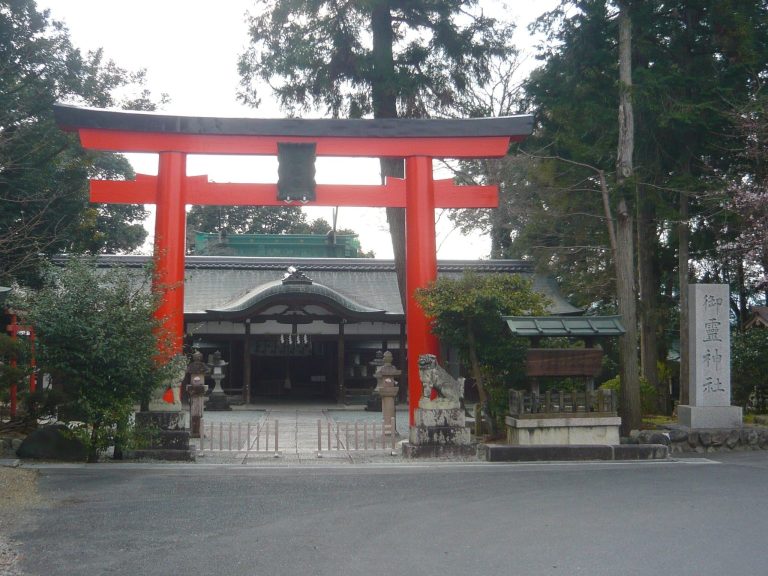
During the Meiji period, the policy of separating Buddhism and Shinto altered Kongō-ji’s religious landscape. Buddhist images were removed from Goryō Shrine and Tenmangu, where Inoue, Prince Oto, and others had been venerated. The statues of Juntei Kannon, also called Cundi, and Jūichimen Kannon, the Eleven-Headed Kannon, were transferred to Kongō-ji.
Remains
Temple buildings
The precinct contains the Main Hall, a Goma Hall, a memorial-tablet hall, a Kannon Hall, a priests’ residential and administrative building, a guest hall, and a main gate combined with a bell tower. Together, these buildings represent the temple’s ritual, memorial, residential, and administrative functions.
Main Hall
The Main Hall was rebuilt during the Genroku period, approximately 1688 to 1704. It underwent major repairs during the late Shōwa period, approximately 1926 to 1989, preserving the principal building associated with the temple’s worship.
Kannon Hall
The Kannon Hall was rebuilt in 1897 by Omori Kaku-myo, a senior high-ranking priest of Tōshōdaiji. Its ridge-end ornaments carry an inscription meaning “imitation of the Golden Hall of Tōshōdaiji.” The hall houses the Juntei Kannon and Jūichimen Kannon statues transferred from Goryō Shrine and Tenmangu during the Meiji separation of Buddhism and Shinto.
Residential and administrative building
The priests’ residential and administrative building was rebuilt in 1691. Its thatched roof forms part of its surviving character. Until the Taishō period, approximately 1912 to 1926, the building served as a retirement apartment for the senior priest of Tōshōdaiji and as a place where disciples received training.
Bell-tower gate
The main gate is combined with a bell tower, with a Buddhist bell suspended in its upper section. The bell was cast in 1762 using contributions from 100,000 donors across the Kinki region.
Garden and cultivated grounds
Genroku 4 Garden
The “Genroku 4 Garden” is a dry-landscape garden created during the early part of the Genroku period, approximately 1688 to 1704. Its design forms one of the temple’s principal historic landscape features.
Peony garden
The peony garden covers approximately 2,000 square metres and uses the Yoshino River as borrowed scenery. It contains about 100 varieties and 1,500 peony plants, continuing the horticultural tradition begun by the priest Honjō in 1822.