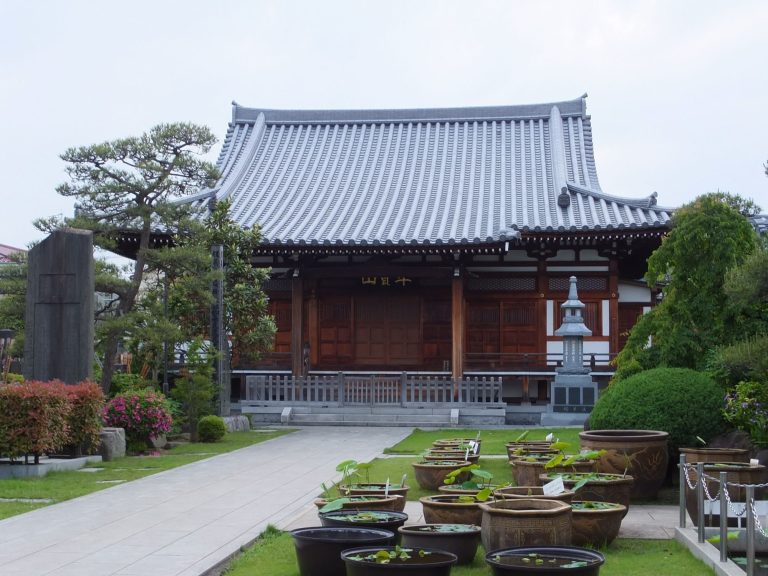
Shinozaki Sengen Shrine: A Historic Sengen Shrine in Tokyo


Site at a Glance
- Rating
- 4.2
- Popularity
- Low
- Country
- Japan
- Primary era
- Unclassified
- External website
- Open
- Eras represented
- Unclassified
- Civilizations
- Unclassified
- Site type
- Religious
- Remains
- Sanctuary
On this page11 sections
History
Shinozaki Sengen Shrine is a historic Sengen shrine in Japan, located in Edogawa City, Tokyo. Sengen shrines are Shinto sites traditionally associated with Mount Fuji and the deity Konohanasakuya-hime. Regarded as the oldest shrine in Edogawa Ward, Shinozaki Sengen Shrine has a foundation date given as either 938 or 940.
Origins and the Taira conflict
In 932, Yayama Sanahi, a shrine religious functionary from Yayama in Shimosa Province, moved to the area. Shimosa was a historical province in eastern Japan. He later became the shrine’s first chief priest, linking the foundation tradition to the arrival of an established religious figure.
In 940, as Taira no Masakado’s rebellion rose in the Kanto region, Taira no Sadamori was sent to suppress it. Sadamori prayed at the shrine for Masakado’s submission, established a Kirishima shrine there, and dedicated a golden offering wand, bow, and arrows while seeking military success. This episode forms an important part of the shrine’s early historical tradition.
Medieval and early modern veneration
The shrine’s treasures include a sword said to have served as the protective sword of Emperor Murakami, who reigned from 946 to 967. They also include linked-verse poetry associated with Emperor Go-Hanazono, whose reign lasted from 1428 to 1464. These imperial associations are connected with the strong veneration accorded to the shrine during the Heian and Kamakura periods.
During the Edo period, worshippers increasingly came from Edo and the surrounding areas. Confraternities were reportedly organized as devotion to the shrine developed beyond its immediate locality.
Modern status and continuing worship
During the Meiji period, Shinozaki Sengen Shrine became the only shrine in Edogawa Ward to receive the former village-shrine rank of gosha, a village-level status in the modern shrine-ranking system established during that period. From the Meiji through the Showa period, the shrine continued to receive revered offerings, including shrine plaques associated with an imperial prince, Sanjo Naidaijin Fujiwara no Ason, and former Prime Minister Tsuyoshi Inukai.
The principal deity is Konohanasakuya-hime, a Shinto kami associated with Mount Fuji, volcanic power, flowers, and the fragile nature of life. The annual festival takes place on July 1. In 1981, Edogawa Ward designated the banner festival an intangible folk cultural property as a custom or folk practice. The same year, the Fuji confraternity stele was registered as a tangible cultural property. The shrine grove received designation as a natural monument of Edogawa Ward in 1982.
Remains
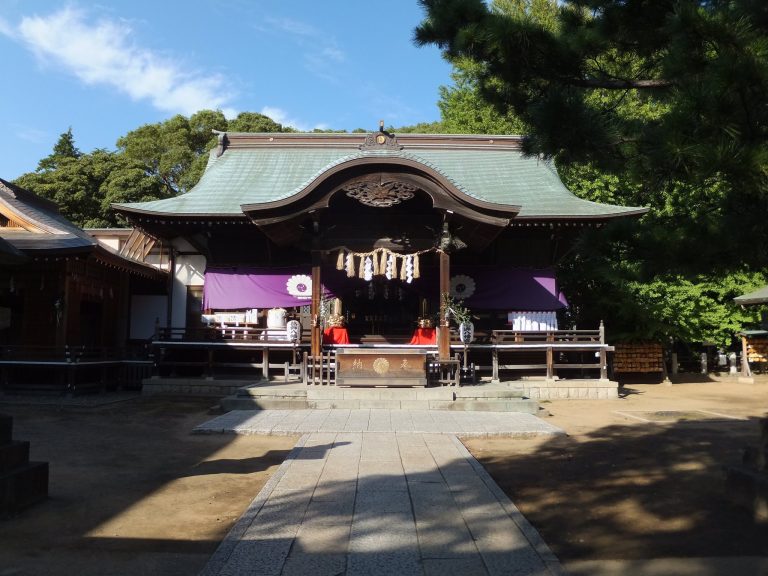
The shrine precinct is organized around a torii, the gateway that traditionally marks the entrance to a Shinto shrine ground, and an approach leading through the grounds. The documented physical setting also includes a shrine grove, a stele associated with Fuji confraternities, and the festival equipment used for the annual observance.
Precinct and festival features
Torii and approach
A torii marks the entrance to the precinct, where an approach continues through the shrine grounds. This arrangement provides the principal documented spatial sequence within the site.
Festival banners
Ten festival banners are erected at the shrine. Each weighs more than one tonne, and their size, together with the scale of the festival, is described as among the largest in Japan. Their use is central to the banner festival, which has been recognized by Edogawa Ward as an intangible folk cultural property.
Grove and Fuji confraternity stele
Shrine grove
The shrine grove forms a documented natural feature of the precinct. Its designation as a natural monument by Edogawa Ward in 1982 recognizes the grove as part of the shrine’s physical heritage.
Fuji confraternity stele
A stele connected with Fuji confraternities stands within the shrine grounds. Fuji confraternities were lay religious associations devoted to pilgrimage and worship connected with Mount Fuji. The stele was registered as a tangible cultural property in 1981.
Sengen Kindergarten is located adjacent to the shrine, forming part of the present surroundings of the precinct.