Kong Asgers Høj: A Neolithic Passage Grave on Møn
Site at a Glance
- Popularity
- Low
- Country
- Denmark
- Primary era
- Stone Age
- Eras represented
- Stone Age
- Civilizations
- Unclassified
- Site type
- Burial
- Remains
- Tomb
On this page7 sections
History
Neolithic construction and reuse
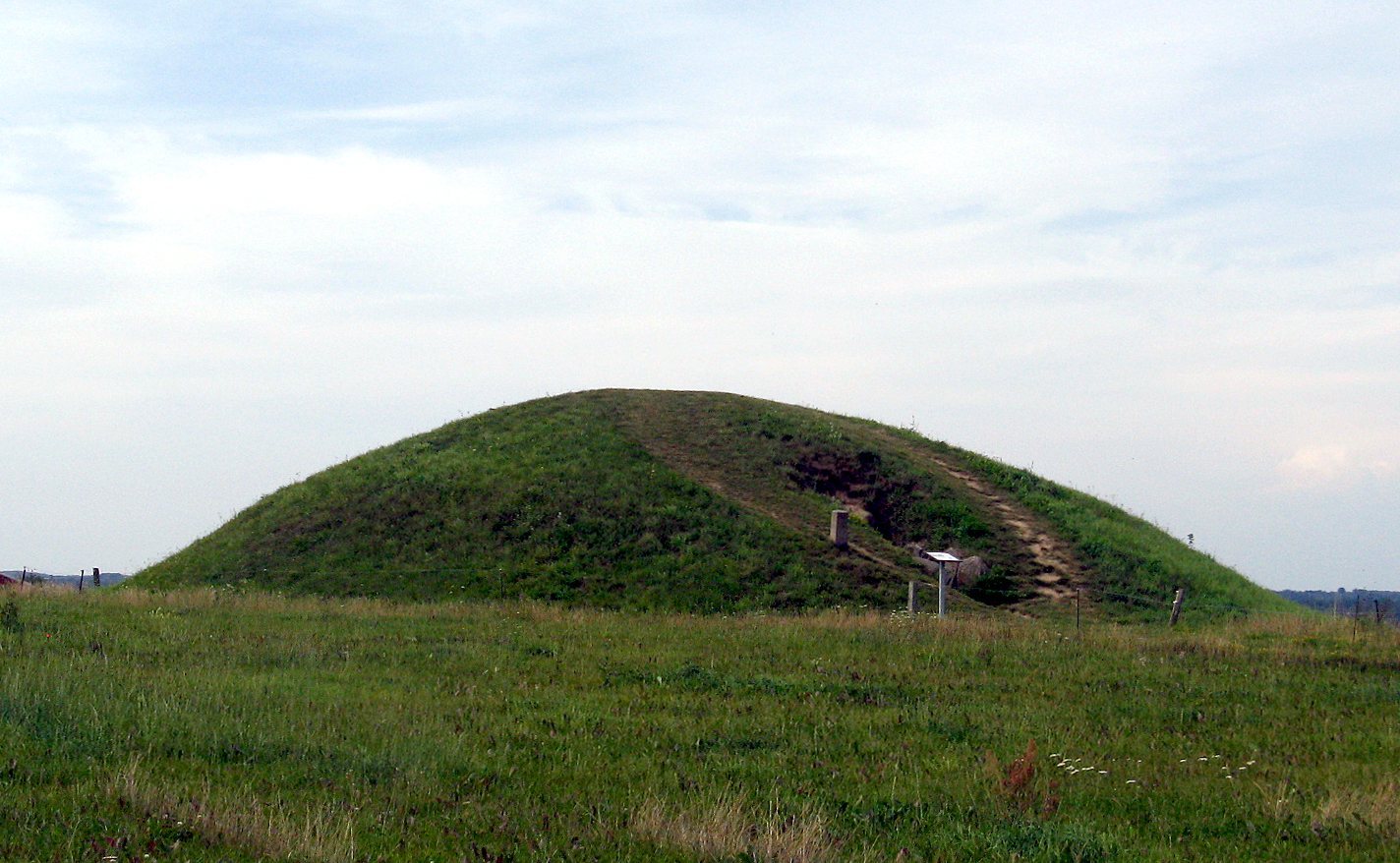
Kong Asgers Høj is a Neolithic passage grave on Møn, Denmark, about one kilometre northwest of Sprove. Built around 3200 BCE, it belongs to the Funnel Beaker culture, a farming society named for its characteristic pottery. A stone battle axe about 600 years younger than the tomb points to a later secondary burial associated with the Corded Ware culture, whose pottery was decorated with cord impressions. The grave may have been cleared or robbed in antiquity in connection with this reuse.
The tomb forms part of a wider group of Neolithic monuments on Møn and Bogø, islands linked by causeways and covering 231 square kilometres together. There are 119 known megalithic tombs on the islands, of which 38 are preserved and protected, including 21 passage graves associated with the Funnel Beaker culture. Estimates suggest that surviving tombs represent about one fifth of those originally built, implying that more than 190 were constructed over roughly 700 years.
Excavation and protection
In 1839, Gustav C. Hage, a merchant and amateur archaeologist from Stege, excavated the mound while searching for treasure. The tomb was placed under protection by voluntary agreement in 1861. Its first description reached Denmark’s National Museum in 1880 through a nationwide parish survey that systematically recorded ancient monuments and remains.
Remains
Chamber and passage
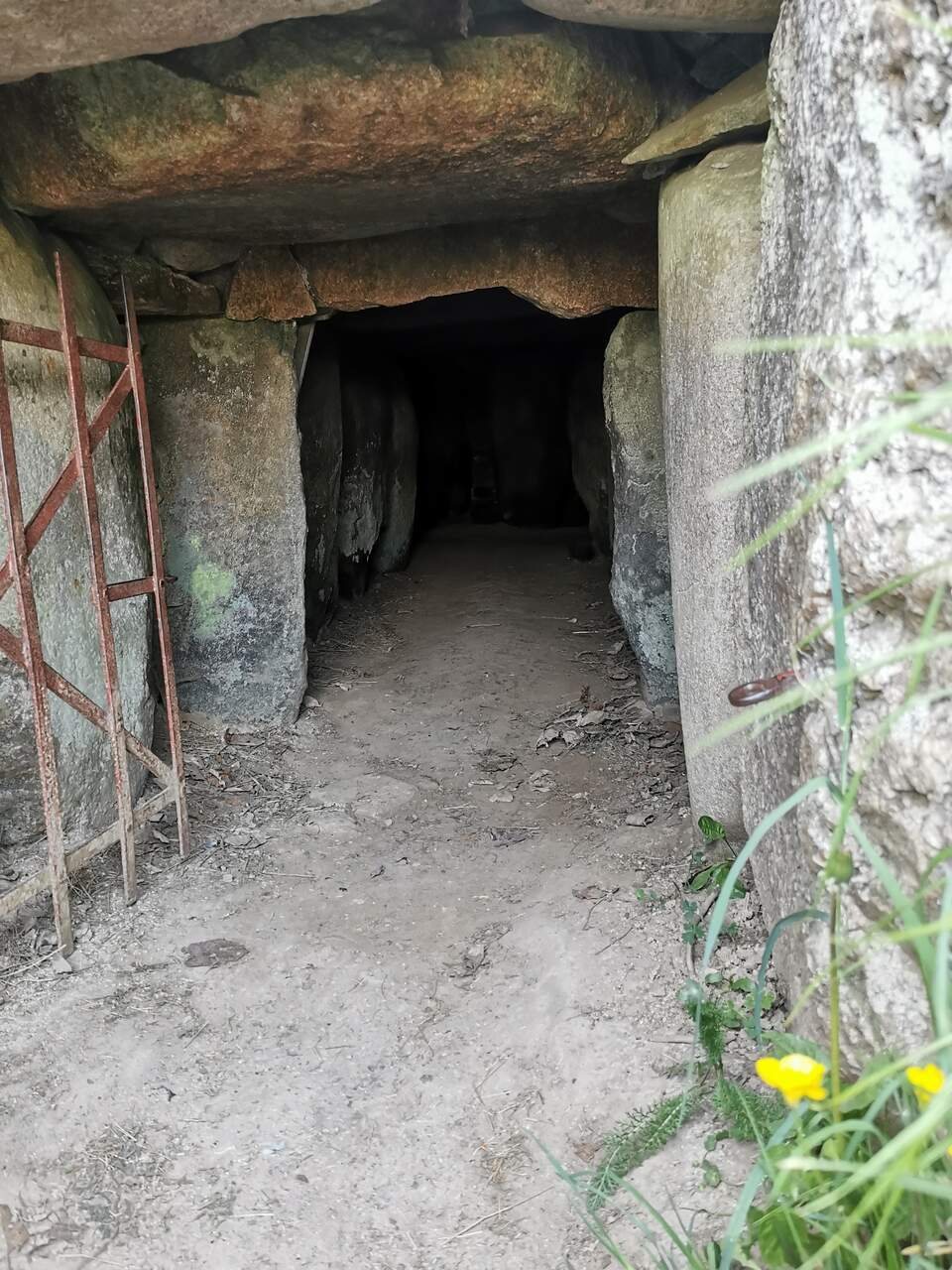
The nearly complete tomb is laid out around a long burial chamber, with its entrance centered on the southeastern long side and a passage approaching from the east. The chamber measures about 10 metres long and 2 metres wide, and rises to nearly 2 metres. It is regularly and almost symmetrically built, and is among the largest passage-grave chambers in Denmark. The passage extends about 7.5 metres, formed by seven pairs of supporting stones that carry six capstones. Within the chamber, 19 supporting stones hold seven large roof slabs. Two capstones stand at each end, while both gables narrow toward the mound.
Flat capstones form the chamber’s level ceiling. Their undersides may also have been split flat, and packing stones above the supports may have helped create even surfaces for the slabs. Flat stone slabs cover the chamber floor.
Mound and surrounding features
Large kerbstones ring the mound’s base, with dry-stone masonry filling the spaces between them. The structure survives almost complete, although a few stones are missing from the masonry in its outer section. A large dolmen at Sprove lies about 150 metres south of the tomb.
Excavated finds
Hage’s 1839 excavation recovered flint flakes and skeletal remains, which were sent to Denmark’s National Museum. The skeletal material was too damaged for further identification.