Santa Cruz Library: Historic Library of the University of Valladolid
Site at a Glance
- Popularity
- Low
- Country
- Spain
- Primary era
- Medieval
- Eras represented
- Medieval, Early Modern
- Civilizations
- Crown of Castile, Spanish
- Site type
- Civic
- Remains
- Library
On this page16 sections
History
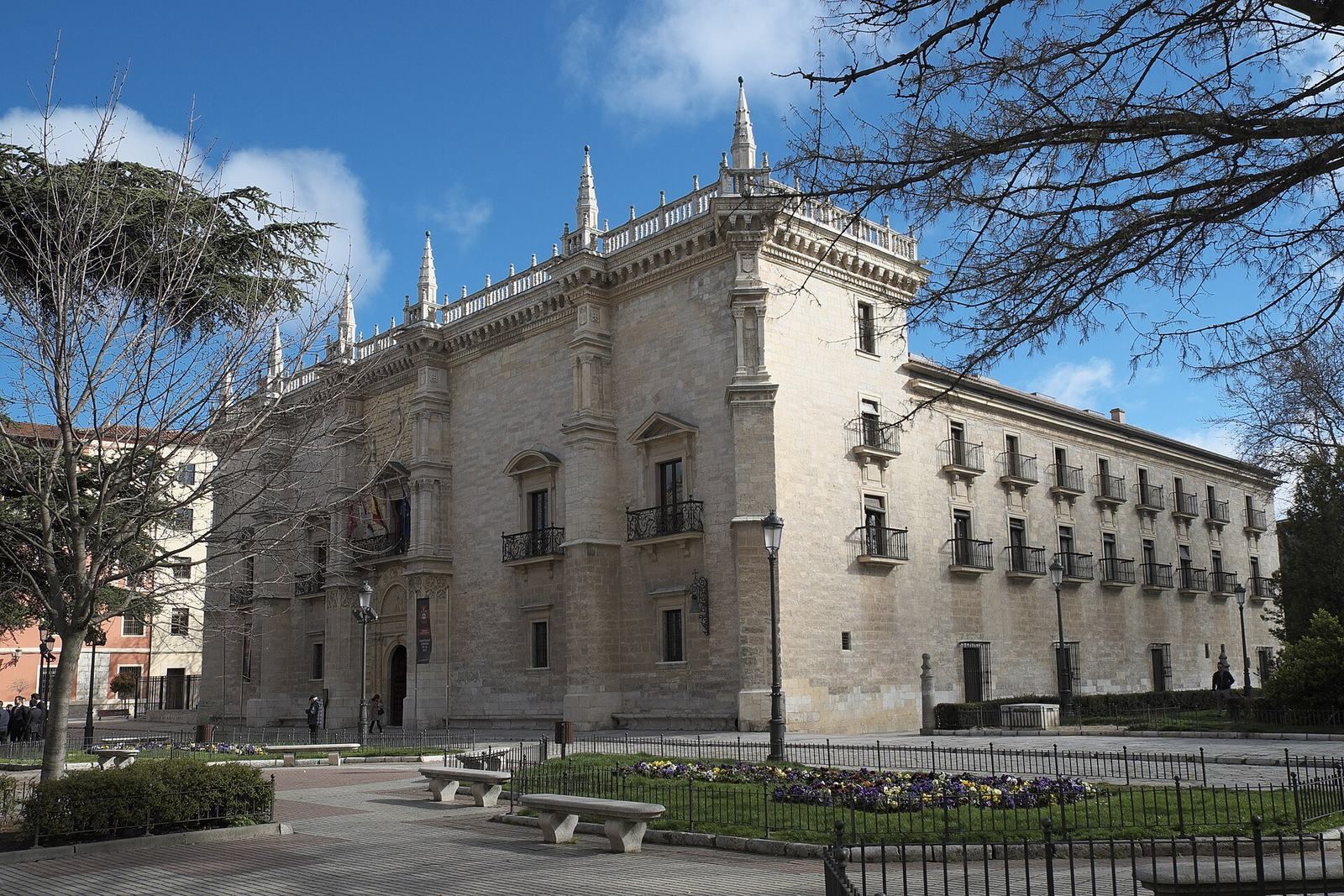
The Santa Cruz Library, housed in the Palace of Santa Cruz in Valladolid, Spain, began with the College of Santa Cruz, founded in 1483 by Cardinal Pedro González de Mendoza. Mendoza, a leading Spanish cardinal and statesman, established the college for students at the University of Valladolid, and its library formed part of the institution from its beginnings.
The college library and early university collections
Mendoza supplied books for the library, and the college set aside a large room for its members. Rules adopted in 1494 aimed to protect the books. Later regulations set out when the library could open and appointed someone to supervise its collection. An inventory made in 1589–1590 lists 970 volumes grouped by subject, including canon law, law, the arts, medicine, and theology.
The university’s own collection developed separately. Its early-sixteenth-century statutes, reaffirmed in 1545, mention a stationer, a bookseller or supplier serving the academic community. In 1604, the university’s governing body ordered that a room be provided for books donated by Doctor Vega, its first recorded initiative to establish a university library.
In 1767, after the Jesuits, members of a Catholic religious order, were expelled from Spain, books from the Valladolid colleges of San Ambrosio and San Ignacio entered the university collections and greatly enlarged them.
Institutional transfers and growing collections
The colleges were suppressed in 1798 after reforms in 1771 and 1777. The Santa Cruz Library’s administration then passed successively to the Royal Chancery, the University, the college, and the Provincial Council. The suppression was interrupted from 1830 to 1836, and the library became part of the University permanently in 1850.
Church-property confiscations in 1836 transferred ecclesiastical property into state control and enabled its sale. During the second half of the nineteenth century, books from these confiscations joined Valladolid’s university libraries, including holdings from the monastery of San Benito el Real and the convent of San Francisco. Later in the century, university libraries in Spain also received books from the library of the Dukes of Osuna.
A separate University Library opened on Librería Street in 1844. It and the Santa Cruz Library initially operated independently, with separate collections. Their partial merger followed the demolition of the old University building in 1909.
Twentieth-century moves and the library today
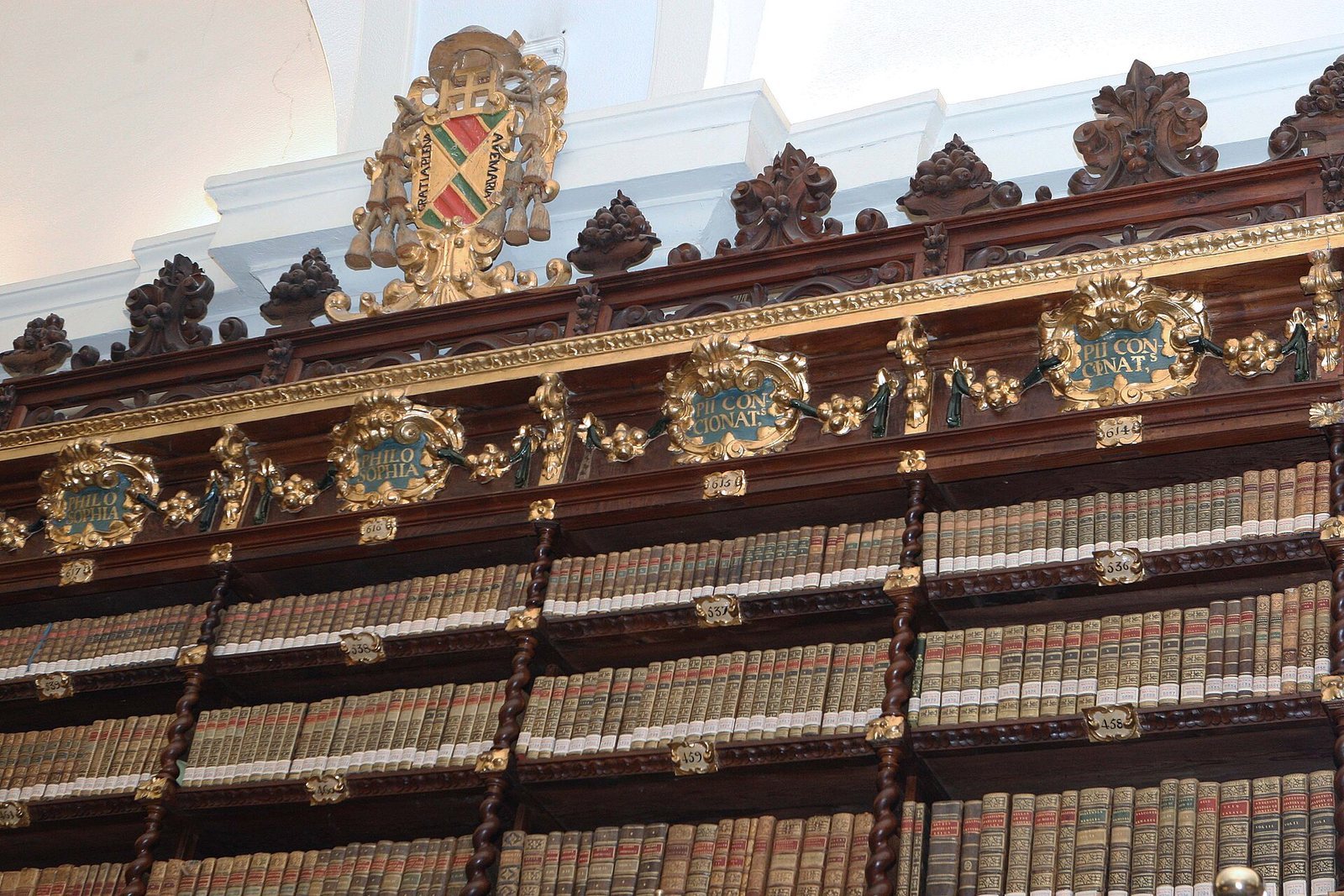
In the early twentieth century, printed books in the Santa Cruz library room were rearranged by size and binding and given sequential numbers to save space. Labels above the shelves still show the earlier subject-based arrangement. When the new University building opened in 1920, university-library books that had been stored in drawers around the Santa Cruz Palace were moved there. A fire in 1939 led to their return to Santa Cruz.
In February 1940, the oldest university-library holdings were transferred to the Santa Cruz Library, while the remaining books were temporarily placed in the University’s ceremonial hall. They moved in August to the main floor of a building beside the college. The library at this location opened on 4 November 1940, with 100 reading places and separate areas for book storage, librarians, indexes, magazines, and pamphlets.
The books remained there until their move to the Reina Sofía Library in 1988. In 1993 they returned to the second floor of the Palace of Santa Cruz. Today the library preserves, processes, and makes available the University of Valladolid’s historical bibliographic heritage. Its historic holdings comprise works published before 1835, drawn from both the University Library and the College of Santa Cruz.
Remains
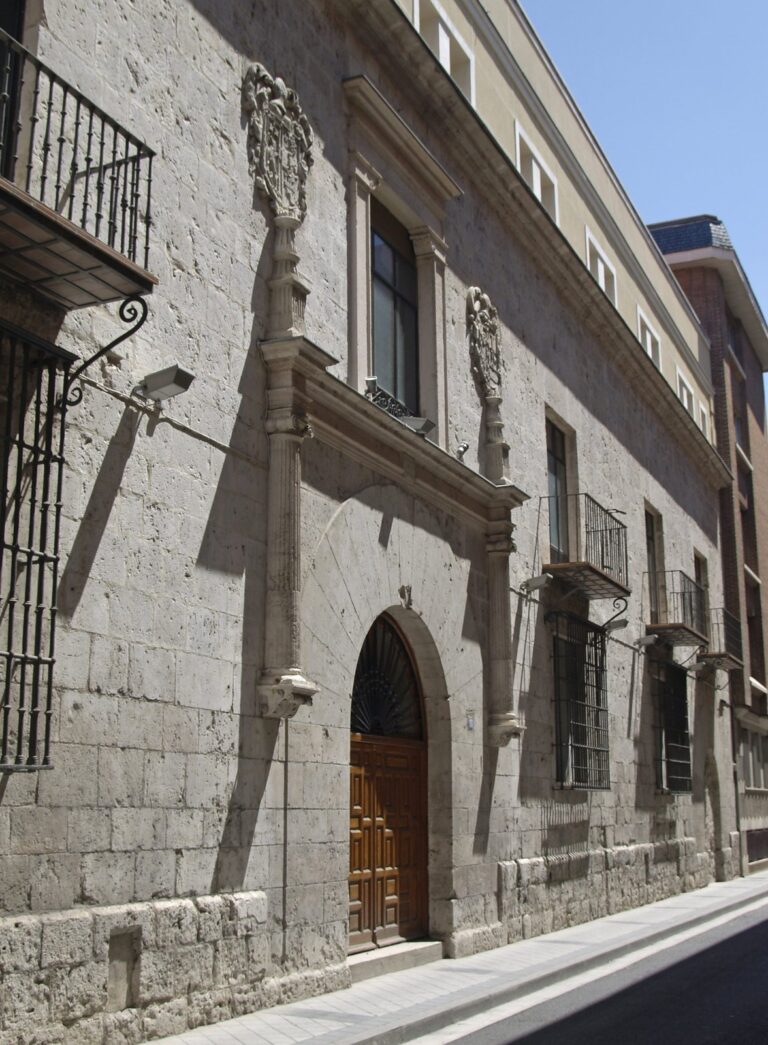
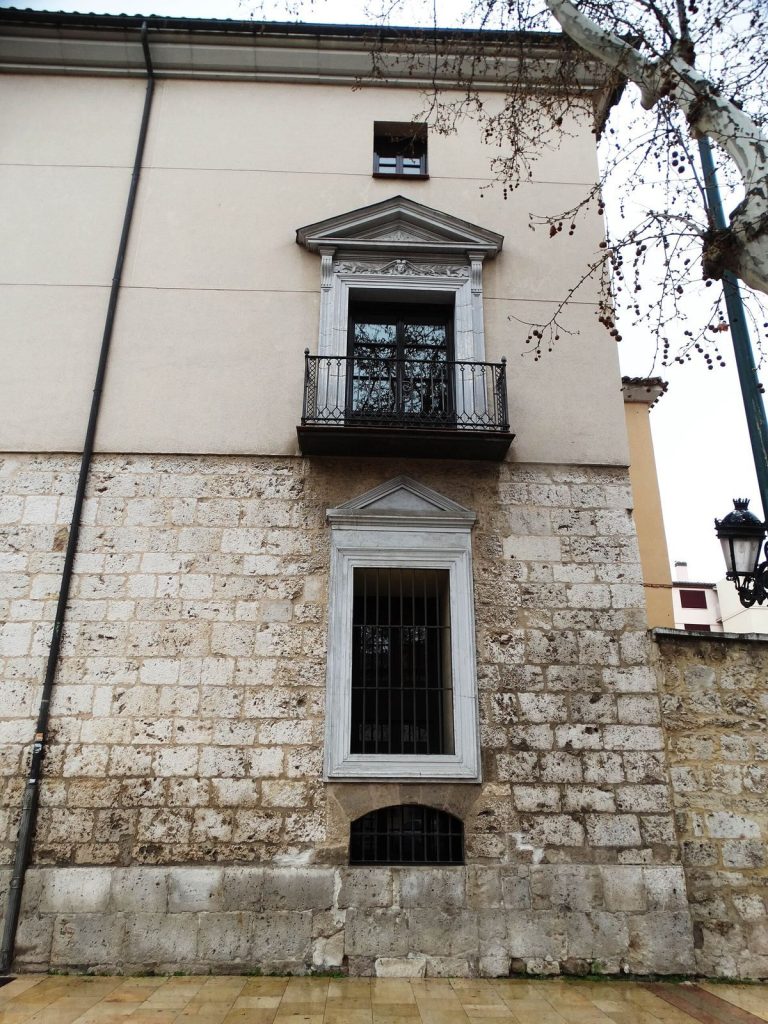
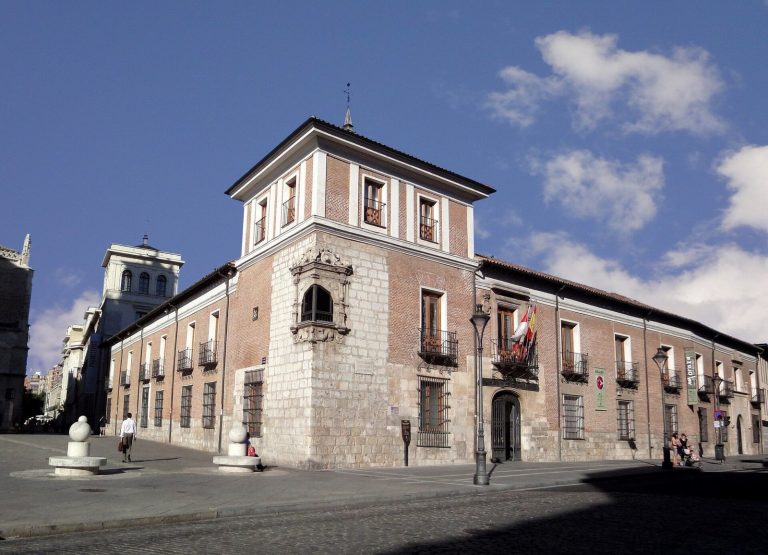
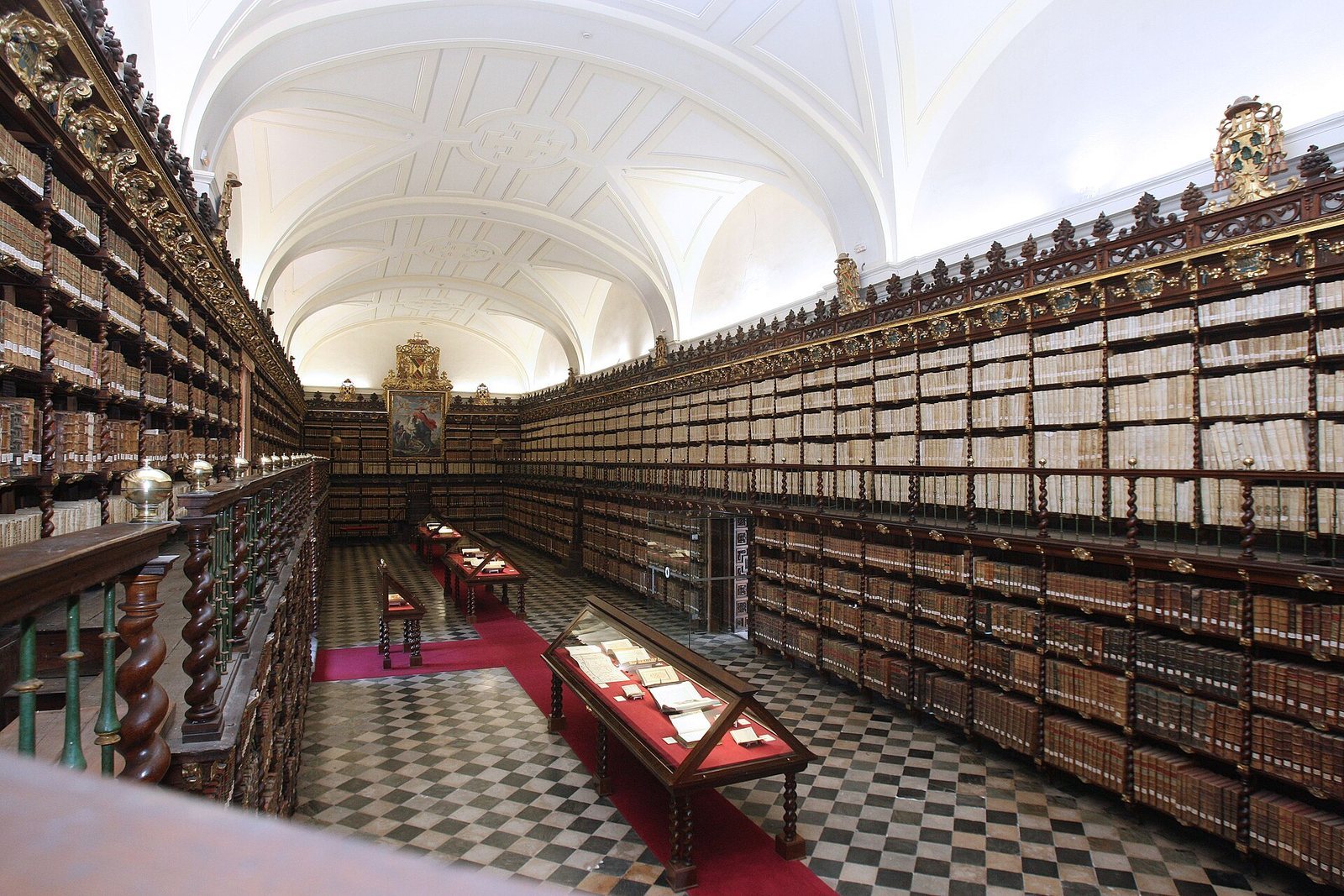
The library is housed in the Palace of Santa Cruz, built between 1486 and 1492. Its original room occupied the full principal façade on the palace’s first floor; the library returned to the palace’s second floor in 1993. The room’s surviving features include carved wooden fittings, a large painted portrait, and sculpted entrance doors.
Room and furnishings
Bookcases
Alonso del Manzano, a master of architectural woodwork, carving, and joinery, made the library’s wooden bookcases in 1705. They have two horizontal tiers connected by a staircase and vertical bays divided by Solomonic columns, whose shafts twist in a spiral. The upper ensemble is crowned with the arms of the Mendoza and Figueroa families. The Mendoza arms carry the motto Ave Maria, while fig leaves appear on the Figueroa arms.
Portrait of the founder
A large painting at the end of the room depicts Cardinal Pedro González de Mendoza on horseback. Two angels holding a Jerusalem cross, an emblem associated with Jerusalem and Christian tradition, appear to his right; his coat of arms is to his left. Manuel Petí Vander painted the work in 1705.
Entrance doors
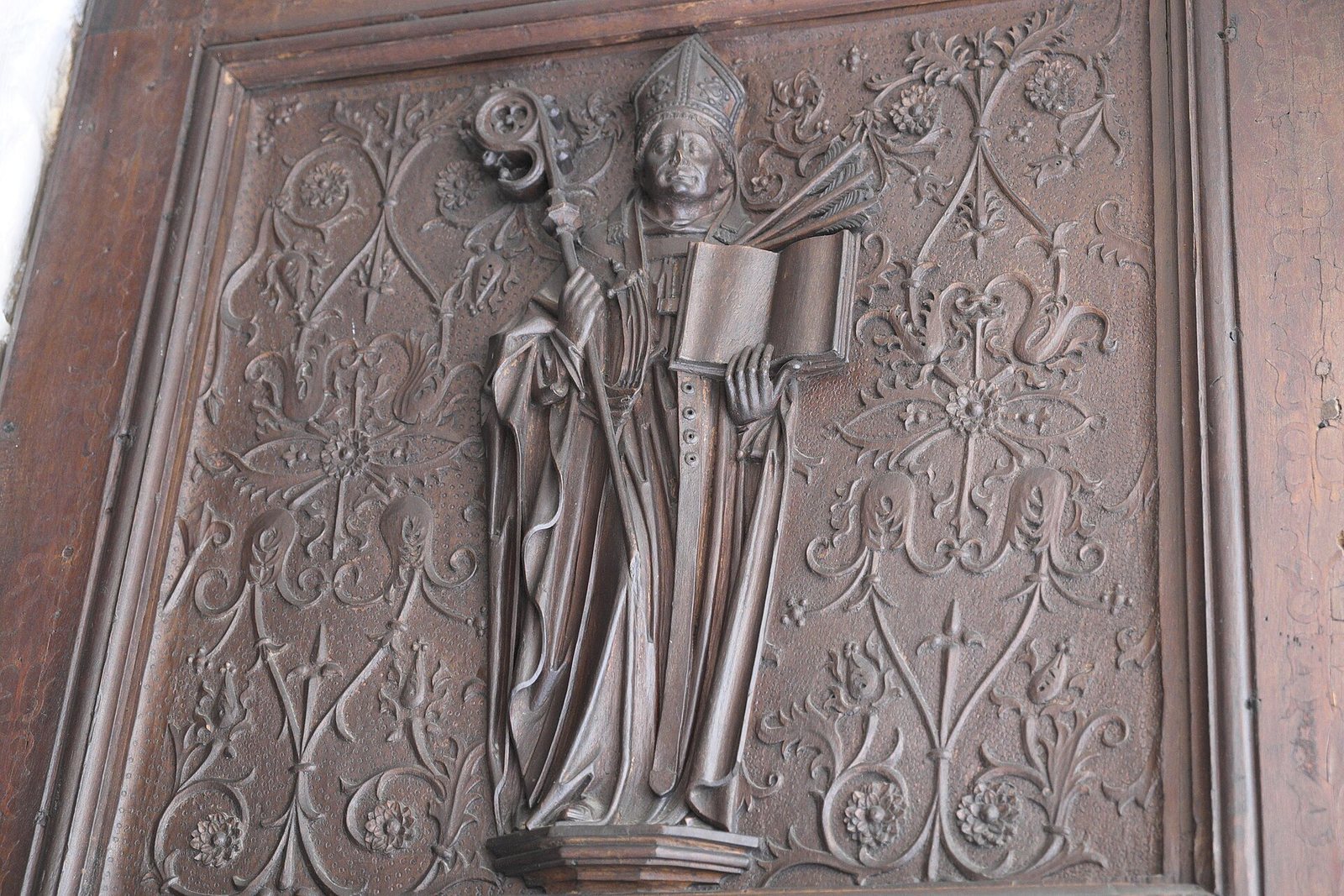
The carved wooden door leaves bear several reliefs. One shows a figure holding a model of a church; another depicts a bishop wearing a mitre and holding a staff as he presents an open book with three arrows projecting from it. Other carvings show a birdlike creature with a crown around its neck and Mendoza’s arms. Those arms feature fig leaves beneath a Jerusalem cross, the emblem associated with the college’s dedication.
Manuscripts and college records
Manuscripts
The manuscript collection contains about 520 volumes, including Bibles, classical works, and books on history and law. Its oldest and most valuable item is a parchment copy, dated 970, of Beatus of Liébana’s commentary on the Book of Revelation. The Iberian monk and theologian’s work was copied by Oveco at the monastery of Valcavado. This Mozarabic manuscript reflects Christian culture in medieval Iberia under Muslim rule and is written in Visigothic script, a medieval writing system used in Iberia. It contains 87 colored miniatures.
Two other manuscripts date from the fifteenth century. Interpretatio Eusebii Caesariensis edita per Beatum Hieronymum has a fantastical, hybrid-figure border around a miniature of Saint Jerome and the lion. Cicero’s Orationes is distinguished by initials decorated in gold and color.
Papers of the College of Santa Cruz
More than 500 documents known as the Papers of the College of Santa Cruz concern the institution’s organization and administration from its foundation. They are arranged in eight subject groups. Among them are the college’s founding document and a privilege granted by the Catholic Monarchs, Ferdinand II of Aragon and Isabella I of Castile.
Printed collections
Incunabula and rare books
The section for incunabula, books printed in Europe before 1501, and other rare books contains roughly 350 volumes or works, including about 200 incunabula. An early example is Johann Nider’s Manuale confessorum, printed in Cologne between 1467 and 1472. Another early item is an oration printed in Rome in 1471.
The collection includes Johannes Regiomontanus’s Calendarium, printed in Venice in 1476 by Erhard Ratdolt. Its title page names the author, printer, contributors Bernhard Maler (Pictor) and Peter Löslein, and the year of publication. It is among the early books to have a title page. Werner Rolewinck’s Fasciculus temporum, printed in Seville in 1480, is considered the first illustrated book produced in Spain.
Other rare works include Fernán Pérez de Guzmán’s La Crónica de Juan II, printed in Logroño in 1517; Pedro de Medina’s El Arte de Navegar, printed in Valladolid in 1545; and the first edition of Lope de Vega’s La Jerusalén conquistada, printed in Madrid in 1609.
A copy of Vita Christi Cartuxano, translated from Latin into the vernacular by the Franciscan friar Ambrosio de Montesinos on commission from Cardinal Francisco Jiménez de Cisneros, belonged to the monastery of San Benito in Valladolid. Its title page depicts the presentation of the work and bears the arms of the Catholic Monarchs.
Printed books
The printed collection includes 12,878 works, mainly from the sixteenth, seventeenth, and eighteenth centuries, from the former library of the College of Santa Cruz. A further 11,678 works from similar periods belong to the University Library and are kept in an upper-floor room. Religious books are prominent, reflecting the collections’ origins in Jesuit libraries, church-property confiscations, and books used to teach subjects at the University of Valladolid.
Notable works include polyglot Bibles printed in Alcalá de Henares between 1514 and 1517, Antwerp between 1569 and 1573, Paris between 1629 and 1645, and London between 1655 and 1657. The holdings also include the first edition of Andreas Vesalius’s De humani corporis fabrica (1543) and Erasmus of Rotterdam’s Opera omnia (1540). Eighteenth-century scientific books in French and other European languages extended the collection into mathematics, botany, and natural history. Among them is a first edition of the Encyclopédie, ou Dictionnaire raisonné des sciences, des arts et des métiers.
Pamphlets and documents
This section contains 4,400 pamphlets from the eighteenth and nineteenth centuries on university life, reports from secondary-education institutes, and Castilian cultural life. It also holds 502 printed documents produced in Valladolid between the sixteenth and nineteenth centuries.