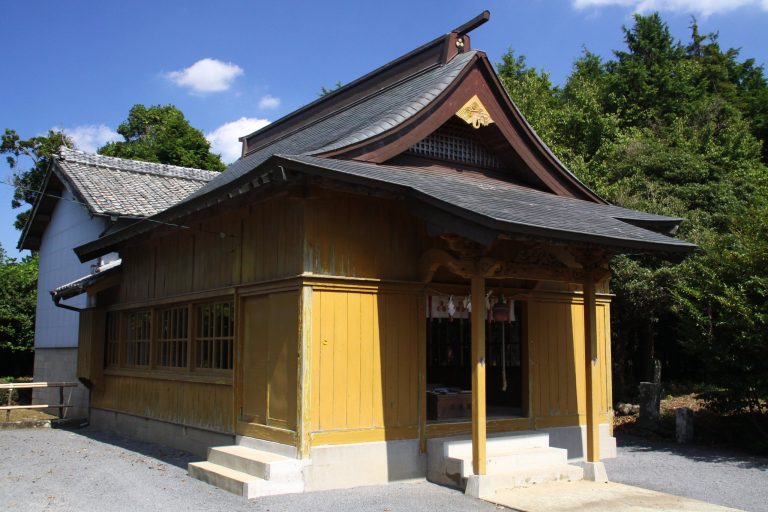
Komodahama Shrine: A Memorial Shrine to Tsushima’s 1274 Defense


Site at a Glance
- Rating
- 4.2
- Popularity
- Low
- Country
- Japan
- Primary era
- Early Modern
- Eras represented
- Early Modern, Modern
- Civilizations
- Japanese
- Site type
- Religious
- Remains
- Sanctuary
On this page7 sections
History
Komodahama Shrine is a Shinto shrine in Japan, located on the southwestern coast of Tsushima. Dated to 1274, it commemorates the Yuan invasion, a military expedition against Japan by the Mongol-led Yuan dynasty with support from Goryeo Korea, and follows the Nagare-zukuri shrine style, distinguished by a sloping roof extended over the front entrance.
The 1274 Invasion
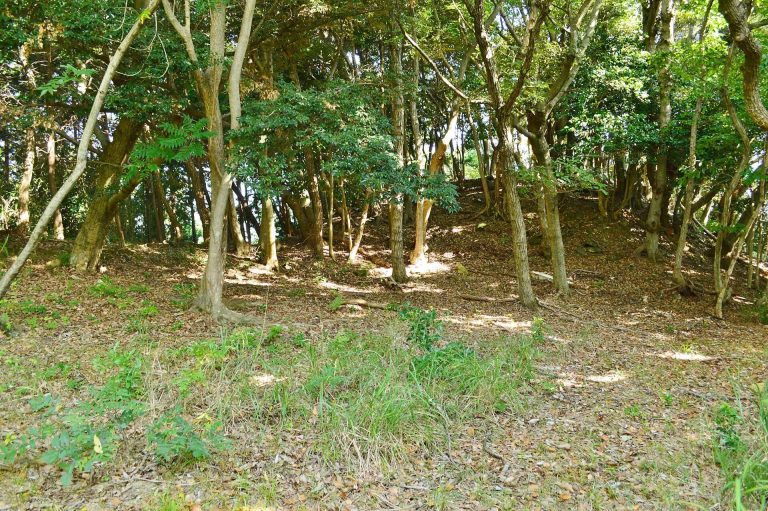
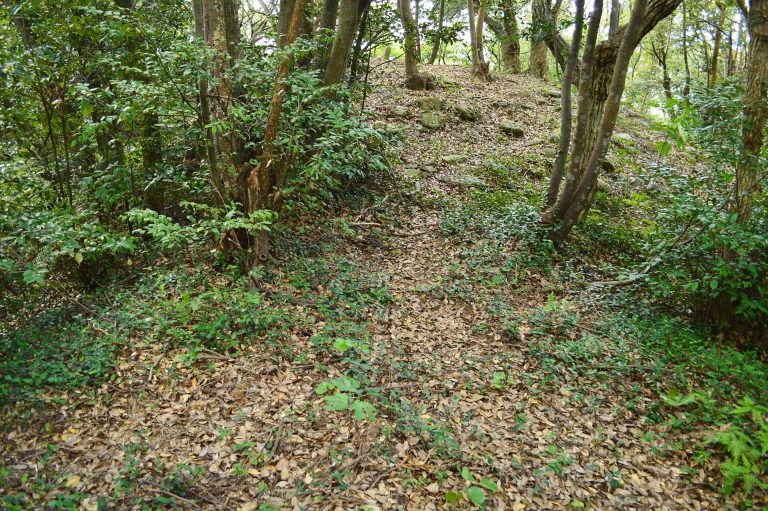
Tsushima was among the first Japanese territories attacked during the invasion, also known as the Bun’ei campaign. The allied Yuan and Goryeo forces landed on the coast at the place associated with the death of Sō Sukekuni, the samurai leader remembered for defending Tsushima. In that year, memorial mounds for Sukekuni’s head and body were established there. Sukekuni became the shrine’s principal deity, while the spirits of warriors who died during the invasion were also enshrined.
Within Shinto, shrines enshrine revered divine beings and spirits, and the principal deity is the central object of worship. Sukekuni is venerated as a protective deity who displayed divine power and gave his life during a national crisis, while safeguarding the country’s peace in peaceful times.
Transfer and Sō Family Patronage
In April 1347, a descendant of Sukekuni moved the shrine to its present location, donated shrine estates, and established worship as a ritual responsibility of the Sō family, Tsushima’s hereditary ruling clan. The shrine later became known as Daimyōjin Shrine, a name whose first element was understood to mean either “marshal” or “military.”
During the Genroku period, which fell in the late seventeenth and early eighteenth centuries, Sō Yoshizane honored Sukekuni by building the shrine gate and a stone monument. From the Kansei period in the late eighteenth century onward, the Sō family conducted the annual ceremonies.
Modern Commemoration and Festival Tradition
The shrine became a prefectural shrine in 1882. Sukekuni received the posthumous court rank of Junior Third Rank in 1896, a high status in Japan’s traditional official system. In 1924, Tsushima islanders marked the 650th anniversary of the invasion by installing a new torii and erecting a commemorative monument. A monument for the 700th anniversary followed in 1974. In 2020, an equestrian statue of Sukekuni was erected and the shrine approach was improved.
The annual festival takes place on November 12. Its ceremonies include the Myōbu Dance, the Urayasu Dance performed by local schoolgirls, the Umisachi ceremony, an armored procession to nearby Komodahama, and the Meigen ritual. During Meigen, participants face the sea and ready bows as if confronting the invading army. Votive sumo and Mongol-drum performances are also part of the festival.
Bean mochi, also called Dantsuke mochi, is associated with the festival. Tradition holds that salted, boiled azuki beans were coated onto mochi so food for fighting warriors could be prepared quickly.
Remains
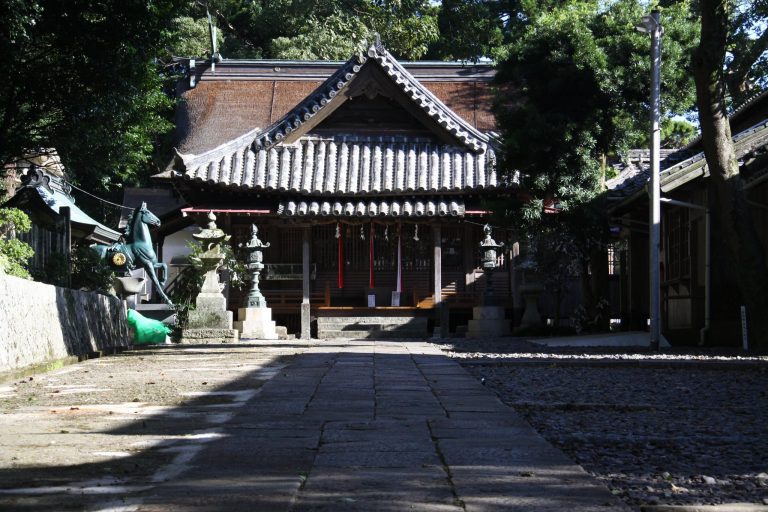
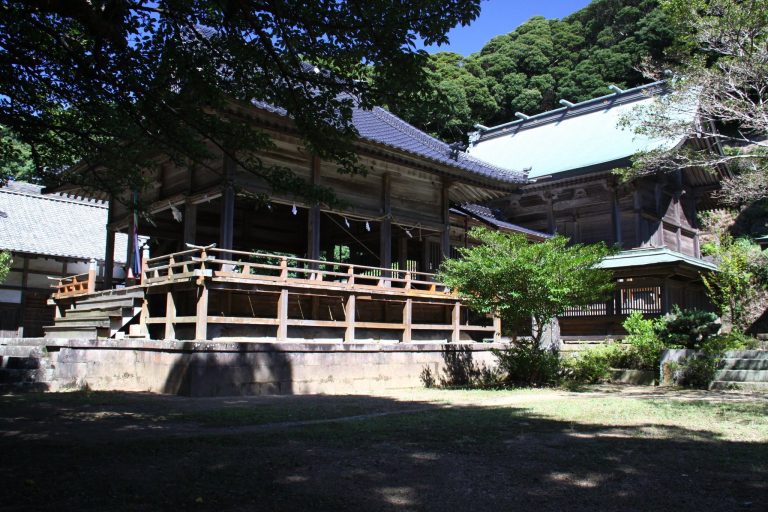
The shrine complex combines a main sanctuary, an approach marked by a torii, commemorative monuments, and a shoreline associated with the 1274 landing. The sanctuary follows the Nagare-zukuri style, whose defining feature is an extended, sloping roof over the front entrance. The approach and monuments preserve both the shrine’s religious setting and its connection with the memory of Sukekuni and the invasion.
Shrine Buildings and Commemorative Monuments
A new torii stands at the shrine, installed for the 650th anniversary in 1924. The precinct also contains the monument erected for that anniversary and the monument commemorating the 700th anniversary, erected in 1974. An equestrian statue of Sukekuni was added in 2020, when the approach was improved.
Komodahama Shore
Komodahama beach lies in front of the shrine and forms the destination of the Umisachi procession. A stone monument for the “Song of Komodahama” stands on the shore, conveying a lasting account of the Yuan invasion. The Meigen ritual is performed facing the sea, maintaining a physical connection between the shrine and the coastal setting associated with the invading army.