Neso Kofun Cluster: Sixth-Century Burial Mounds on Tsushima
Site at a Glance
- Rating
- 3.1
- Popularity
- Very Low
- Country
- Japan
- Primary era
- Medieval
- External website
- Open
- Eras represented
- Medieval
- Civilizations
- Yamato
- Site type
- Burial
- Remains
- Necropolis
On this page11 sections
History
Neso Kofun Cluster is a group of sixth-century burial mounds in Japan, on Tsushima Island, constructed during the late Kofun period. A kofun is a monumental Japanese burial mound built mainly between the third and seventh centuries, and the period takes its name from these tombs. Neso is historically important because it includes keyhole-shaped mounds, a form strongly associated with the political authority of the Yamato polity and rare on Tsushima.
Formation and political setting
The cluster was first identified through an archaeological investigation in 1922, when four mounds were discovered. Five mounds were confirmed by the East Asian Archaeological Society in 1948, and a sixth was identified during a later investigation. The group is described in two ways: as three keyhole-shaped mounds, two circular mounds, and one mound of uncertain form, or as three keyhole-shaped and three circular mounds.
The people buried at Neso have been proposed as the Tsushima Agatanushi, a hereditary local elite lineage, or as members of a related powerful clan. Another interpretation connects the mounds with influential people who followed the individual buried in an earlier nearby keyhole-shaped tomb. That earlier tomb dates to the latter half of the fourth century and has a mound about 40 metres long. Sainoyama, another mound on Tsushima, is also considered in interpretations of the island’s relationship with the Yamato polity.
Tsushima’s changing centers
During the Yayoi period, Tsushima’s central settlements are thought to have been on the western coast. In the Kofun period, when the earlier nearby tomb and the Neso cluster were built, the center is thought to have shifted to Kechiura on the eastern coast. Under the later ritsuryo system, Japan’s centralized administrative and legal order, the center moved south along the eastern coast to the Izuhara area, where the Tsushima provincial government and Tsushima Kokubunji were located.
The five mounds other than Mound No. 6 were designated collectively as a National Historic Site of Japan on February 24, 1976. Mound No. 6 was not included in that designation.
Remains
Ridge setting and mound forms
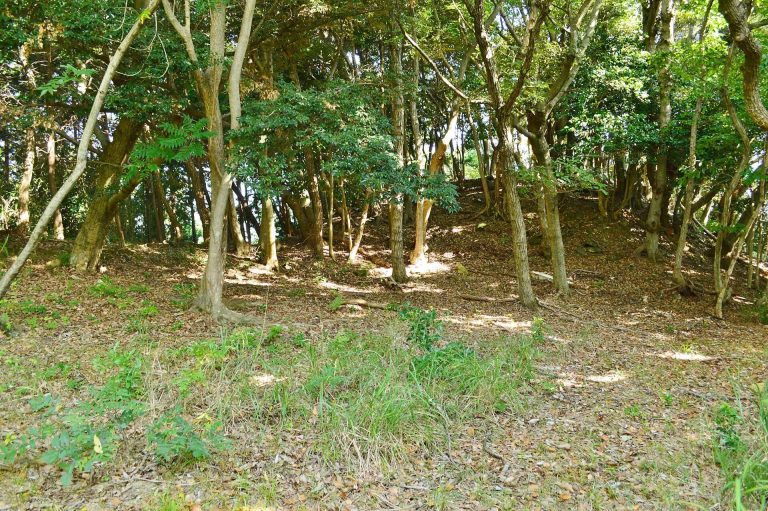
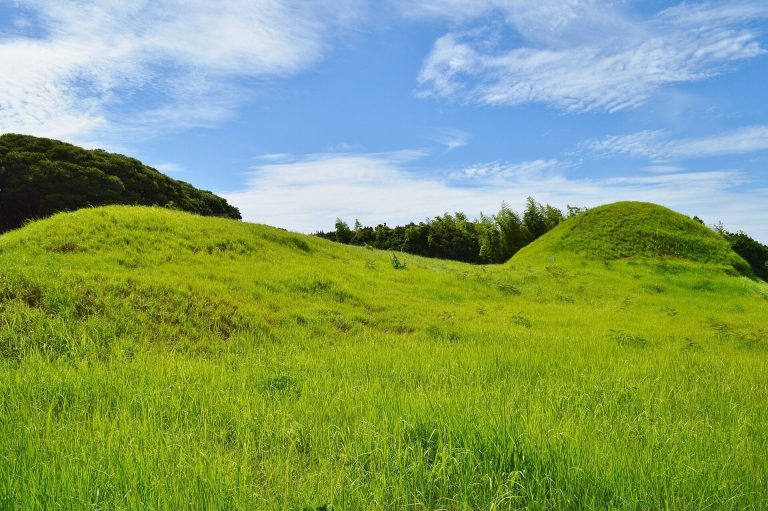
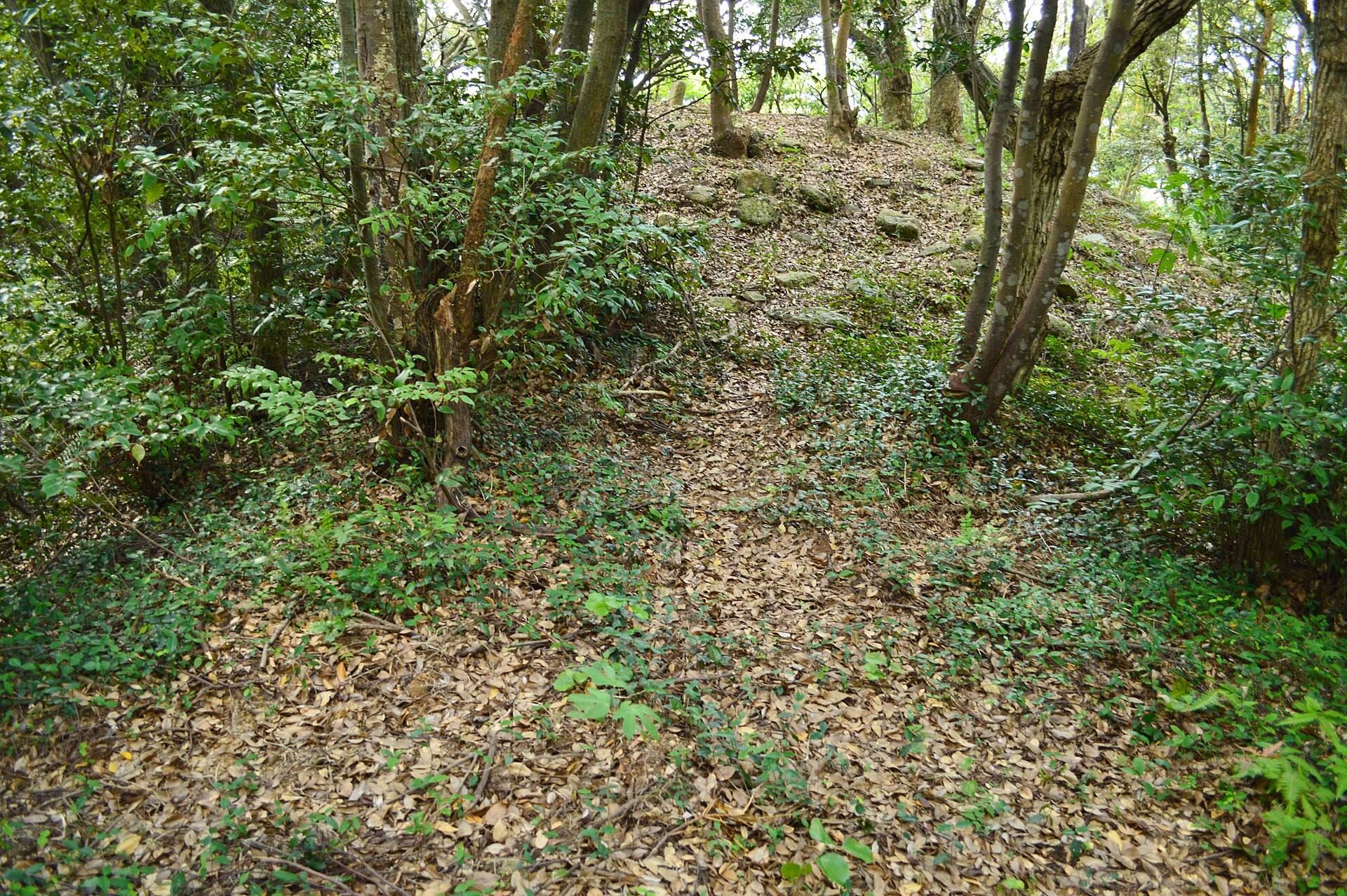
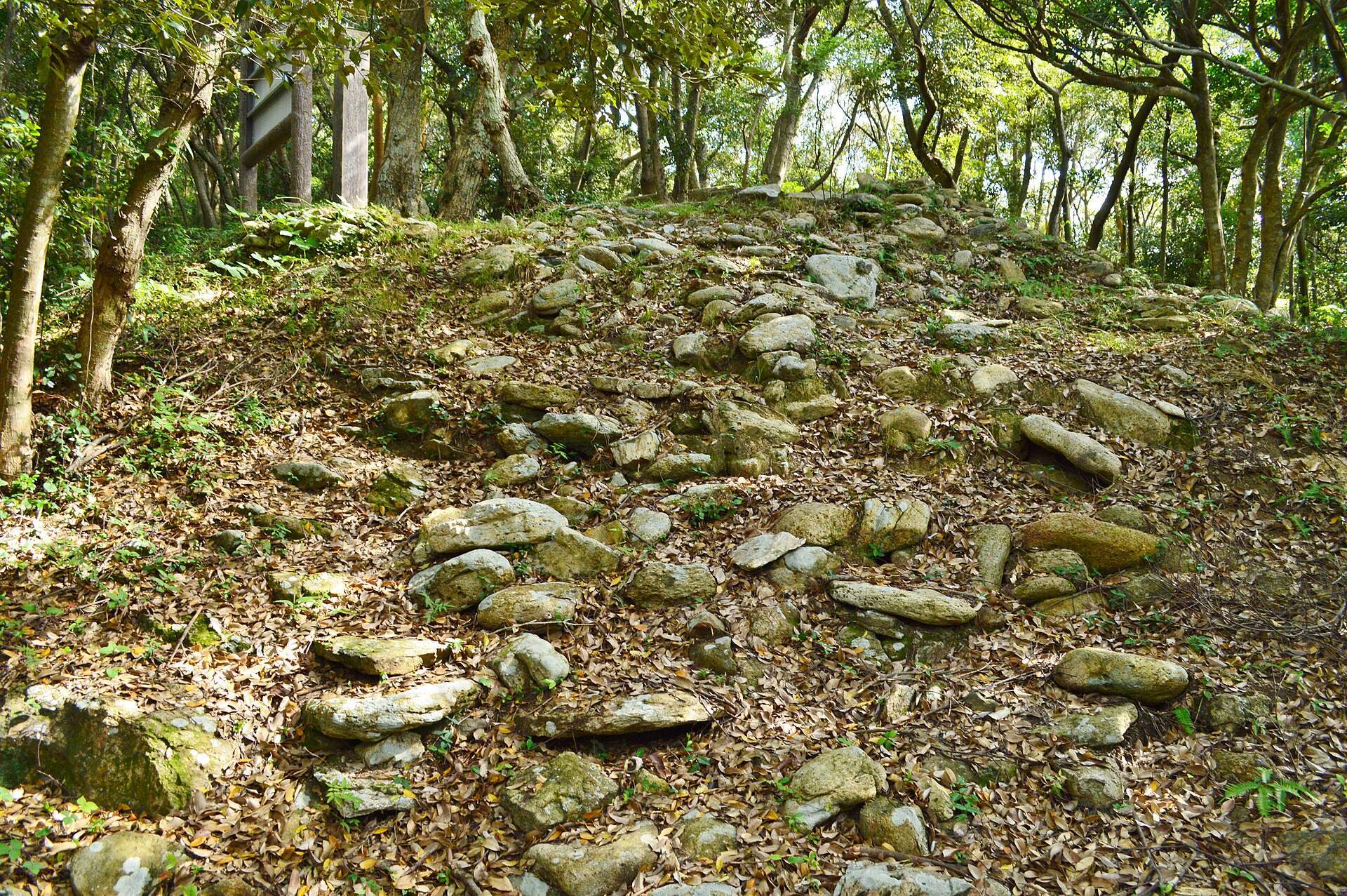
The cluster occupies the eastern ridge of a cape bordering Kechiura on Tsushima’s eastern coast, in the Neso area of Mitsushima-cho, Nagasaki Prefecture. The mounds are stone-built and comprise keyhole-shaped, circular, and possibly circular or uncertain forms. A keyhole-shaped mound has a rectangular or trapezoidal front joined to a circular rear section when viewed from above. Together with Tsuru-no-yama Kofun on the opposite bank, the Neso mounds preserve an important group of these rare Tsushima tombs.
Individual burial mounds
Neso Kofun No. 1
Neso Kofun No. 1 is a keyhole-shaped stone mound at the highest elevation on the ridge and measures approximately 30 metres in length. Its front section is 12.3 metres long, 5.5 metres wide, and 1 metre high. The circular rear section measures 14.5 metres across and rises about 2.5 metres higher than the front. A stone-slab burial chamber runs parallel to the mound’s main axis. Excavated grave goods include a willow-leaf-shaped iron arrowhead, an iron sword, and a tubular jasper bead.
Neso Kofun No. 2
Neso Kofun No. 2 is a 35.6-metre-long keyhole-shaped stone mound whose external form remains relatively well preserved. A stone-slab burial chamber occupies the center of the rear circular section, while another chamber lies within the narrow front section.
Neso Kofun No. 3
Neso Kofun No. 3 has lost its original external shape but is considered to have been circular. Its horizontal burial chamber is made from large stone slabs. Each wall has the unusual construction of a single stone forming the entire wall.
Neso Kofun No. 4
Neso Kofun No. 4 is a keyhole-shaped stone mound that has been severely destroyed.
Neso Kofun No. 5
Neso Kofun No. 5 is a circular stone mound containing a box-shaped stone sarcophagus.