Deizuka Kofun: An Early Kofun-Period Burial Mound on Tsushima
Site at a Glance
- Rating
- 4
- Popularity
- Very Low
- Country
- Japan
- Primary era
- Classical
- External website
- Open
- Eras represented
- Classical
- Civilizations
- Unclassified
- Site type
- Burial
- Remains
- Burial Mound
On this page7 sections
History
Deizuka Kofun is a Japanese burial mound on Tsushima Island, Japan, probably constructed during the latter half of the fourth century in the Early Kofun period. A kofun was a mound built over the burial of an elite or socially prominent person. Deizuka is regarded as both the oldest and the largest kofun on Tsushima Island.
Early Kofun-period development
The mound is considered the earliest example on Tsushima of a Kinai-style kofun. Kinai-style forms and burial traditions originated in the Kinai, the historical region around the former imperial centers of central Japan, including present-day Nara and Osaka. Deizuka Kofun, the Neso Kofun Group, and nearby Sainoyama Kofun have therefore been interpreted as evidence that Tsushima lay within the sphere of the Yamato polity at the time. The Yamato polity was an early centralized power based in the Kinai region that later developed into the Japanese imperial state.
Tsushima’s principal center appears to have changed during this period. In the Yayoi period, it was probably located on the island’s west coast, especially around Mine and Nii. By the Kofun period, when Deizuka Kofun and the Neso mounds were built, the center had shifted to Ketchi Inlet on the east coast. The person buried at Deizuka has been interpreted as Tsushima Agatanushi, a hereditary title associated with the island’s elite, or as a related member of that elite.
Identification and protection
The site was recorded as “Deizuka” in the 1917 work History of Tsushima. An excavation in 1951 described it as the front-circular, rear-rectangular Crane Mountain Kofun. A surveying investigation carried out in fiscal year 1991 revised the interpretation of its shape, identifying the mound as front-rectangular and rear-rectangular, and the name Deizuka Kofun was used in the resulting report.
Deizuka Kofun was designated a Nagasaki Prefectural Historic Site on February 26, 2002. Its form and location remain important for interpreting the movement of political and funerary traditions between the Kinai region and Tsushima during the fourth century.
Remains
Mound and setting
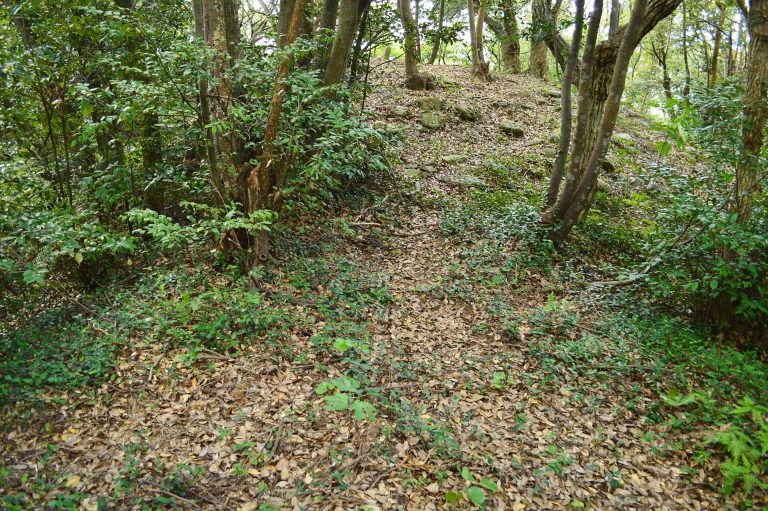
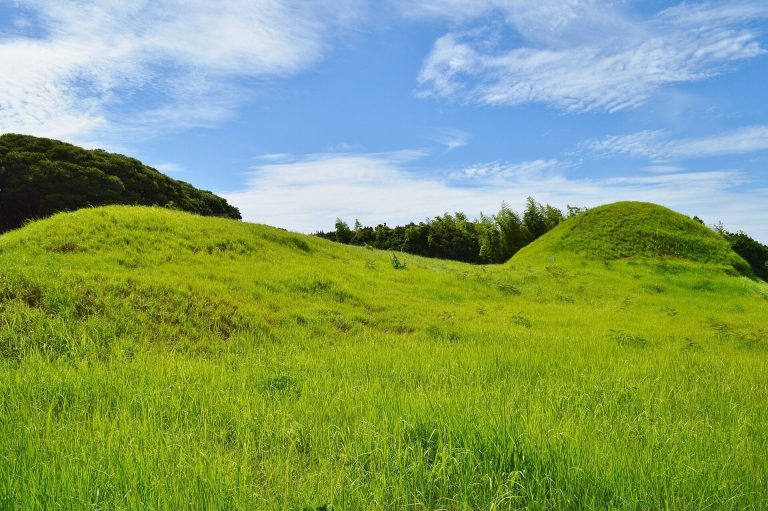
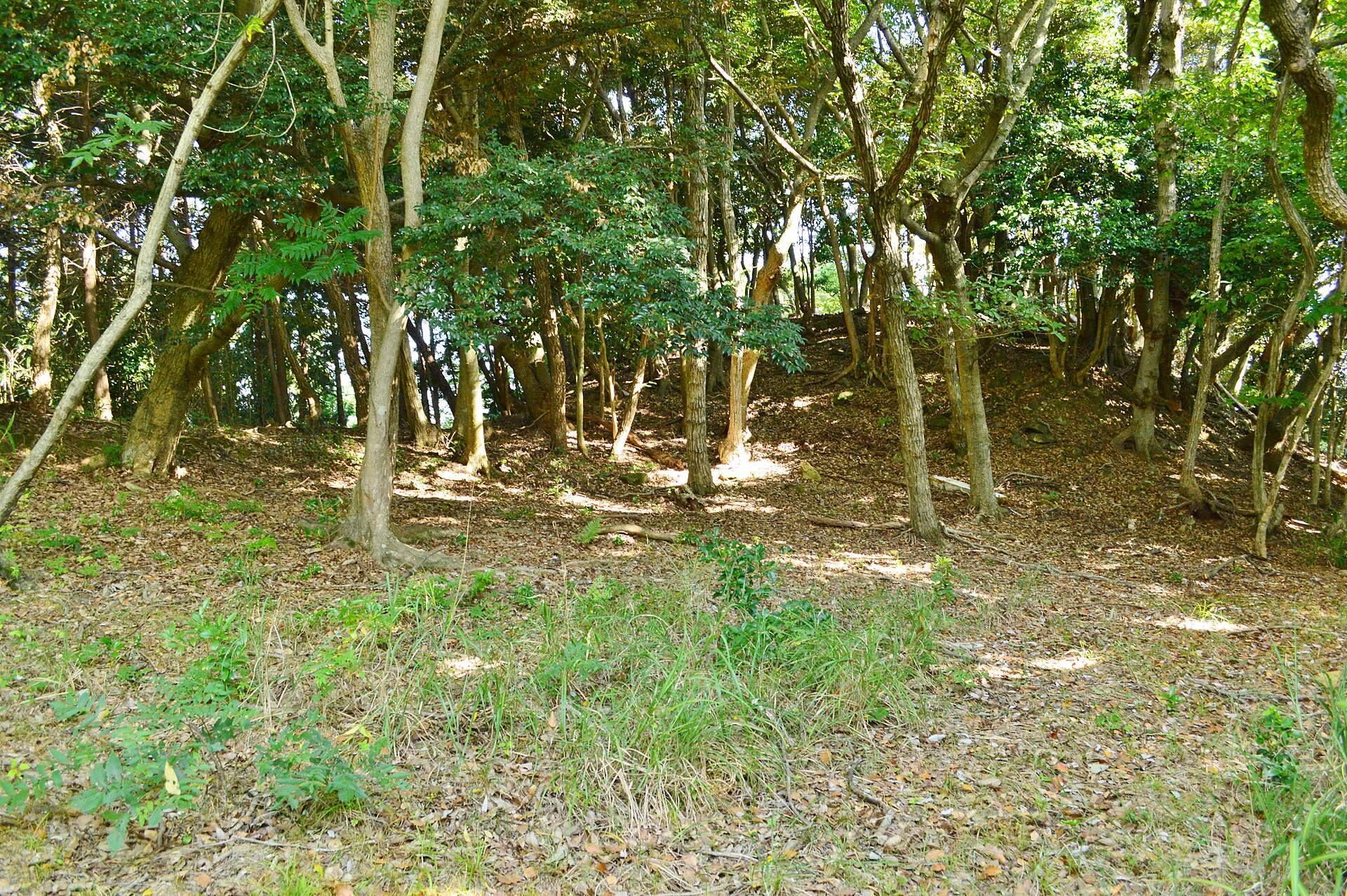
Deizuka Kofun stands on a hill west of Ketchi Inlet on Tsushima’s east coast. The mound is approximately 40 metres long and has a front-rectangular, rear-rectangular plan. In this form, a narrower rectangular front section joins a larger rectangular rear section. It differs from the more common front-circular, rear-rectangular design. Deizuka is the only kofun of this form in the Nagasaki Prefecture area. Stone-built elements were incorporated into its construction.
Burial chamber
The burial facility was a vertical stone chamber, meaning a stone-lined burial space built into a shaft or pit beneath the mound. Severe damage has left its original form uncertain, but its estimated dimensions are approximately 4 metres long, 2 metres wide, and 0.9 metres deep.
Excavated objects
The 1951 excavation recovered 12 bronze arrowheads, a tubular bead made of jasper, fragments representing two iron swords, and one pottery fragment. These objects form part of the archaeological evidence associated with the mound and its burial.