Komae Kofun Cluster: Elite Burial Mounds in Tokyo
Site at a Glance
- Rating
- 3.4
- Popularity
- Low
- Country
- Japan
- Primary era
- Classical
- External website
- Open
- Eras represented
- Classical, Medieval
- Civilizations
- Yamato
- Site type
- Burial
- Remains
- Necropolis
On this page13 sections
History
The Komae Kofun Cluster is a group of elite burial mounds in Komae, Tokyo, Japan. Most were built between about the middle of the fifth and middle of the sixth centuries, during Japan’s Kofun period, when burial mounds were constructed for the elite. The buried people are generally understood to have been local leaders and other powerful figures connected with the royal authority centered in the Kinai, the historic core around present-day Kyoto, Osaka, and Nara.
The mound-building sequence
Construction began in the first half of the fifth century in the Izumi and Iwato subgroups. The first mound in the Inogata subgroup followed in the second half of the century, and construction at Iwato ended with its final mound late in the fifth century. Early-sixth-century burials included mounds with pit-type burial facilities, entered from above. Izumi’s sequence ended around the middle of the sixth century, while Inogata’s construction paused after the last mound of that phase.
Two Inogata mounds with stone chambers entered from the side were built in the early seventh century. Inogata Ogawazuka, built around the middle of that century, was the cluster’s final mound. Underground burials began in the Izumi and Iwato subgroups in the late seventh century.
People lived in the area before mound construction. Investigations in 1987 near the Benzaiten Pond archaeological site uncovered remains predating the burial mounds. The Izumi archaeological site, which is separate from the mounds, dates to around the fifth century and is the type site for Izumi-style pottery, meaning its finds define that pottery style.
Reuse, changing interpretations, and preservation
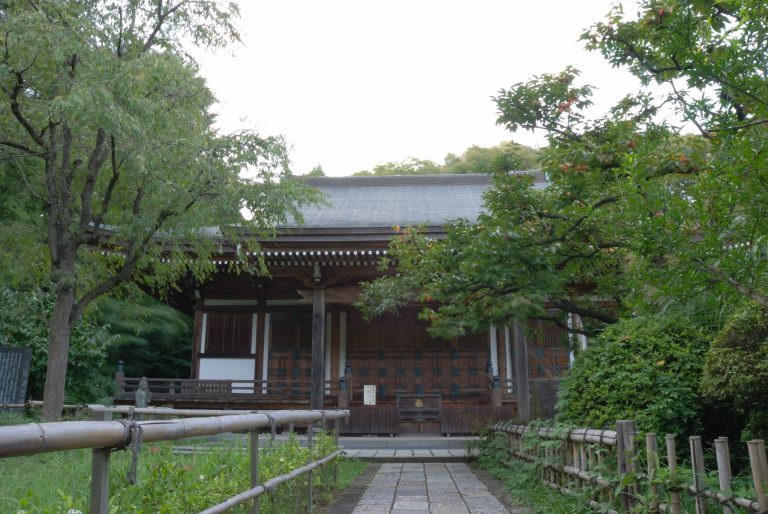
From the thirteenth century onward, Kyozuka was reused as part of a Buddhist temple. One tradition identifies the mound as the grave of Rōben, an eighth-century monk credited with reviving the temple, though this identification is unconfirmed. Another tradition connects the mound’s name with the burial of Buddhist scriptures. A late-Edo-period topographical work also records the cluster. Around the Meiji period, about 20 mounds could still be identified. The group once contained roughly 70, but urban housing development destroyed most of them; at least 50 are now gone, and the original total is uncertain.
The alternative name Komae Hundred Mounds comes from a local historian’s draft describing the tombs as the graves of local chiefs and provincial governors. The same draft proposed other epithets, including Ninety-Nine Mounds and Wheel Mound, which fell out of use. An earlier theory that the cluster was created by an immigrant community, prompted by finds from Kamezuka, is also no longer accepted.
Kamezuka was the first burial mound excavated in Komae, in 1951. Cluster-wide distribution surveys followed in 1960 and 1976. A mound in the Izumi subgroup was excavated in 1962 and then destroyed for apartment construction. Kyozuka was investigated in 1996, and retaining work during nearby construction the following year helped preserve it. The Tokyo Metropolitan Government also designated the area as park green space under its nature-protection ordinance.
An emergency investigation at Tsuchiyazuka in 2004 accompanied plans for apartment construction. A local petition bearing 4,581 signatures followed, and the municipality acquired the privately owned western part of the mound in 2014. Inogata Ogawazuka, once discovered and later thought to have disappeared, was found again by chance during housing development in 2012. The municipality acquired land and investigated it in detail, protecting the site as park plans proceeded.
Kabutozuka was designated a Tokyo Metropolitan Historic Site in 1975, with more land added in 1988; Tsuchiyazuka became a municipal historic site in 1986. Inogata Ogawazuka and associated finds received metropolitan designation in 2021. Kamezuka Kofun Park opened in 2020, followed in 2021 by Tsuchiyazuka Kofun Park and Inogata Ogawazuka Kofun Park, as part of efforts to preserve the remaining sites.
Remains
Distribution and setting
The mounds are spread across Komae on the Tachikawa Terrace, an elevated upland. The former course of the Nogawa and the Shimizu River separate them into the Izumi, Inogata, and Iwato subgroups; the Nogawa now follows a different course. The cluster is counted as 13 mounds, 12 round and one scallop-shaped, with a rounded rear and projecting front. Most of the round mounds have a raised strip crossing the moat, known as a bridge feature. The mounds are not wholly intact, and some have been cut back.
Earlier archaeological remains
Excavations near the Benzaiten Pond archaeological site revealed a stone-paved building, a square-moated burial mound measuring 18 metres on each side, and pit-trap remains dating from the Jomon period onward. Jomon was a prehistoric Japanese cultural period preceding the age of burial mounds.
Mounds and burial features
Kamezuka Kofun
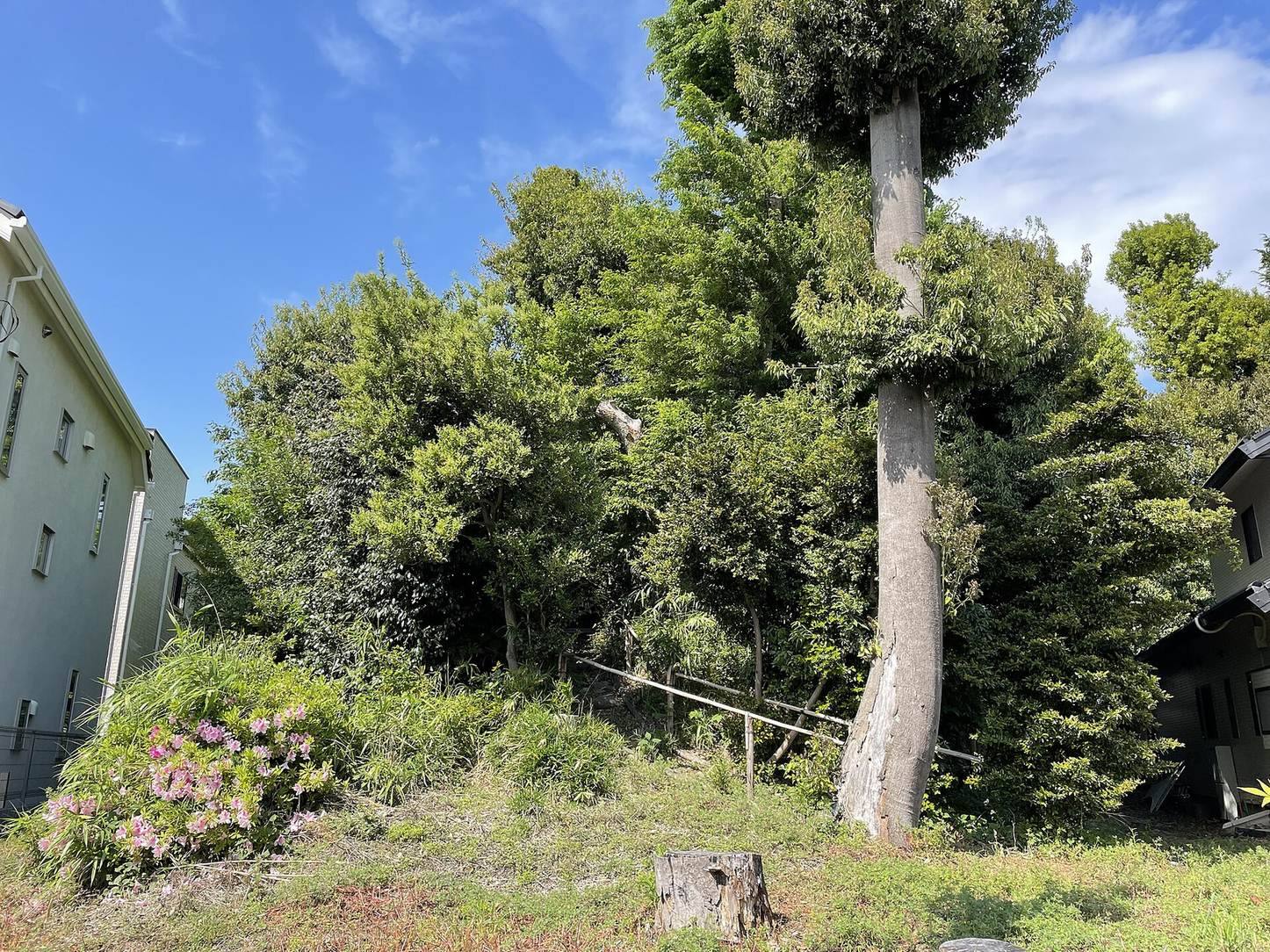
In the Inogata subgroup, Kamezuka is the cluster’s largest mound and its only securely identified scallop-shaped example. Built in the late fifth century, it measured 42 metres long and 7 metres high, and was considered the largest mound in southern Musashi at that time. Housing development removed most of it: part of the projecting front remains, but the summit is gone. A stone monument erected in 1956 bears calligraphy by journalist and historian Tokutomi Sohō. Plantings beside the park path indicate the former moat’s position.
Kamezuka’s burials and finds
Kamezuka had two burial facilities: a charcoal-coffin burial, in which charcoal surrounded the burial facility, directly beneath the summit, and a box-shaped stone coffin between the front projection’s tip and the summit. Sue ware, a high-fired pottery, and Haji ware, a lower-fired pottery, were found on both sides of the bridge feature. The charcoal-coffin burial contained a 21-centimetre mirror decorated with human and deity figures, bronze bracelets, and fragments of engraved gilt-bronze horse fittings. The mirror was made by reworking a Chinese mirror from the Later Han dynasty. Thirteen examples had been found in Japan, and two made from the same mould came from tombs in Osaka. The horse fittings bear images of people and animals resembling paintings in tomb chambers of Goguryeo, an ancient Korean kingdom.
Kabutozuka Kofun
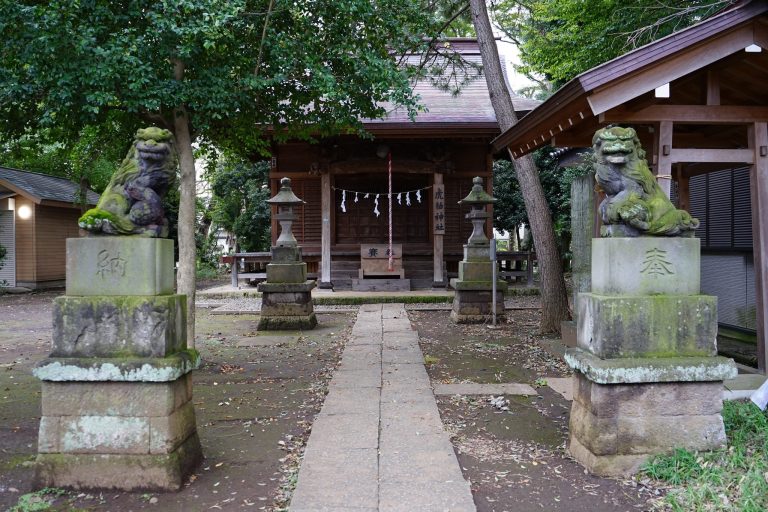
Kabutozuka, in the Izumi subgroup near a shrine, is a round mound in relatively good condition. The shape of its southeast side has led to suggestions that it might instead be scallop-shaped, or that it was round with a projecting platform. Surveys measured it at 43 metres across and 5 metres high; its diameter including the moat was estimated at 70 metres. The summit stands at 30.4 metres above sea level, Komae’s highest point, and has a triangulation marker. Its relationship to Kamezuka remains uncertain.
Kyozuka Kofun
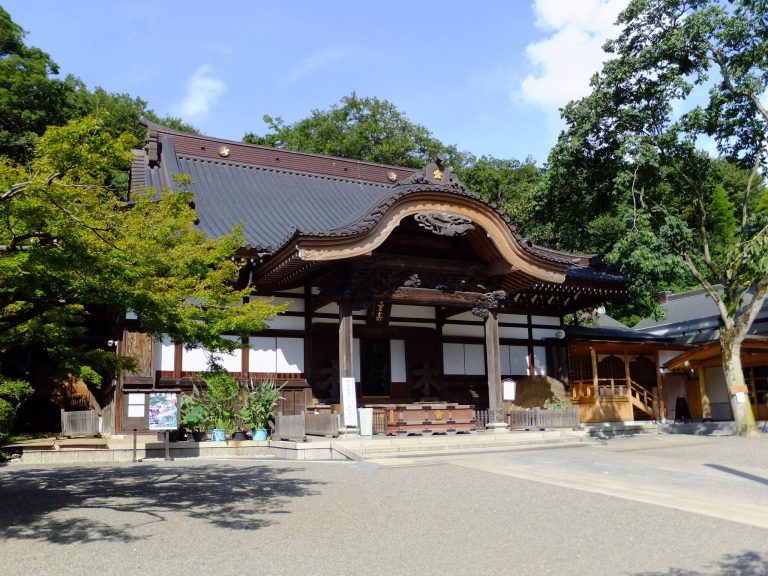
Kyozuka is a round mound in the Izumi subgroup. Its estimated original dimensions are 40 to 42 metres across and 5 metres high, making it the cluster’s third largest. Its moat was estimated at 11 to 14 metres wide and about 1.5 metres deep. A Tokoname cinerary urn, a vessel for cremated remains from a pottery tradition associated with present-day Aichi Prefecture, was found in the mound. About 30 inscribed Buddhist memorial slabs dating from the thirteenth to sixteenth centuries once stood there; some are now kept at the temple.
Tsuchiyazuka Kofun
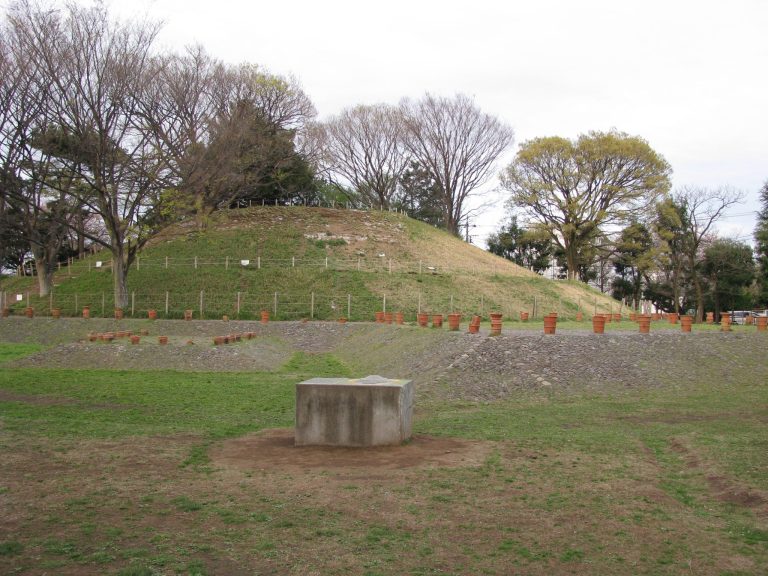
Tsuchiyazuka, in the Iwato subgroup, is a round mound with a smaller projecting platform. It measures 38.5 metres across and 5 metres high, and its moat is about 9 metres wide and 1.5 metres deep. Most of the mound survives. A burial facility beneath the summit is thought to have been a clay-lined coffin burial.
Large numbers of cylindrical clay haniwa, objects placed around burial mounds, were recovered from the moat. They are thought to have stood around the mound and include roughly equal numbers of morning-glory-shaped examples and examples decorated with birds. Some have round openings and others square ones. Square openings had previously been found only at Ota Tenjin-yama Kofun, the largest burial mound in the Kanto region. Horizontal scraping on the upper parts of the figures is a technique associated with the Kinai. A large Haji ware jar and pedestal dishes suggest that funerary rites took place on the eastern platform.
Inogata Ogawazuka Kofun
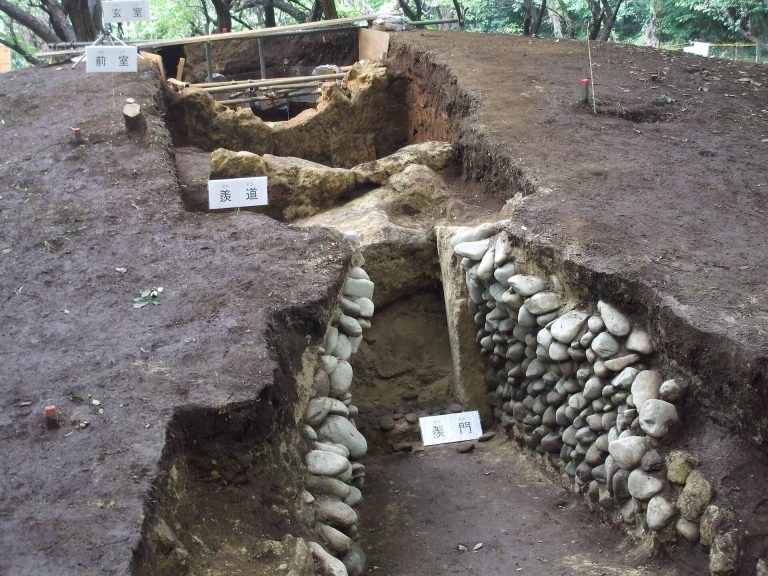
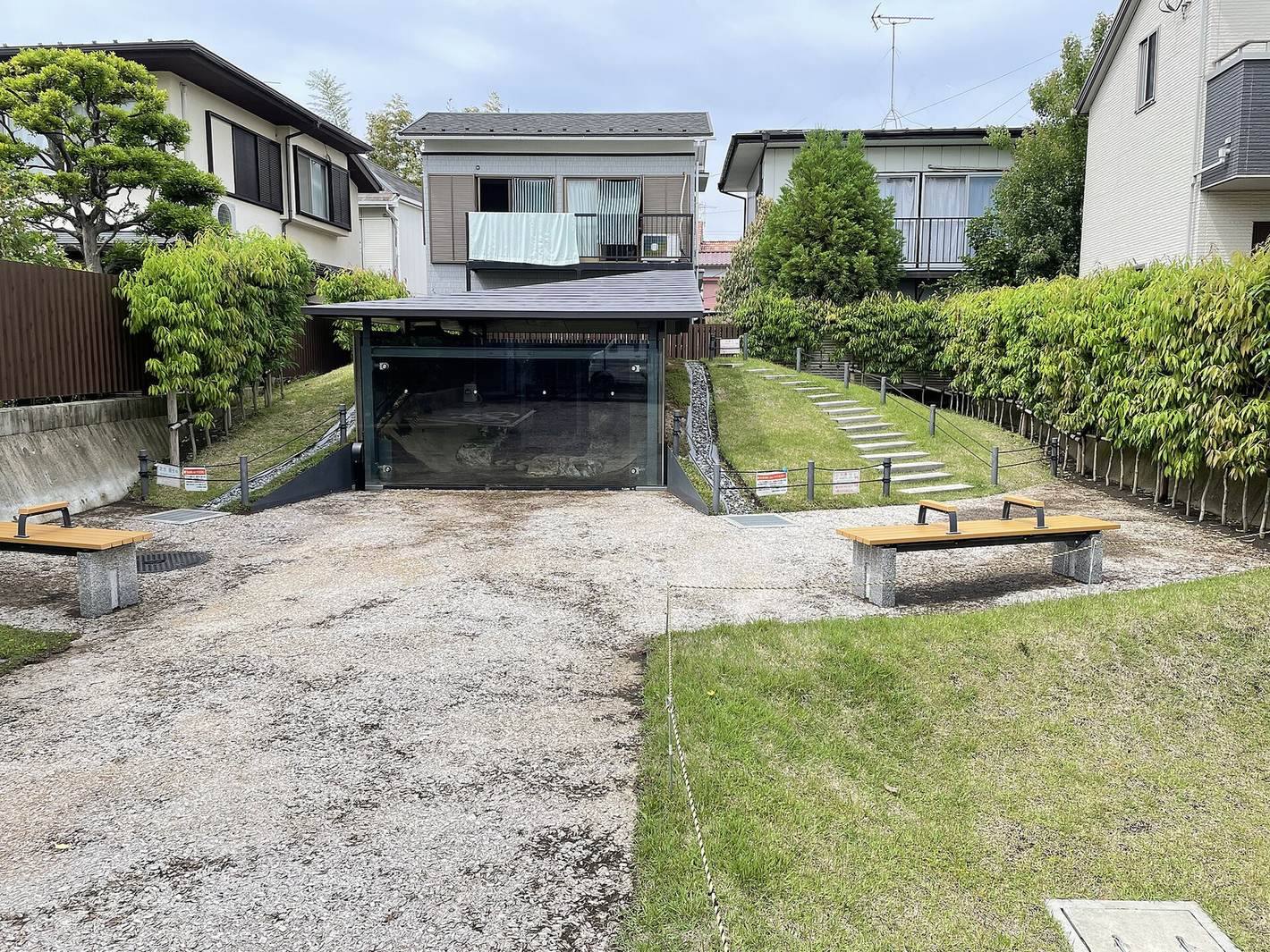
Inogata Ogawazuka was a round mound measuring 23 metres across and 3 metres high, though its mound had already been lost. Its distinctive stone chamber, built from cut tuff, survives. The chamber is 5.2 metres long and consists of an entrance passage, a front chamber, and a burial chamber. Parts of its ceiling and walls were damaged, but the chamber remained in comparatively good condition.
Finds from the site include Haji and Sue ware, knives, iron arrowheads, ash-glazed pottery, and gilt-bronze earrings. The designated group of associated objects comprises two gilt-bronze earrings, 14 iron arrowheads, two knives, nine rod-shaped iron objects, a Sue ware long-necked bottle, 13 fragments of a large Sue ware jar, an ash-glazed long-necked bottle, and three copper coins.