Thanh Mai Pagoda: A Trúc Lâm Buddhist Center in Vietnam
Site at a Glance
- Rating
- 4.6
- Popularity
- Medium
- Country
- Vietnam
- Primary era
- Modern
- Eras represented
- Medieval, Early Modern, Modern
- Civilizations
- Dai Viet
- Site type
- Religious
- Remains
- Pagoda
On this page15 sections
History
Thanh Mai Pagoda is a Buddhist temple in Nguyễn Trãi ward, Hải Phòng, Vietnam. The site dates to around 1329, during the Trần dynasty, which ruled Vietnam from the thirteenth to the fourteenth century. Pháp Loa expanded an existing pagoda, developing it as an ancestral seat of the Trúc Lâm Yên Tử, a Vietnamese Buddhist Zen tradition. As its second patriarch, a recognized teacher in the lineage, he made the pagoda a major religious center. It retained that standing under his successor Huyền Quang, the tradition’s third patriarch.
The Trần-period center and its record
A stone inscription at the pagoda was erected in 1362, more than thirty years after Pháp Loa died in 1330. Its account of his life and work also preserves information about Trần-period Buddhism and religious practice in the Trúc Lâm Yên Tử tradition. The text says that Pháp Loa’s disciples built temples and towers in several places in 1314. It credits him with producing more than 1,300 Buddha images and over 100 earthen images, establishing two major temples and five towers, founding more than 200 monastic residences, ordaining over 15,000 monks and nuns, and printing the Buddhist canon, a collection of Buddhist scriptures.
The inscription was assembled by the attendant monk Trung Minh and revised by Huyền Quang. The disciple Trí Nhu paid for the stone, Thiệu Tuệ wrote the text, and Kim Sơn and another disciple carved it in 1362, after both Pháp Loa and Huyền Quang had died. It records that in 1321 the Marquis of Hoài Ninh commissioned Pháp Loa to cast a bronze image of thousand-eyed, thousand-armed Avalokiteśvara, the bodhisattva of compassion. The commission indicates that this image type was present in Vietnam by the early fourteenth century and points to the influence of Esoteric Buddhism, a Buddhist tradition emphasizing ritual and esoteric teachings. The inscription also names Vĩnh Nghiêm Pagoda as a center for printing Buddhist scriptures in the Trúc Lâm tradition.
A poem mourning Pháp Loa is carved on the stone. Later collections gave it a title, with Việt Âm thi tập the earliest identified work to do so. Although later writings often attributed the poem to Trần Anh Tông, the inscription names Trần Minh Tông. The chronology supports that attribution: Anh Tông died before Pháp Loa in 1330. Minh Tông had visited Pháp Loa, gave him an honorific at his death, and contributed gold toward the construction of a tower.
The text also reflects writing conventions at the Trần court. It alters the character for moon, Nguyệt, by omitting a horizontal stroke because the character formed part of the name of Lady Thiện Đạo, mother of Empress Thiên Cảm. References to the king, royal family, and court receive elevated placement in the writing.
Ruin and restoration
Over time, warfare, natural forces, and other upheavals brought the old pagoda down. Many of its antiquities were lost or damaged, and the site fell into ruin and obscurity. Restoration began in 1980. The pagoda received recognition as a national historical and cultural relic in 1992. When Thích Chí Trung became abbot in 1994, the buildings were in severe disrepair, and he helped gather support for their restoration.
Work proceeded in stages. The Viên Thông Tower was reconstructed between 1994 and 2000, followed by a ten-bay Patriarch Hall in 2002 and a ten-bay main hall in 2005. In 2007, work added the entrance gate, stele pavilion, guesthouse, and monks’ residence; the kitchen and other supporting buildings followed in 2010. The inscription was designated National Treasure No. 6 in the fifth designation round.
Continuing religious life
Thanh Mai remains a Buddhist pagoda affiliated with the Trúc Lâm Yên Tử tradition and managed by the Vietnam Buddhist Sangha, the national organization of Buddhist communities in Vietnam. Its annual festival takes place from the first to the third day of the third lunar month in observance of Pháp Loa’s death. The rites include sutra lectures, vegetarian Buddhist observances, and ceremonial bathing.
Remains
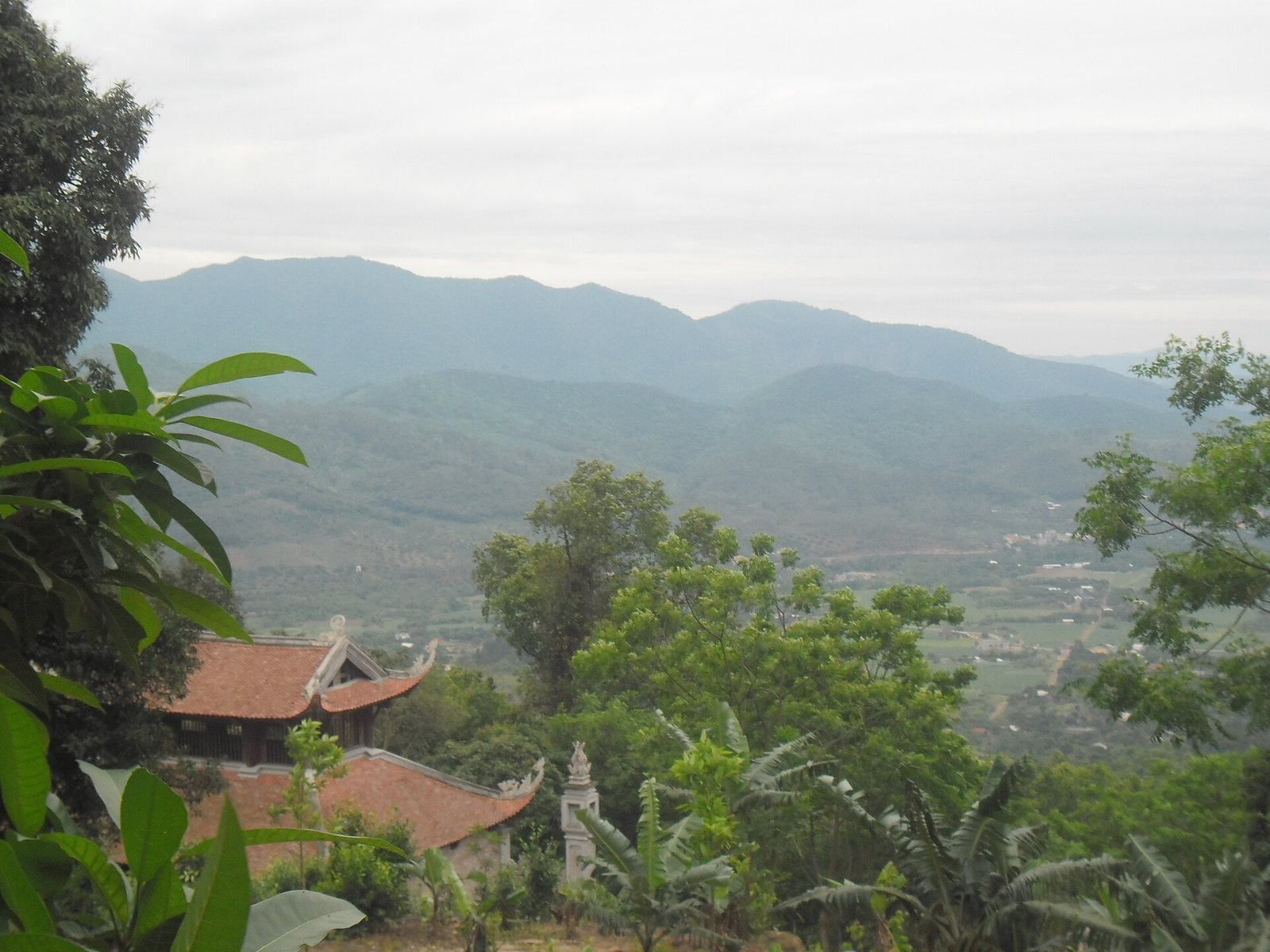
The pagoda occupies relatively level ground on the second level of Phật Tích Mountain, also known as Thanh Mai or Tam Ban Mountain. The mountain rises to about 200 metres and lies within the Đông Triều arc, which extends across parts of Bắc Ninh, Hải Phòng, and Quảng Ninh. The site was historically in Thanh Mai village, Phưỡng Nhãn district, Kinh Bắc; it is now in Thanh Mai residential area, Nguyễn Trãi ward. Sweetgum trees surround the pagoda, and fallen leaves cover the mountain path in winter and spring.
Earlier fabric and tomb towers
Building remains
Traces of the older pagoda include bricks, stones that served as column bases, wall sections in separate areas, and about nine old building platforms. These fragments survive among the later buildings of the restored complex.
Towers
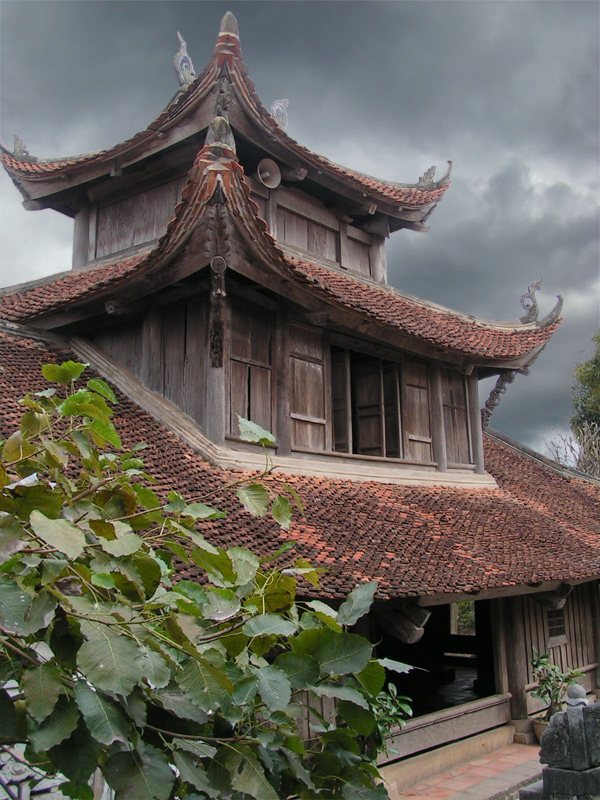
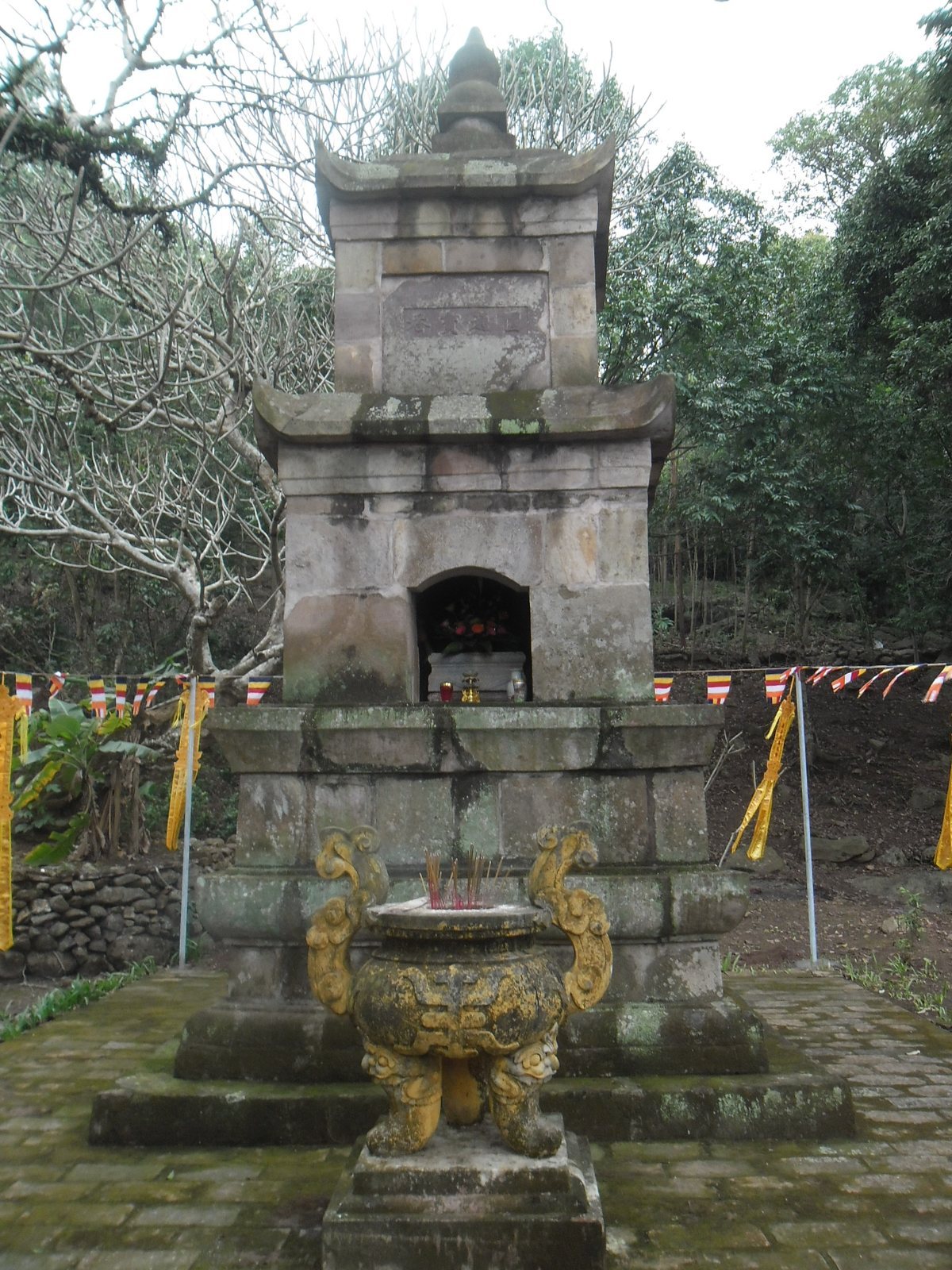
The tower group includes Viên Thông Bảo Tháp, a stupa, or Buddhist monument associated with relics, which holds the burial place of Pháp Loa’s relics. It also includes Phổ Quang Tower, built in 1702, Linh Quang Tower, built in 1703, and five other tomb towers whose dates are undetermined.
Restored temple buildings
Main hall
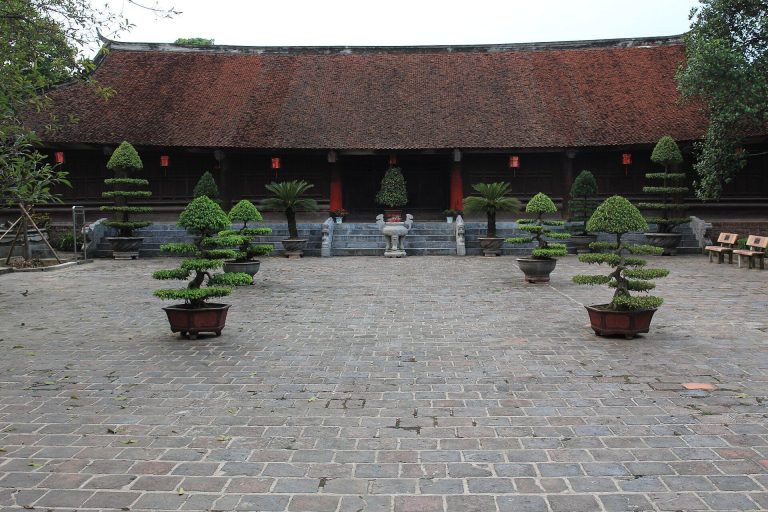
The present main hall was built anew with a T-shaped plan: a seven-bay front hall joins a three-bay rear sanctuary. Its frame is made of lim wood and has 12 main columns, each 50 centimetres in diameter and 7.2 metres high, and 16 secondary columns, each 42 centimetres in diameter and 3.5 metres high. Stacked beams and supporting bracket blocks form the frame. Eight roof sections with upturned corners are covered in shoe-shaped tiles. Four raised characters on the ridge identify the building as Thanh Mai Zen Temple.
Worship images
The present worship images were made during the restoration campaigns and are gilded. Two guardian figures, each three metres high, are carved from jackfruit wood. The arrangement follows the Lâm Tế Zen lineage, distinct from Trúc Lâm, and uses six altar platforms.
Other buildings
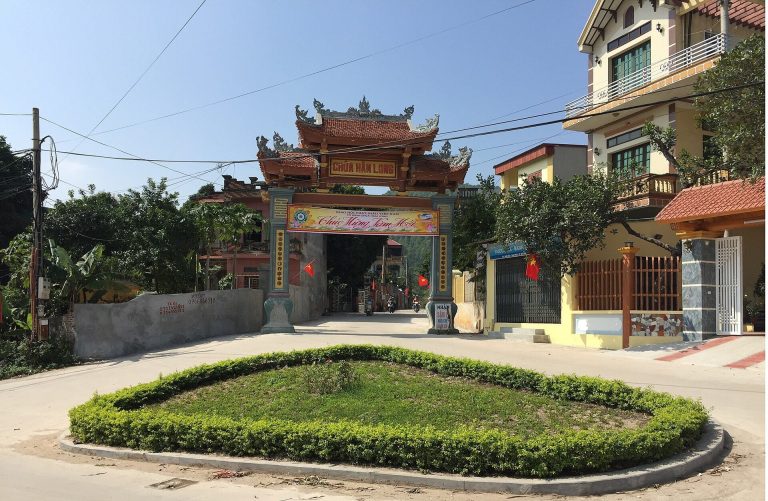
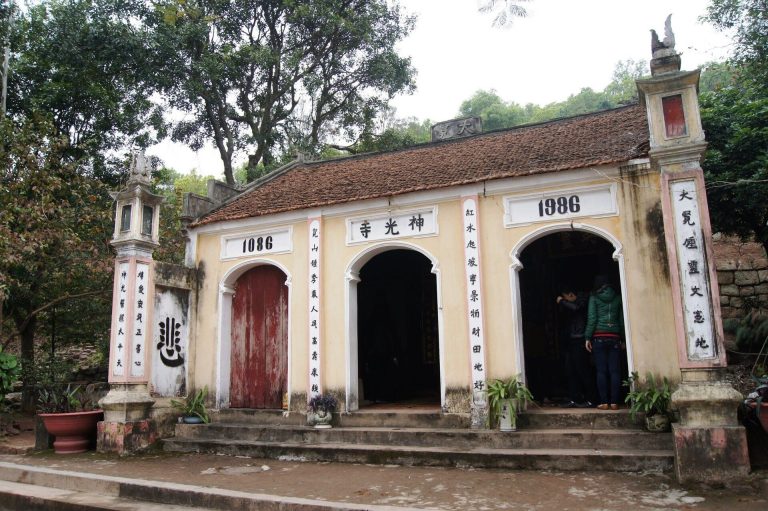
The pagoda’s other buildings include a three-portal entrance gate, a two-bay stele pavilion, a seven-bay guesthouse, a seven-bay monks’ residence, the ten-bay Patriarch Hall, a kitchen, and ancillary buildings.
Steles and inscriptions
Thanh Mai Viên Thông Stupa Stele
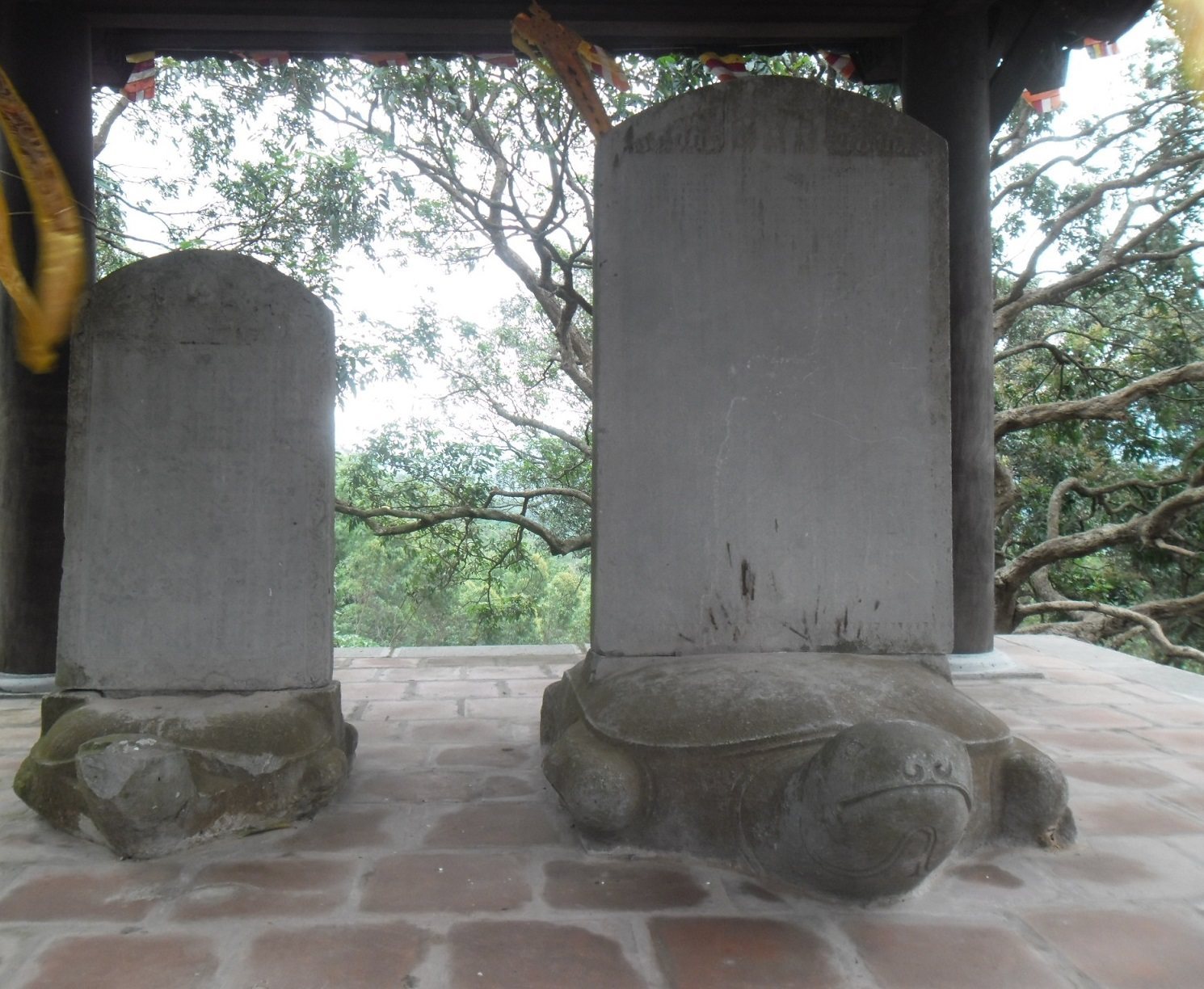
The Thanh Mai Viên Thông Stupa Stele is a single block of blue stone measuring 131 centimetres high, 82 centimetres wide, and 14 centimetres thick, not counting its base. It rests on a stone turtle with its head, shell, tail, and four legs intact; each foot has five claws. The stele is now in a roofed pavilion in front of the main hall. When Thích Chí Trung arrived in 1994, it lay among other stones and objects. The pagoda placed it on the turtle and moved it to its present position.
The front bears a six-character title in seal script, a formal style of Chinese writing, above the main inscription in clerical script, another historical Chinese writing style. A pair of crested Trần-period dragons faces inward at the top, while stylized scrolling vines frame the inscription. Wave and mountain designs decorate the base in a style associated with the Lý–Trần period. On the reverse, the border and divisions of the inscription correspond to those on the front. More than 5,000 Chinese characters cover the two faces: the front has 39 lines of 68 characters, and the back has 42 lines, mostly of 68 characters, with several shorter lines at the end. Exposure to sun and rain has worn the stone and faded many characters; a complete, accurate translation has not been established.
Other steles
Three other steles are preserved at the pagoda: two four-sided examples from the Lê period and one from the Mạc period.