Koloděje nad Lužnicí Castle: A Baroque Estate Residence in Czechia
Site at a Glance
- Rating
- 4.4
- Popularity
- Low
- Country
- Czechia
- Primary era
- Early Modern
- External website
- Open
- Eras represented
- Early Modern
- Civilizations
- Holy Roman Empire, Kingdom of Bohemia
- Site type
- Domestic
- Remains
- Castle
On this page9 sections
History
Koloděje nad Lužnicí Castle is a Baroque castle in Czechia, in the present-day town of Týn nad Vltavou. It developed from a Renaissance noble residence commissioned in 1535 on the site of an earlier manorial farmstead and inn, and became the centre of an estate beside the Lužnice River.
Renaissance origins and noble ownership
In 1535, the property passed to Adam Čabelický of Soutice, who ordered the construction of a small Renaissance residence. Its trapezoidal plan was surrounded by a water moat supplied by the Lužnice. The estate later passed through several noble families, including the lords of Liliental and the lords of Malovice.
Following an auction in 1704, the property was acquired by Count Václav Oktavián Kinský. His daughter Marie Alžběta later married František Karel Vratislav of Mitrovice and received the castle as her dowry.
Baroque rebuilding and the Vratislav estate
Between 1739 and 1741, František Karel Vratislav had the Renaissance residence rebuilt as a Baroque castle. The Baroque period was a European era known for animated forms, dramatic spaces, and elaborate decoration. The rebuilding is attributed to Jan Hybner, who also designed the Chapel of St. Anne attached to the castle.
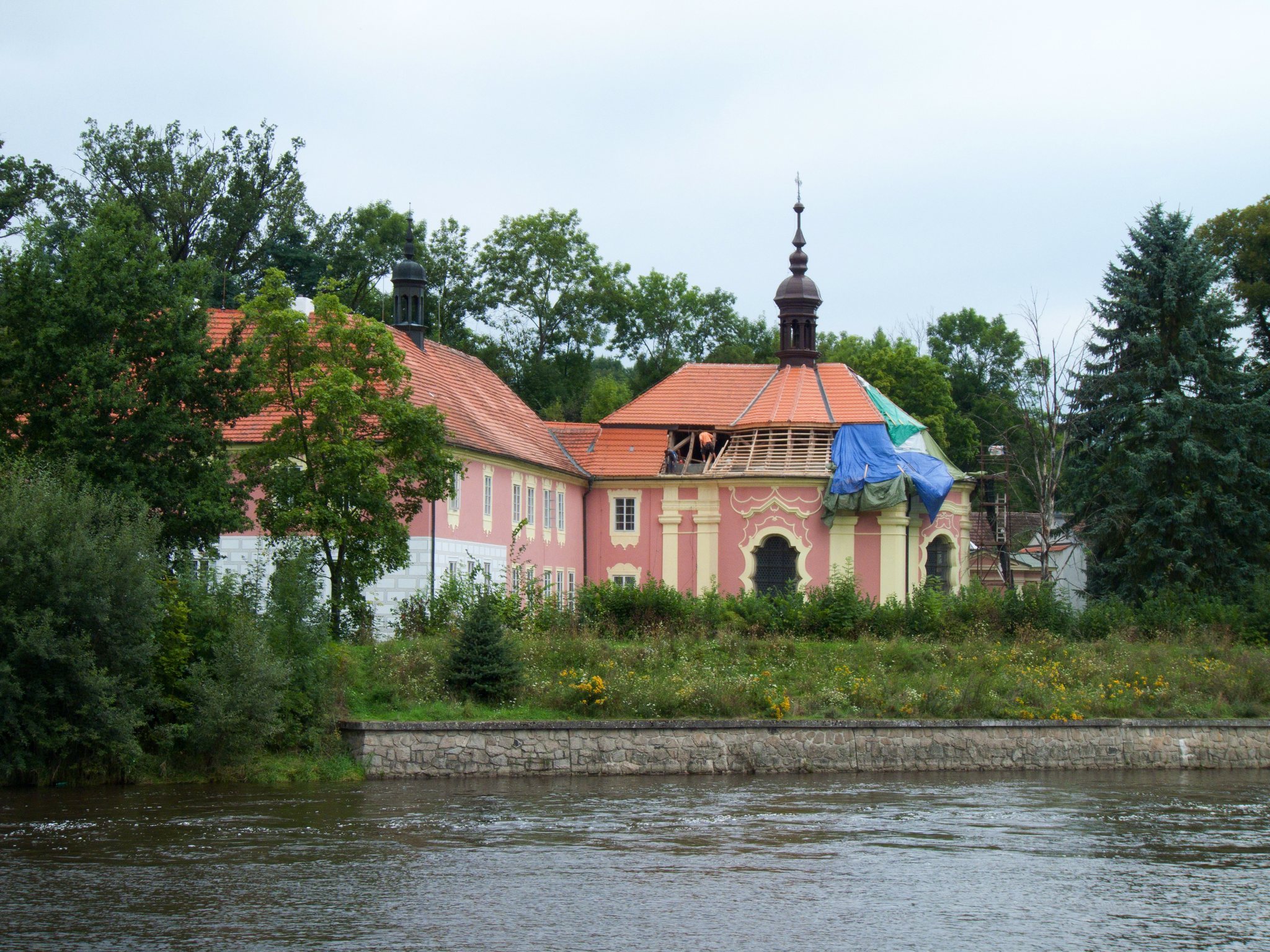
A castle park existed by 1753. After 1840, the former Renaissance mill was moved to the opposite bank of the river, while the river channel near the castle was shifted. These changes created additional space for the park. A family crypt for the Vratislav of Mitrovice family was built in 1875.
Twentieth-century changes and restoration
The male line of the Vratislav of Mitrovice family ended in 1943. The estate passed to Marie Terezie, who was married to Baron Dercsényi, but the property was subsequently nationalized. The castle, brewery, distillery, and stables were assigned to the local Unified Agricultural Cooperative, and the castle building housed a museum depository.
In 1961, filling of the Orlík Reservoir raised the level of the Lužnice near the castle. A protective embankment was built, reducing the area of the castle park. A military aircraft crashed onto the castle roof in 1970. During post-communist restitution, female heirs of the Dercsényi family reclaimed the castle and later sold the restituted properties.
The Lužnice flooded the castle in 2002. Since 2008, the property has been owned by Mitrowicz, a.s., which arranged building and restoration work with financial participation by the state. Koloděje nad Lužnicí Castle is legally protected as a cultural monument.
Remains
Main castle and grounds
Castle building
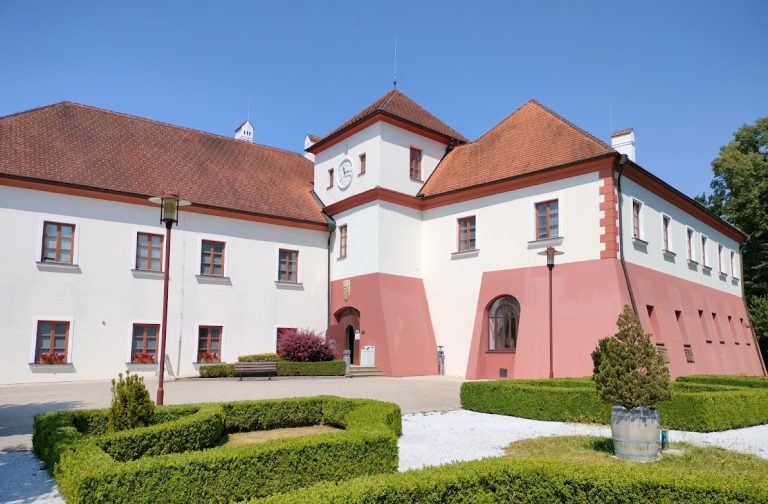
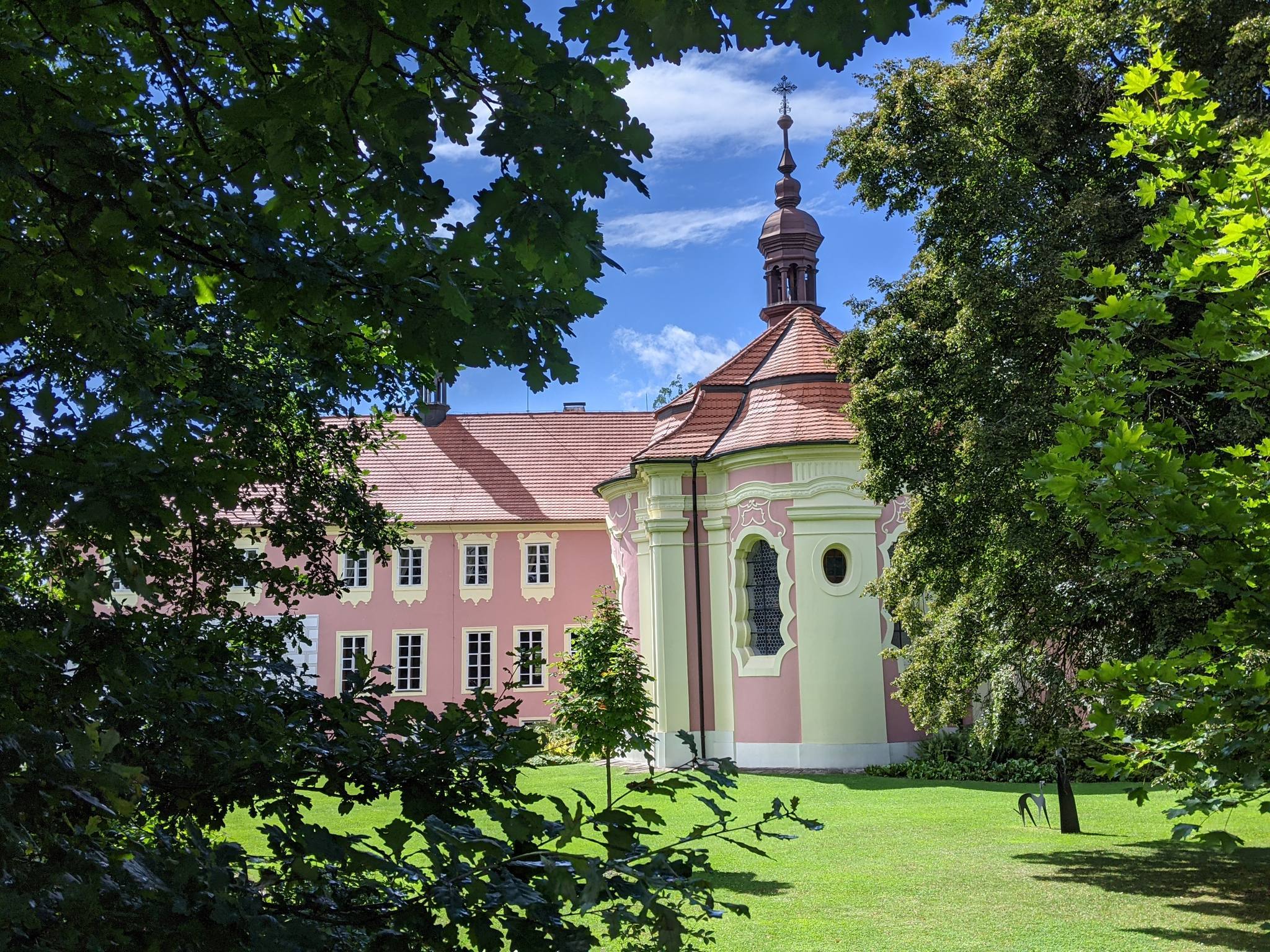
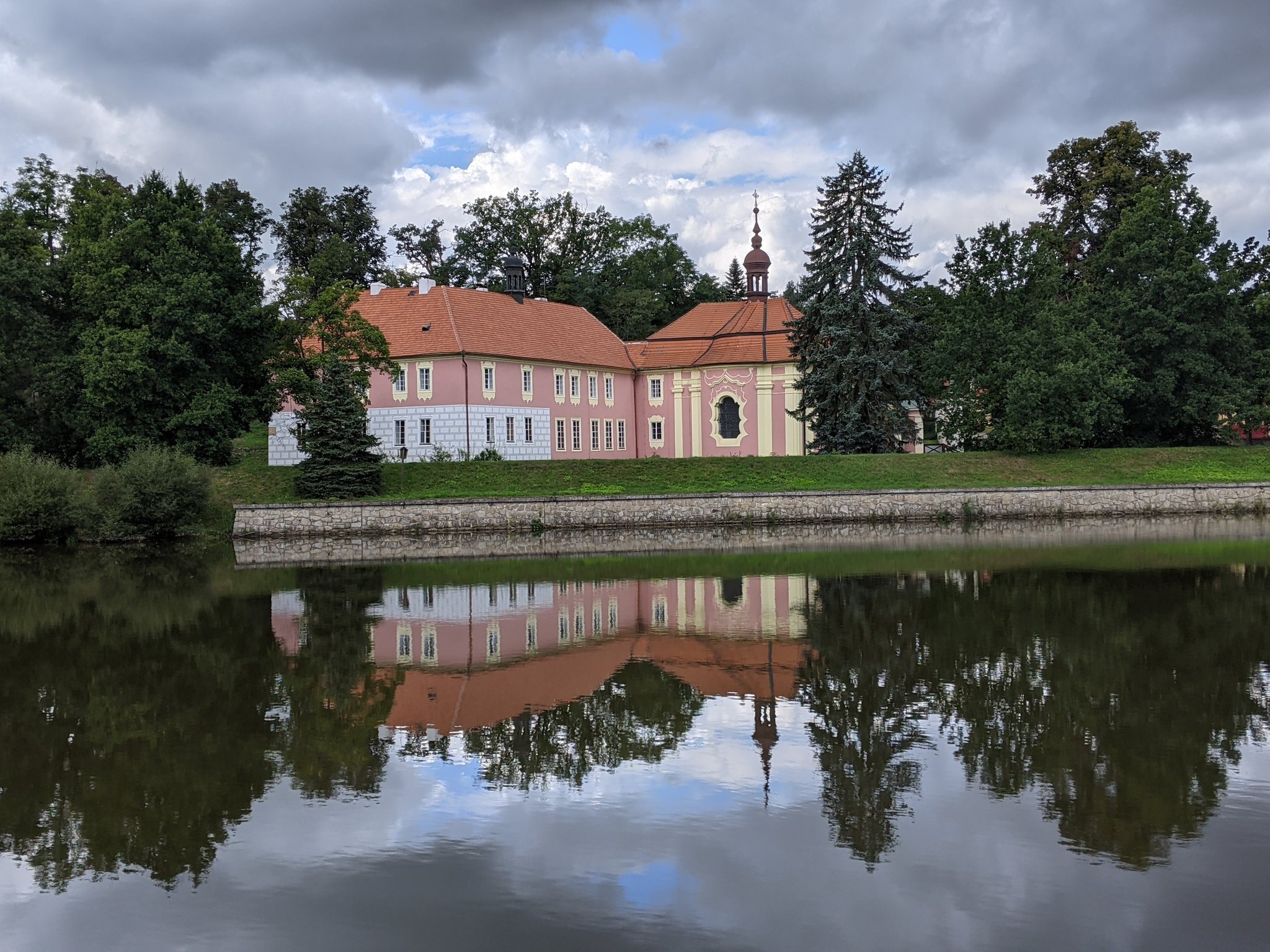
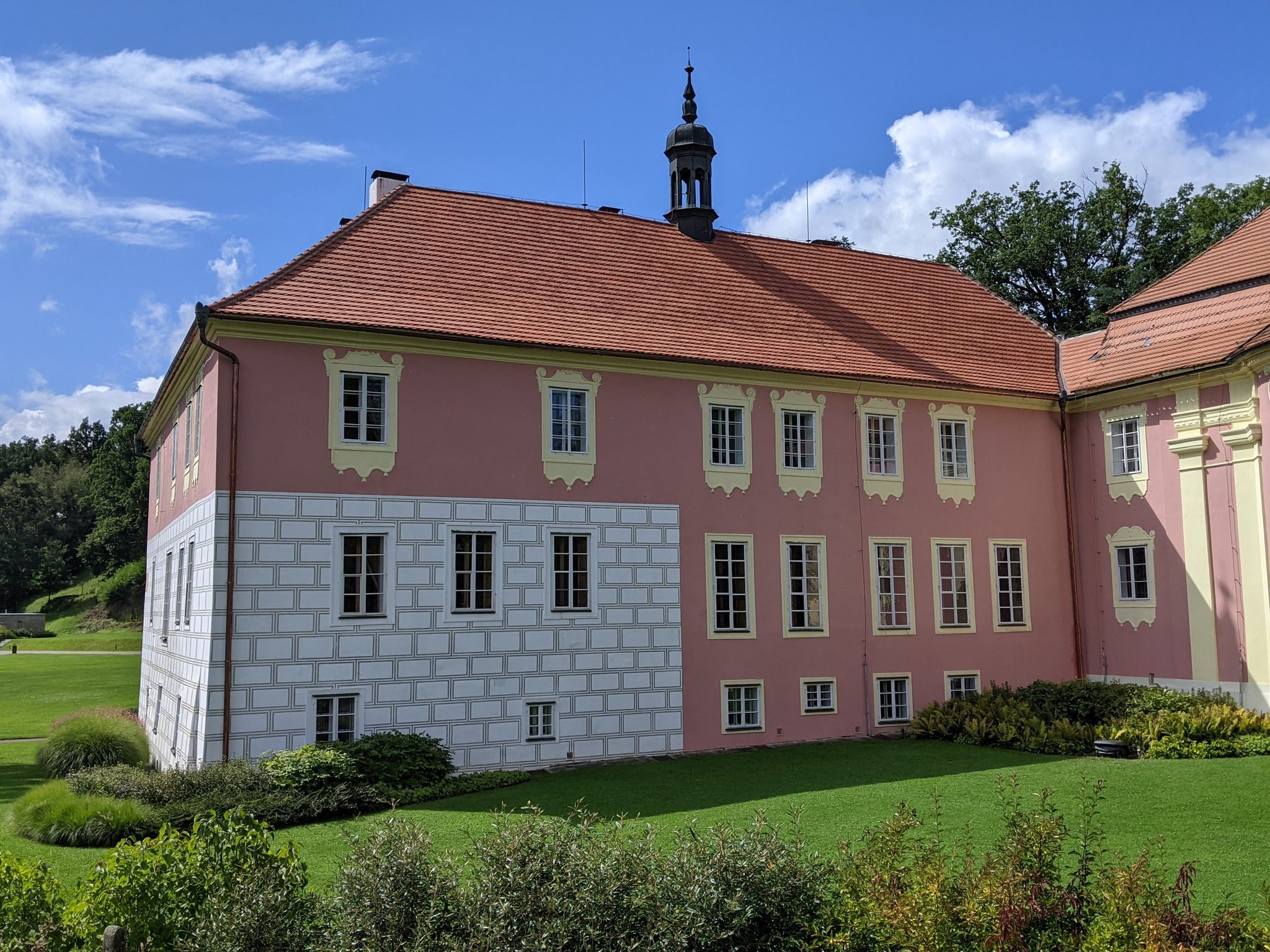
The present castle is a Baroque building on the right bank of the Lužnice. It replaced the earlier Renaissance residence, whose trapezoidal layout and water moat reflected the site’s relationship with the river. The Baroque rebuilding of 1739 to 1741 gave the castle its current architectural character.
Rococo wall paintings from the 1780s survive in the private and representative rooms on the first floor, particularly in the Representative Hall. Rococo developed as a lighter and more intimate decorative style after the Baroque period. The paintings probably show episodes from the travels of Václav Vratislav of Mitrovice, who joined a journey to Constantinople as a page and later recorded the route in a travel account.
Castle park
The park forms part of the castle surroundings. Its expansion after 1840 followed the relocation of the former Renaissance mill to the opposite riverbank and the shifting of the river channel beside the castle. Its area was later reduced when the protective embankment connected with the Orlík Reservoir was constructed.
Chapel of St. Anne
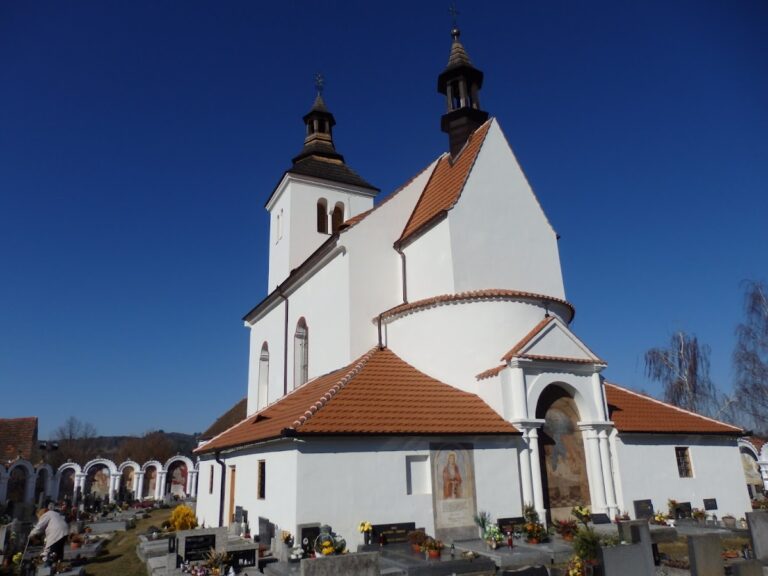
The Chapel of St. Anne is attached to the northwestern wing. Built by Jan Hybner in 1741, it consists of an interconnected rectangle and ellipse. Its articulated façades include chasuble-shaped windows, whose outlines resemble the priest’s vestment worn during Mass. The design was probably influenced by the work of Kilian Ignaz Dientzenhofer, a prominent Bohemian Baroque architect.
Inside, Jiří Vilém Neunhertz painted the fresco Glorification of the Virgin Mary and the Holy Trinity in 1744. The main altar painting, Saint Anne Selbdritt, shows Saint Anne with the Virgin Mary and the infant Jesus. It was made by an anonymous painter from the circle of Peter Brandl’s followers. The chapel organ dates from 1818.
The castle estate also historically included a brewery, distillery, stables, and the Vratislav of Mitrovice family crypt. The castle’s original furnishings were removed after the Second World War and taken to Kratochvíle Castle, but were soon removed from there because they did not fit its interiors stylistically.