Saint Peter of the Dominicans, Heraklion: A Venetian Gothic Church


Site at a Glance
- Rating
- 4.6
- Popularity
- Low
- Country
- Greece
- Primary era
- Medieval
- External website
- Open
- Eras represented
- Medieval
- Civilizations
- Venetian
- Site type
- Religious
- Remains
- Church
On this page6 sections
History
Foundation under Venetian Rule
Saint Peter of the Dominicans is a medieval Catholic church in Heraklion, Greece, built under Venetian rule between 1248 and 1253 in the Gothic architectural tradition. It served as the principal church of a Dominican monastery, although it initially belonged to a Cistercian monastery. The Cistercians were a Catholic monastic order associated with an austere form of communal religious life. The church was dedicated to the apostles Saint Peter and Saint Paul, but it was generally known as the Church of Saint Peter.
The building functioned both as a monastic church and as a burial place connected with prominent Venetians and the city’s Venetian clergy. Its position on the shoreline, near the former Venetian port, the Venetian fortress, and the sea wall, placed it within the coastal setting of Venetian Heraklion.
Ottoman and Later Use
After the beginning of Ottoman rule in Crete, the church was converted into a mosque dedicated to Sultan Ibrahim, the Ottoman ruler who reigned from 1640 to 1648. It became known as the Sultan Ibrahim Mosque. The building was later converted into an Orthodox church, reflecting the successive religious and political changes that affected Heraklion.
Following restoration, Saint Peter of the Dominicans functions as a ceremonial church and conference venue. It also hosts the annual feast of Saints Peter and Paul. The church and the surrounding ruins are protected in Greece as an archaeological site and listed building.
Remains
The Church Building
The surviving church is a large single-nave basilica with a timber roof and a Gothic character. The sanctuary and chapels have cross vaults, formed by intersecting vaulted sections, while wall paintings remain in one of the chapels. The building is preserved as part of a wider archaeological area rather than as an isolated structure, allowing its surviving fabric to be understood alongside the ruins around it.
Archaeological Area
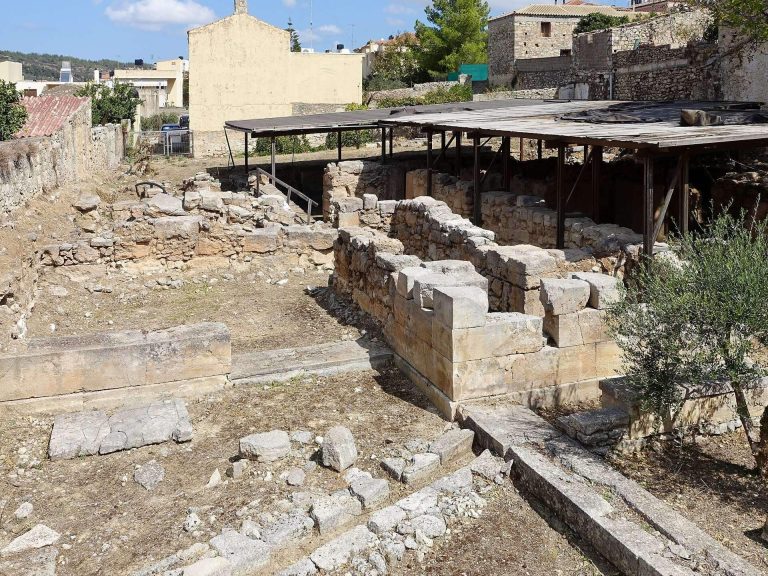
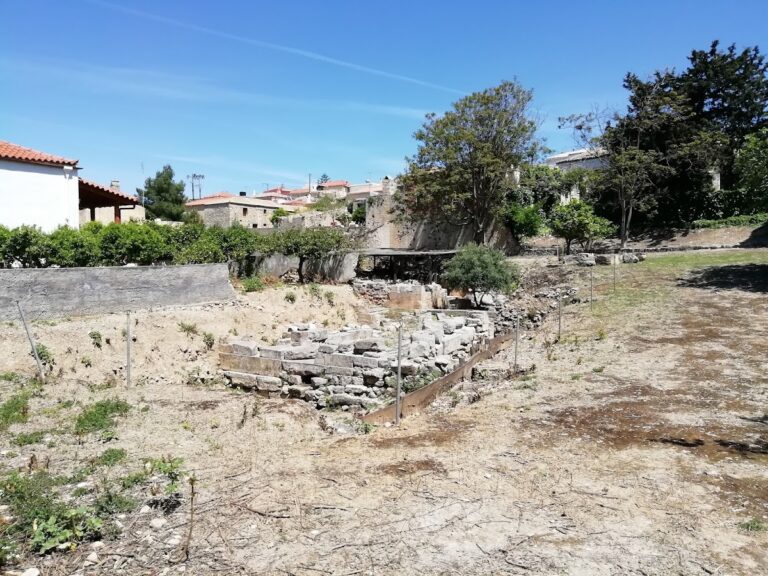
The archaeological area extends around the church and includes evidence from earlier phases of occupation. Graves dating to the Second Byzantine period, the later phase of Byzantine rule in Crete, have been found in the vicinity. Traces of habitation from the Arab period, chiefly the ninth and tenth centuries, were also uncovered around the church, particularly beneath the Kastella building. These remains place the medieval church within a longer sequence of settlement on Heraklion’s shoreline.