Kloster St. Georgenberg: A Cistercian Women’s Abbey in Frankenberg
Site at a Glance
- Rating
- 5
- Popularity
- Very Low
- Country
- Germany
- Primary era
- Medieval
- Eras represented
- Medieval, Early Modern
- Civilizations
- Holy Roman Empire
- Site type
- Religious
- Remains
- Monastery
On this page12 sections
History
Foundation and relocation
Kloster St. Georgenberg is a former Cistercian women’s abbey in Frankenberg, Germany, founded during the thirteenth century. The abbey stood under the patronage of Saint Maurice and was also dedicated to Saints George and Mary, although it was generally known as St. Georgenberg. At first, the monastery belonged to the Archdiocese of Mainz; it is now within the Diocese of Fulda. It did not establish daughter monasteries.
In 1242, Konrad von Itter founded a convent called Butzebach, also known as Butzkirchen, in an isolated woodland area of the Nuhne valley about six kilometres north of Frankenberg. The location between present-day Schreufa and Sachsenberg proved difficult to sustain economically and practically. Konrad’s sons, Reinhard I and Konrad II, therefore agreed with Landgrave Heinrich of Thuringia to move the community closer to the fortified town of Frankenberg.
Construction began in 1245 west of Frankenberg’s gates, on the site of the abandoned village of Hadebrandsdorf at the meeting point of the Nemphe and Eder. The town and its castle offered better protection, while the new foundation also supported Hessian interests against the territorial claims and possessions of the Electorate of Mainz in the upper Eder region. The nuns moved to the new site in 1249, although building work continued for several years.
Medieval development
The relocation quickly improved the abbey’s economic position. Two neighbouring estates formed its original material foundation, while later donations and inheritances brought it property and income in about 90 settlements. From 1254, the monastery also received revenue from the patronage of Frankenberg’s town church. This patronage gave the abbey rights and income connected with the parish church, including influence over its clerical administration.
The abbess directed the convent locally, while the abbot of Haina carried out repeated visitations. In 1308, Mainz Archbishop Peter of Aspelt limited the community to 36 sisters, although the abbey sometimes housed more than 50. Most of the nuns came from lower noble families and prosperous urban households in the surrounding area. For them, the Cistercian convent provided a socially suitable and economically secure form of religious life. The order emphasized communal discipline, enclosure, and economic self-sufficiency.
The abbey lost the patronage of Frankenberg’s parish church in 1392, when it passed to the Hospitaller commandery at Wiesenfeld. This caused a considerable reduction in income. During the fifteenth century, discipline also weakened. In 1444, the convent was reported to have departed from its rule and to have stopped observing enclosure. By 1452, only six nuns remained.
Landgrave Wilhelm I of Hesse restored enclosure in 1487 and brought nuns from Westphalia to Frankenberg. The community recovered and in 1517 consisted of 51 women and seven men. This expansion appears to have placed renewed pressure on the abbey’s economic resources, and decline followed again.
Secularization and later institutional use
Landgrave Philipp of Hesse introduced the Reformation, the movement that divided Western Christianity and established Protestant churches, in his territory in 1526 and 1527. Kloster St. Georgenberg was then secularized. Nuns who did not leave voluntarily were permitted to remain for the rest of their lives. In 1568, the last members transferred the monastery to the landgrave, and the final nun died in 1581.
The landgraviate took control of the buildings, furnishings, and landed property. The silver was melted down, and the agricultural estates were sold. The buildings remained in landgrave ownership, while the movable inventory was later reduced, especially through wartime plundering. The complex itself remained generally well preserved.
The former monastery was adapted to a succession of state and institutional functions. A landgravial forester occupied it from 1539, and from 1588 it housed the landgravial rentmaster and his administration. This official managed territorial revenues and estates. The University of Marburg also used the complex several times between 1530 and 1611 as an alternative teaching location during plague outbreaks and other epidemics.
A Reformed congregation worshipped in the Mauritius Chapel from 1659 to 1662, before the hospital church was prepared for services in 1679. French Protestants known as Huguenots, many of whom settled in German territories after persecution and restrictions in France, established themselves at Louisendorf in 1688 and used the monastery chapel until their own church was completed in 1702.
Administrative and museum history
In later centuries, the complex housed the state forestry administration and the district court with its prison. From 1902 to 1974, it served as the seat of the Frankenberg district administration. After the creation of the Waldeck-Frankenberg district in 1974, it became an external office of the district administration.
A low office wing added in the 1960s was later removed. The complex now contains an external office of the Waldeck-Frankenberg district administration and the Museum in the Frankenberg Monastery. A local-history museum was established there in 1952, and the museum reopened in a new form at the end of 2024 with exhibitions on the history of Frankenberg and its district.
Remains
Monastery complex and medieval chapel
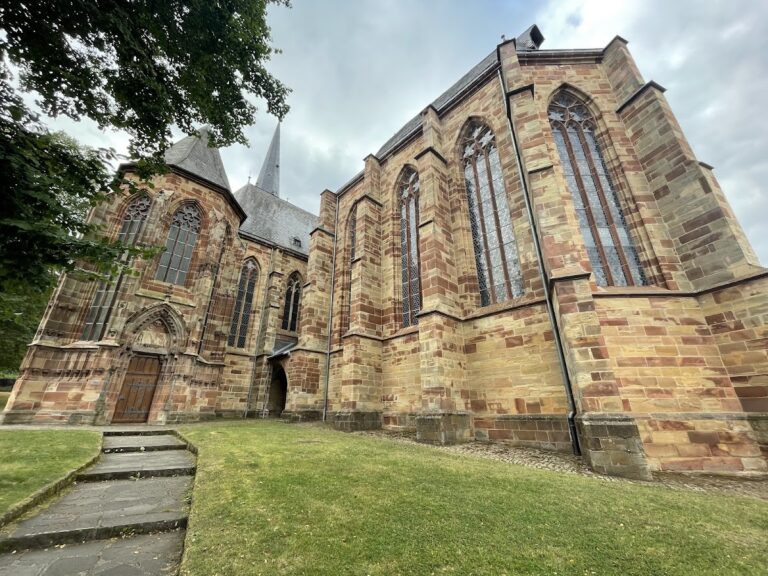
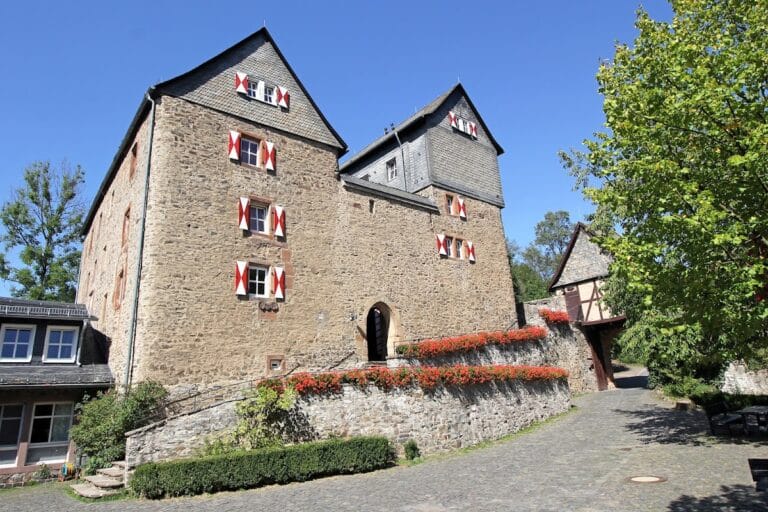
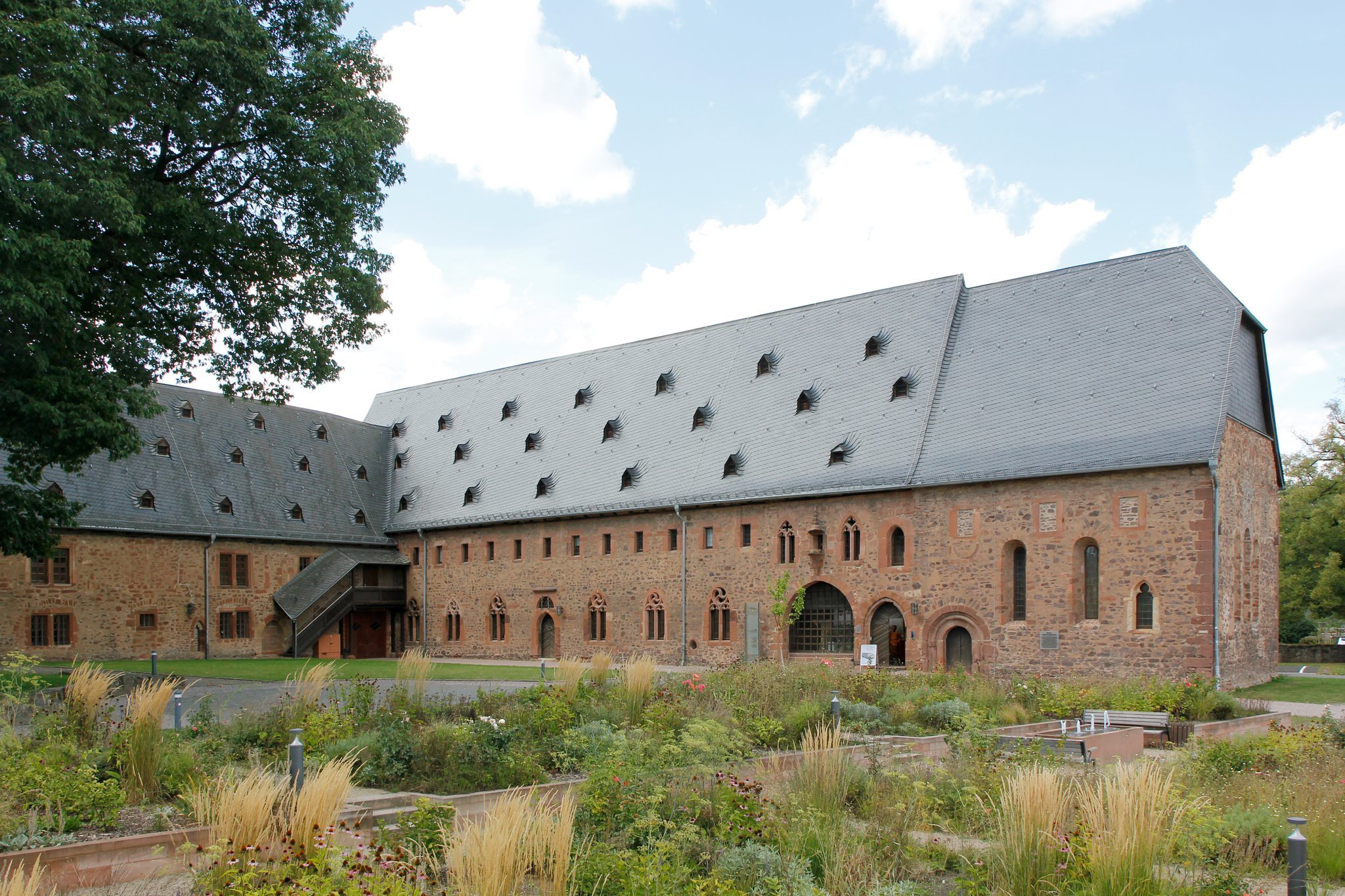
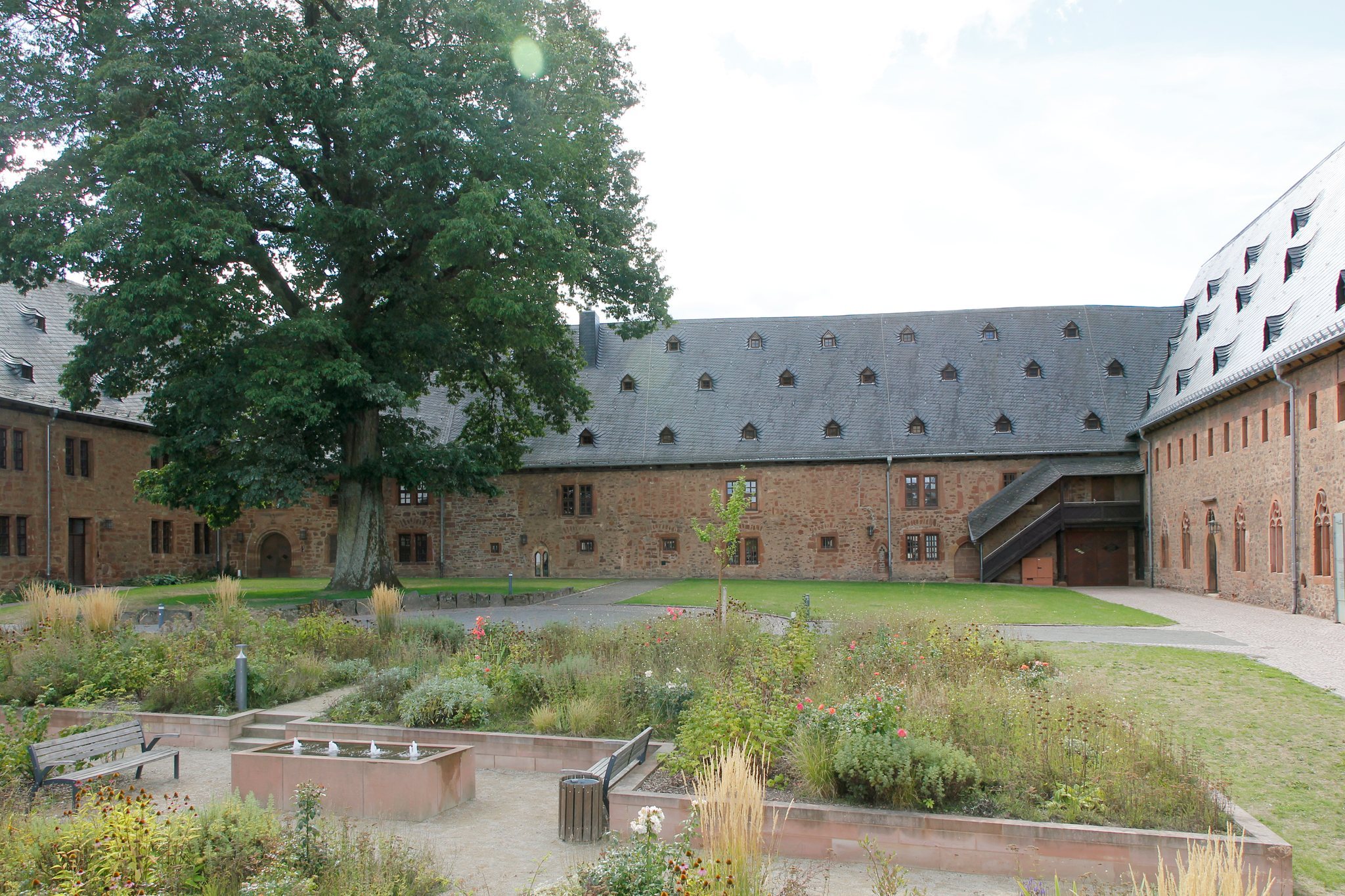
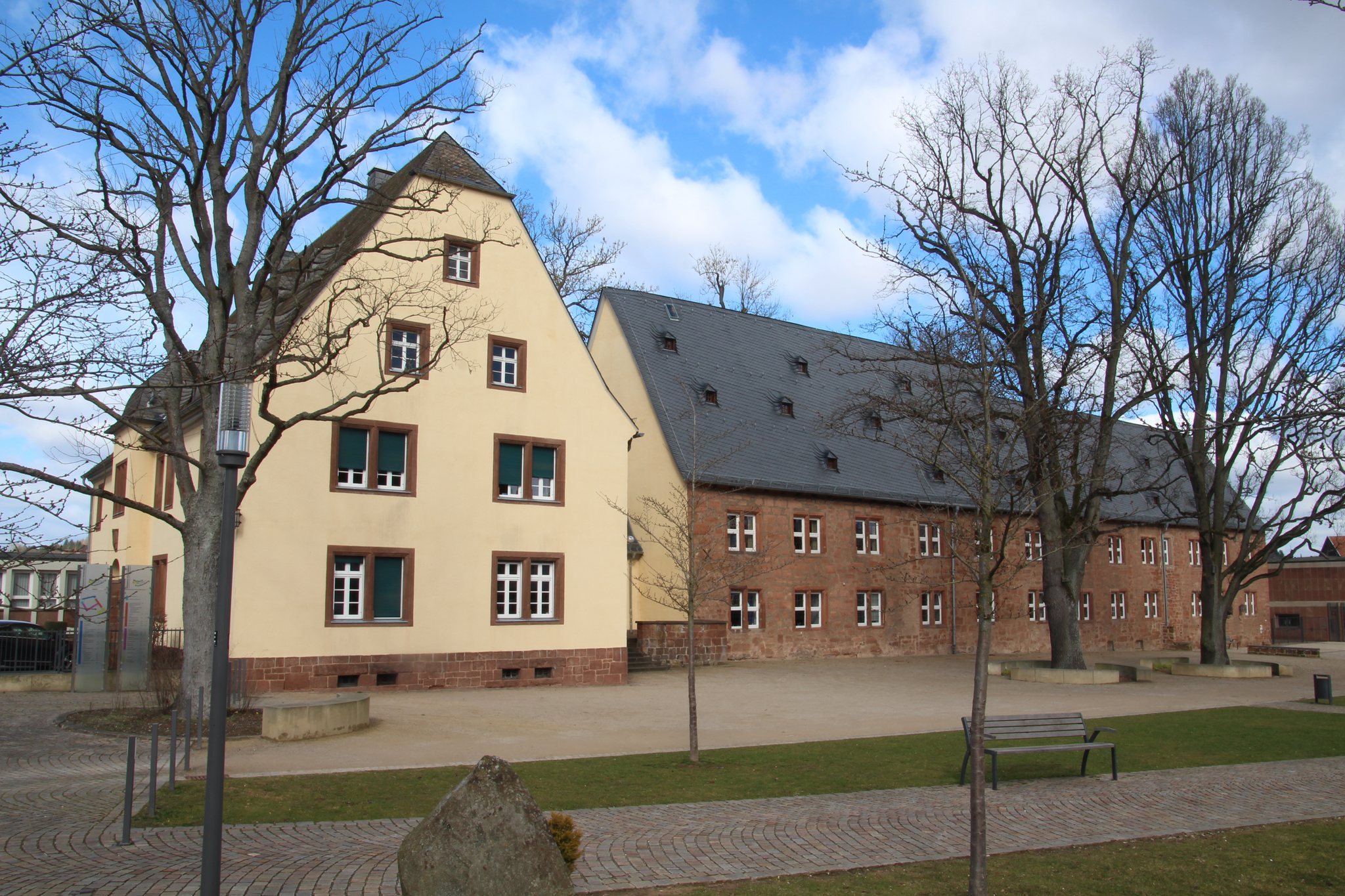
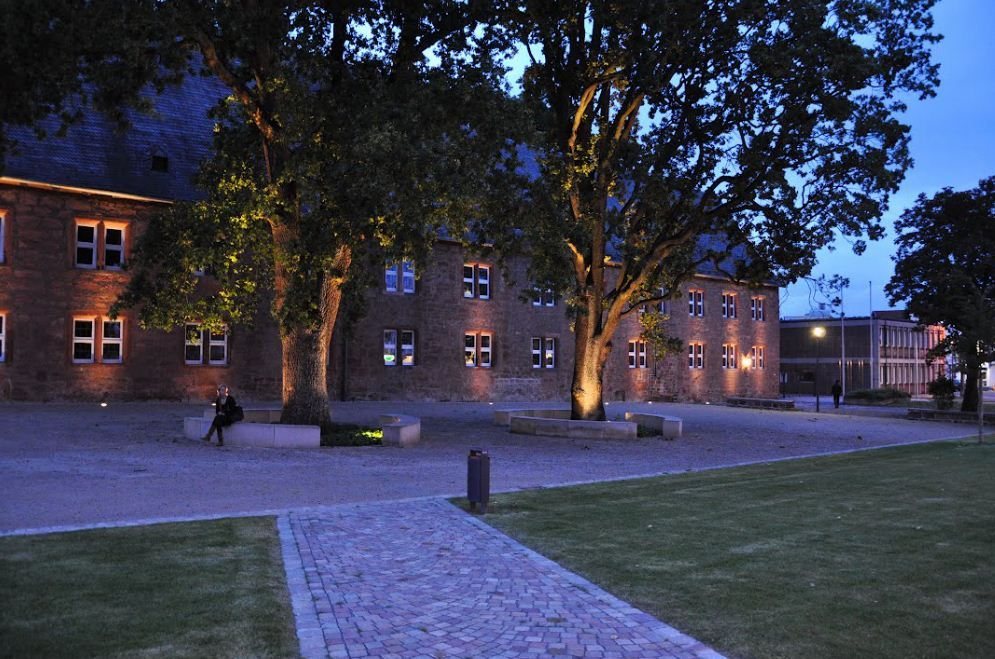
Kloster St. Georgenberg is a three-wing complex whose surviving fabric dates from the thirteenth through the seventeenth centuries. It stands west of the former town gates, on the former site of Hadebrandsdorf near the confluence of the Nemphe and Eder. The buildings combine surviving elements from the monastery’s medieval foundation with later alterations connected to changing institutional uses.
Mauritius Chapel
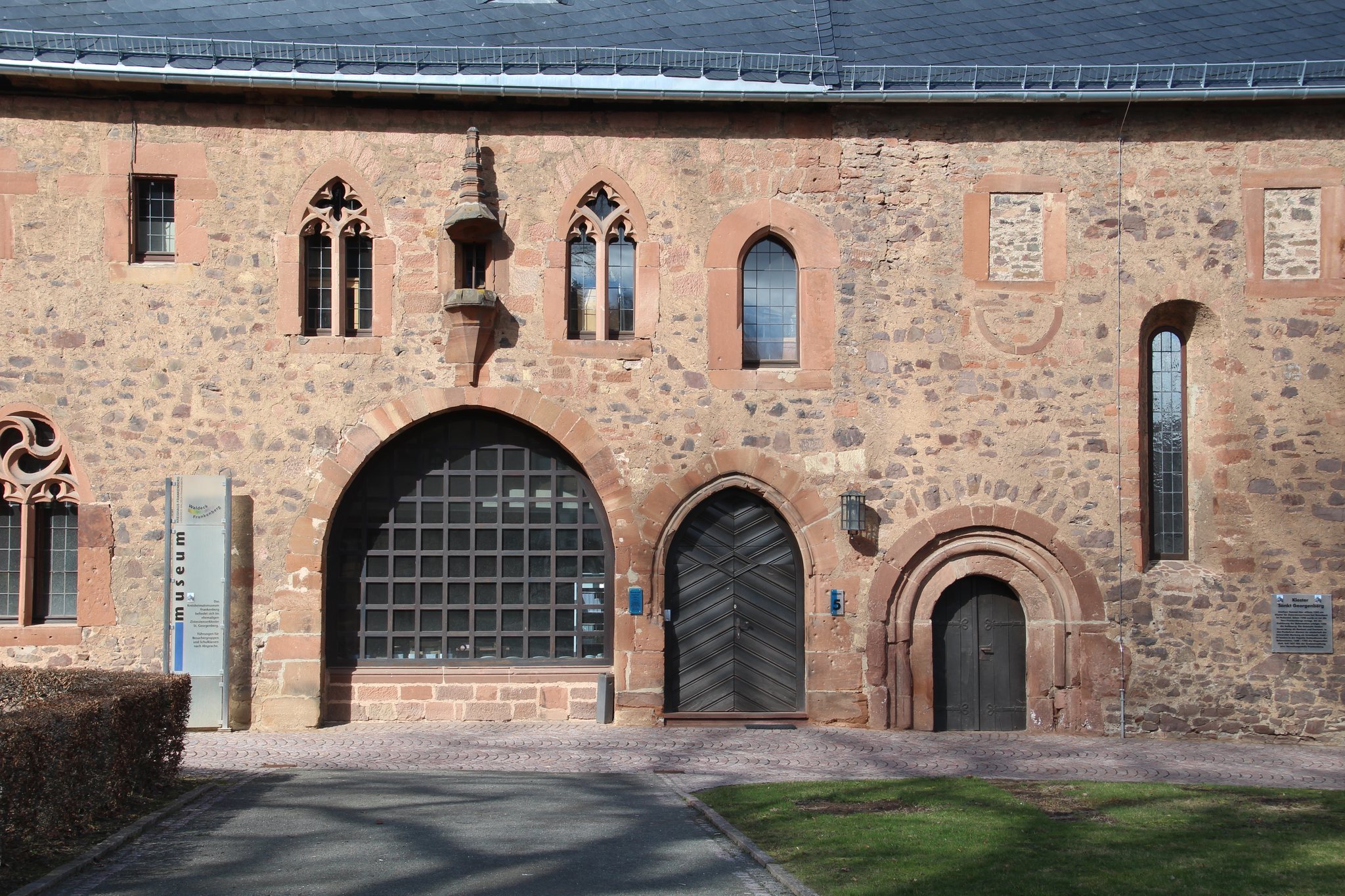
A small Late Romanesque chapel from Hadebrandsdorf was still standing when the convent moved to the site. The monastery adapted it for the needs of an enclosed women’s community and dedicated it to Saint Maurice, a Christian martyr traditionally associated with the Theban Legion. The chapel retains narrow round-arched windows from the mid-thirteenth century.
Entrances to a nuns’ gallery remain in the chapel. This elevated area allowed enclosed members of the community to take part in worship while remaining separated from the main congregation. After the monastery was dissolved, the chapel was converted into a tithe barn, a storage building for agricultural dues, and a dividing floor was inserted into the interior.
Cloister and dormitory
West of the chapel lies the former cloister, a covered passage arranged around an open court. Its Late Gothic tracery windows retain ornamental stone frameworks that divided and supported the upper parts of Gothic windows. The upper floor contains the former dormitory, the communal sleeping area of the religious community, with its small rectangular windows still surviving.
Museum collections
Works associated with Philipp Soldan
The north wing contains the Museum in the Frankenberg Monastery. Its displays include works by Philipp Soldan, a sixteenth-century Frankenberg woodcarver, stone sculptor, and artist associated with stove plates. The collection includes stove plates based on his moulds and elaborately carved beam heads originally made for Frankenberg’s Church of Our Lady.
Sandstone figures by Tyle of Frankenberg
The museum also presents numerous sandstone figures by Tyle of Frankenberg, a fourteenth-century stone sculptor and master builder from the town. The figures originally came from the Church of Our Lady. They were removed during the iconoclasm of 1606, when religious images were destroyed or taken down on the orders of Landgrave Moritz of Hesse, and some of the figures were partly destroyed.