Kloster Harsefeld: A Benedictine Abbey in Germany
Site at a Glance
- Rating
- 4.3
- Popularity
- Very Low
- Country
- Germany
- Primary era
- Medieval
- Eras represented
- Medieval
- Civilizations
- Holy Roman Empire
- Site type
- Religious
- Remains
- Monastery
On this page11 sections
History
Kloster Harsefeld was a Benedictine abbey in Harsefeld, Germany, that developed from an earlier collegiate foundation and became a Catholic stronghold on the Lower Elbe until its dissolution in 1648. Its origins lay in a community of secular priests established between 1007 and 1010 by the counts of Stade, the Udonids, as penance for a political murder. The foundation later became a Benedictine monastery, whose church was consecrated in 1108.
From collegiate foundation to Benedictine monastery
The foundation arose after Udo and Heinrich of Katlenburg, sons of Count Luder-Udo, took part in the killing of Margrave Ekkehard of Meissen at Pöhlde on 30 April 1002. King Henry II spared the two men but required them to surrender their inherited estates around Harsefeld, including Harsefeld Castle, to the Church. With the support of Count Henry II of Stade, known as “the Good,” a collegiate institution was established under the patronage of the Virgin Mary and the Apostle Bartholomew. Archbishop Libentius I of Bremen consecrated it, and the community of secular clergy lasted for 99 years.
Oda of Werl, wife of Count Udo II and stepdaughter of Duke Otto of Northeim, is regarded as the founder of the Benedictine monastery. She sought to transform the collegiate foundation into a monastery so that the archbishops of Bremen could not appropriate it. Around 1100, monks arrived from Ilsenburg with their abbot Herrand. They followed a combination of Gorze and Cluniac observances known as the Ilsenburg, or Herrand, reform. The Benedictine foundation was formally established in the early twelfth century, and its church was consecrated in 1108.
Harsefeld was removed from the ordinary jurisdiction of the archbishops of Bremen, apart from certain consecration functions, and placed directly under Pope Paschal II. This arrangement made the abbey largely exempt, meaning that it answered directly to the papacy rather than to the local diocesan authority. The papal constitution gave the community broad freedoms, including the right to elect its abbot and its lay advocate, or Vogt, who represented and protected the institution in legal and secular affairs.
Most of the monks who had come from Ilsenburg returned to the Harz after five years. Harsefeld then drew many members from the landed nobility of the Lower Elbe and benefited from substantial donations. In 1147 it founded a daughter monastery dedicated to Saint Mary outside Stade.
Exemption and political conflict
The archbishops of Bremen repeatedly tried to restrict Harsefeld’s privileges. During the Western Schism, the late-medieval division in which rival popes claimed authority, the antipope Victor IV granted control of the monastery to Archbishop Hartwig of Bremen. Abbot Ado opposed the archbishop and probably also faced resistance within his own community before leaving Harsefeld.
In 1158 Duke Henry the Lion annulled Harsefeld’s subordination to Bremen, and the abbey became a Welf political base. A settlement in 1221 confirmed its privileges but assigned the archbishop responsibility for electing the Vogt. Pope Alexander IV formally confirmed Harsefeld’s exemption in 1260. The conflict nevertheless continued. Archbishop Hildebold of Bremen expelled Abbot Reinhold, who fled to Brunswick, and allowed the monastery’s property to be devastated. Reinhold remained in exile for three years until Pope Urban IV intervened. Harsefeld repeatedly suffered from the wider rivalry between the Welfs and the archbishops of Bremen.
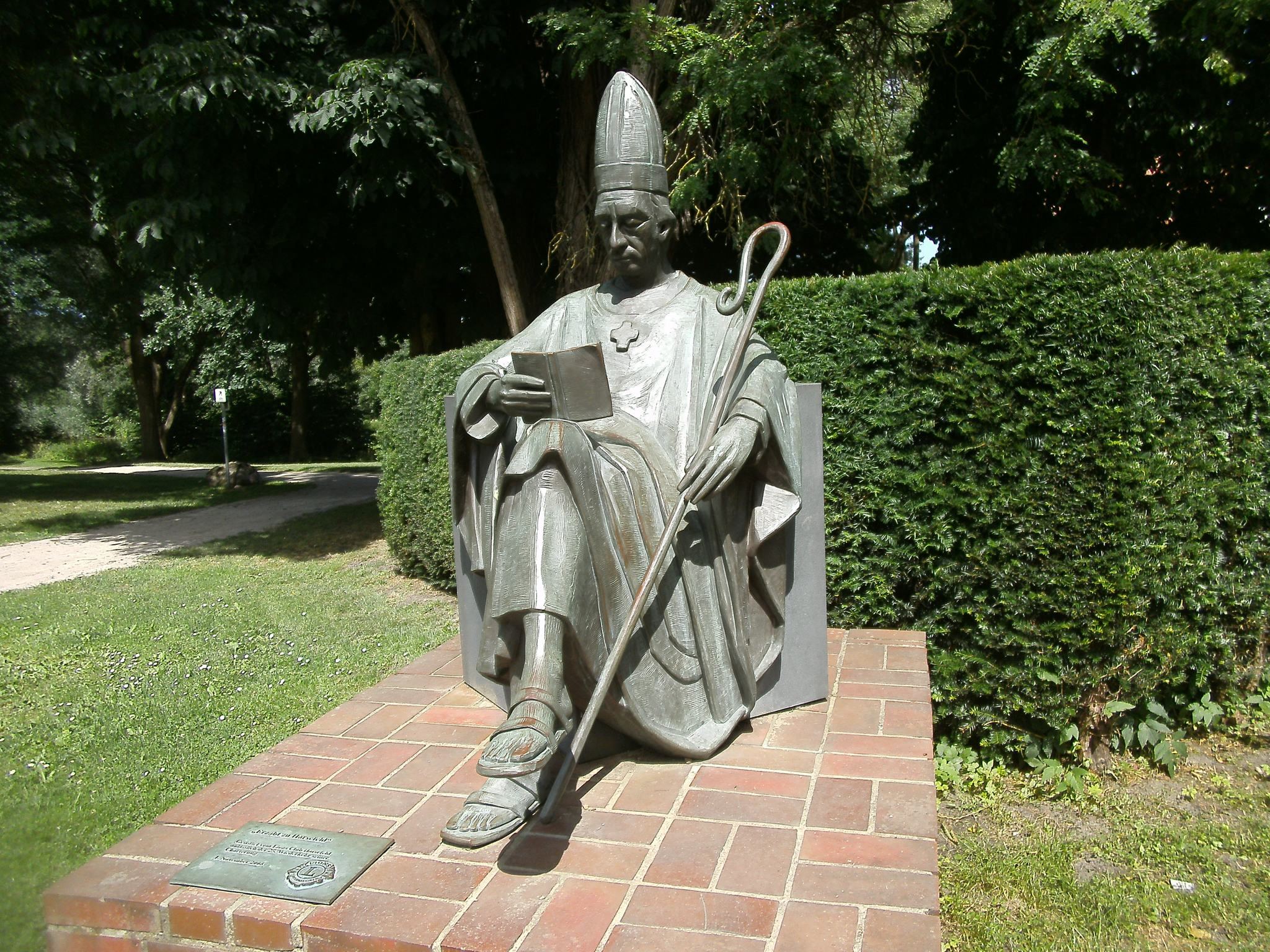
The circumstances in which Harsefeld’s abbots acquired the title of archabbot remain uncertain. The title appears in papal documents of the fourteenth century, while Gerlach Schulte, who led the abbey from 1375 to 1410, was the first superior known to use it. An archabbot was a superior recognized as standing above ordinary abbots, or, literally, a first abbot.
The Schulte archabbots and the late medieval abbey
Gerlach Schulte expanded the monastery’s wealth, including through leased land in the Altes Land, the fertile agricultural region along the Lower Elbe south of the river. In 1394 Pope Boniface IX authorized him and his successors to wear pontificals, the insignia and vestments associated with episcopal or comparable high ecclesiastical office. Three years later Gerlach gained a place in the estates of the archbishopric of Bremen. Shortly before his death in 1410, the antipope John XXIII granted him judicial powers, including the authority to absolve offenders who had completed their penance.
Gerlach’s successors Johannes Schulte and Johannes de Lu governed from 1410 to 1440 and from 1440 to 1462. All three archabbots belonged to the same Schulte family, and together they oversaw the construction of a new abbey church and its furnishing with works of art. From the late fourteenth century, the archabbot of Harsefeld was also the first prelate of the archbishopric of Bremen. He served as president and spokesman of the Bremen estates in their dealings with the archbishop, while the abbey continued to look to the papacy to preserve its exemption.
Pope Martin V’s abolition in 1418 of exemption privileges granted by his immediate predecessors allowed the archbishop of Bremen to argue that Harsefeld’s older exemption had ended. In 1462 Mathias Grimmeke became the first archabbot of civic rather than noble background. Disputes following his death, including a double election, were eventually settled.
Reform, destruction, and the Reformation
The resignation of Archabbot Detlev von Luneberg in 1508 opened the way for Harsefeld to join the Bursfeld Congregation. This fifteenth-century Benedictine reform association, centered on Bursfelde Abbey, sought stricter observance and closer coordination among participating monasteries. Archbishop Johann Rode von Wale supported the change partly because he hoped it would weaken Harsefeld’s exemption. Heinrich Dudenrath, a monk from Huysburg, became archabbot in 1508 and advanced the connection. Harsefeld formally joined the congregation in 1510 while retaining its exemption.
The surrounding settlements gradually adopted Protestantism from 1525 onward, but Harsefeld itself remained Catholic. Its abbots tried to preserve the community within the Catholic Church, admitted many young men to the novitiate, and later sent them to Jesuit schools in Cologne and Fulda. Archabbot Luneberg Brummer, who governed from 1575 to 1612, also attempted to revive the Roman rite.
The abbey suffered a severe physical disaster during the sixteenth century. The Mecklenburg knight Joachim Pentz of Gadebusch attacked it twice because the archbishop of Bremen had failed to repay a loan of 5,000 gold ducats. On 5 January 1545 the monks repelled his first assault with a barrage of stones. On 25 February 1546 Pentz returned with about 100 men, entered the monastery, and plundered and burned it. The complex was left in ruins. Archabbot Arnold Bicker, who led Harsefeld from 1527 to 1548, escaped capture because he was in Buxtehude and later began rebuilding with outside assistance.
Decline and dissolution
Harsefeld’s community declined to seven members by 1611. The monks had abandoned their habits by 1616, although they apparently resumed wearing them later. Imperial orders for visitations in 1616 and 1617 were abandoned because of resistance from Bremen. A visitation begun by two Hildesheim abbots in 1624 was interrupted when Archabbot Paridon Korff and his convent failed to cooperate. In 1625 the community accepted a visitation by Bremen’s Protestant administrator, Johann Friedrich, despite its claim of exemption, and the result was satisfactory.
In 1628 the Bursfeld Union appointed Friedrich Davensberg archabbot. During the period of the Imperial Edict of Restitution, a 1629 decree that sought to restore Catholic ecclesiastical property transferred to Protestants since the Reformation, he attempted to reform and strengthen the convent. Monks unwilling to reform were replaced by conventuals from Cologne and Abdinghof, and several new members joined in 1631 and 1632.
The Thirty Years’ War, the European conflict that lasted from 1618 to 1648, brought the final crisis. After Swedish forces entered the Empire and Imperial troops withdrew from Stade, Johann Friedrich abolished the monastery in 1632 after the monks had fled. Benedictines who escaped to Cologne elected Theoderich Pfingsthorn titular archabbot in 1634. A titular archabbot held the title without exercising ordinary authority over an active monastic community. Monks who returned to Harsefeld in the same year elected Sebastian Bandex, the last Harsefeld archabbot, who governed until 1648. His leadership and the death of the archbishop temporarily reversed the suppression.
Bandex resisted efforts by the Bursfeld Congregation to reinstall its representatives at Harsefeld. The abbey’s Catholic period ended with the Peace of Westphalia in 1648, the settlement that concluded the Thirty Years’ War and fixed its political and confessional consequences. The Benedictine monastery was dissolved, although its economic estate continued for several decades. The last religious priest left Harsefeld in 1690, and the former monastery was described as dilapidated in 1716.
Archaeology and preservation
Excavations in the 1980s revealed burials associated with measures intended to restrain people believed capable of returning from the dead. The foundations of the monastery buildings were excavated between 1981 and 1984 and incorporated into a park. The Harsefeld Museum opened in 1986 in a former courthouse and records office built on monastery foundations, presenting aspects of life in the former abbey.
Remains
Former abbey church
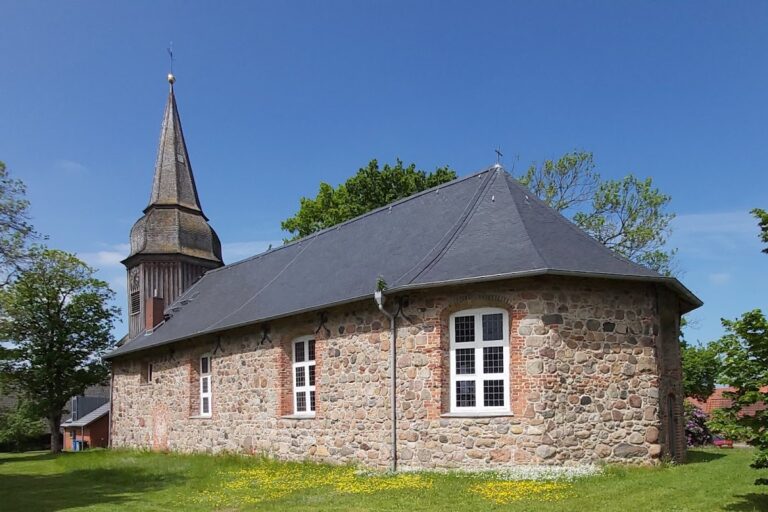
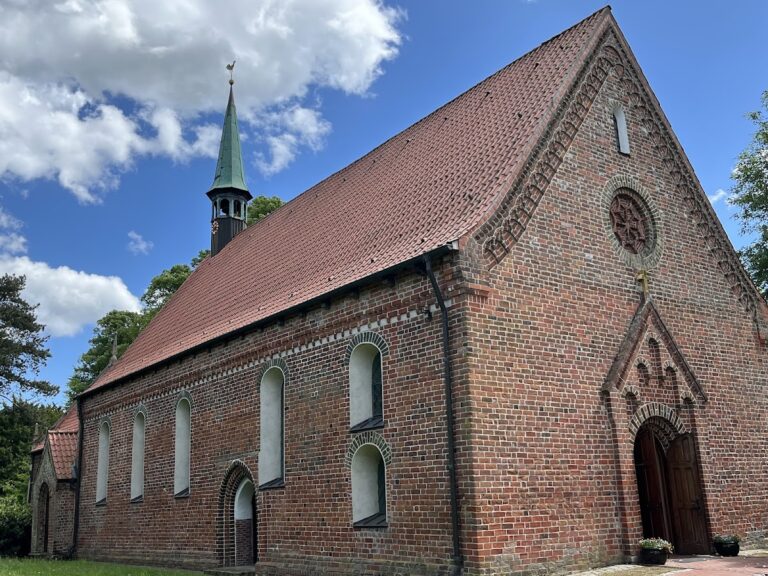
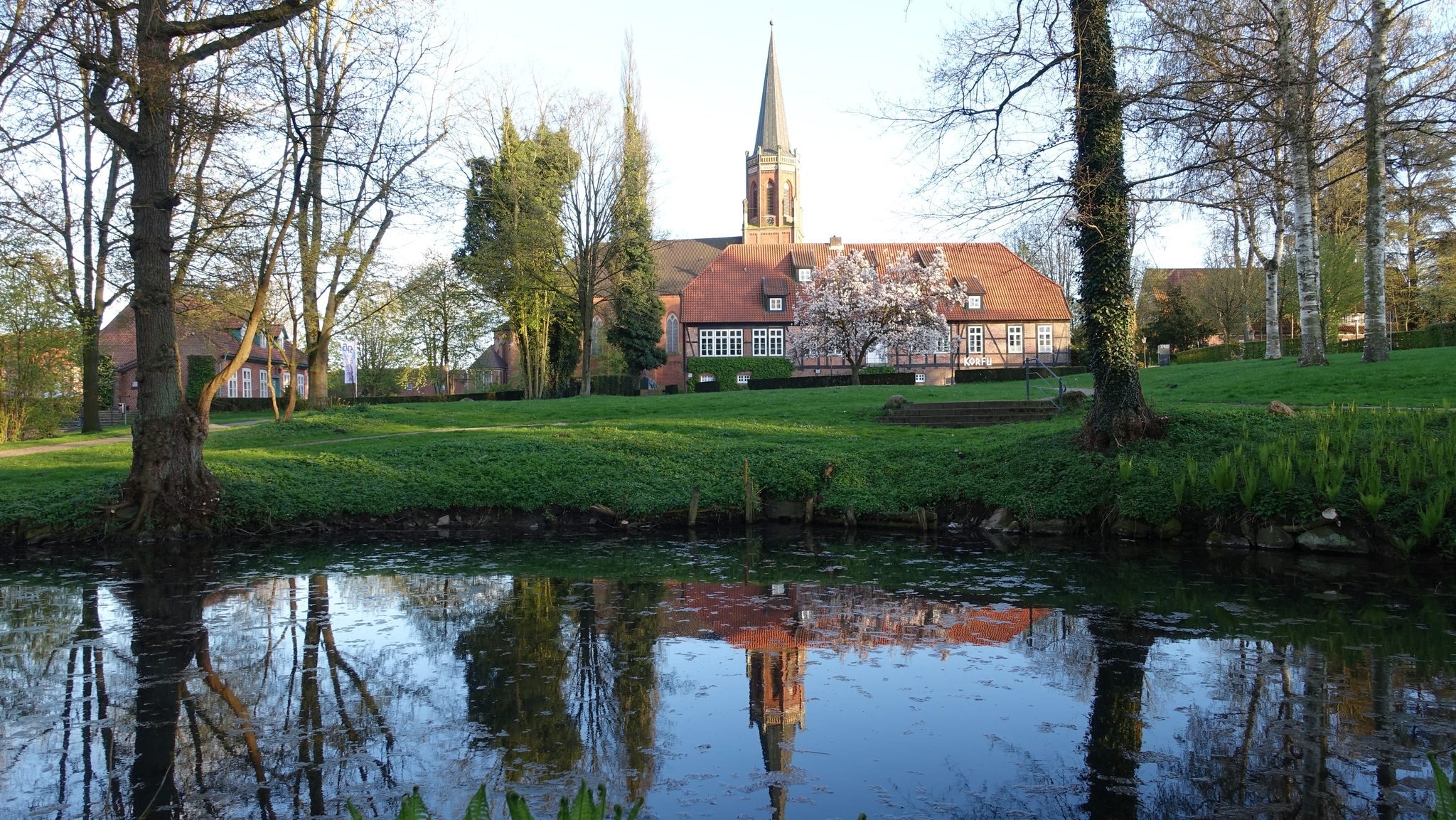
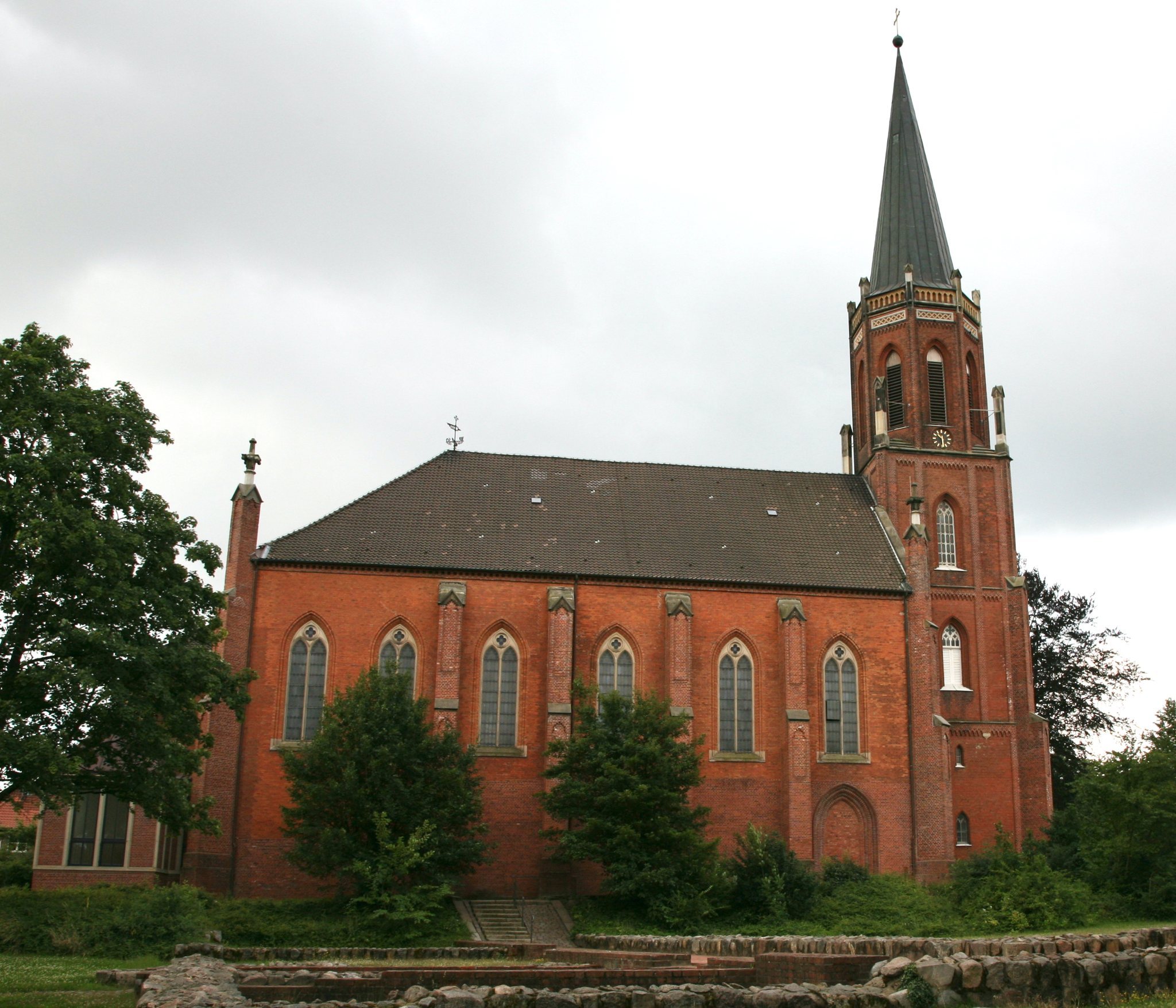
The surviving complex is centered on the former abbey church dedicated to the Virgin Mary and Saint Bartholomew. It is the last surviving building of the abbey and now serves as a Protestant parish church. The church underwent a comprehensive renovation between 1856 and 1861. Descriptions of the former complex identify two churches dedicated to Saint Mary and Saint Bartholomew, along with a smaller nearby church dedicated to Saint Gangolf.
The construction of a new abbey church and its artistic furnishing took place under Archabbots Gerlach Schulte, Johannes Schulte, and Johannes de Lu. A baptismal font dated 1454 has survived from this period. It preserves a material link with the late medieval phase when the three archabbots directed the rebuilding and embellishment of the abbey.
Monastery foundations and museum
The monastery buildings were largely destroyed when Joachim Pentz’s forces plundered and burned the complex in 1546. Their foundations were excavated, exposed, and incorporated into the Klosterpark between 1981 and 1984. The remains preserve the ground plan of parts of the former monastic complex within the park.
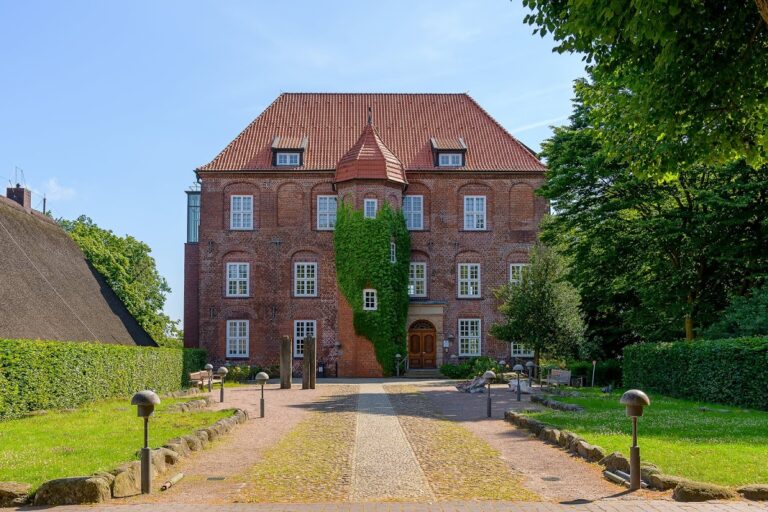
The Harsefeld Museum stands on foundations belonging to the former monastery buildings. A building erected on the foundations of the former abbot’s house also survives. The museum building and the exposed foundations together present the physical remains of the abbey after the destruction of its monastic structures.
Unusual burials
Excavations in the western cloister uncovered several graves containing unusual interventions. In one man’s grave, the burial had been reopened and a large erratic boulder placed on the head of the body. The action was apparently intended to keep a presumed revenant in the grave.
Another burial contained several possible apotropaic measures, meaning actions intended to avert supernatural harm. The feet had probably been tied and the lower jaw fixed before burial. After several years, the grave was reopened, the coffin was turned so that the body lay face down, and the grave was sealed with bricks above the coffin.
Construction work near the altar inside the former abbey church uncovered the grave of an abbot. His lower limbs had been bound and secured with a large iron padlock, adding another example of measures intended to prevent the dead from returning.