Kjærstrup: A Danish Manor House and Estate on Lolland
Site at a Glance
- Popularity
- Low
- Country
- Denmark
- Primary era
- Early Modern
- Eras represented
- Early Modern, Modern
- Civilizations
- Danish, Denmark–Norway
- Site type
- Domestic
- Remains
- Manor House
On this page7 sections
History
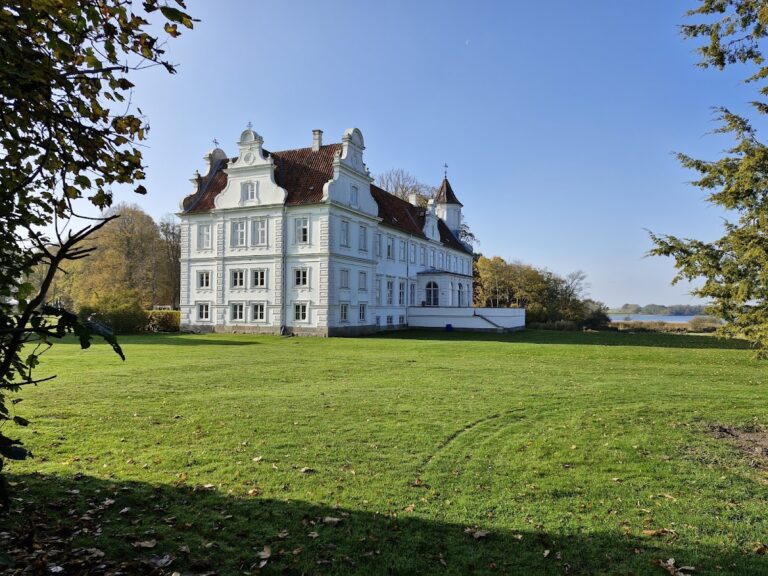
Kjærstrup is a Danish manor and estate on Lolland, about nine kilometres east of Rødby in southeastern Denmark. Its two-storey main building was built in 1765 by Christian Frederik Raben on foundations of buildings belonging to the Gøye family. It follows the Renaissance Revival style, which reuses forms and motifs associated with Renaissance buildings. Kjærstrup is among the oldest manors on Lolland.
Early manor and Gøye ownership
The manor originally stood in a village of the same name, which disappeared in the early Middle Ages. Its first known owner, Anders Siundesen Mule, was associated with Kjærstrup in the late 1360s.
The Gøye family held the estate for many generations. Henning Gøye, the family’s last owner there, died without children in 1617. Kjærstrup then passed to his sister-in-law Karen Skram, the widow of Laurids Brockenhuus. Later owners included Palle Rosenkrantz and Christen Skeel.
Royal purchase and the Raben family
In 1720, King Frederick IV of Denmark and Norway acquired Kjærstrup and made it part of the Lolland Cavalry District, a Crown-administered land district associated with supporting cavalry. When the district was dissolved in 1725, its land was divided into estates and sold at public auction.
That year, Emerentia Raben, born von Levetzau, acquired Kjærstrup, Aalholm, and Bremersvold. She transferred Kjærstrup and Bremersvold to her son-in-law Niels Rosenkrantz Schack, on the condition that they return to the Raben family if his marriage to Sophie Hedewig Raben remained childless. After Schack died without children in 1731, Emerentia bought the two estates back in 1732. When she died in 1746, they passed to her son, Christian Frederik Raben.
Nineteenth-century succession and protection
Sophus Frederik Raben-Levetzau inherited Kjærstrup and Bremersvold in 1820 and died in 1828. His widow, Charlotte Emerentia Rosenkrantz-Huitfeldt, managed the estates with help from her nephew, Baron Gottlob Rosenkrantz, and sought to leave them to him. The dispute with the Raben family remained unresolved when she died in 1843. Supreme Court rulings in 1844 and 1850 returned both estates to the Rabens.
Kjærstrup was auctioned in 1852. A consortium bought it and first sold the copyholds, customary tenancies held under the manor’s authority, to their holders. The consortium then sold the estate to David Peter Friderichsen in 1853. In 1918, the main building was entered in the Danish register of protected buildings and places.
Remains
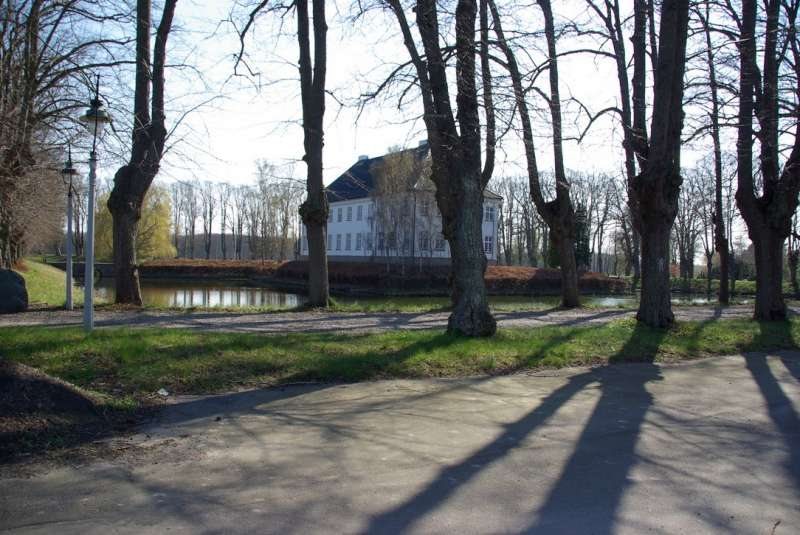
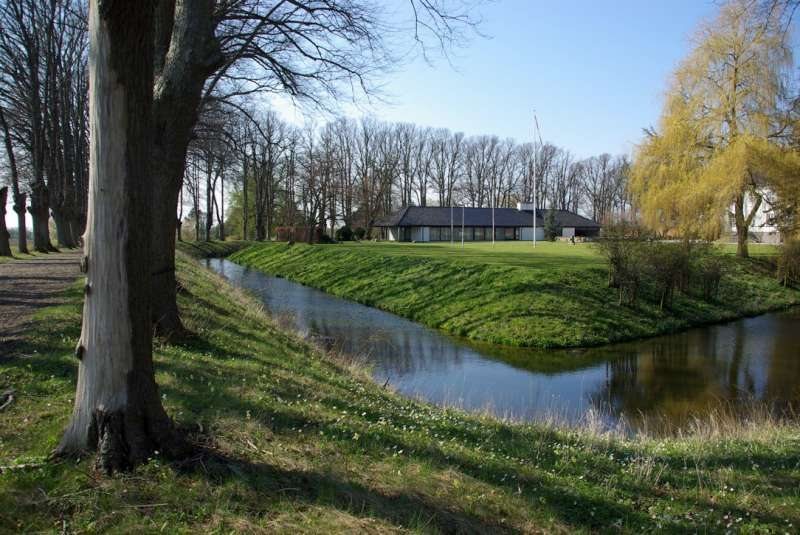
The 487-hectare estate includes a two-storey main house surrounded by moats, along with a garden and farm buildings. The main house is timber-framed, and the estate’s features reflect several periods of construction and alteration.
Main house and moats
The main house was faced with brick in 1836. A central tower was added to its front facade in 1868. Beneath the building are cellars with vaulted ceilings dating to about 1540. Moats from the first half of the sixteenth century encircle the main house.
Garden and farm buildings
The garden is Baroque, a European artistic and architectural style associated with the seventeenth and early eighteenth centuries. It dates to about 1765 and was recreated around 1900. The home farm and a bridge across the eastern moat were built around 1910; the adjacent farm buildings date from the early 1910s.