National Portrait Gallery: A Public Museum of Portraits in London
Site at a Glance
- Popularity
- Very High
- Country
- United Kingdom
- Primary era
- Modern
- Eras represented
- Early Modern, Modern
- Civilizations
- British, English
- Site type
- Museum
On this page10 sections
History
The National Portrait Gallery is a public museum devoted to portraiture in London, United Kingdom. The proposal to establish it was made in 1846, and it opened in 1856. It may have been the world’s first national public institution dedicated specifically to portraits.
Founding and early homes
Member of Parliament Philip Henry Stanhope proposed the Gallery in 1846. Queen Victoria approved the plan, and the House of Commons allocated £2,000. Stanhope, historian and politician Thomas Babington Macaulay, statesman Benjamin Disraeli, and Lord Ellesmere became its founding trustees. Ellesmere gave the Chandos portrait to the nation as the Gallery’s first portrait.
The Gallery spent its first thirteen years at 29 Great George Street in Westminster. During that time, the collection grew from 57 to 208 items, while visitor numbers rose from 5,300 to 34,500. In 1869 it moved to Exhibition Road, to a building managed by the Royal Horticultural Society, a British organization devoted to horticulture. Following a fire there, the Gallery transferred to Bethnal Green Museum in 1885.
The present home and later development
The government secured a new site and provided £16,000 toward the move and new premises. The Gallery opened at its present location on 4 April 1896. Shortly before the building was completed, its architect, Evan Christian, and its first director, George Scharf, died.
In February 1909, John Tempest Dawson, aged 70, shot his 58-year-old wife, Nannie Caskie, with a revolver in the Gallery’s Arctic Room, then killed himself. Caskie died in hospital several hours later. Both were American citizens and had lived in Hove for about ten years.
The Gallery’s first expansion, funded by Lord Duveen, took place in 1933. During the Second World War, its collection was kept at Mentmore Towers, a country house in Buckinghamshire. Portraits of living people became eligible for the collection in 1969. Selection is based on the historical importance of the people portrayed rather than the standing of the artists. A second expansion was funded by Sir Christopher Ondaatje and a £12 million grant, and designed by London architects Edward Jones and Jeremy Dixon.
Remains
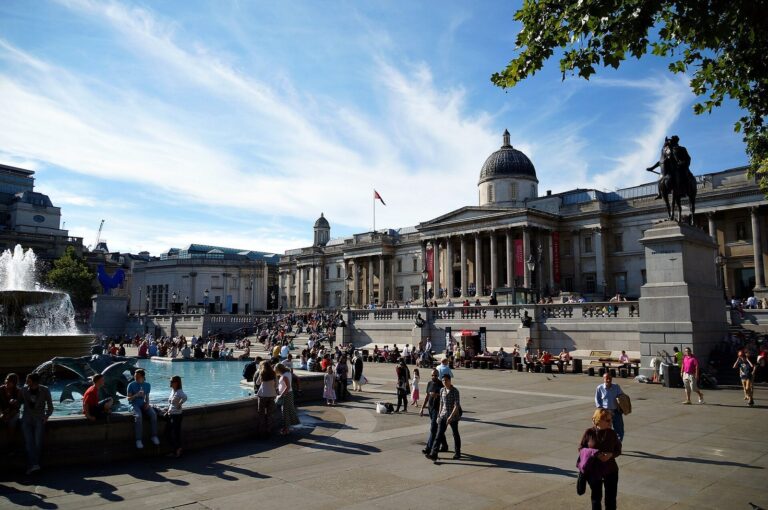
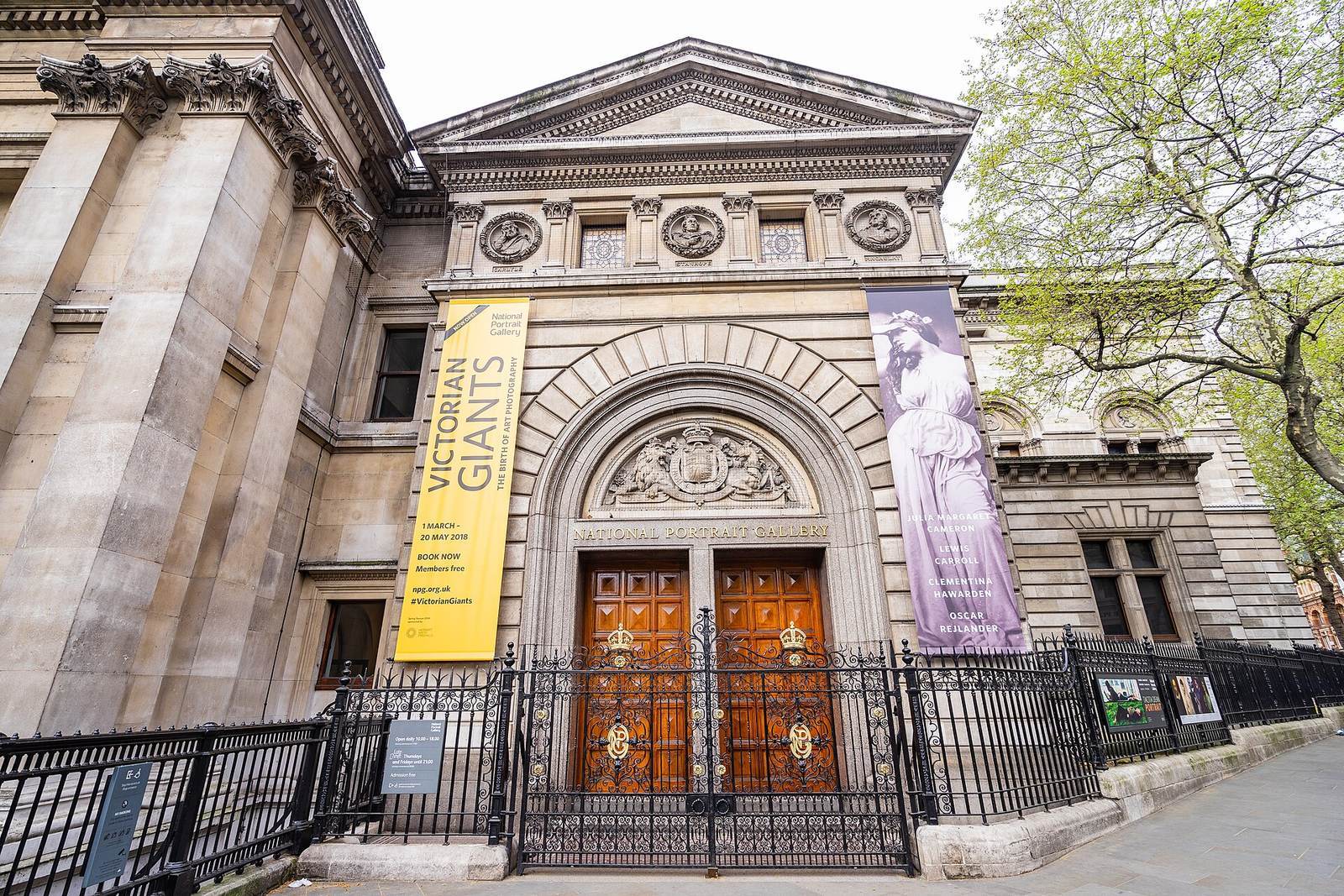
The Gallery stands at St Martin’s Place, beside the National Gallery and off Trafalgar Square. Its two original 1896 buildings are faced with Portland stone, a limestone quarried in Dorset. Shillitoe & Son built them to designs by Evan Christian.
The 1896 buildings
Entrance busts
Three busts stand in front of the main entrance in commemoration of people who contributed to the Gallery’s foundation. Stanhope’s bust is at the centre, with Macaulay’s to its left and Scottish historian and essayist Thomas Carlyle’s to its right.
Exterior sculptures
Stone sculptures carved by Frederick R. Thomas decorate the exteriors of the two original buildings. Their subjects include biographer and clergyman James Granger, engraver William Faithorne, herald and biographer Edmund Lodge, historian Thomas Fuller, the Earl of Clarendon, writer Horace Walpole, and portrait painters Hans Holbein the Younger, Sir Anthony van Dyck, Sir Peter Lely, Sir Godfrey Kneller, William Hogarth, Sir Joshua Reynolds, and Sir Thomas Lawrence. The sculptures also depict sculptors Louis François Roubiliac and Sir Francis Chantrey.
The portrait collection
Paintings and other images
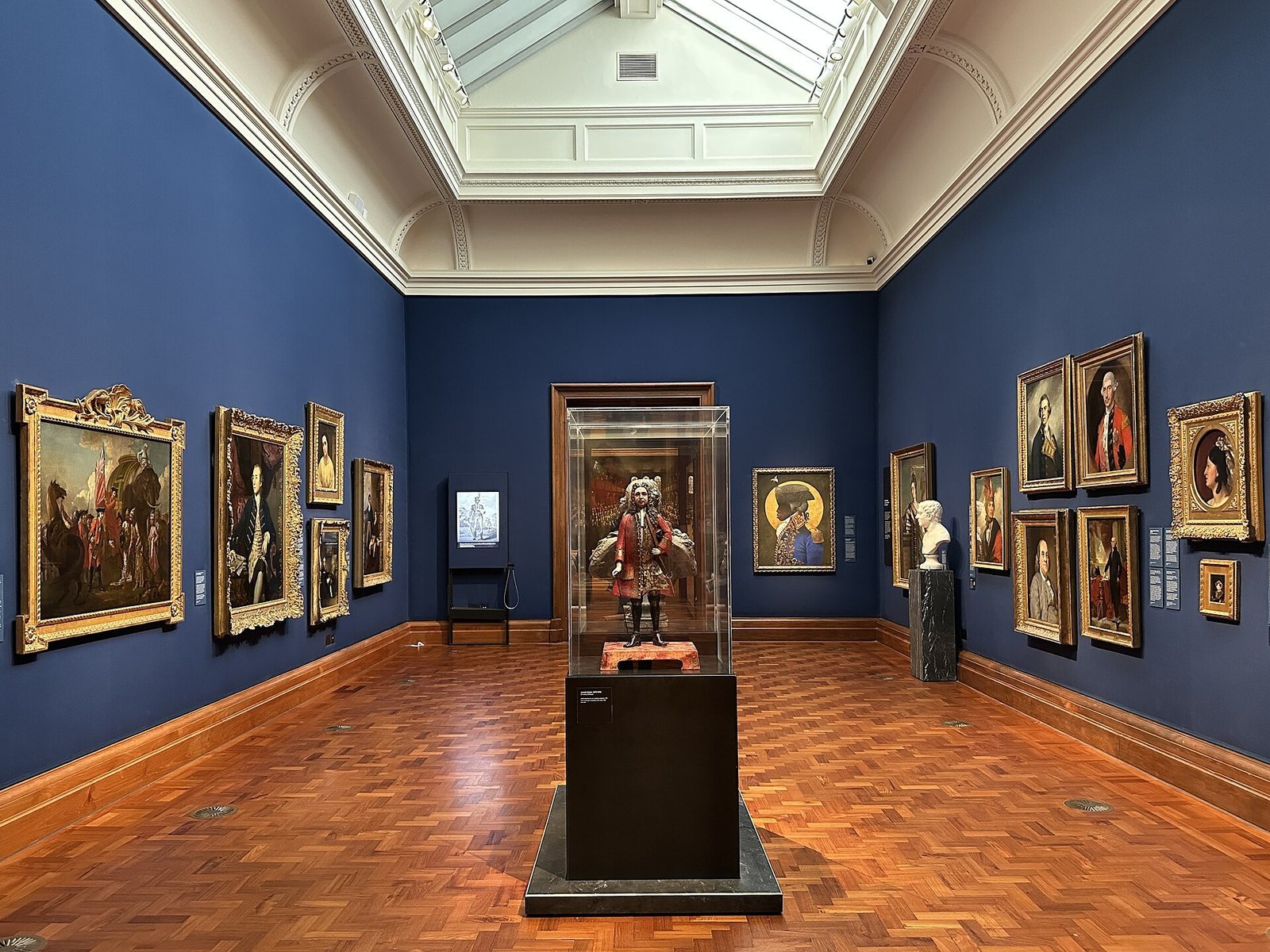
The collection contains 195,000 portraits in photographs, caricatures, drawings, and paintings, as well as sculpture. The Chandos portrait, traditionally connected with William Shakespeare, remains uncertain as an identification of the playwright. Other works include self-portraits by Hogarth and Reynolds, and William Scrots’s anamorphic portrait (a deliberately distorted image that looks proportionate from one viewpoint) of Edward VI. Patrick Branwell Brontë painted portraits of his sisters Charlotte, Emily, and Anne. A group portrait of participants in the Somerset House Conference, peace negotiations between England and Spain held from 20 May to 16 July 1604 that ended their war, is regarded as an important historical document.
Sculptures
The collection also includes sculptures of Queen Victoria and Prince Albert wearing medieval dress.