Oratorio dei Vanchetoni: A Florentine Oratory and Confraternity Headquarters
Site at a Glance
- Rating
- 5
- Popularity
- Low
- Country
- Italy
- Primary era
- Early Modern
- Eras represented
- Early Modern, Modern
- Civilizations
- Grand Duchy of Tuscany
- Site type
- Religious
- Remains
- Church
On this page13 sections
History
The Oratorio dei Vanchetoni is a Roman Catholic oratory of the Roman rite in Florence, Italy. Founded in the early 17th century, it became the worship space and headquarters of the Archconfraternity of San Francesco, a lay association devoted to religious and charitable activity. The confraternity grew from Ippolito Galantini’s work educating poor children in Christian teaching.
Foundation and early development
Galantini (1565–1619), a weaver, established the Congregation of Christian Doctrine. Its members were laypeople like him. They became known as Vanchetoni for their quiet manner of walking and as bacchettoni in reference to their penitential use of a rod.
Construction of the oratory and the confraternity’s headquarters began in 1602 on land granted by the Franciscans of Ognissanti. The site had been an orchard belonging to their church. The foundation stone was laid on 14 June 1602, and the first service took place on 4 October 1603, for the feast of St Francis. Work was completed in 1604.
In 1620, financial support from Maria Maddalena of Austria, wife of Cosimo II, enabled further work. Archbishop Alessandro de’ Medici, who later became Pope Leo XI, laid a foundation stone for this phase on 4 November. After Galantini’s death, the confraternity also helped poor people and continued religious instruction for children. It earned a strong reputation during the 17th and 18th centuries.
Recognition and later changes
Galantini was declared venerable in 1765, a stage in Catholic recognition of holiness, and beatified in 1825, allowing specified forms of public veneration as a blessed person. A bell-gable, a wall structure with openings for bells, was added during the celebrations for his beatification.
In 1785, under Grand Duke Pietro Leopoldo, the confraternity was among only nine in the Grand Duchy of Tuscany, a monarchy ruled by grand dukes in central Italy, that were not suppressed. At a later time, members sold part of its collection of movable artworks; some works are now in museums. The confraternity kept the oratory and some apartments, and members remained bound by an obligation to pray.
An effort to suppress the confraternity began in 2008 over irregularities considered inconsistent with its religious aims. A dispute with the diocese continued for about a decade, while restoration work kept the oratory closed for an extended period. The dispute ended with the confraternity continuing. The oratory is also used for chamber-music concerts and small meetings.
Remains
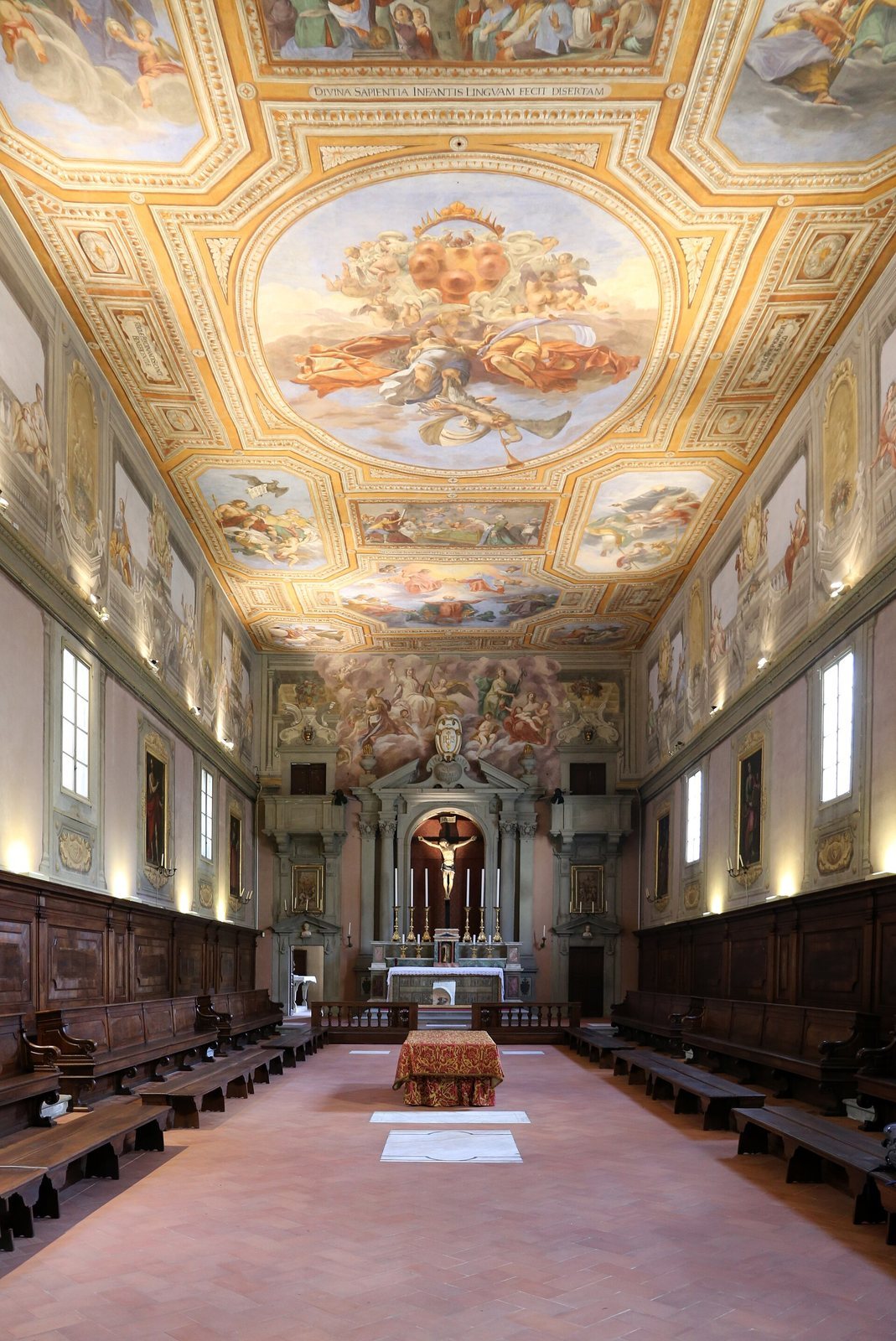
The oratory is organized around a long hall, where the confraternity gathered, with a wooden choir-like structure running along three sides. The hall’s scale makes the oratory the largest in Florence. An altar stands at one end, with a chapel behind it, while a separate chapel is dedicated to Galantini. Matteo and Giovanni Nigetti are associated with the design; the original plan is probably Giovanni’s work.
The hall and its painted decoration
Hall and entrance
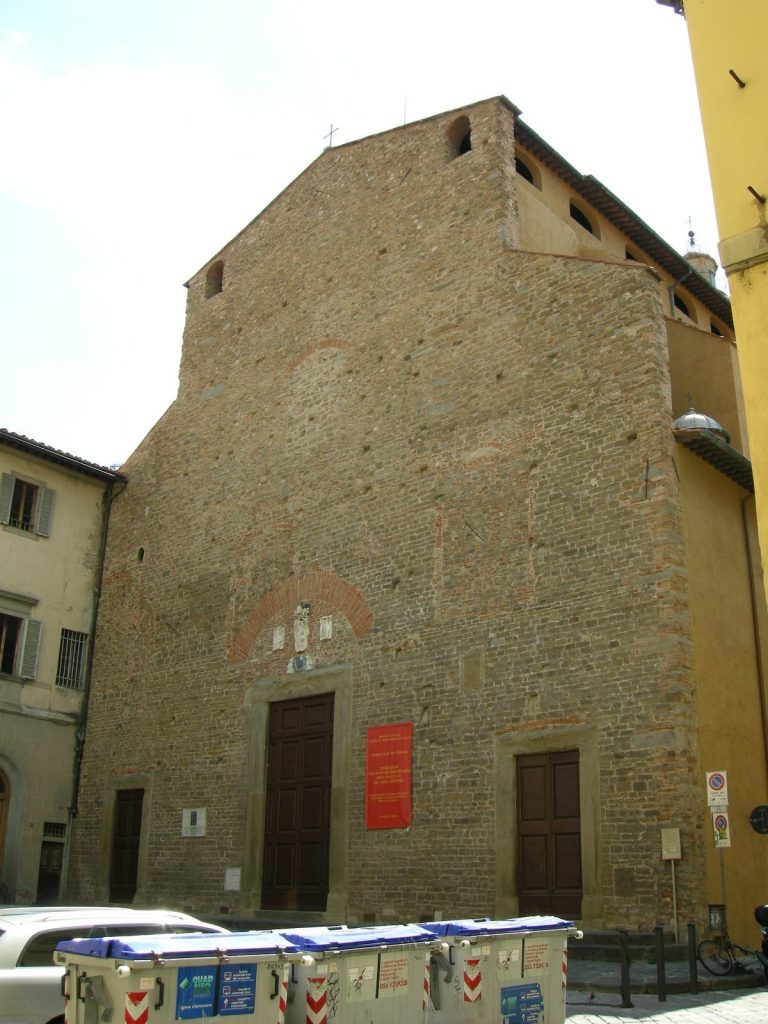
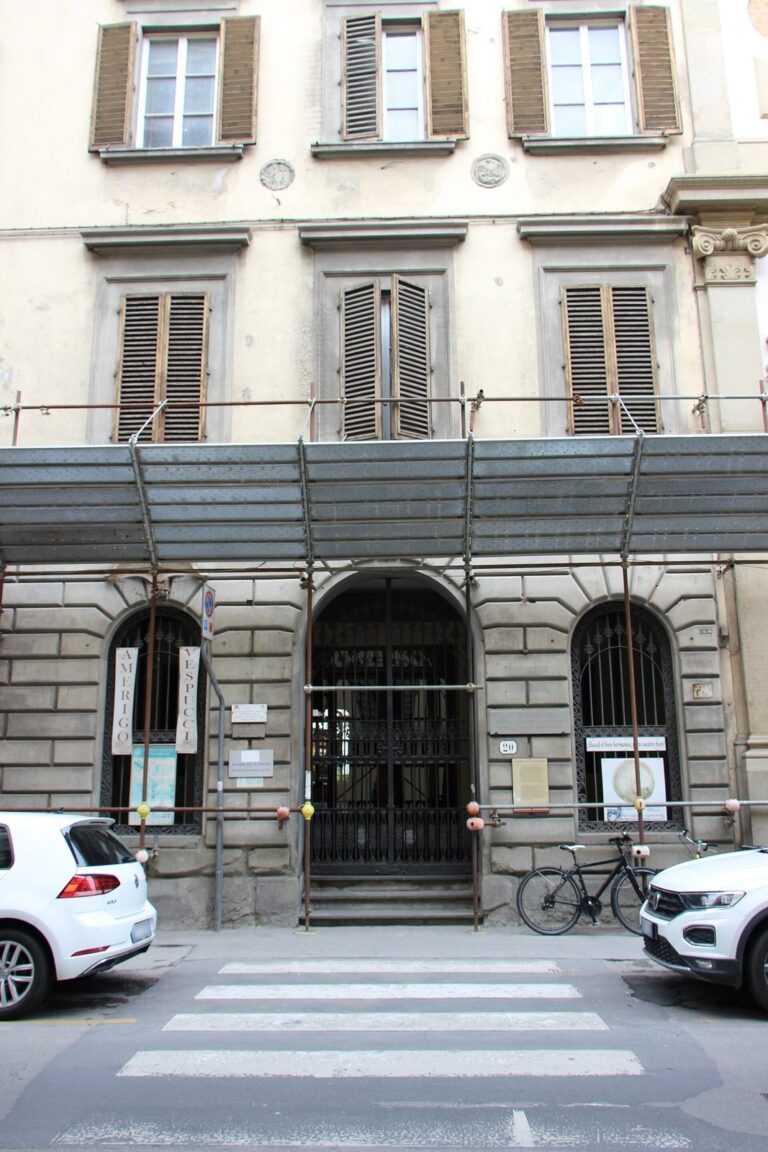
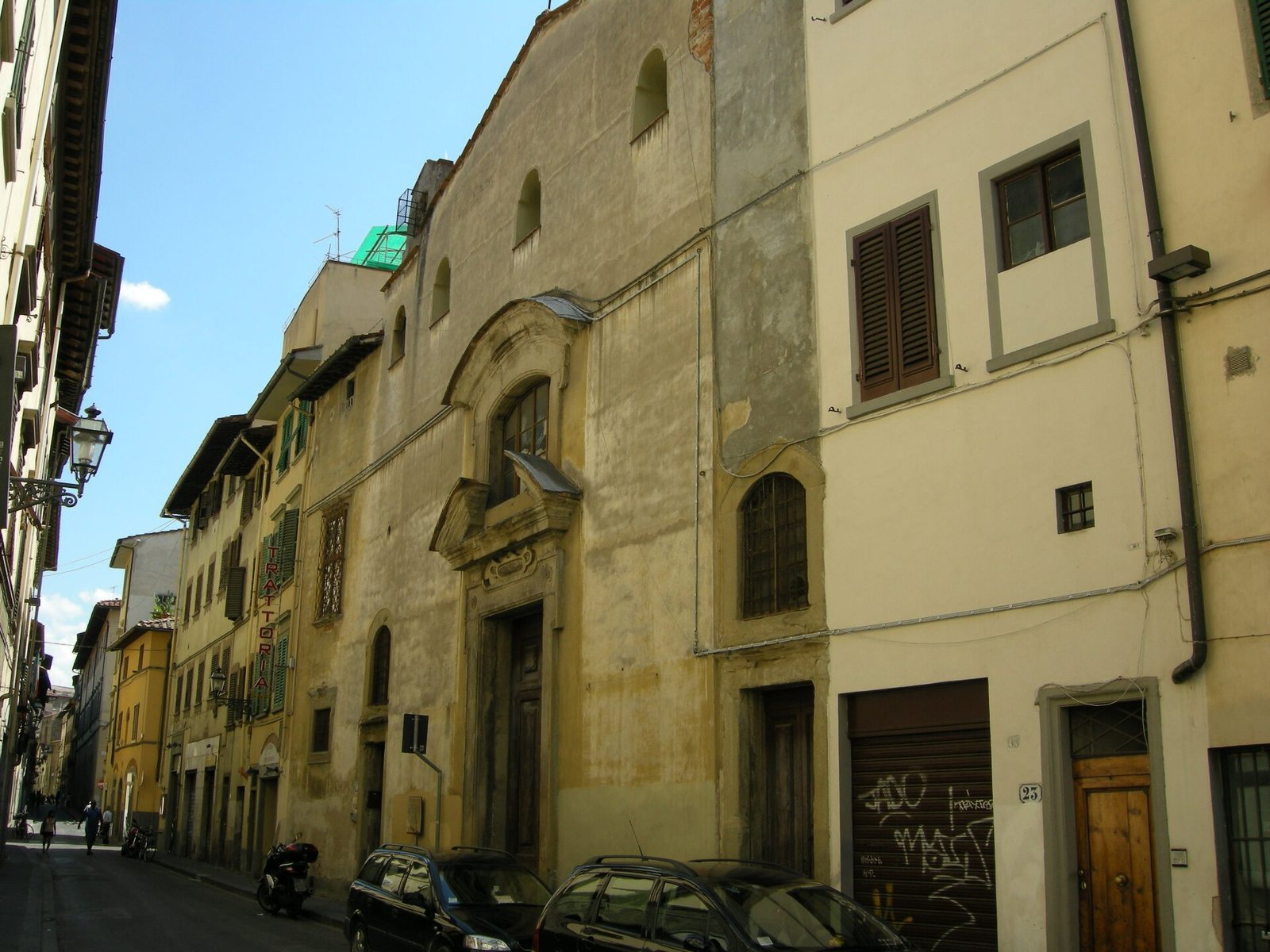
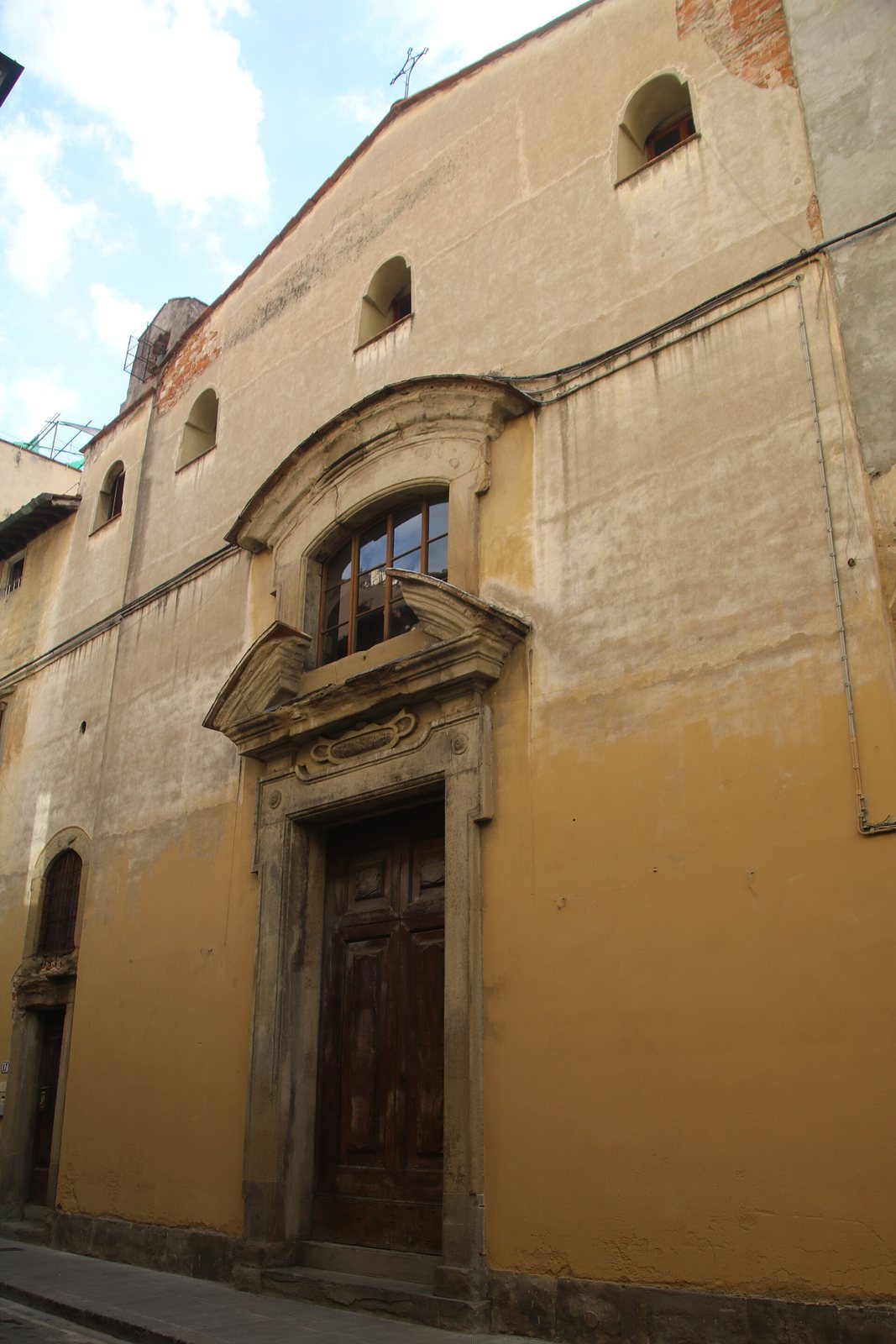
The entrance on Via Palazzuolo has a façade and vestibule dating to the building work supported in 1620. Matteo Nigetti may have designed them with help from his brother Giovanni. The hall’s three-sided wooden structure gives the gathering space a distinct internal frame.
Ceiling panels
The fresco campaign began in 1633 and continued into the middle of the 17th century. The ceiling paintings, made in 1639–1640, offer a broad view of Florentine painting in the 1630s. Pietro Liberi painted the central and largest panel, an oval bearing the Medici coat of arms. Rectangular, elongated octagonal, and panels with both straight and curved outlines surround it. Their framing makes them resemble separate pictures, while varied perspective effects create visual depth.
Wall paintings
Near the entrance, Domenico Pugliani painted St Francis in Glory. Farther along the left side, viewed from the entrance, his fresco shows Saints Lucy, Catherine, and Mary Magdalene. More centrally is his Death of Blessed Ippolito Galantini. Pugliani may have belonged to the confraternity and may have coordinated or directed the painting campaign. Toward the front, Giovanni Martinelli’s 1639–1640 panel depicts Galantini preaching with Saints Ignatius, Dominic, Joseph, and Bernardino of Siena. Its view includes Porta al Prato and the site later occupied by the oratory.
On the right, Lorenzo Lippi’s 1639–1640 octagonal panel depicts Saints Catherine, Agatha, and Cecilia. Their angled poses suggest depth and display Lippi’s skill with perspective. The composition also shows some openness to innovations associated with Pietro da Cortona, a prominent Italian Baroque painter and architect. Near the altar, an octagonal panel by Il Volterrano shows Saints John the Evangelist, John the Baptist, and Philip Neri. Opposite it, Cecco Bravo’s 1639 panel depicts Saints Zenobius, Antoninus, and Charles Borromeo, with Pugliani’s scene of Galantini’s death between them.
Frescoed frieze
A painted band runs around the oratory just below the ceiling. Niccolò Nannetti and Rinaldo Botti created it in 1734, depicting virtues, allegorical subjects, and biblical stories.
Chapels and furnishings
Chapel behind the altar
The chapel behind the altar contains a large crucifix dating to the 16th century.
Galantini chapel
A separate chapel dedicated to Galantini contains numerous ex-votos, offerings made in fulfillment of or gratitude for vows.
Sacristy and bust
The sacristy retains old inlaid cabinets. A 17th-century bust of Galantini that once stood on the portal is now in storage.