Kippinge Church: A Medieval Parish Church in Denmark
Site at a Glance
- Rating
- 4.7
- Popularity
- Very Low
- Country
- Denmark
- Primary era
- Medieval
- External website
- Open
- Eras represented
- Medieval, Early Modern
- Civilizations
- Danish
- Site type
- Religious
- Remains
- Church
On this page14 sections
History
Foundation and medieval devotion
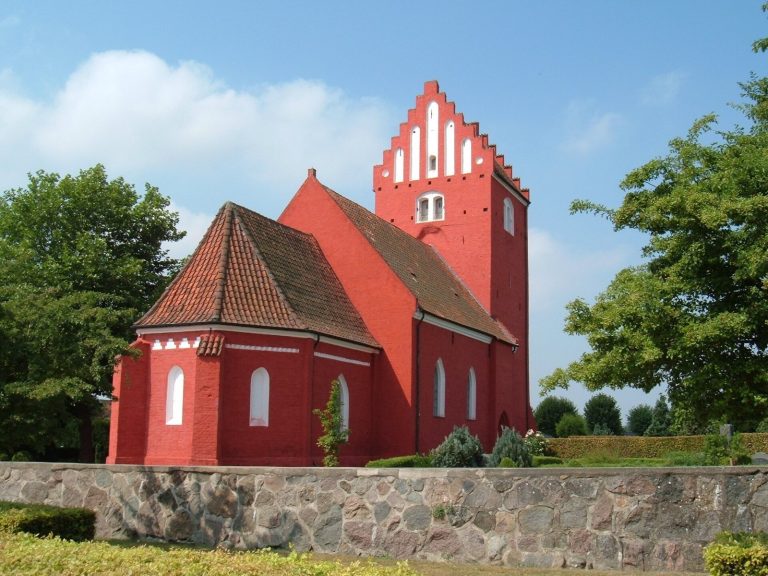
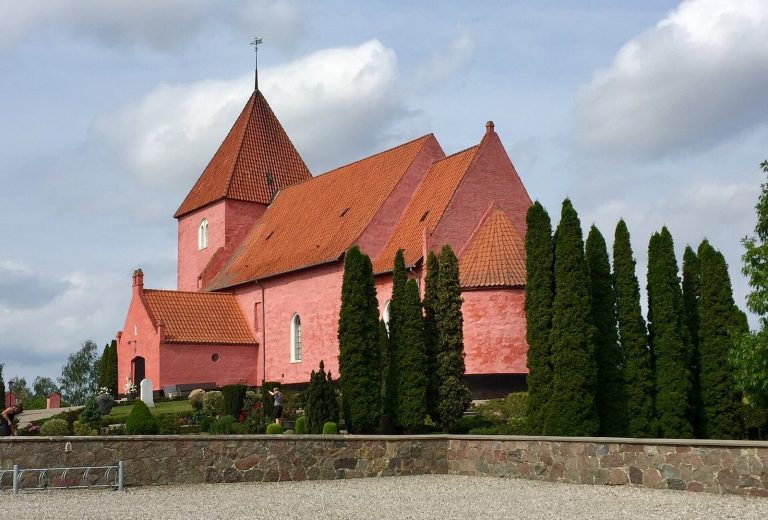
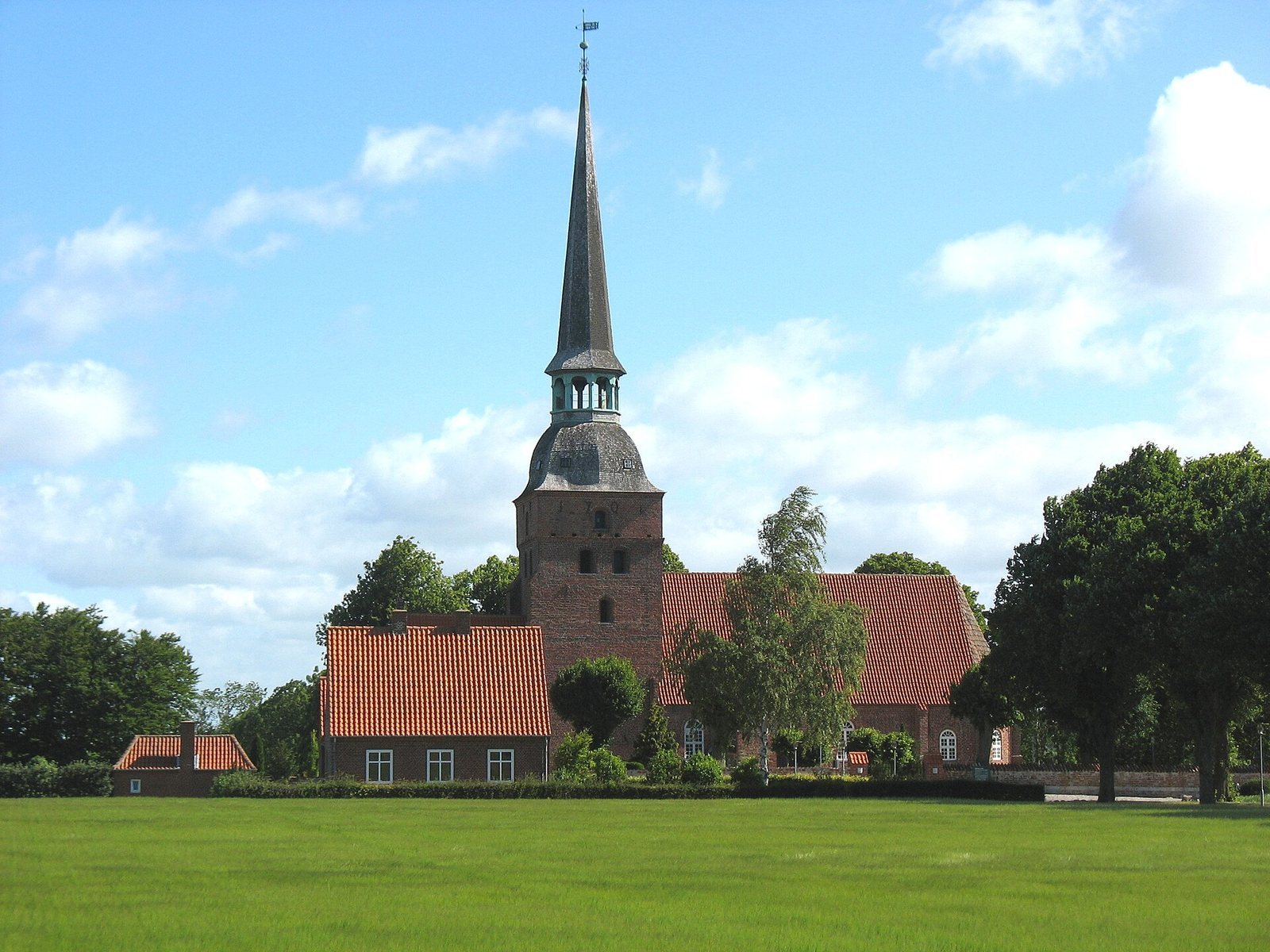
Kippinge Church is a parish church in Denmark, founded around 1300 in the Early Gothic style. It stands in the countryside between Vester Kippinge and Øster Kippinge in northwestern Falster, west of Redslev Wood. During the Middle Ages, it was dedicated to the Virgin Mary and belonged to the Catholic Church. By 1338, the two villages had developed on either side of the church, which remained in its rural setting.
The church’s survival and reputation were linked to the healing properties attributed to a holy spring. Three reputed miracles drew pilgrims over the centuries, including a bleeding Sacrament in 1492 and a miraculous altarpiece showing the Virgin Mary. Pilgrimage continued until the end of the nineteenth century. The west chapel, built shortly before the Reformation, is closely associated with this activity. The Reformation was the sixteenth-century religious transformation that ended Catholic ecclesiastical authority in Denmark and established Lutheran church institutions.
Ownership and restoration
At the beginning of the sixteenth century, the Crown held the right to appoint the church’s clergy. After the church was sold into private ownership in 1767, the State soon reacquired it. The parish’s citizens bought the church in 1868, and it became fully independent in 1938. Today it is a Church of Denmark parish church within Nordvestfalster Parish, Falster Deanery, and the Diocese of Lolland-Falster. Its medieval wall paintings were rediscovered beneath limewash in 1904 and restored in 1909. The Baroque spire was renovated in 1911.
Remains
Building fabric and additions
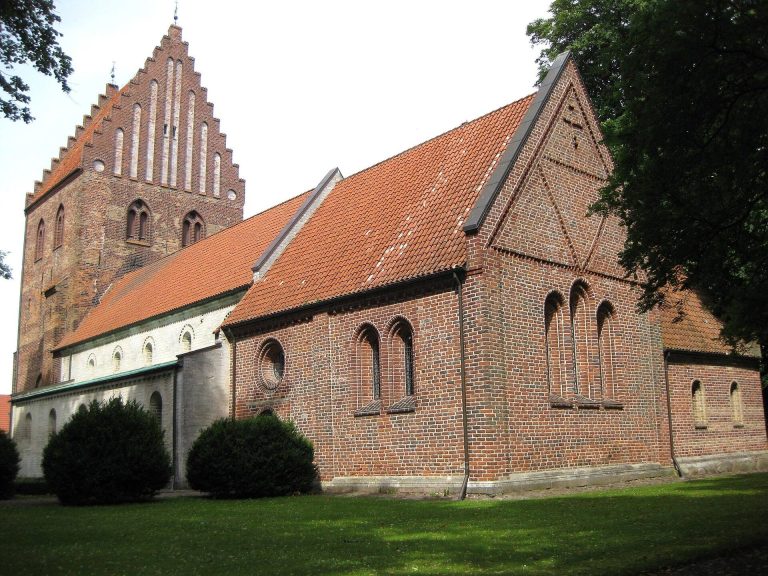
The nave and chancel were built around 1300 from red brick set on a sloping plinth. The chancel ends in three sides and originally had five small pointed windows, which were later replaced by round-arched openings. The north doorway, with its pointed arch, and the priest’s doorway have been bricked up, while the modified south doorway remains in use. A porch and tower were added during the Late Gothic period. The west chapel adjoins the tower and was constructed shortly before the Reformation. Above the tower rises a sturdy domed base with an octagonal lantern and a tall, slender spire.
Medieval wall paintings
Frescos in the chancel vault date from around 1300 and are attributed to artists of the Kippinge workshop. Their subjects come principally from chapters 3 and 4 of Genesis. The eastern vault panel presents Christ with Mary, John the Baptist, and two angels. The western section shows Adam and Eve and the sacrifice of Cain and Abel. The northern panel depicts the killing of Abel by Cain and Saint Michael fighting the dragon, while the eastern side of the north vault places the Annunciation beside the Fall.
Renaissance furnishings
Altarpiece
The richly carved altarpiece was made by Jørgen Ringnis in 1633. Its central painting was probably produced by Anthonius Clement. Figures of Matthew and Mark accompany the central composition, while Faith, Hope, and Charity appear as female personifications. The work also includes angels, scenes or figures of Christ at his baptism and the Last Supper, and Luke and John on either side of the cornice.
Baptismal font and canopy
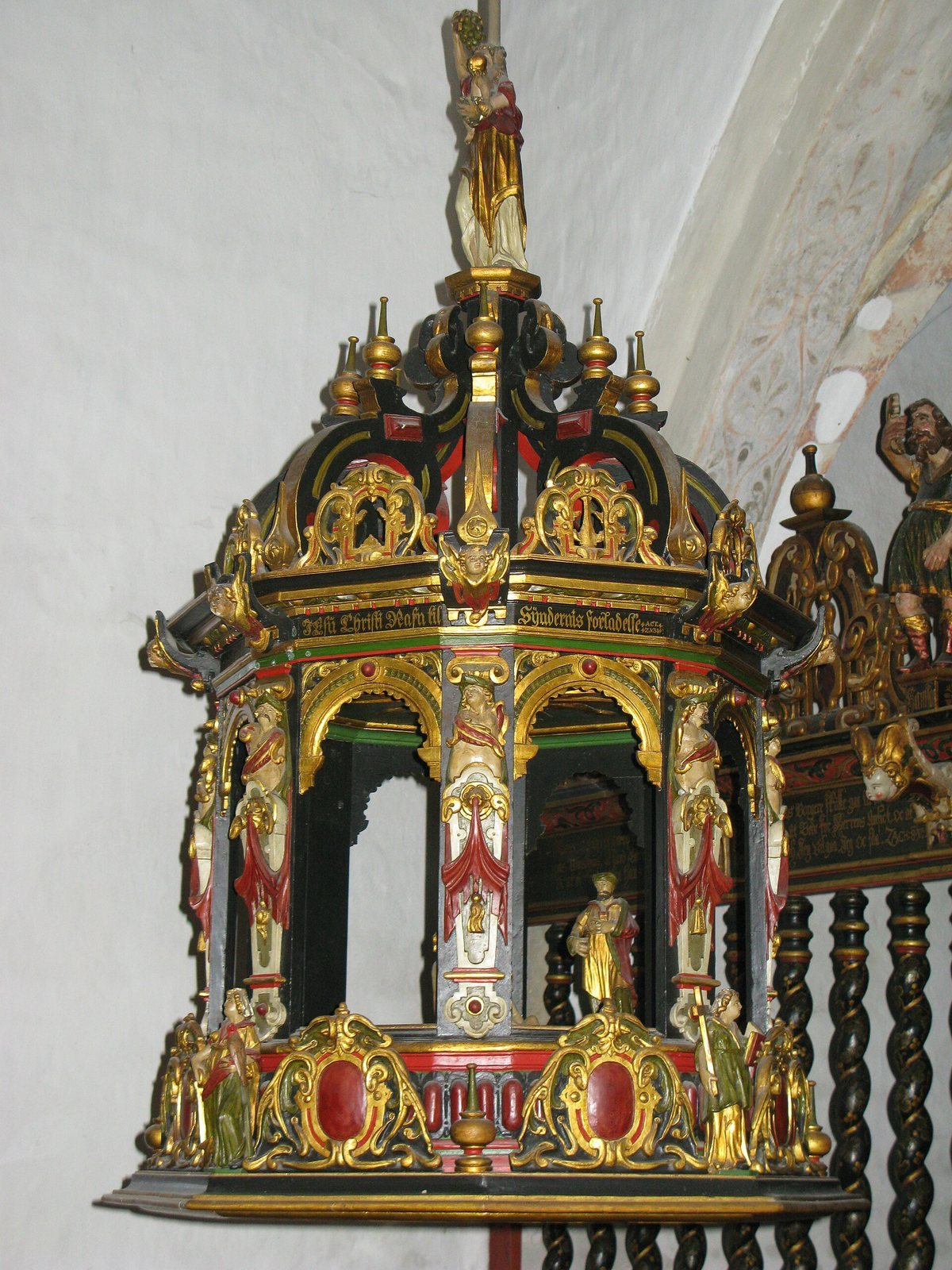
Ringnis also made the elaborately carved octagonal baptismal font and canopy in 1635. The font base carries the four Evangelists, Matthew, Mark, Luke, and John, while its double-arched panels show the Annunciation, the birth of Christ, the Adoration of the Magi, and the Circumcision. The canopy has an octagonal lantern with arched panels containing male and female herms, ornamental human figures joined to architectural supports. Its central panel shows a baptismal scene with naked figures. The highly colored and gilded finish has been restored.
Choir screen
The lattice choir screen dates from 1650 and has nine panels decorated with flowers, herms, and symbols of the virtues. Its pedestal depicts Adam and Eve, while the upper cartouche shows Christ holding the globe. Hans Lauridsen decorated the screen in 1680 and added six small paintings of a woman in different positions.
Pulpit
Ringnis’s pulpit, dated 1631, resembles the pulpit in Nakskov Church. It contains figures of the Evangelists, John the Baptist, Christ, and Moses. The colored decoration and paintings were probably made by Anthonius Clement. The ornamental work belongs to the seventeenth-century Auricular style, which is characterized by flowing, highly sculptural forms.
Older objects
Crucifixes
Two old crucifixes survive in the church. One dates from the fourteenth century and the other from the fifteenth century, preserving material evidence of the church’s medieval Catholic period.
West chapel font
The west chapel contains an older baptismal font carved from Gotland limestone. Its base is decorated with four heads.