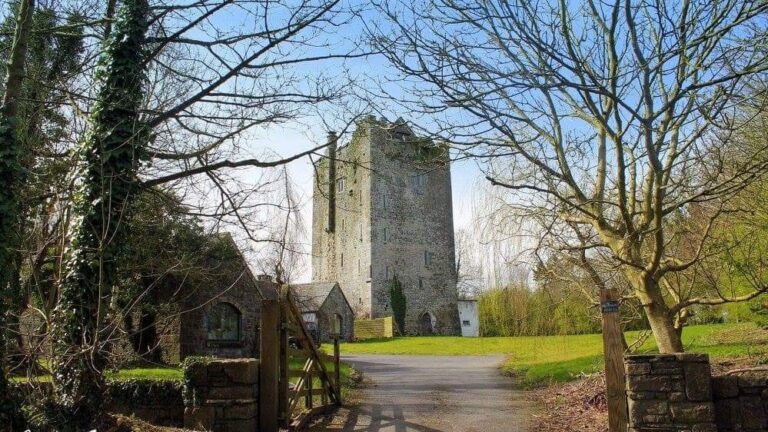
Kilcash Castle: A Sixteenth-Century Fortified Tower in Ireland


Site at a Glance
- Rating
- 4.4
- Popularity
- Very Low
- Country
- Ireland
- Primary era
- Early Modern
- Eras represented
- Early Modern
- Civilizations
- English
- Site type
- Military
- Remains
- Castle
On this page9 sections
History
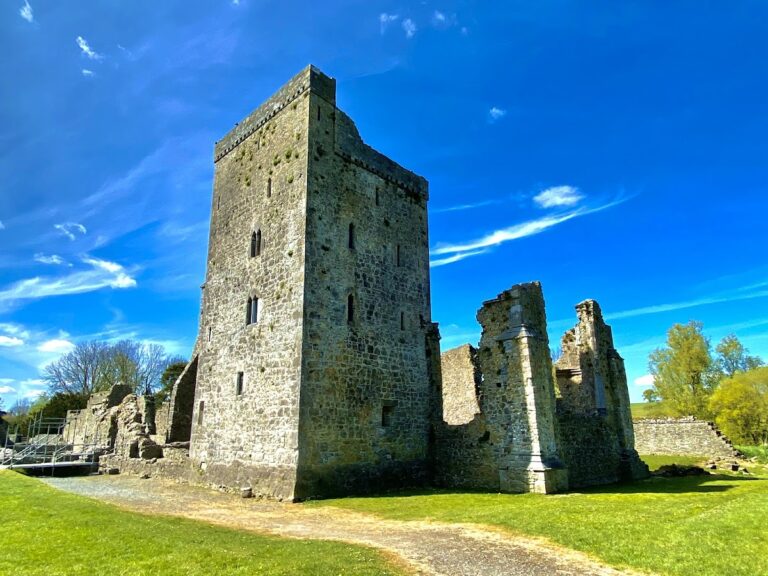
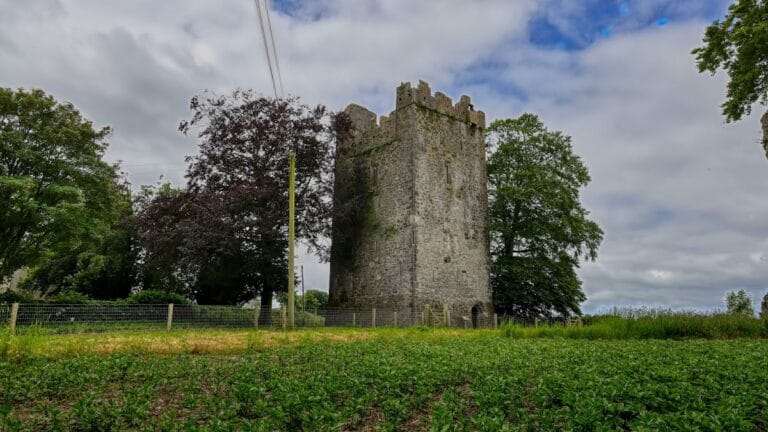
Kilcash Castle is a ruined sixteenth-century fortified tower in Kilcash, County Tipperary, Ireland, built in connection with the manor of Kilcash. During the sixteenth century, the manor passed from the Wall family to the Butler family of Ormond, a powerful Anglo-Irish dynasty whose branches held major Irish estates and titles.
The Butler manor
In 1614, Walter Butler, 11th Earl of Ormond, inherited the Ormond title from his uncle Thomas, 10th Earl. Walter lived at Kilcash, but a dispute over the Ormond lands brought pressure from James VI and I. Walter was imprisoned in London from 1619 to 1625 and was forced to surrender most of his property. He later passed the manor of Kilcash to his grandson, Colonel Richard Butler of Kilcash, a senior military officer who died in 1701.
Kilcash was also associated with James Tuchet, 3rd Earl of Castlehaven, an Anglo-Irish nobleman and Catholic Confederate commander during the Irish Confederate Wars of 1641 to 1652. The Irish Confederates were predominantly Catholic forces that established a government in areas of Ireland under their control. Castlehaven frequently stayed at Kilcash, where his sister Lady Frances married Richard Butler of Kilcash. He also wrote his memoirs at the castle.
Decline and wartime damage
Parts of the Kilcash Estate were sold around 1800, and the castle fell into ruin during the nineteenth century. Its later history was shaped by the Irish Civil War. Anti-Treaty forces, who opposed the 1921 Anglo-Irish Treaty, occupied the castle in an effort to delay Pro-Treaty forces advancing towards Clonmel. Pro-Treaty forces supported the treaty and the Irish Free State. The occupants were expelled by artillery commanded by Commandant-General John T. Prout, causing further damage to the already deteriorated building.
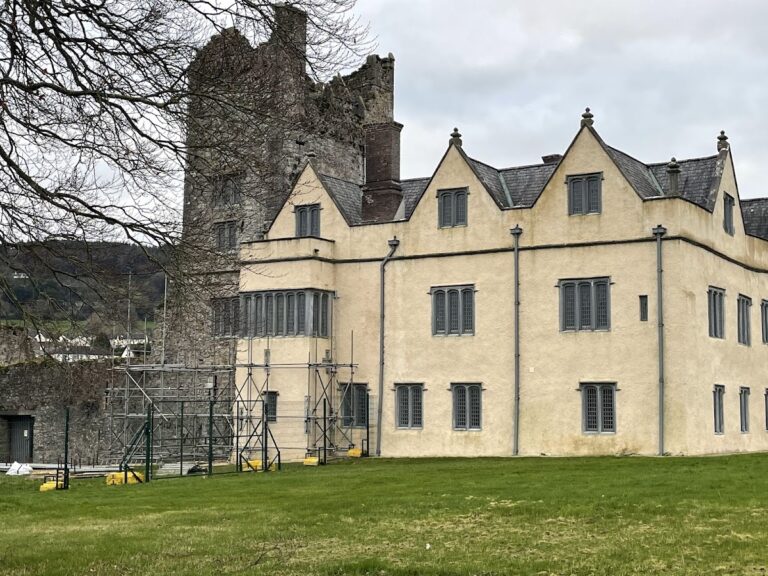
By the late twentieth century, Kilcash Castle was in a dangerous state of repair. The Irish State acquired it from the Butler family in 1997 for £500 and assumed responsibility for its care. Extensive repairs began in 2011 to prevent the remaining structure from collapsing. The nearby medieval church was partially repaired during the 1980s and remains open to the public. Its graveyard and Butler mausoleum continue the site’s associations with the Butler family and related figures.
Memory in song
Kilcash is particularly associated with the Irish lament Kilcash, also called The Lament for Kilcash or Caoineadh Chill Chais. The song mourns Margaret Magennis, Viscountess Iveagh, who died in 1744, and laments the decline of Kilcash. The work is traditionally attributed to Father John Lane, who died in 1776, but its chronology is problematic because the woods mentioned in its opening stanza were not sold until 1797 and 1801. The earliest surviving manuscripts date from the mid-nineteenth century.
Remains
Castle tower and later hall
Kilcash Castle stands west of Ballydine, near Kilcash village and the N24 road outside Clonmel. It is a ruined lowland castle whose principal surviving element is a sixteenth-century fortified tower built of rubble stone. A hall was added to the tower at a later date. Its larger windows belong to a phase when defensive needs had diminished and domestic comfort had become more important. The castle remains ruinous, although repair work has stabilized parts of its surviving fabric.
Medieval church and burial ground
Church
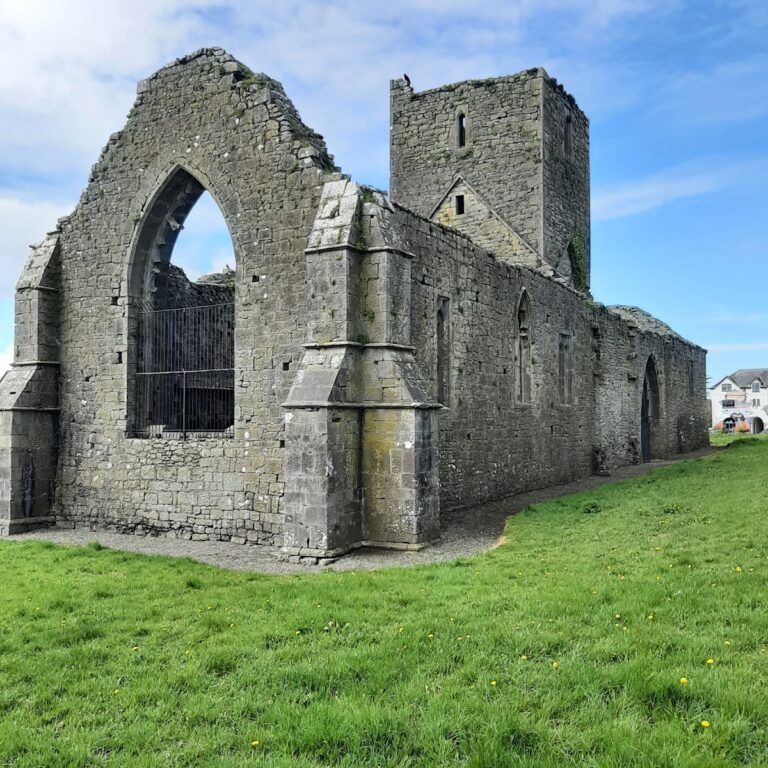
The nearby medieval church consists of a nave and chancel. Its south wall contains a Romanesque doorway, a medieval entrance built with heavy masonry and typically rounded arches. The church was partially repaired during the 1980s and remains open to the public.
Butler mausoleum and graveyard
The churchyard contains a Butler mausoleum, a burial building almost as large as the church. Its tombs include those of Thomas Butler of Garryricken; Christopher Butler, Roman Catholic Archbishop of Cashel, who lived from 1673 to 1757; Margaret Magennis, Viscountess Iveagh, who lived from 1673 to 1744; Walter Butler, 16th Earl of Ormonde, who died in 1773; and John Butler, 17th Earl of Ormonde, who died in 1795. Some eighteenth-century headstones in the graveyard carry elaborately carved scenes of the Crucifixion.