Kells Priory: An Augustinian Monastic Foundation and Fortified Medieval Complex in Ireland


Site at a Glance
- Rating
- 4.7
- Popularity
- Low
- Country
- Ireland
- Primary era
- Medieval
- External website
- Open
- Eras represented
- Medieval
- Civilizations
- Norman
- Site type
- Religious
- Remains
- Fortified Monastery
On this page8 sections
History
Foundation and Early Development
Kells Priory is a medieval Augustinian foundation in Ireland, at Kells in County Kilkenny, established most probably in 1193 by the Anglo-Norman nobleman Geoffrey FitzRobert. The Augustinians followed the Rule of Saint Augustine, combining communal religious observance with pastoral and institutional duties. The priory replaced an earlier church dedicated to Saint Mary, the Blessed Virgin, which had served as the parish church for the nearby village of Kells.
During its first century and a half, the priory experienced repeated violence. Lord William de Bermingham attacked and burned it in 1252. On Palm Sunday in 1316, the Scottish army of Edward Bruce, a Scottish prince and military leader who led a campaign in Ireland, also burned the priory. A second William de Bermingham carried out another attack in 1327.
The 1324 Heresy Proceedings
In Lent 1324, Richard de Ledrede, Bishop of Ossory, visited Kells Priory after an inquisition into a heretical sect in Kilkenny involving Alice Kyteler and William Outlawe. The proceedings produced a major scandal when Arnold de Poer, Lord of Kells, arrested the bishop and imprisoned him in Kilkenny Castle for 17 days. After his release, Ledrede prosecuted the accused. Alice Kyteler fled to England, as did Alice Smith, while Petronilla de Meath was burned at the stake as the first heretic in Ireland to receive that punishment.
Dissolution and Archaeological Investigation
Kells Priory was dissolved in March 1540. At that time, its church and property were surrendered to James Butler, 9th Earl of Ormonde, an Irish nobleman who received them at the priory’s dissolution.
The priory is a National Monument and is held in the guardianship of Ireland’s Office of Public Works. Tom Fanning began archaeological excavation in 1972, and Miriam Clyne completed the work after Fanning’s death in 1993. The excavation was among the largest carried out at an Irish monastic house, and its publication was among the largest studies devoted to a rural medieval site.
Remains
Setting and Enclosures
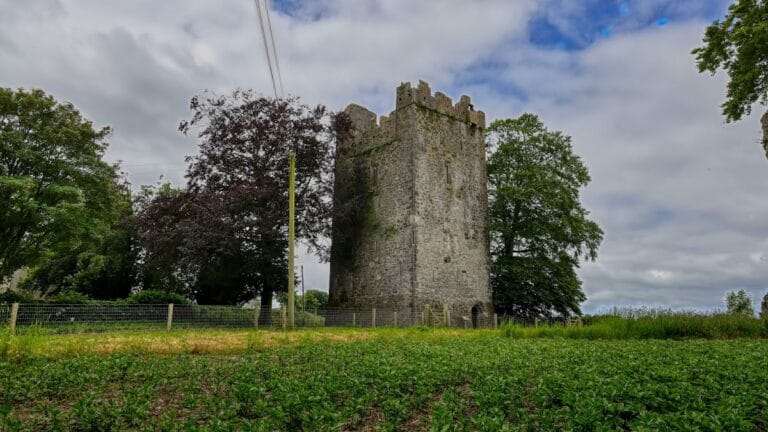
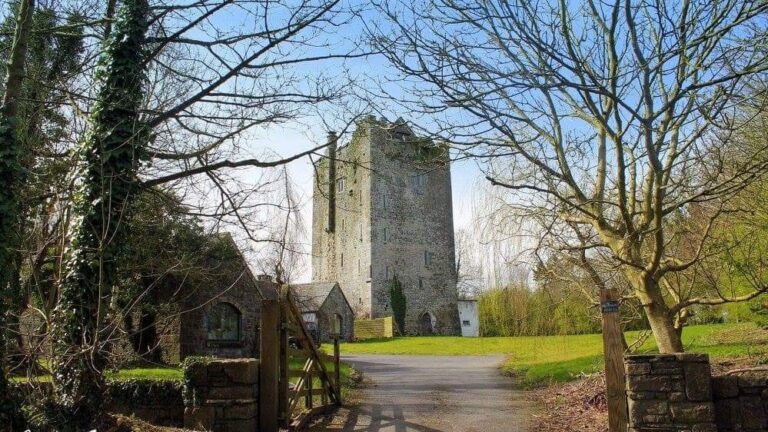
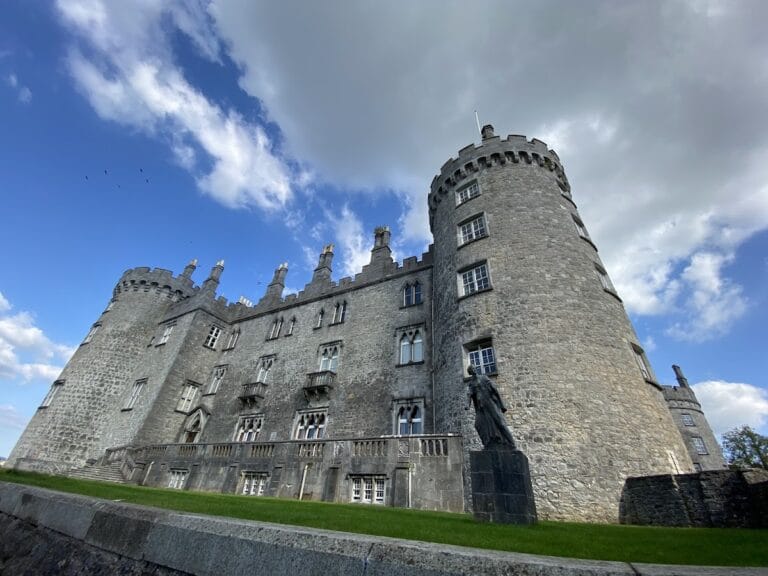
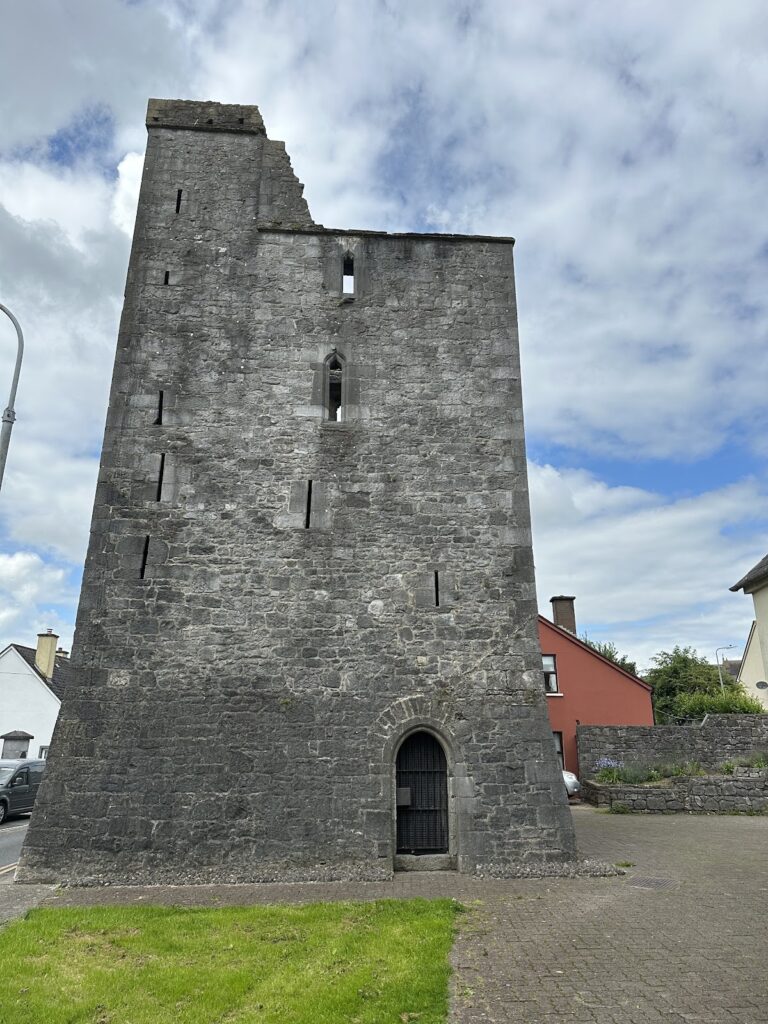
The priory stands beside the King’s River near Kells, approximately 15 kilometres south of medieval Kilkenny, in the townland of Rathduff (Madden). The complex occupies just over three acres, or approximately 12,000 square metres. Walls enclose the site, with medieval tower houses positioned at intervals along and within them. Their defensive appearance gave the priory its local name, “Seven Castles,” and makes the complex resemble a medieval fortress as much as a religious foundation.
The site is divided into an inner monastic precinct beside the river and a large outer enclosure to the south. Built in the fifteenth century, the outer enclosure was known as Villa Prioris, meaning “villa.” It may have offered safety to people and animals from neighbouring houses, although its actual function remains uncertain.
Church and Monastic Buildings
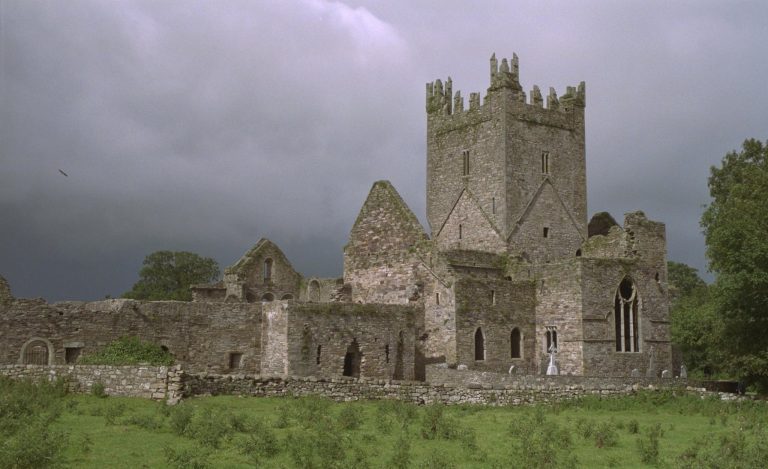
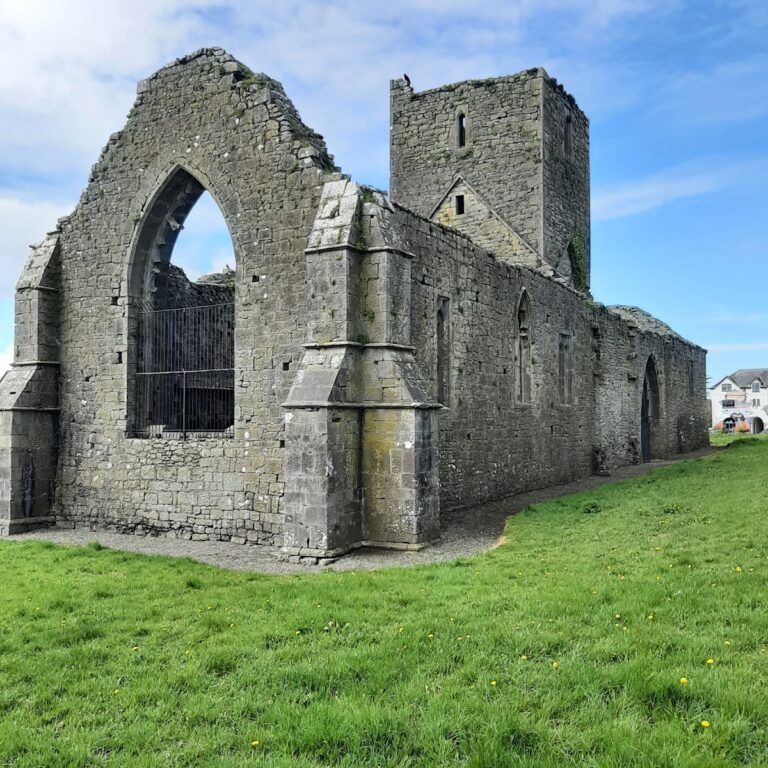
The principal church stood beside the second wall, nearer to the river. Built in the early thirteenth century, it had a nave approximately 25 metres long. The chancel, the eastern part reserved primarily for the clergy and altar, and the crossing, where the nave intersected the transepts, together measured about 40 metres.
Utility buildings for the canons surrounded the church. These buildings were first constructed in wood and later rebuilt in stone. Some of the claustral ranges, the buildings arranged around a monastic cloister, may have been completed before the main church.
Archaeological Finds
Excavation produced approximately 20,000 archaeological finds. They include carved-stone fragments, pottery such as Ham Green ware, floor tiles, ridge tiles, and metal objects. Ham Green ware is a medieval pottery type identified by its distinctive production tradition and fabric. Painted window glass among the finds has made it possible to reconstruct probable patterns from some of the church windows.