Kilbride Castle: A Norman Stronghold of the Lords of Kilbride
Site at a Glance
- Popularity
- Medium
- Country
- United Kingdom
- Primary era
- Medieval
- Eras represented
- Medieval
- Civilizations
- Kingdom of Scotland, Norman
- Site type
- Military
- Remains
- Castle
On this page7 sections
History
Kilbride Castle was a Norman stronghold in the United Kingdom, dated to the twelfth century and held by the Lords of Kilbride before becoming a seat of the Comyn family. Its motte, a raised earthwork used as a defensive stronghold, may be older than the eleventh or twelfth century. The name Kilbride was shared by early medieval settlements named for a cell or chapel dedicated to Saint Brigid of Kildare, an early Christian saint venerated in Ireland.
The de Valognes family
The de Valognes family, Norman nobles, held Kilbride under its first lord, Roger de Valognes. Around 1180, Roger disputed the church’s rights and associated lands with Jocelin, Bishop of Glasgow. At William the Lion’s court, testimony held that those rights went back to the tenure of John Capellanus, Glasgow’s first bishop. Roger had withdrawn his claim by 1189, when Jocelin granted the family permission to maintain a private chapel in the castle.
The Comyn lordship
Before 1215, a younger son of William Comyn, Lord of Badenoch and Earl of Buchan, married Isabel de Valoniis and acquired Kilbride as David Comyn, Lord of Kilbride. The Comyns of Kilbride were one branch of a closely connected Scoto-Norman noble family. David died in 1247, and his son William succeeded him.
William Comyn married Euphemia de Clavering and had two sons. His elder son, John, inherited the lordship in 1283 but is said to have fled. In 1290, his younger brother Edmund became Lord of Kilbride. In 1306, Robert the Bruce, later Robert I, killed John, the Red Comyn, at Greyfriars in Dumfries and confiscated the Comyn estates. Bruce later granted Kilbride Castle and its lands as a dowry to his son-in-law Walter Stewart, who married Bruce’s daughter in 1315.
The Lindsays and later identification
In 1382, Robert II granted John Lindsay of Dunrod the barony of Kilbryde and lands that included Kittochsyde and Thorntoun in Clydesdale. The estate was assessed at one hundred merks, a measure of landholding value, in recognition of Lindsay’s faithful service. The Lindsays kept their title and earlier property, but settled at the Mains in Kilbride rather than their older family seat at Dunrod near Gourock. The original castle appears to have been entirely destroyed around this time.
After 1783, historian David Ure lived as assistant to the minister of East Kilbride parish and researched local history and mineral strata. In 1793, he identified Laigh Mains Motte as the site of Kilbride Castle, describing it as the old and probably original building.
Remains
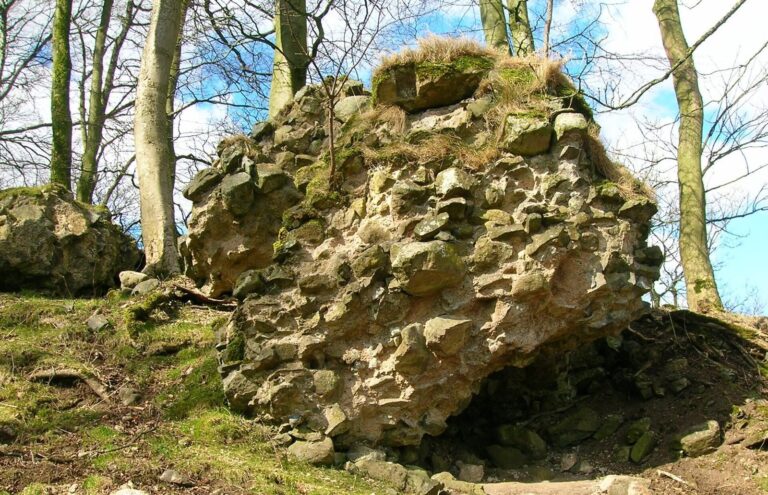
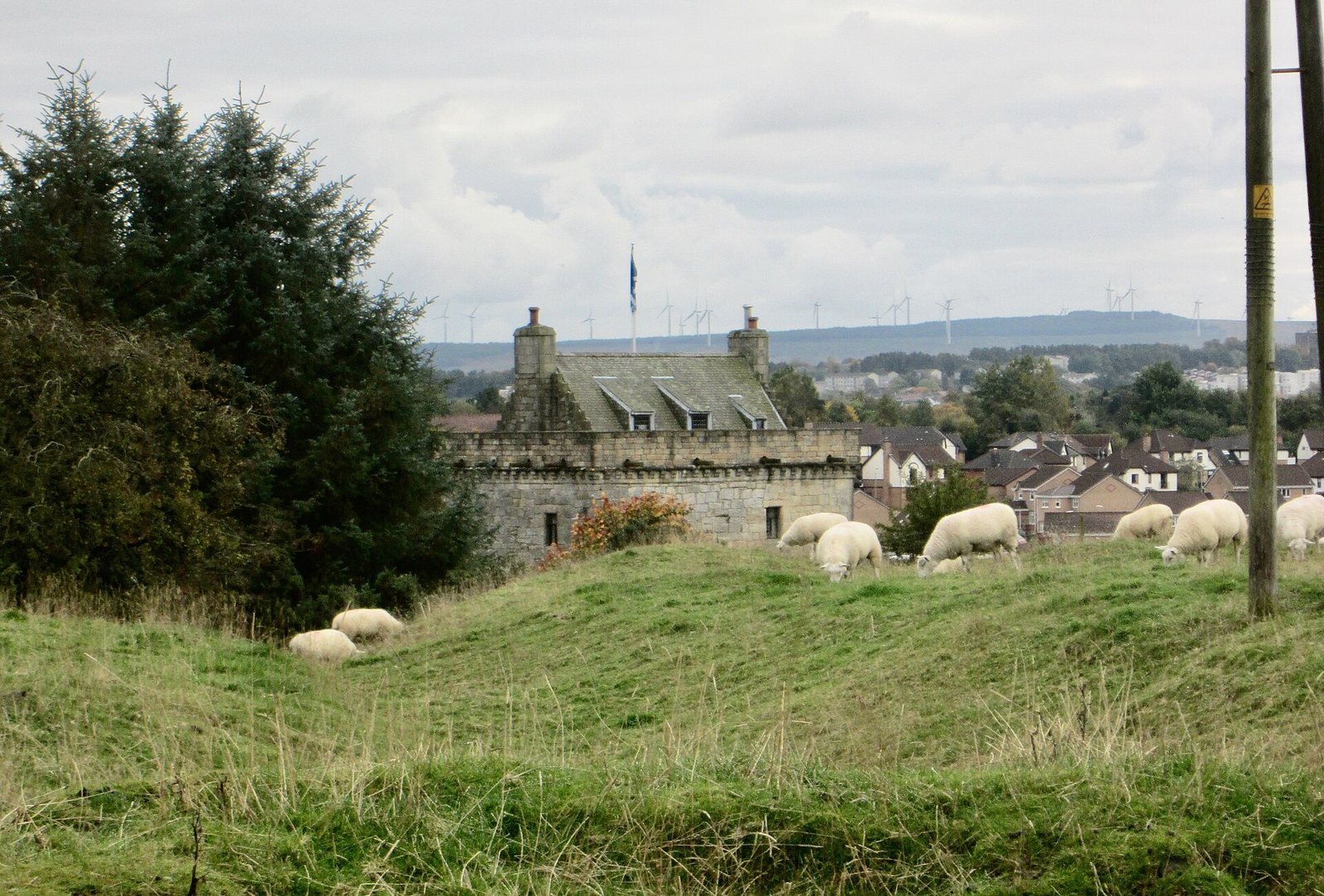
The castle site is identified with Laigh Mains Motte, within the grounds of Laigh Mains farm, west of Markethill Road. It lies north of Mains Castle and about 1.1 miles (1.8 km) north of the church. The earthwork projects from the brow of a south-facing slope, with a raised, flattened top. Its position provided a defensive advantage against approaches from the south and east.
Motte and ditches
A double ditch defended the motte on its eastern and northern sides. Farming has filled in the northern outer ditch. The motte and its surrounding earthworks form the surviving features associated with the castle site.
Mains Castle
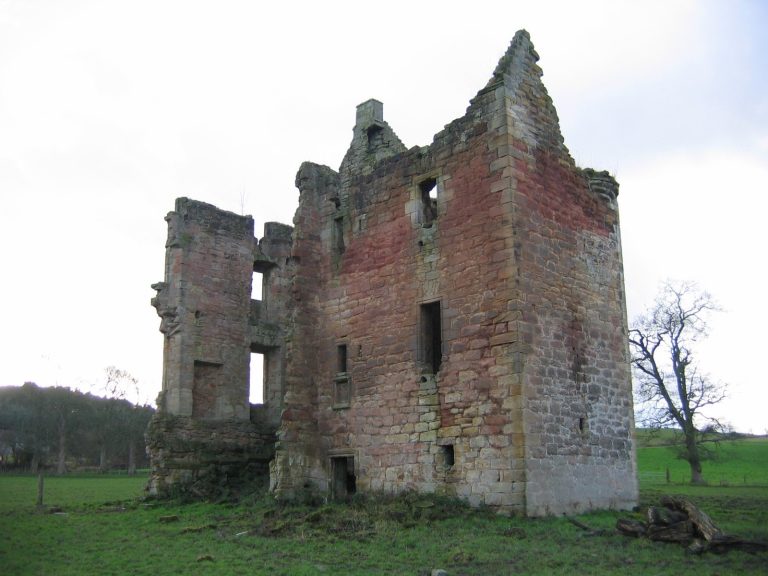
Mains Castle stands down the slope from the motte. Its construction incorporated stonework taken from Kilbride Castle.