The Burrell Collection: An Art Museum in Glasgow
Site at a Glance
- Popularity
- Very High
- Country
- United Kingdom
- Primary era
- Medieval
- Eras represented
- Stone Age, Medieval, Early Modern, Modern
- Civilizations
- Chinese, Egyptian, Mughal, Tang
- Site type
- Museum
On this page16 sections
History
The Burrell Collection is an art museum in Pollok Country Park, Glasgow, United Kingdom, created to house the works assembled by Sir William Burrell and Constance, Lady Burrell. It opened in 1983 in a purpose-built building influenced by Scandinavian design. The museum’s creation followed a long effort to find a suitable home for the collection and bring it into public ownership.
A public gift and a search for a home
Sir William, a Glasgow shipping magnate and art collector, and Constance gathered the collection over many years. In 1925, he gave 48 paintings and 30 prints to Kelvingrove Art Gallery and Museum. Many of his works, particularly those from China, were displayed there on a semi-permanent basis. Around 1930, Burrell decided to give his collection to the public and sought a home for the roughly 6,000 objects still to be placed. He first offered them to the Westminster government for a separate national institution, but wartime priorities stalled the plan. London County Council later negotiated over the collection, then declined because of the cost of maintaining it.
Tom Honeyman, the newly appointed director of Kelvingrove, was a trusted and admired figure to Burrell, and helped persuade him to offer the collection to Glasgow. In April 1944, William and Constance signed an agreement with Glasgow Corporation, the city’s municipal government. It required a distinct, suitable museum within four miles of Killearn and at least 16 miles from Glasgow Royal Exchange, partly to protect the collection from air pollution. Burrell contributed £450,000 towards the building.
Glasgow considered at least eight possible locations by the late 1940s. Mugdock Castle Estate received serious attention despite being closer to Glasgow than the agreement allowed. In 1951, the widow of a Glasgow shipbuilder gave the Dougalston estate to the city on the condition that the museum be built there. The plan was dropped in 1955 after the National Coal Board, Britain’s state-owned coal-mining authority, announced a nearby mine. The collection remained in storage.
Pollok estate offered another possibility. The Stirling-Maxwell family’s ancestral home included 360 acres of parkland, although it lay only three miles from Glasgow city centre, so some original location conditions were set aside. After extended negotiations, the government provided support for the museum, and the Secretary of State for Scotland promised to meet half the estimated £9.6 million cost. The estate passed to the city in 1967, allowing preparations to advance.
Building and opening
A design competition began in 1970, and a postal strike delayed its 1971 closing date. Construction started on 3 May 1978 and continued for about five years. Queen Elizabeth II opened the museum on 21 October 1983. Glasgow Museums, the city’s museum service, manages it.
Burrell continued adding to the collection until 1958, and other acquisitions followed before the museum opened. These included the purchase of the Warwick Vase in 1977.
Later stewardship and provenance
In 2000, the UK government established the Spoliation Advisory Panel to advise on claims involving cultural objects displaced during the Nazi era. Glasgow Museums reviewed works whose ownership histories had gaps between 1933 and 1945. In 2004, the panel concluded that a still life by 18th-century French painter Jean-Baptiste-Siméon Chardin, formerly held by the Jewish-owned A. S. Drey gallery in Munich, had been forcibly sold and recommended its return. The heirs accepted a voluntary £10,000 payment from Glasgow City Council, without an admission of legal liability, and the painting stayed in the collection.
Historic Scotland gave the building Category A listing in February 2013, Scotland’s highest category for buildings of special architectural or historic interest. That year, a project began to conserve and research stained glass from the Carmelite church at Boppard-am-Rhein in Germany. In 2014, the panel concluded that Burrell’s purchase of the early-16th-century Swiss tapestry The Visitation, previously owned by Jewish collector Emma Budge of Hamburg, followed a forced sale. The council agreed to pay an amount reflecting the tapestry’s market value; Budge’s estate relinquished its claim, and the tapestry remained in the collection. Refurbishment work begun in 2016 repaired the building, improved its sustainability and expanded gallery space.
Remains
The museum combines purpose-designed galleries with historic architectural pieces and reconstructed domestic rooms. Its physical arrangement brings together the building, the collection, and the surrounding parkland.
Building and setting
Plan and parkland
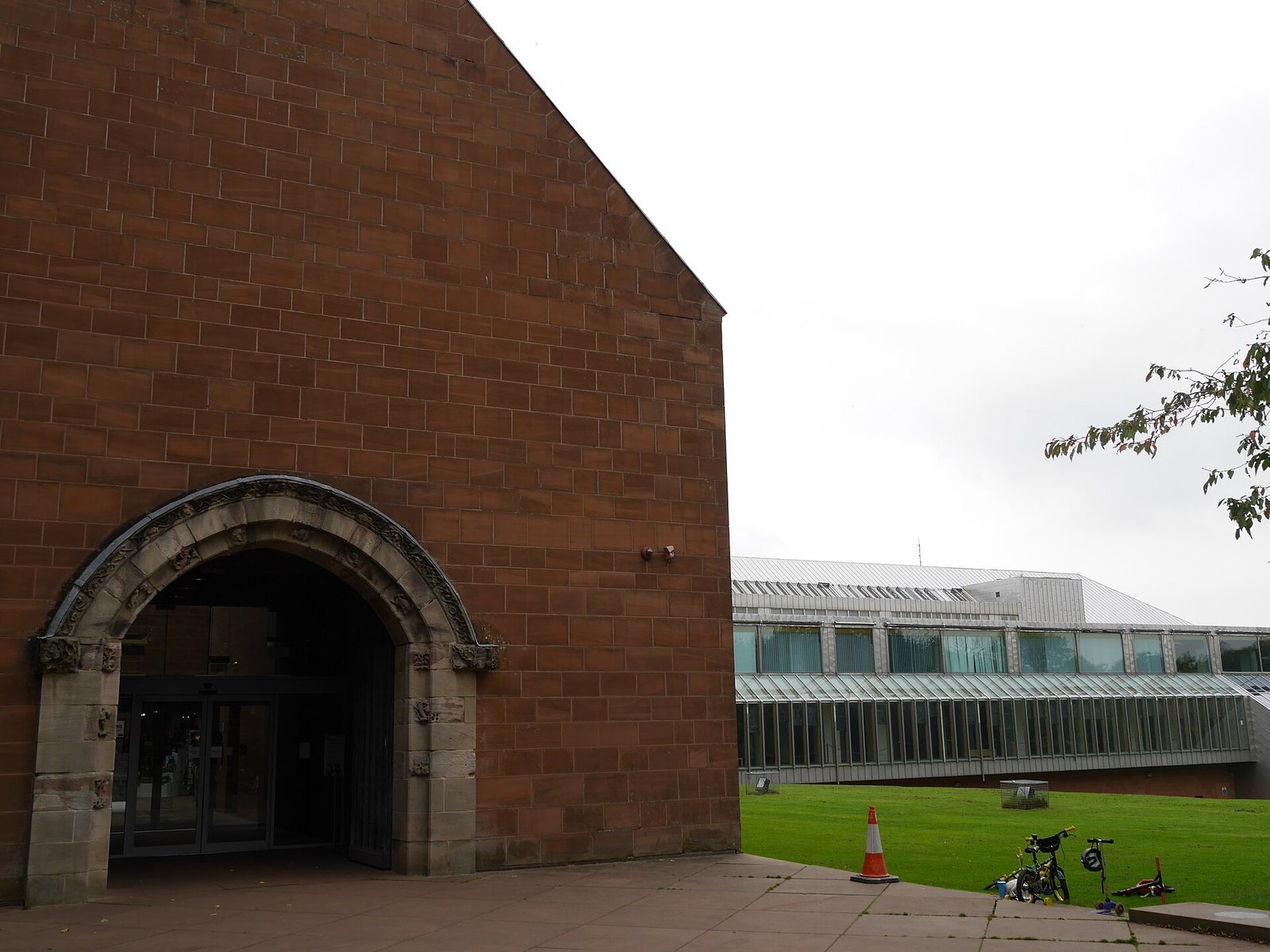
The building has an L-shaped plan designed around the collection. Its orientation admits natural light while shielding vulnerable works, and the design connects the galleries with the landscape. Large objects, including historic doorways, were incorporated into the structure. Formal grassed areas lie to the south and woodland to the north, with gallery views over these parts of the park.
Entrance and courtyard
A stone archway from the 16th century forms the entrance in a modern gable faced with red sandstone. The building also incorporates a doorway from the church of Montron in France. It is Romanesque, a medieval style associated with rounded arches. The entrance side includes a shop and other facilities, and opens onto a central courtyard beneath a glazed roof.
Reconstructed rooms and galleries
Beside the courtyard are three furnished reconstructions of rooms from Hutton Castle, the Burrells’ home near Berwick-on-Tweed: a wood-panelled drawing room, a hall and a dining room. The galleries occupy two levels above basement storage. A restaurant on the lower level faces south across the lawn.
The collection
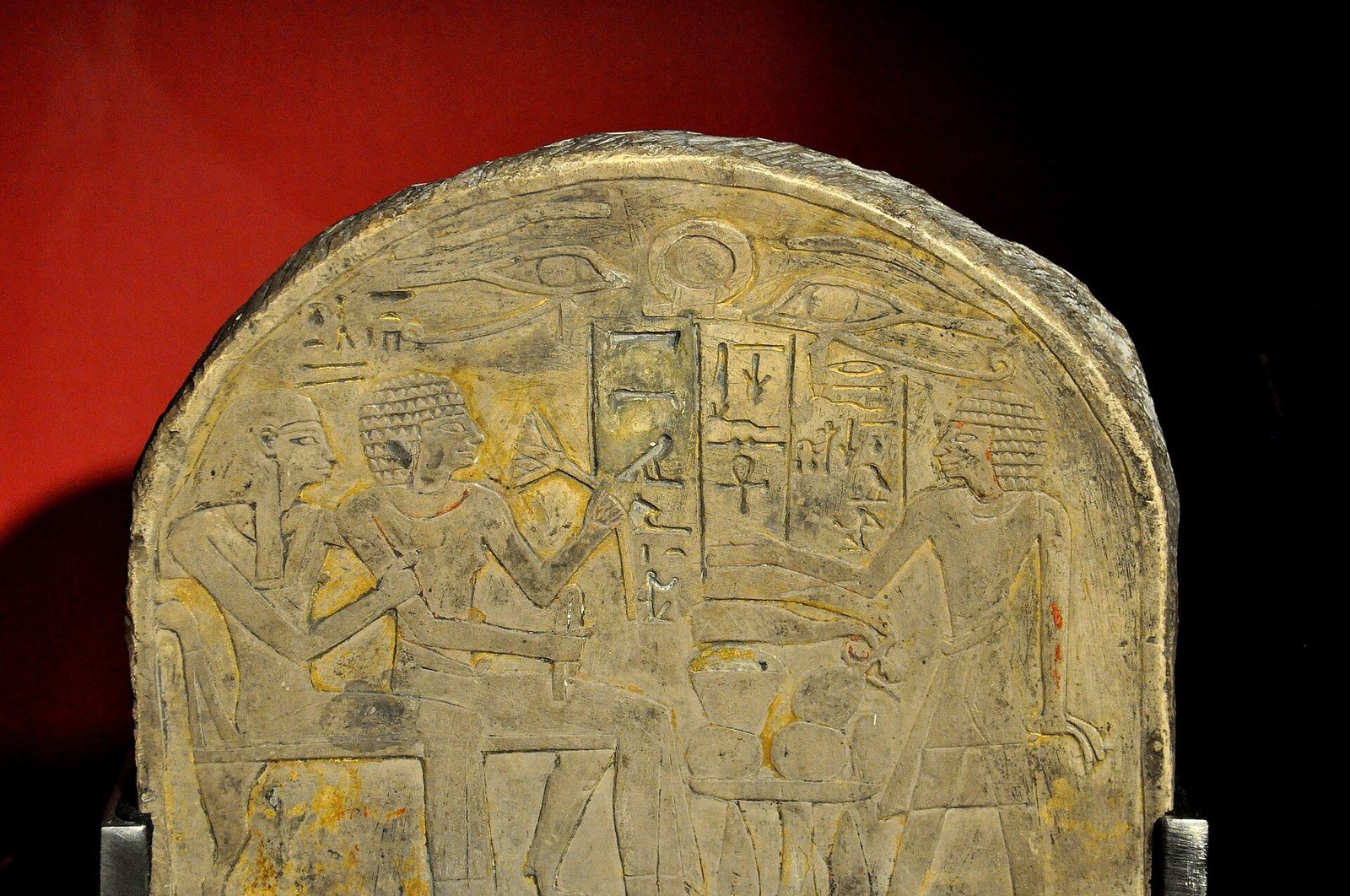
The museum holds more than 9,000 objects, with material spanning six millennia and paintings spanning five centuries. Its holdings also include objects from ancient Egypt, oak furniture, weapons and armour, and modern sculpture.
Chinese art
Burrell began collecting Chinese antiques around 1910. The collection includes Neolithic burial urns, from a prehistoric period associated with early farming and settled communities, as well as carved jade, bronze ritual vessels, earthenware figures and antique furniture. Its porcelain includes works from the Tang dynasty, an imperial Chinese dynasty. The Chinese holdings are regarded as one of the UK’s most important collections of Chinese art.
Islamic art
The Islamic holdings include ceramics and carpets from Iran and the Mughal Empire, a major South Asian empire, as well as embroidery and textiles from Turkey and Uzbekistan. They also include pottery made in Spain with a metallic-looking glaze. Among the best-known works is The Wagner Garden Carpet, made in 17th-century Iran and regarded as one of the most remarkable surviving garden carpets.
Medieval art and textiles
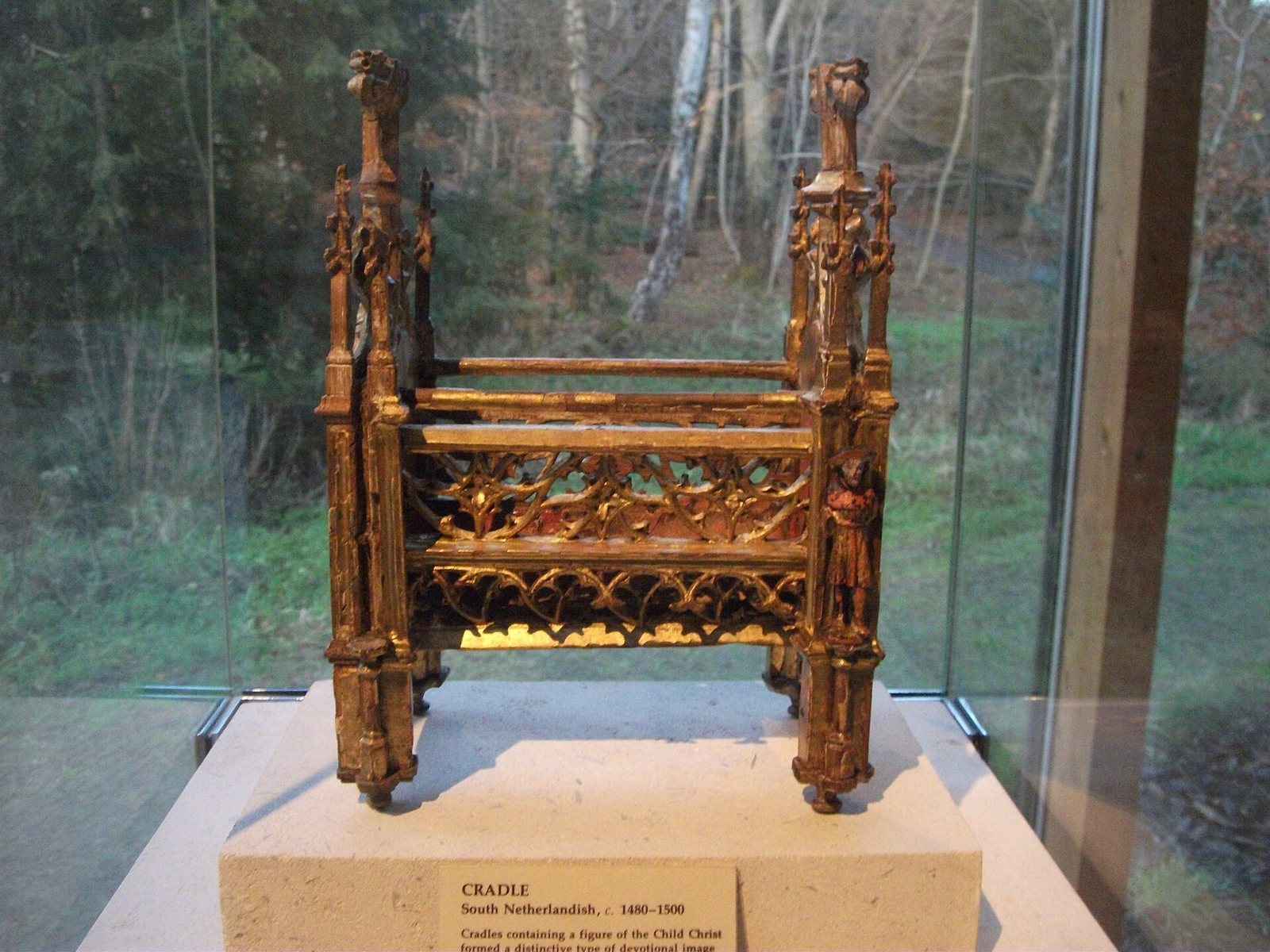
Medieval religious works include wooden and stone sculpture, wooden church furnishings and architectural fragments. These include the Temple Pyx, a container for the consecrated bread used in communion. The wider collection contains more than 200 tapestries and carpets.
Stained glass
More than 700 panels of stained glass come from across Europe. They represent Romanesque, Gothic and Renaissance styles, associated respectively with rounded arches, pointed arches and renewed use of classical forms. Many panels carry heraldic motifs, such as coats of arms. One panel, believed to have come from the Franciscan church at Oxford, depicts Beatrice of Falkenbourg. It is regarded as the oldest surviving donor portrait in good condition; a donor portrait shows someone who gave or commissioned a work. The 34 panels from Boppard have a combined area of 14 square metres.
European paintings
French works range from Realism, whose artists often depicted contemporary life, to Impressionism, which emphasized the effects of light and colour. The collection includes paintings by François Bonvin, Eugène Boudin, Jean-Baptiste-Camille Corot, Gustave Courbet, Charles-François Daubigny, Honoré Daumier, Henri Fantin-Latour, Édouard Manet and Jean-François Millet. Other European artists represented include Lucas Cranach the Elder, Giovanni Bellini, Rembrandt, Théodore Géricault, Alfred Sisley, Camille Pissarro, Renoir, Gauguin and Paul Cézanne.
Edgar Degas
The museum holds more than 20 works by Edgar Degas, making its group one of the greatest collections of his work in the world. Its Degas pastels are regarded as the most important group in the UK.