Kilbline Castle: A Sixteenth-Century Tower House in County Kilkenny
Site at a Glance
- Popularity
- Low
- Country
- Ireland
- Primary era
- Early Modern
- Eras represented
- Early Modern
- Civilizations
- English
- Site type
- Military
- Remains
- Castle
On this page9 sections
History
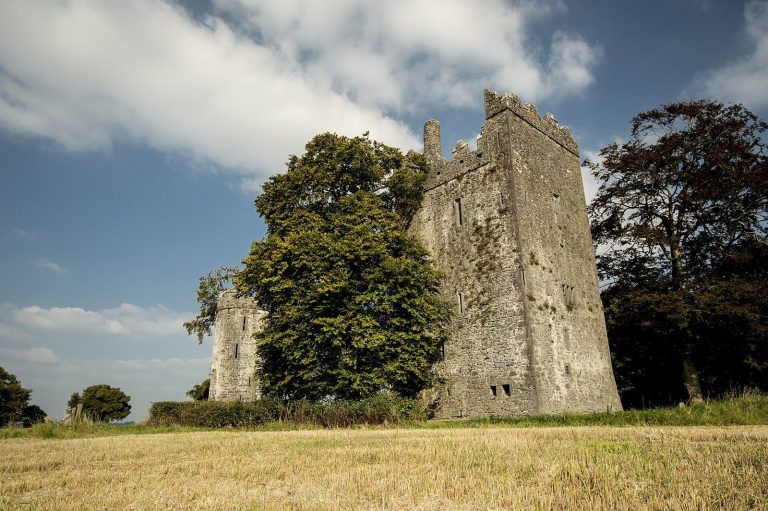
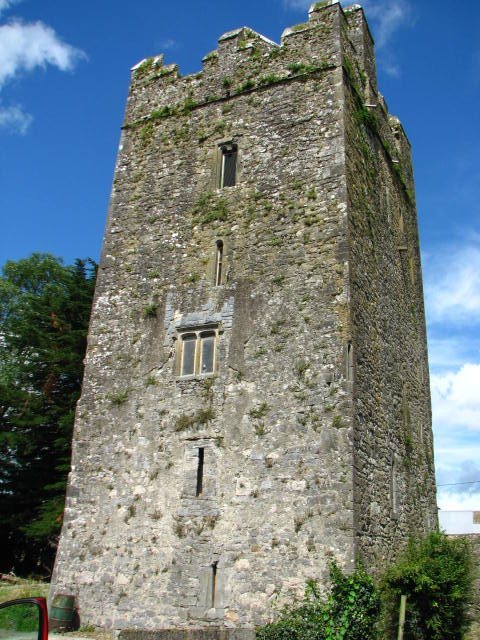
Kilbline Castle is a sixteenth-century fortified tower house, a vertically arranged residence combining domestic rooms with defensive features, on the Kilbline Estate in County Kilkenny, Ireland. It follows the Norman style, an architectural tradition associated with the Normans. The castle lies in Tullaherin parish, within the historic barony of Gowran, about a mile southeast of Bennettsbridge.
Sixteenth-century castle
In 1566, Thomas Comerford of Ballymac forfeited the castle to the Crown after an attainder, a legal process that could deprive a person condemned for a serious offence of rights and property. Comerford had also substantially rebuilt it.
Shortall and Forstall ownership
Thomas Shortall acquired Kilbline Castle in 1628. Peter Shortall held it in 1651, during confiscations that followed the suppression of the Irish rebellion. Properties were taken from former owners and granted to English army officers and soldiers, and Peter was apparently exiled to Connacht. After the Restoration, the re-establishment of the monarchy in England in 1660, his confiscated holdings were returned in 1662.
Walter Forstall held the castle in 1668. In 1684, Mary Milbanke was recorded at Kilbline with her son Walter.
The Candler family and later owners
By the early eighteenth century, the Candler family held the castle. William Candler, who came from Newcastle in Northumberland, served Oliver Cromwell, the English military and political leader whose forces played a major role in the conquest of Ireland. William rose to lieutenant colonel and received Irish lands for his service, particularly in County Kilkenny.
William’s younger son, John, lived at Kilbline. John’s only son, Thomas, had one son who did not marry, ending that branch of the family. William’s elder son, also named Thomas, lived at Callan and had four sons. His youngest, Daniel, married Hannah, an Irish Catholic. As such a marriage was unacceptable in England at the time, they emigrated in 1735, first to North Carolina and then to Bedford, Virginia. Their great-grandson Asa Griggs Candler became a successful businessman and founded Coca-Cola.
In 1774, Reverend Henry Candler’s interest in the Kilbline lands was to be sold over a debt owed to Sir John Blunden. On 19 October, Candler announced that he had paid the debt, and the sale did not go ahead.
Mrs Walsh, the widow of farmer Edward Walsh of Tullow, died at the castle in 1797. Patrick Purcell was associated with Kilbline around 1840, when furniture and agricultural equipment were auctioned there for his estate. Joseph Purcell lived at the castle in 1853. Catherine Ryan owned it in 1876, and members of the Ryan family lived there for several generations. The Lannon family acquired the castle in 1969; it remains privately owned.
Remains
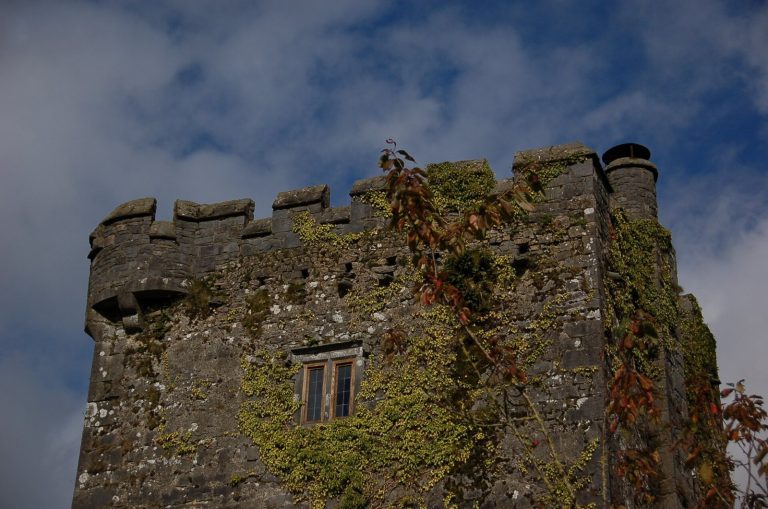
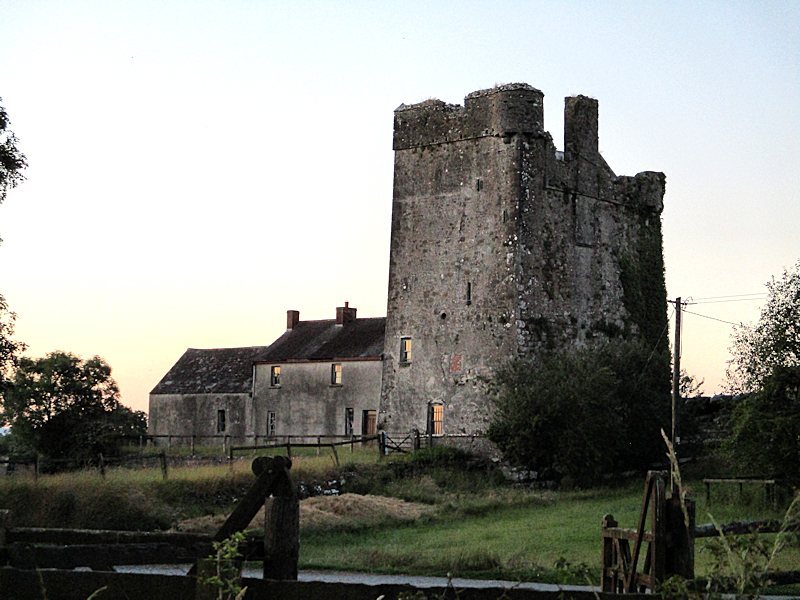
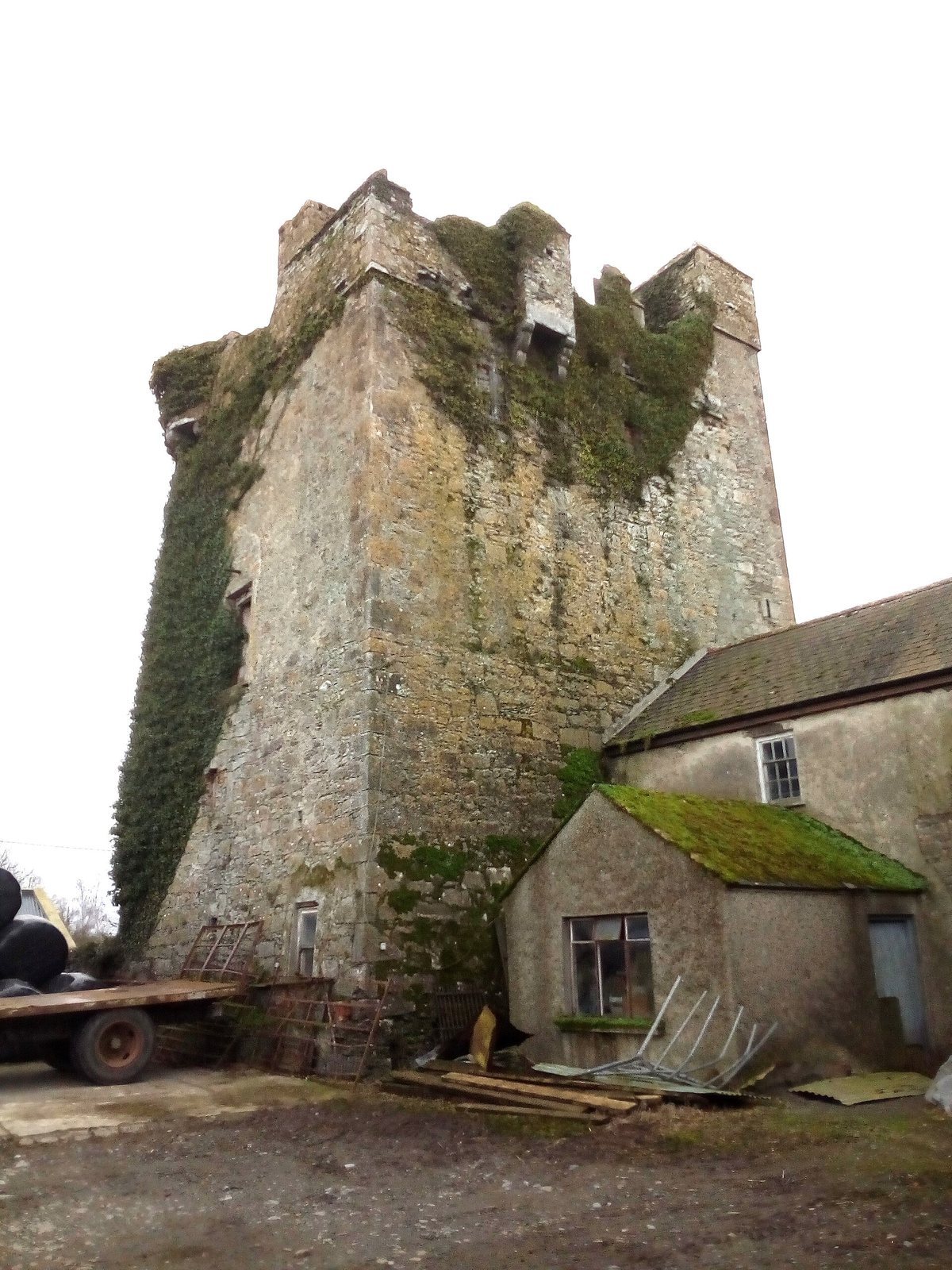
The surviving complex centres on the fortified tower, with a low house attached to it and a larger, more modern house elsewhere in the grounds. Early brick walls stand beside the house.
The tower and associated buildings
Tower house
The tower contains a panelled room and a fireplace surround dated 1580. A slab above the fireplace bears an inscription and the date.
Attached house and grounds
A later, low house is attached to the tower. It has two storeys and three principal divisions across its front, with narrow windows resembling loopholes and a simple doorway surround. A larger, more modern house also stands within the grounds.
Early brick walls
Brick walls beside the house include blank arches and vaulted sections with curved ceilings.