Khotyn Fortress: A Historic Stronghold in Ukraine
Visitor Information
Google Rating: 4.8
Popularity: High
Official Website: khotynska-fortecya.cv.ua
Country: Ukraine
Civilization: Medieval European, Modern, Ottoman
Site type: Military
Remains: Castle
History
Khotyn Fortress is located in the town of Khotyn, in modern-day Ukraine, and was originally built by the Rus-Vlach peoples under the Mușat dynasty during the Moldavian Principality period. The fortress stands on a site that had been settled since at least the 8th century by East Slavic tribes.
The earliest known fortification was a wooden structure constructed in the 8th or 9th century by Slavic inhabitants. Over time, this settlement developed and transformed, with stone fortifications likely emerging by the late 12th or early 13th century. Archaeological excavations have uncovered remnants of 13th-century stone walls and a significant collection of coins dating from this period, confirming the fortress’s early importance. Positioned on the right bank of the Dniester River, it served as a vital defensive stronghold and a key point for river crossing and trade.
During the 14th century and onwards, Khotyn Fortress became a residence for Moldavian rulers and a stronghold within the principality. Under the reign of Alexander the Good (1400–1432), the fortress saw considerable expansion and reinforcement. His successor, Stephen the Great, further strengthened the defenses during the 15th century with thick walls as high as 40 meters, multiple towers, and a division of interior space into areas for ruling and military purposes. Stephen the Great is known to have personally overseen these reconstructions.
Throughout its history, Khotyn Fortress changed control among several powers. It was part of the Moldavian Principality, but later came under the influence or occupation of the Kingdom of Poland, the Ottoman Empire, and the Russian Empire. Its location made it a focal point in regional conflicts, notably resisting Ottoman sieges such as the 1476 attack by Sultan Mehmed II. The fortress played a central role in the 1621 Battle of Khotyn, where forces from the Polish-Lithuanian Commonwealth and Cossack allies successfully repelled the Ottoman army, an event leading to a peace agreement that year.
In the 18th century, the Ottoman Empire, assisted by French military engineers, extensively modernized the fortress. They transformed it into a bastion-style fortress, adding earthworks and artillery bastions capable of supporting a large garrison, including facilities such as a mosque with a minaret. Despite these improvements, Khotyn Fortress gradually lost its military significance, eventually being decommissioned in 1856.
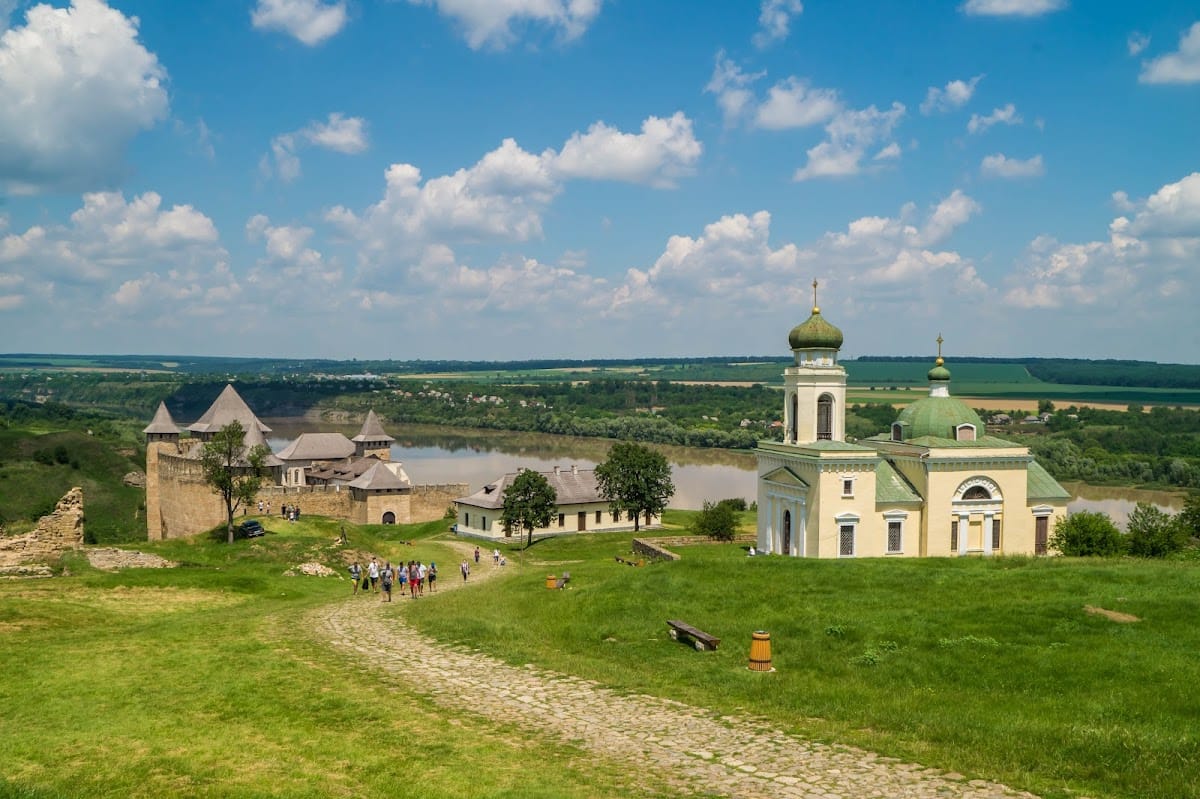
In the 19th century, the site came under Russian control, which left some architectural marks, including the construction of a Russian Orthodox church within the complex. Since 1963, the fortress has been protected as an architectural monument, and in 2000 it was designated a state historical-architectural reserve honoring its importance in Ukrainian heritage.
Remains
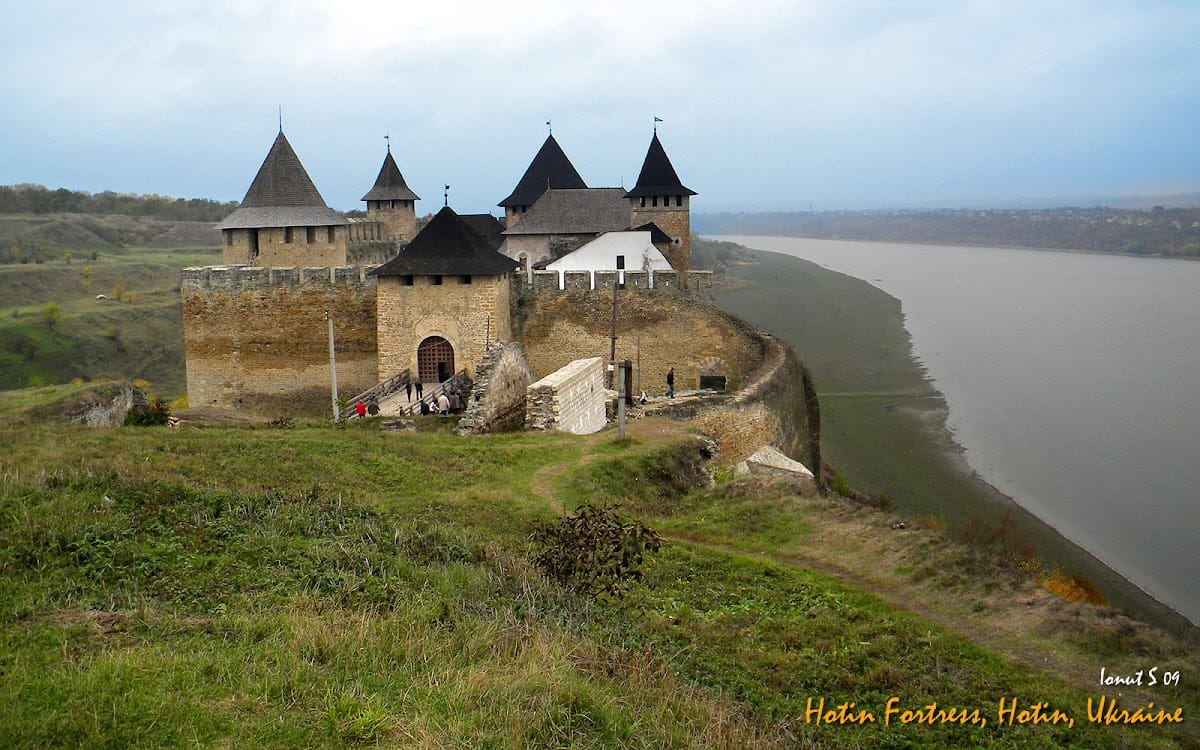
Khotyn Fortress occupies a prominent rocky hill overlooking the right bank of the Dniester River, with its medieval core covering around 2 hectares. Over time, expansions have increased the protected area to more than 16 hectares. The fortress’s walls are built from roughly cut quarry stones laid in even layers, punctuated by bands of red bricks arranged into geometric patterns that decorate the façades and interior buildings.
The oldest surviving stone fortifications date from the 13th century and include walls approximately six meters thick, surrounded by a triangular moat. Fragments of these early walls have been incorporated into later curtain walls, preserving a direct link to the fortress’s medieval origins.
Significant work by Stephen the Great resulted in formidable defensive walls reaching up to 40 meters in height and five meters in thickness. The layout within includes a courtyard raised roughly 10 meters above the surrounding terrain, divided into two main sections: one served as the princely court where rulers and officials resided, and the other functioned as the military area for soldiers. Beneath these courtyards are deep cellars used for storing provisions during sieges.
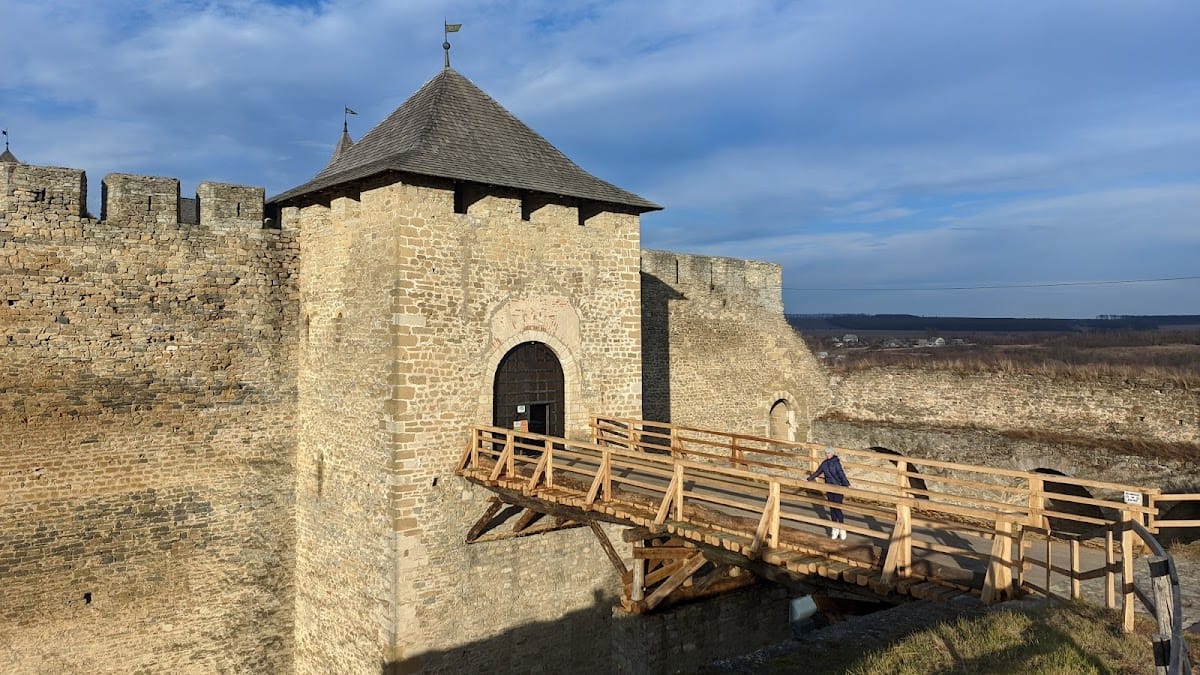
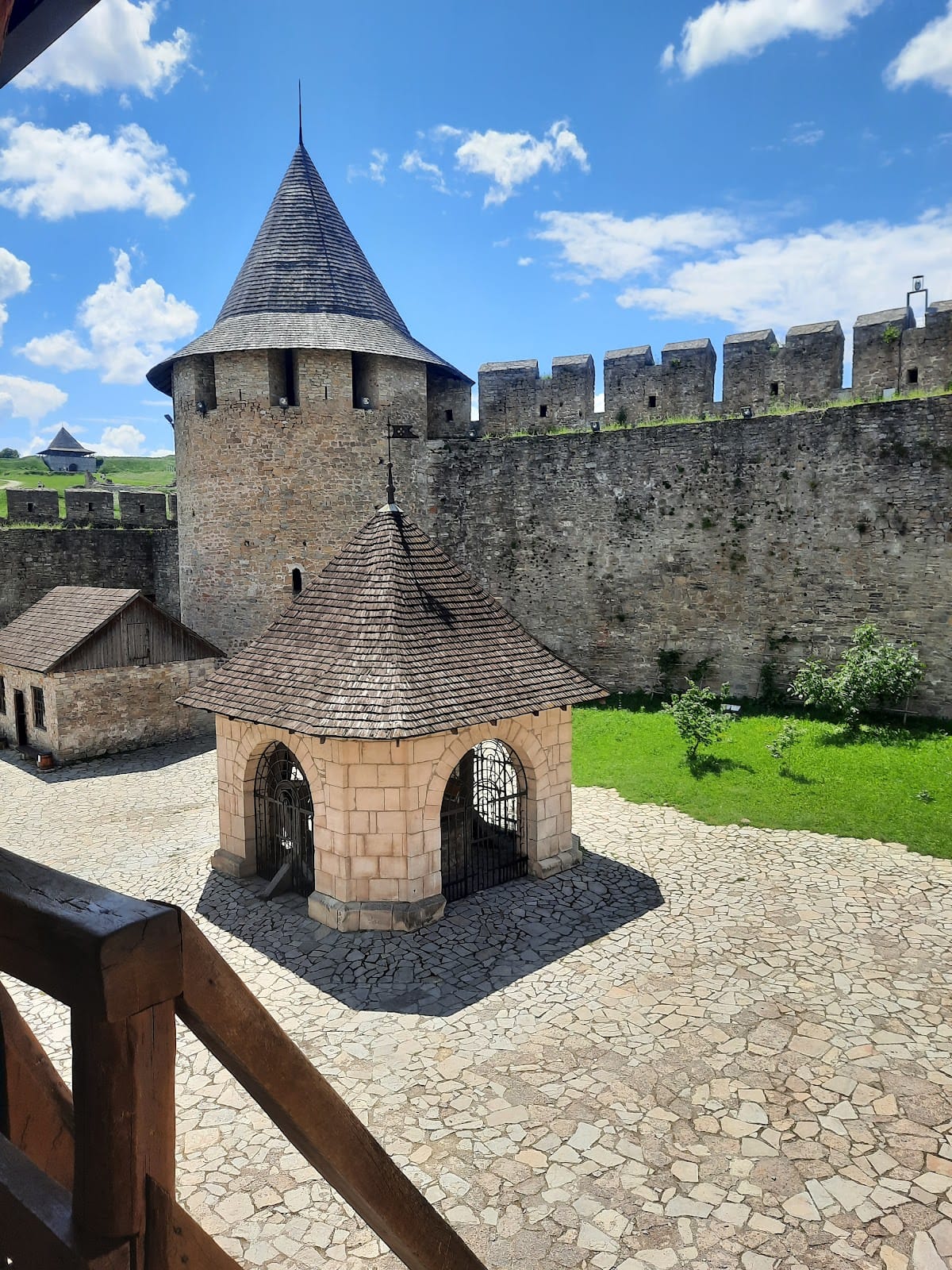
The fortress features five main towers with shingled roofs. Three of these—including two round towers and a rectangular gate tower on the south side—were constructed under Stephen the Great’s direction. The gate tower is accessible by a wooden bridge resting on pilings. Two additional rectangular towers are older, with the northernmost one likely serving as the original main defensive keep, or donjon. The tallest towers reach about 25 meters in height, and the walls vary in thickness, the western walls being the thickest while those fronting the river are designed with fewer openings but equipped with arrow slits.
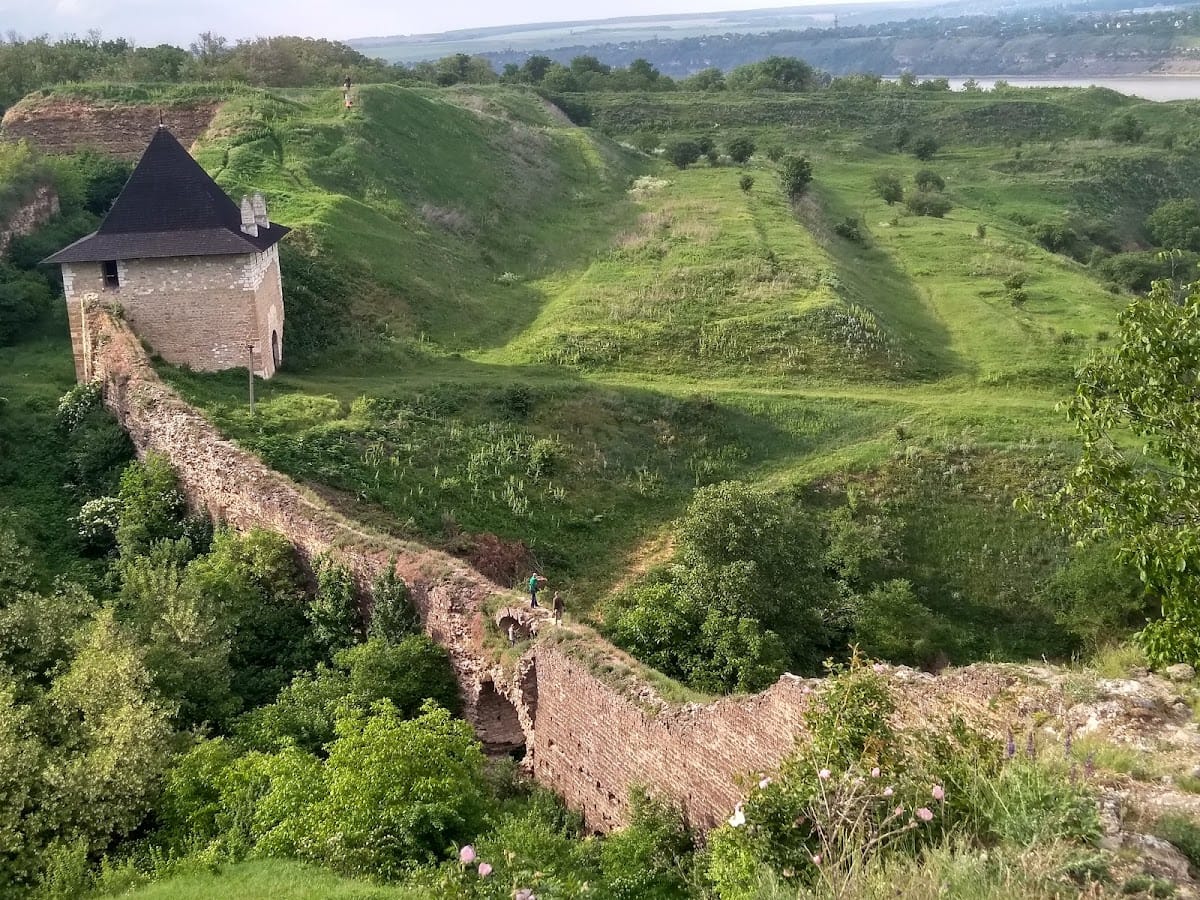
During the Ottoman reconstruction in the early 18th century, the fortress was encircled with a “New Fortress” bastion system. This included earthen ramparts, bastions shaped to withstand artillery fire, and broad moats, reinforced using finely dressed stone. This outer line of defense comprises three gate towers and six artillery bastions. Within this later enclosure remain the ruins of a Turkish mosque, identifiable by the foundations of a minaret.
Several notable buildings stand within the fortress. A chapel dedicated to the Dormition of the Mother of God presents Gothic design elements and preserves frescoes dating to the time of Petru Rareș, a Moldavian ruler of the 16th century. The two-story princely palace features decorative brickwork on its façade and contains extensive cellars beneath. Military barracks also exist within the walls, alongside a well that historically supplied water during sieges.
In the 19th century, the Russian Orthodox Church of St. Alexander Nevsky was constructed inside the fortress’s boundaries, highlighting the complex’s continued use and layered history.
Archaeological excavations have revealed earlier wooden fortifications under the stone walls and unearthed various artifacts, including coins and building materials, which help to trace the fortress’s phases of construction and occupation. Today, the complex remains well-preserved and is formally protected as a historic site covering over 16 hectares, allowing for close study and understanding of its long and varied past.