Keishō-ji Temple: A Koyasan Shingon Buddhist Temple in Matsusaka

Site at a Glance
- Rating
- 4.1
- Popularity
- Low
- Country
- Japan
- Primary era
- Unclassified
- External website
- Open
- Eras represented
- Unclassified
- Civilizations
- Unclassified
- Site type
- Religious
- Remains
- Temple
On this page8 sections
History
Foundation and the Okadera tradition
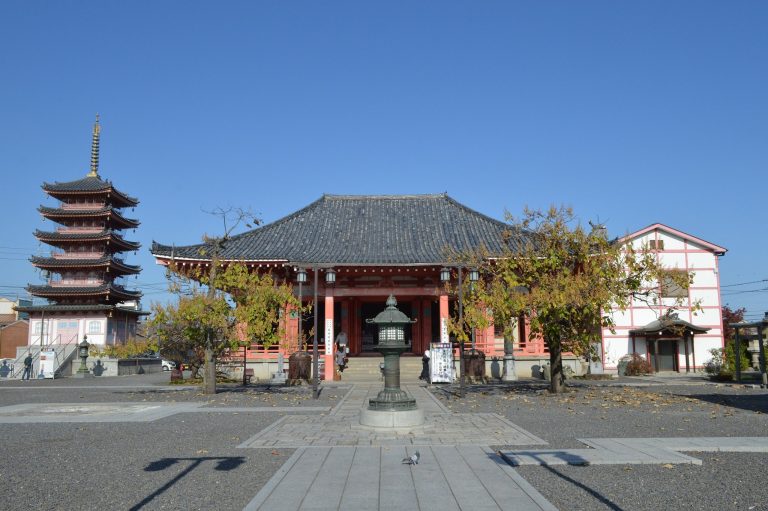
Keishō-ji Temple is a Koyasan Shingon Buddhist temple in Matsusaka, Japan, traditionally founded in 743 during the reign of Emperor Shōmu. Its mountain name is Okaderayama, its formal name is Okaderayama Nyoirin-in Keishō-ji, and it is commonly called Okadera. According to temple tradition, Emperor Shōmu commissioned the monk Gyōki to establish it at Ishizu in Iitaka District, in what is now Ishizu-cho, Matsusaka.
Gyōki had been sent to Ise Shrine to seek divine guidance about constructing the Great Buddha at Nara. After receiving a spiritual revelation, he founded four temples. Keishō-ji is traditionally regarded as the only surviving sacred site among them.
A further tradition connects the temple’s history with a great flood in 750. The flood swept away the temple buildings and its principal image, Nyoirin Kannon. Mitsu Gorōemon, a resident of Futamiura, found the image in the sea, entered religious life under the name Keishō Hōshi, and is said to have rebuilt the temple. The temple’s name derives from his religious name.
Relocation and early modern history
Keishō-ji moved to its present location during the early modern period. The relocation is associated either with the Tenshō period, when Gamō Ujisato was building Matsusaka Castle, or with 1612, when the move was carried out under Furuta Shigeharu, lord of the Matsusaka domain. The temple now stands in Nakacho, Matsusaka.
Calligraphy, painting, and religious tradition
During the middle Edo period, the abbot assisted the calligrapher Kan Tenju with a copy of a calligraphic model book. Ike Taiga, an eighteenth-century painter and calligrapher associated with the literati-art tradition, stayed at Keishō-ji during a visit to Ise and left calligraphic and pictorial works there. In the late Edo period, the artist and calligrapher Nukina Kaioku also stayed temporarily at the temple while tracing Tenju’s footsteps.
Keishō-ji follows Kogi Shingon, a historical stream within Japanese Shingon Buddhism, and belongs specifically to the Koyasan Shingon school centered institutionally on Mount Koya. Its principal devotional figure is Nyoirin Kannon, a form of Kannon, the bodhisattva associated with compassion. This form is characterized by the wish-fulfilling jewel and wheel, and the temple is known for worship connected with protection from misfortune.
The Hatsuuma festival
The Hatsuuma Grand Festival takes place for three days around the first Hatsuuma day in March. It is associated particularly with people observing yakudoshi, traditional ages regarded as especially susceptible to misfortune, and with nineteen-year-old women wearing furisode, the long-sleeved formal kimono worn especially by young unmarried women. Stalls along the approach sell Hiki-zaru charms, whose name puns on driving away misfortune, and twisted okoshi confections, whose name puns on overcoming it.
A worship tradition holds that people should not look downward or turn around while approaching or visiting the temple. On the festival’s second day, women selected through public recruitment take part in the Hōei palanquin procession, walking in kimono from the city center to Keishō-ji around a palanquin. The procession began in the Meiji period, ceased temporarily after the Second World War, and was revived by local volunteers in 2009.
Leaving a handkerchief in the precincts as an act of casting off misfortune is also associated with the temple, although Keishō-ji states that this is not an old-established practice and does not recommend it. The temple and related features have received cultural-property designations from Mie Prefecture and Matsusaka City. These include the image of Fugen Enmei Bodhisattva, Soga Shōhaku’s painting The Boy of Snow Mountain, the temple study, bell tower, bronze bell, bronze incense burner, bronze lantern, mandala paintings, and woodblocks with related materials from the Okadera edition of a calligraphic model-book collection.
Remains
Temple complex and principal image
Keishō-ji occupies the site in Nakacho to which the temple was relocated during the early modern period. The central object of worship is Nyoirin Kannon, whose traditional history links the present religious identity of the temple with the flood of 750 and its recovery from the sea. The surviving complex includes the temple’s study and bell tower as documented architectural components.
Study and bell tower
The study, or shoin, forms part of the temple complex and is designated as a Matsusaka City cultural property. The bell tower is another identified component of the grounds and also holds municipal cultural-property designation. Together, these buildings represent surviving elements of the temple’s early modern site, where the religious institution continues to center its worship on Nyoirin Kannon.