Tamukeyama Hachiman Shrine: Tōdai-ji’s Tutelary Shrine in Nara


Site at a Glance
- Rating
- 4.2
- Popularity
- Low
- Country
- Japan
- Primary era
- Medieval
- External website
- Open
- Eras represented
- Medieval
- Civilizations
- Kamakura shogunate
- Site type
- Religious
- Remains
- Sanctuary
On this page7 sections
History
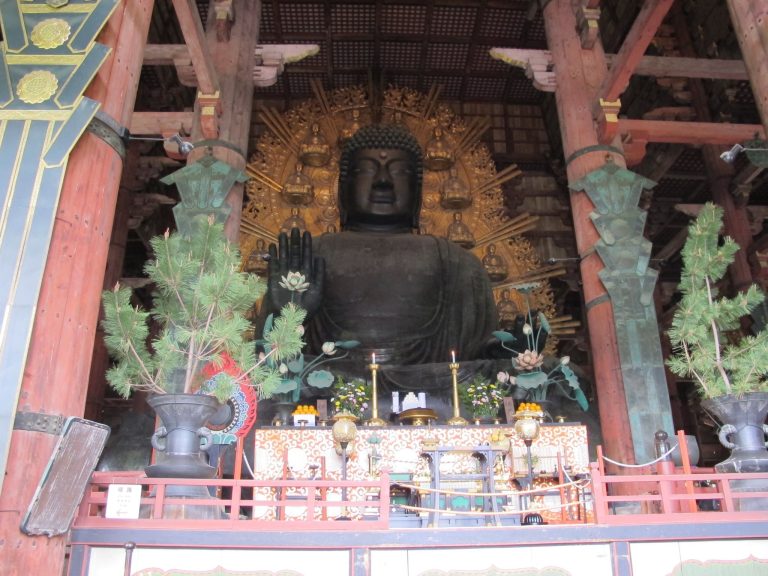
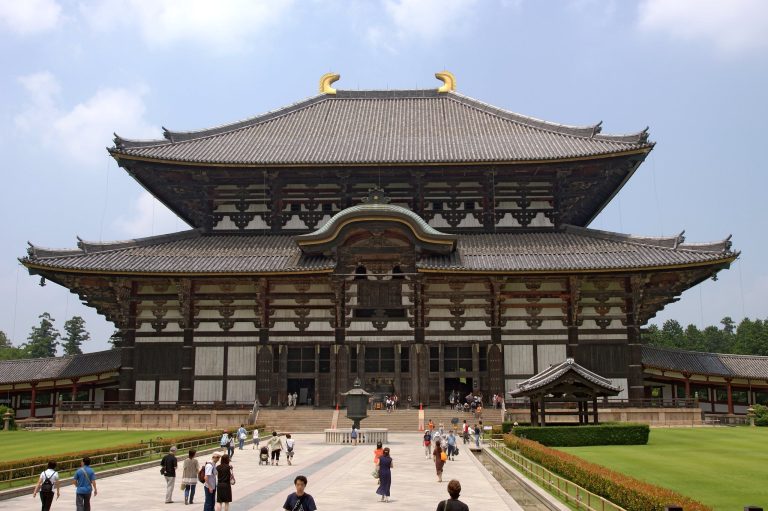
Tamukeyama Hachiman Shrine is a Shinto shrine in Nara, Japan, established in 749 during the eighth-century construction of Tōdai-ji and its Great Buddha. It served as the temple’s tutelary shrine, a shrine established to protect a temple or other institution. Hachiman, a Japanese kami associated with protection, warfare, agriculture, and the safeguarding of Japan and its people, was transferred from Usa Hachiman Shrine in Kyushu to become Tōdai-ji’s principal protective deity.
Foundation and imperial patronage
The shrine’s foundation was connected with plans for the Great Buddha. Oga no Morime, a priestess of Usa Hachiman Shrine, issued an oracle recommending that Hachiman participate in and guard the Tōdai-ji project. Emperor Shōmu, who promoted the construction and dedication of the Great Buddha, granted Hachiman the rank of ippin, the highest level in the historical system of official shrine and deity rankings, in 750. At the dedication of Tōdai-ji in 752, the shrine received formal imperial thanks, possibly in recognition of Usa’s contribution.
Tamukeyama Hachiman Shrine was first established at Nashihara Palace, south of the Heijō Palace, whose exact location remains uncertain. It later moved to the area around Kagami Pond, south of Tōdai-ji’s Great Buddha Hall. In 1180, the original shrine buildings were destroyed during the attack on the Southern Capital led by Taira no Shigehira. Chōgen, Tōdai-ji’s chief fundraising administrator, built a temporary sanctuary in 1188, and the shrine buildings were rebuilt in 1197.
Relocation and institutional change
In 1250, Hōjō Tokiyori moved the shrine precinct to its present location, formerly occupied by Tōdai-ji’s Senju-in. The main sanctuary was rebuilt in 1691. From its foundation until 1871, Tamukeyama Hachiman Shrine belonged to Tōdai-ji and functioned as its tutelary shrine.
That relationship ended with the Meiji-era separation of Shinto and Buddhism, a policy that formally divided the two religious traditions. The shrine became independent and was classified as a prefectural shrine. The Tōshōgū formerly located at Tōdai-ji’s Tōnan-in, now the temple’s main quarters, was designated as an Imperial Hall, and its buildings and enshrined deities were transferred to Tamukeyama Hachiman Shrine.
Rituals, traditions, and records
The shrine enshrines Hachiman together with Emperor Ōjin, Empress Jingū, Emperor Chūai, and Emperor Nintoku. Emperor Ōjin was later identified with or deified as Hachiman, explaining the joint association with members of his imperial family. The shrine is also known as Tōdai-ji Hachiman Shrine.
Annual observances include Onda, or Otaue, a rice-planting ritual held in February and designated an intangible folk cultural property of Nara City. Tegaie takes place each year on January 5. Tamukeyama is also associated with the poet Sugawara no Michizane, whose poem about the mountain’s autumn maples is traditionally connected with the shrine. The mountain is known for its autumn foliage.
The shrine’s associated records include imperial and shogunal documents, a document from the Office of the Left, an order from the retired Emperor Go-Uda, a directive issued by Ashikaga Yoshimitsu, an imperial proclamation from Emperor Go-Nara, and the diary of the Tōdai-ji painting bureau. These materials are designated tangible cultural properties of Nara City.
Remains
Precinct and setting
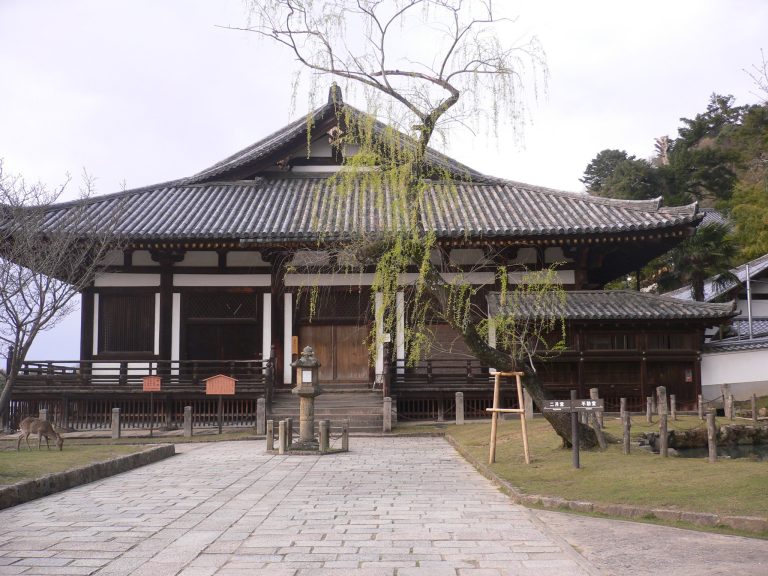
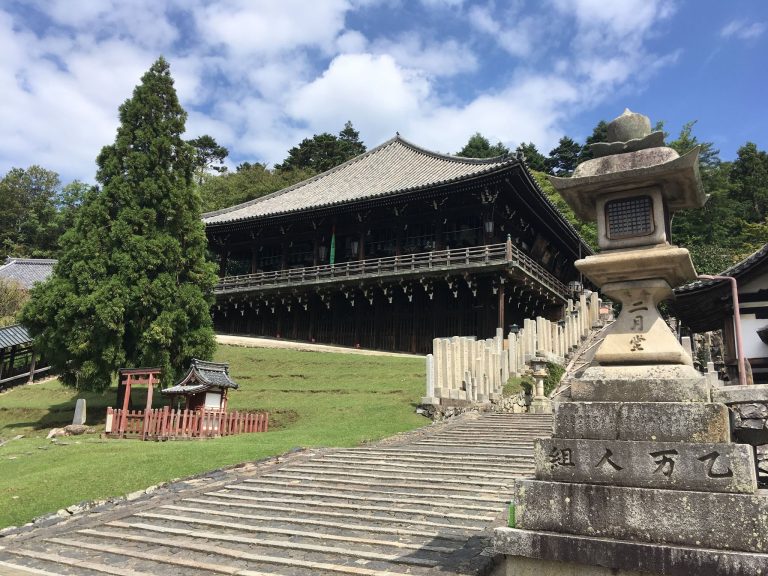
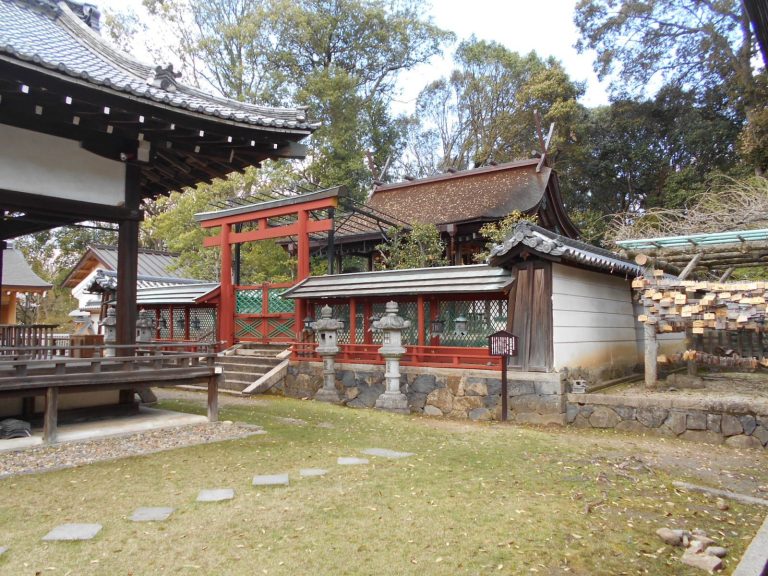
The present precinct occupies the former site of Tōdai-ji’s Senju-in on the lower slope of Mount Tamuke in eastern Nara. It stands immediately east of the road extending from the front of Tōdai-ji’s Great Buddha Hall, while Tōdai-ji’s Hokkē-dō, also called the Sangatsudō, lies immediately to the north. A rōmon, or gate building, forms part of the shrine complex. The precinct’s current position reflects the relocation carried out in 1250, following the shrine’s earlier settings at Nashihara Palace and near Kagami Pond.
Main sanctuary and transferred image
The main sanctuary was rebuilt in 1691. A wooden image of Hachiman in the form of a Buddhist monk, made by the sculptor Kaikei, was formerly kept at Tamukeyama Hachiman Shrine. It was transferred to Tōdai-ji during the 1871 separation of Shinto and Buddhism and is now housed in the temple’s Kanjinsho Hachiman Hall. The image is designated a National Treasure.