Geerestein Castle: A Historic Water Castle in the Netherlands
Site at a Glance
- Rating
- 4
- Popularity
- Very Low
- Country
- Netherlands
- Primary era
- Early Modern
- Eras represented
- Medieval, Early Modern, Modern
- Civilizations
- Dutch, Habsburg, Holy Roman Empire
- Site type
- Domestic
- Remains
- Castle
On this page10 sections
History
Origins and fifteenth-century conflict
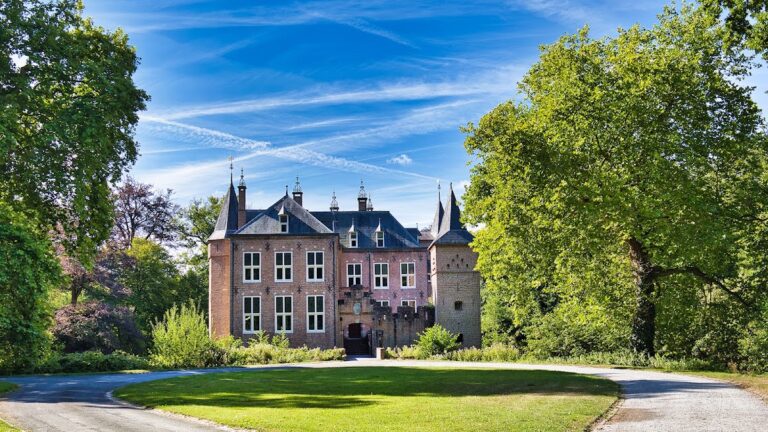
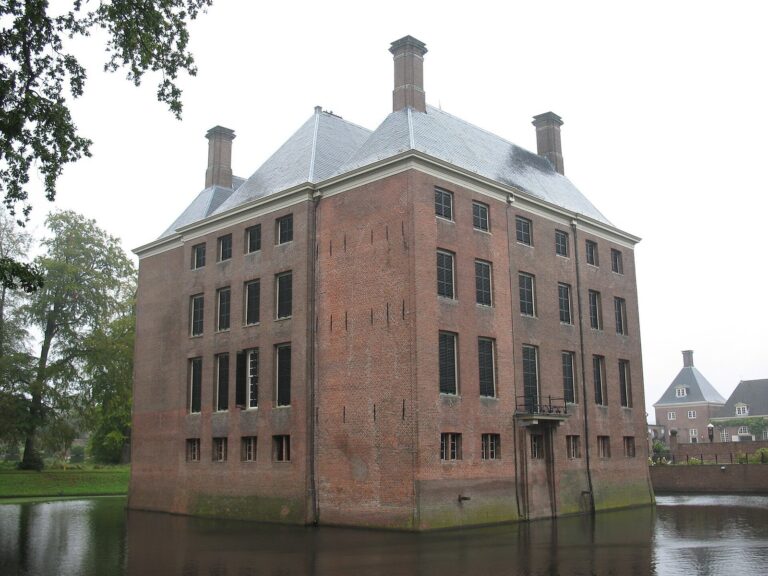
Geerestein Castle is a water castle, meaning a castle associated with water defenses, just north of Woudenberg in the Netherlands. Jacob van Zuylen van Nijevelt probably built it between 1394 and 1402. Arend, Gerrit’s grandson, is considered the builder of the present castle in 1546. Its Dutch classicist style draws on classical forms.
After Jacob’s death, his son Steven inherited the property and was recorded as living there in 1430. In 1478, Steven transferred it to his brother Gerrit. During the Hook and Cod conflicts, rival groupings in late-medieval regional politics, Steven, Gerrit, and Jan supported the Hook faction and opposed David of Burgundy, bishop of Utrecht. The bishop’s office held political as well as religious authority. David besieged Geerestein in 1482 and captured it by treachery in June; the brothers were imprisoned at Castle Duurstede.
The estate under later owners
After David’s death in 1496, Gerrit became marshal of Amersfoort and Eemland, a regional office-holder. In 1546, Gerrit’s grandson Arend became lord of Geerestein and Hoevelaken and is credited with building the present castle.
Hendrik Daniël Hooft bought the estate in 1834. After a disagreement with the church council, he arranged for services to be held in Klein-Geerestein. The name of the Heiligerlee children’s house may refer to the Battle of Heiligerlee, an early battle in the Dutch Revolt against Spanish rule. Around the time the house was built, the battle drew nationalist attention, including through a monument at Heiligerlee to Count Adolf of Nassau, a German nobleman killed in the fighting.
Geerestein is recognized as a ridderhofstad, a fortified manor historically associated with knightly status, and is protected as a national monument in the Netherlands. The castle now accommodates an architectural firm and Cannondale’s Dutch office.
Remains
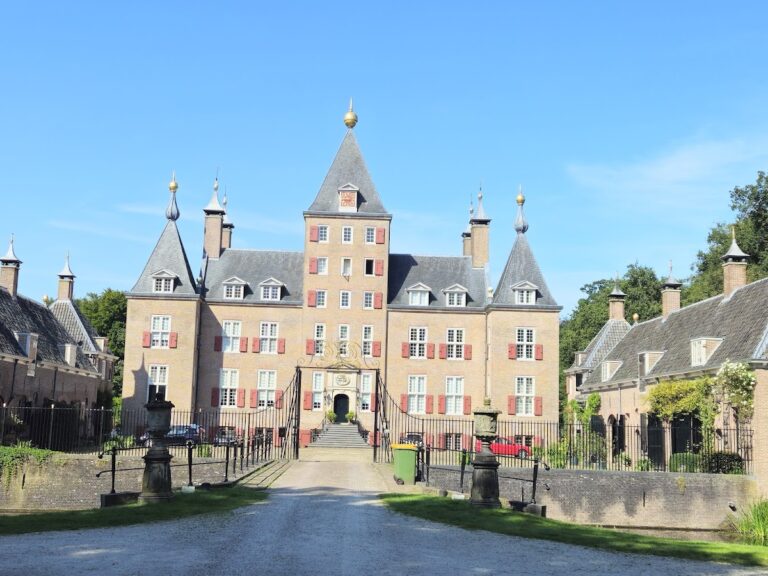
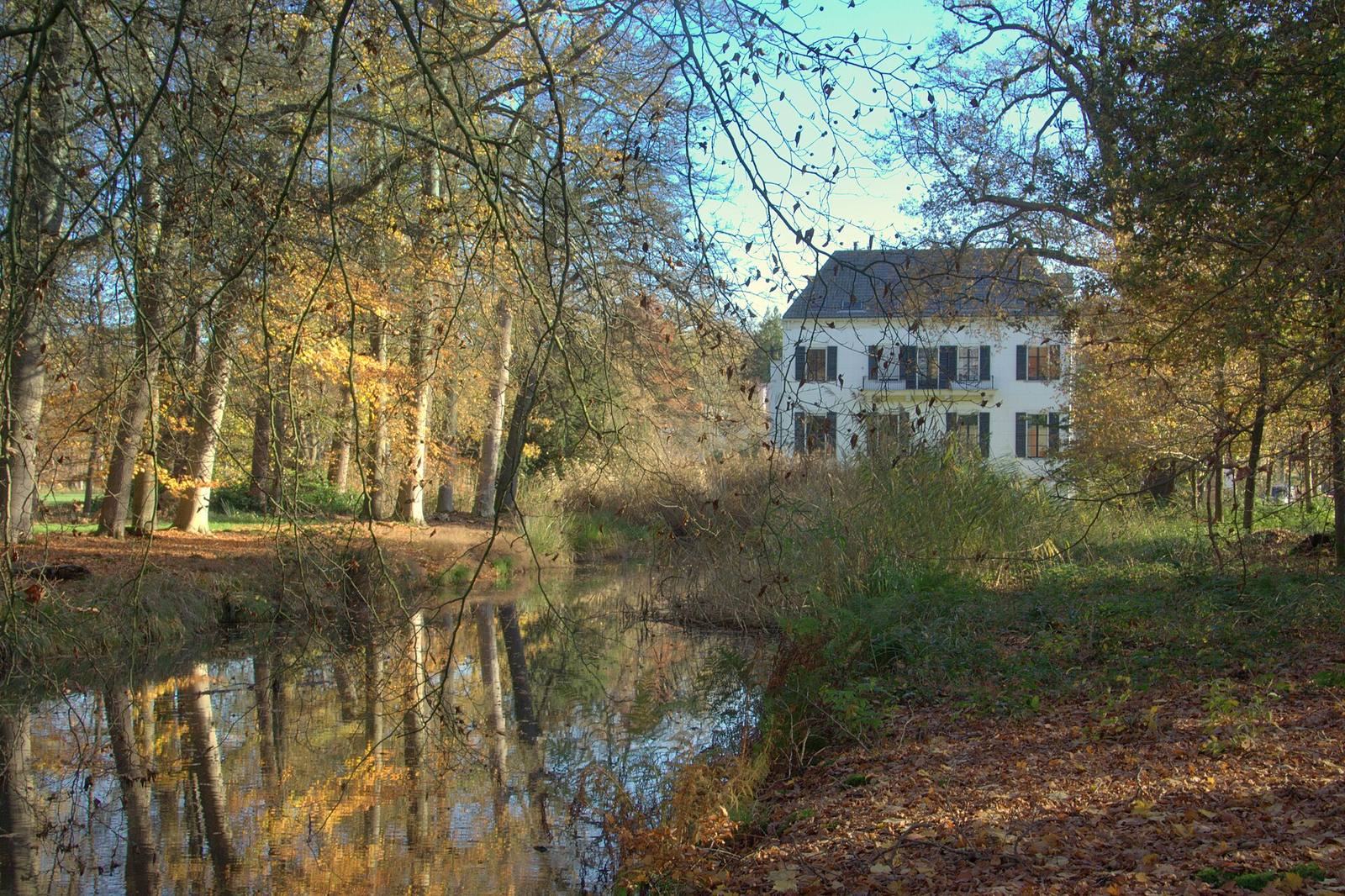
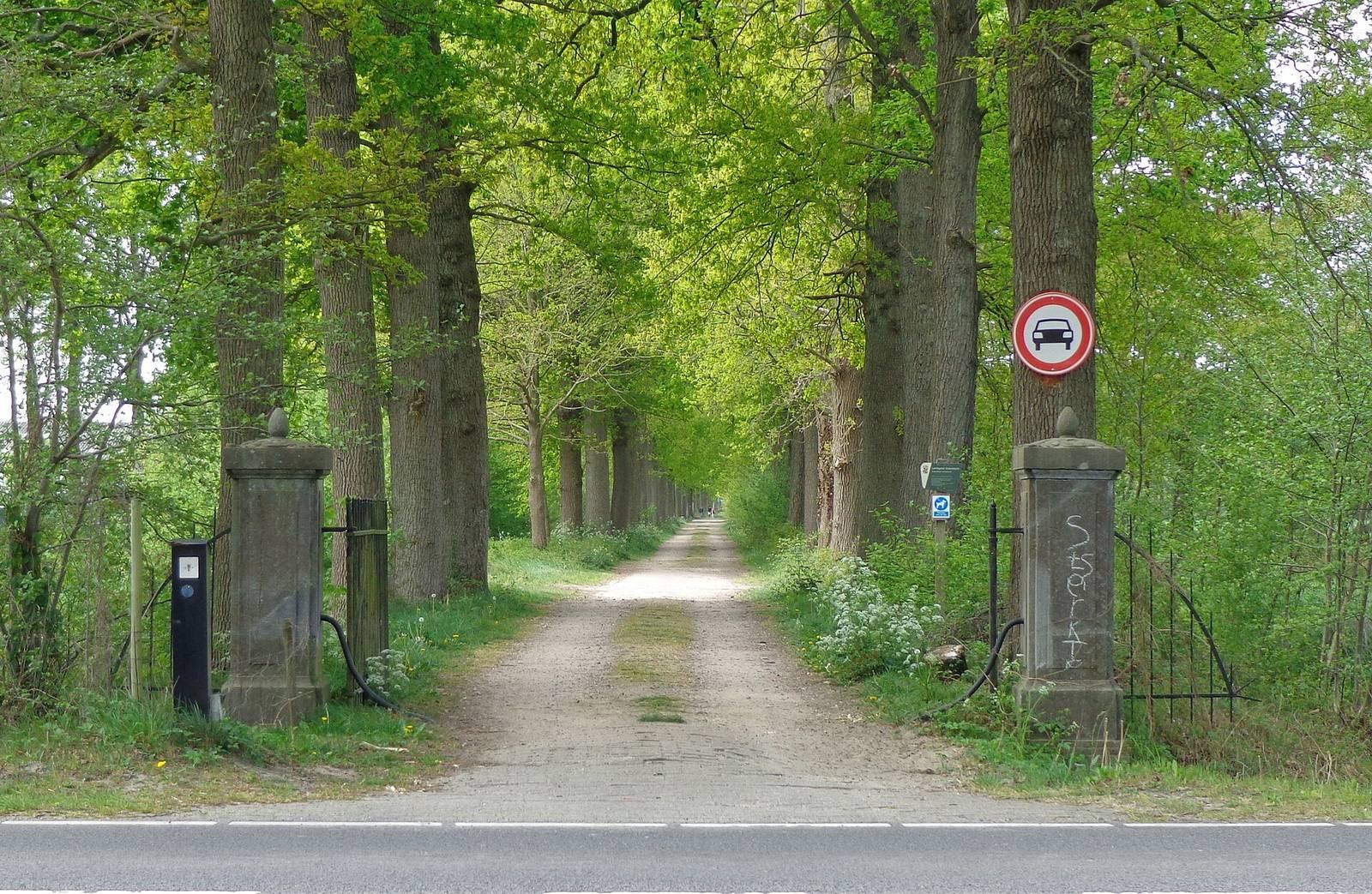
The main house is accompanied by service buildings on opposite sides of its avenue. Klein-Geerestein stands close to the house, while the Heiligerlee children’s house is behind and to its left. The buildings’ differing forms and later alterations reflect the estate’s changing use.
The main house
The front façade bears a family coat of arms in colours associated with Geerestein. In the hall above the farm section, marbled walls and arched decorative bands are embellished with small heraldic shields. Hooft acquired the shields for decoration; they are unrelated to his family. A large panel above the fireplace displays the arms of W.D. Hooft and his wife, W.C. Kluppel, while another wall bears the arms of the lords of Geerestein and Groenewoude.
Service buildings
North service building
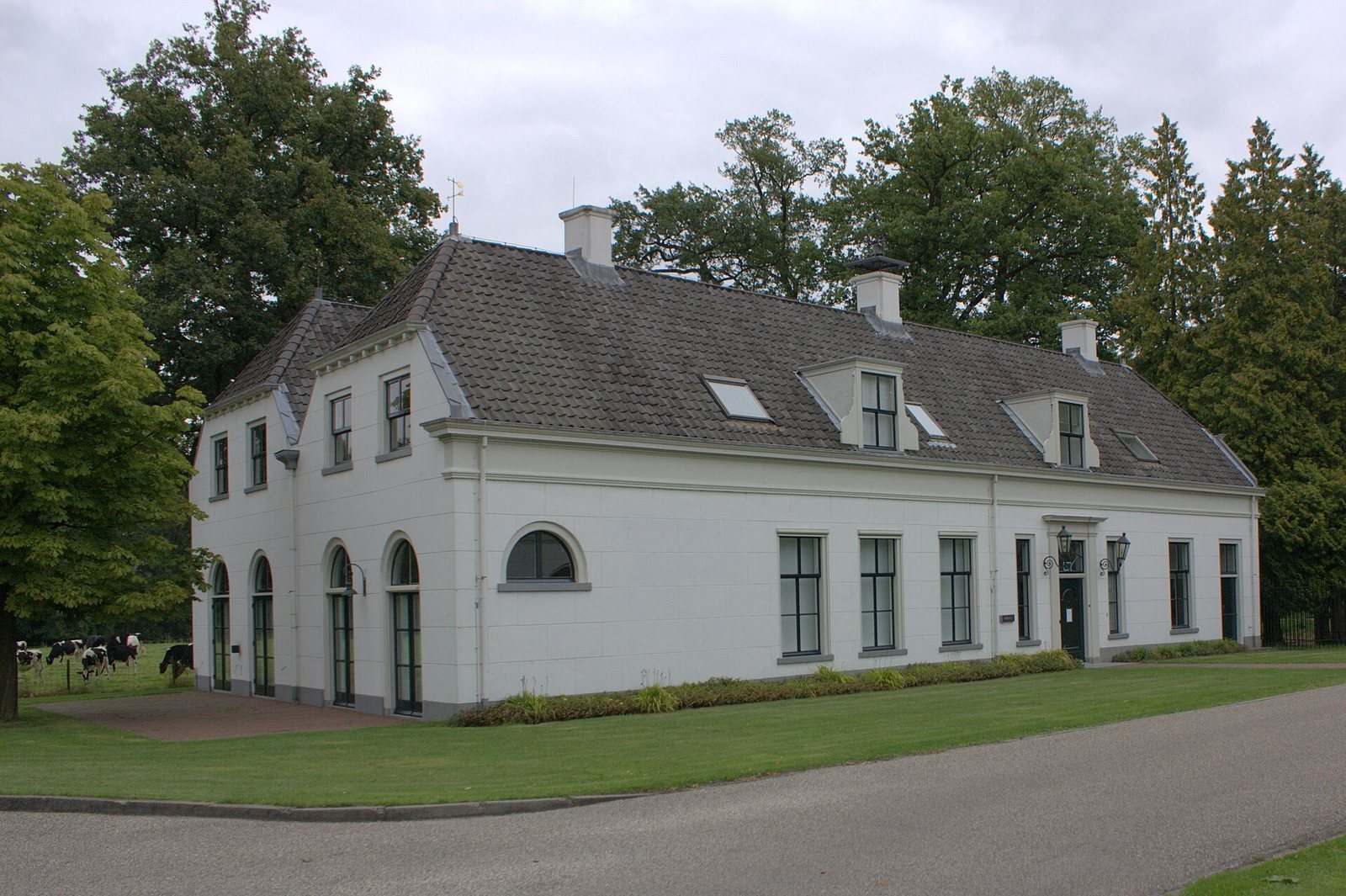
Built around 1740 beside the avenue to the house, the north service building was covered with white plaster in 1834. Lines in the plaster imitate joints between natural-stone blocks. The building has a roof with gabled ends and sloping sides, two projecting roof windows with scroll-shaped ornaments, and blue-grey, smoke-fired Dutch roof tiles. Between 1980 and 1985, it was extended to twice its former size and its design was mirrored along its length as it was converted to office use.
South service building
Across the avenue, the south service building was originally a coach house. During its conversion to offices between 1980 and 1985, it was doubled in size.
Klein-Geerestein and its tower
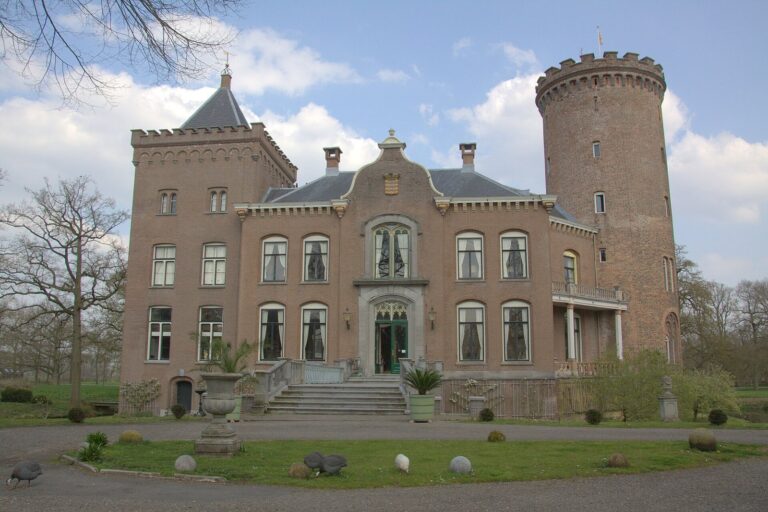
Klein-Geerestein was built as a farm around 1838 and later became a folly, a structure adapted mainly for ornamental or picturesque effect. Its round-arched windows and pedimented façade give it the appearance of an English Gothic church. A tower added beside it in 1849 contains a fifteenth-century bell from a monastery in Brabant and the coat of arms of Geerestein’s lords. The main house’s bathroom occupied the tower’s top floor. A marble plaque dated 1849 dedicates the tower to God, the king, and the lord, and describes its founder awaiting the world’s final Judge.
Heiligerlee children’s house
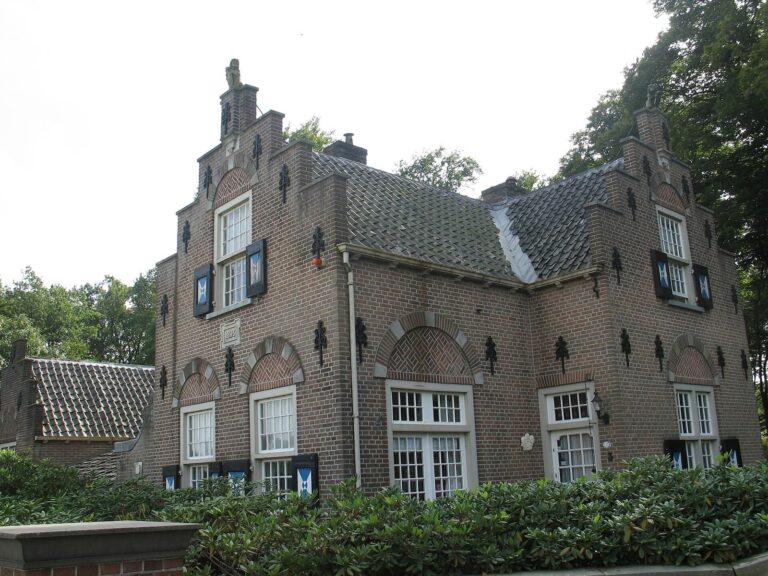
Built between 1835 and 1850, the children’s house stands behind and to the left of the main building. It was remodelled in 1980, when an extension was added at the rear. Its original thatched roof, with sloping sides and ends, was replaced by blue-grey, smoke-fired Dutch tiles with a saw-edge detail.