Karaftu Caves: A Historic Rock-Cut Complex in Iran
Visitor Information
Google Rating: 4.6
Popularity: Very Low
Country: Iran
Civilization: Greek
Site type: Religious
Remains: Temple
History
Karaftu Caves, Saqqez municipality, Iran, were adapted and used beginning in the Seleucid period.
The stone cavities themselves were formed long before human occupation, when this landscape lay beneath a shallow sea; geological sources place that process in the Mesozoic Era, while one account describes it as the Tertiary. Over long spans of time, moving water sculpted the limestone walls and ceilings, producing hollows that later invited human modification.
Archaeological evidence shows the site was occupied and reworked from the time of the Seleucid rulers onward. Carving and rock-cut imagery from that broad Hellenistic horizon link the complex to Seleucid-period activity, and one prominent Greek inscription on an upper level led later scholars and visitors to associate the place with the mythic figure Heracles, giving rise to names such as “Heracles Temple” or “Hercules.” The site has also been called Karaftu Castle in some records.
Use and presence at the caves continued through successive centuries into the Islamic era, reflecting a long sequence of human activity layered onto the natural caverns. In the modern period the Iranian state recognized the site as a national monument on February 10, 1940 (registration number 330), and it was placed on UNESCO’s Tentative World Heritage list on November 15, 2022.
Remains
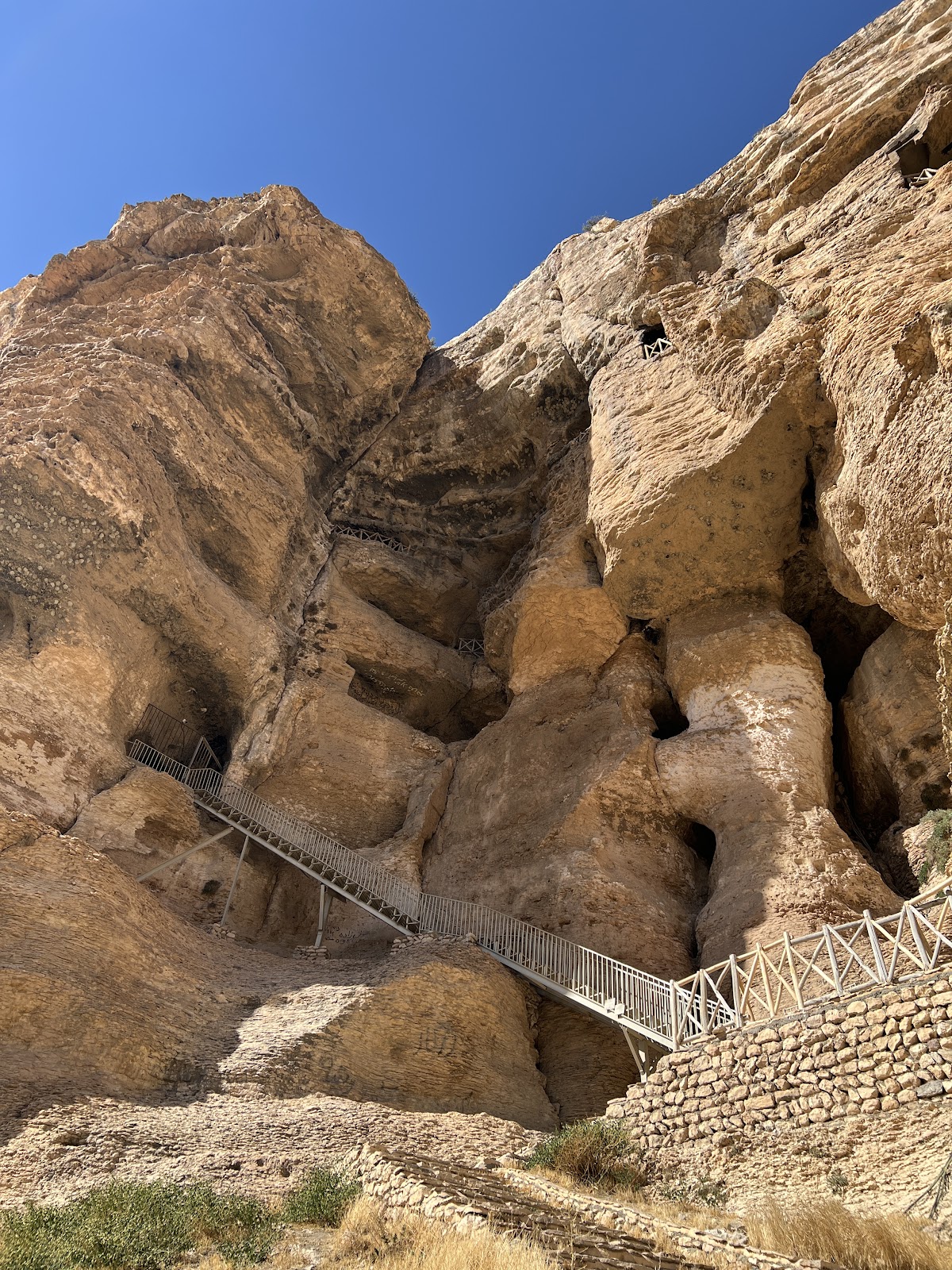
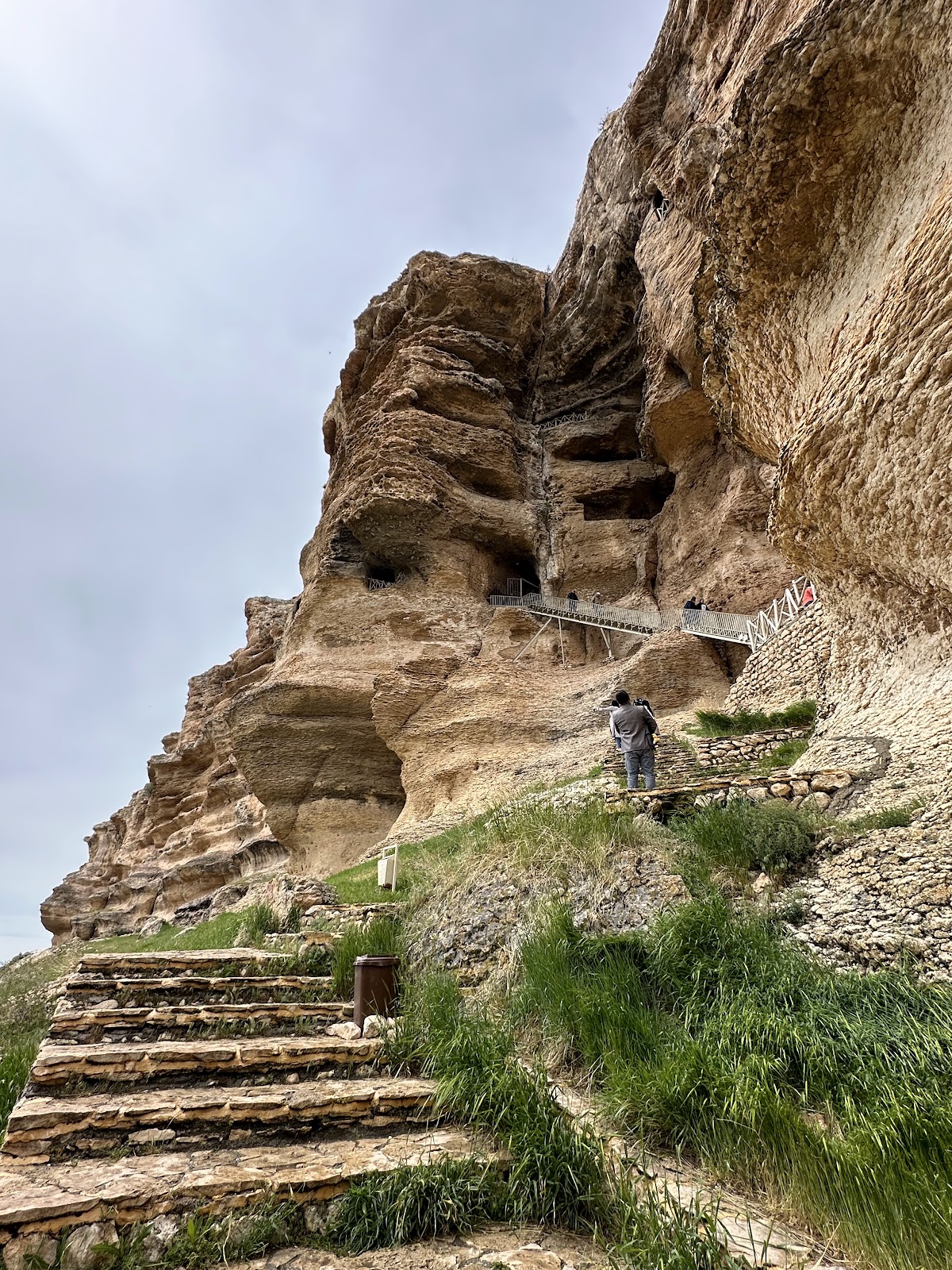
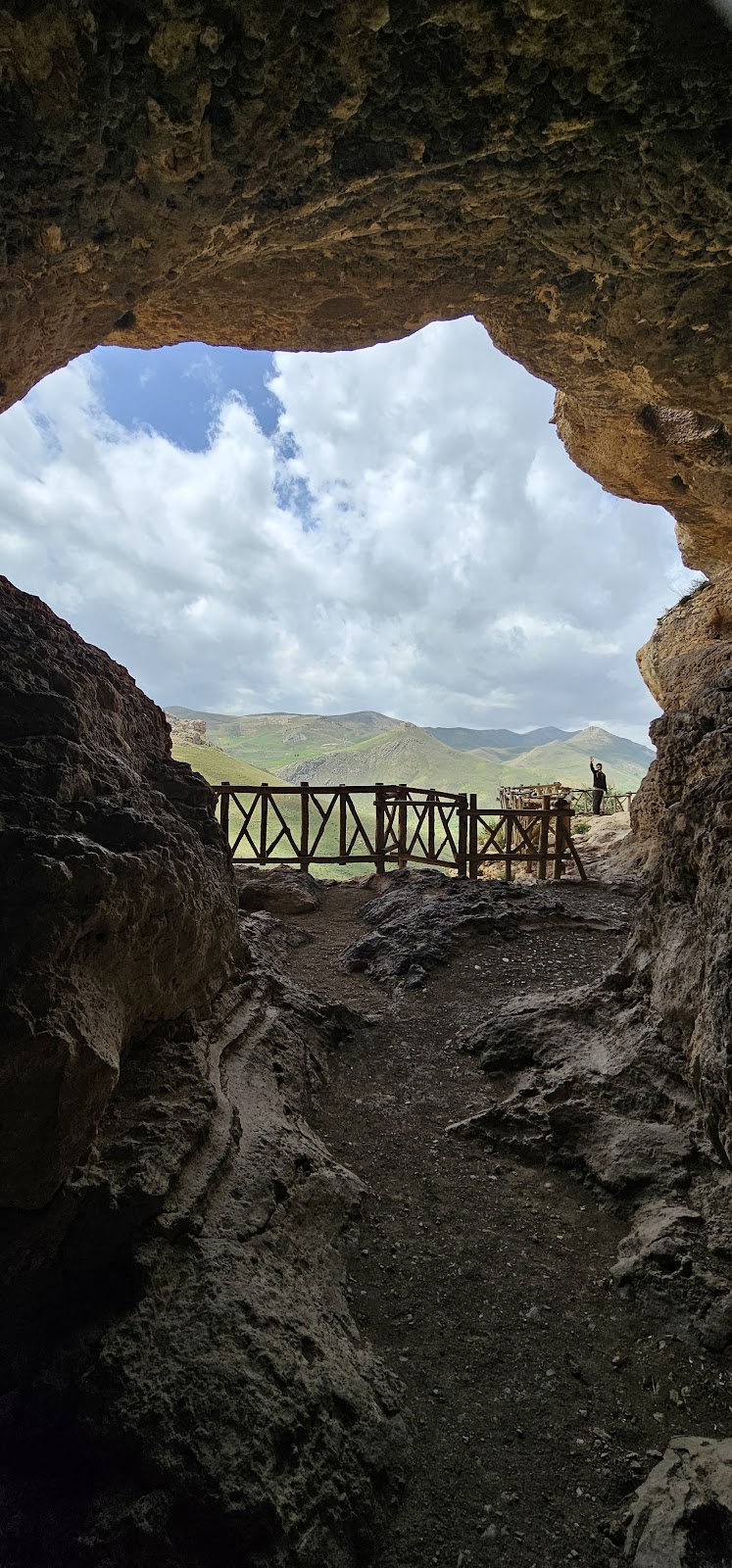
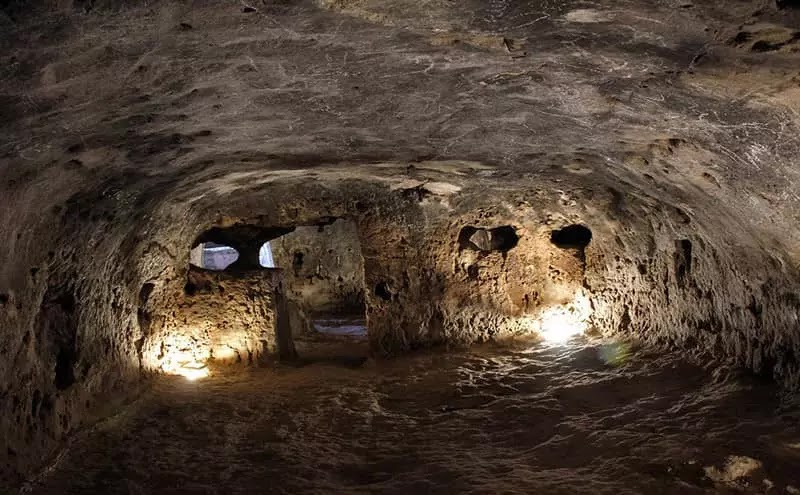
Karaftu presents a striking combination of natural cave development and deliberate human carving. A limestone cliff at roughly 2,000 meters above sea level contains a four-story complex of chambers, interlocking rooms, passages, and stairways that follow the cliff face. The builders worked directly into the existing rock, producing nested spaces that take advantage of natural hollows while introducing regular, cut surfaces and access routes. The main entrance sits some 20 to 25 meters above the surrounding slope, a position that historically made rear access difficult.
The third floor is the best-documented decorated level. Its rooms and ceilings show careful carving executed with hand tools, and at the entry to one chamber a Greek inscription remains visible; this inscription is the source of the site’s association with Heracles and with Hellenistic rock-cut art. That same floor preserves prehistoric painted and pecked imagery, rendering human figures, animals, plants, and geometric motifs directly on the rock faces. These images and the inscription survive in situ and testify to both ritual or commemorative use and long-term occupation spanning the Seleucid period and later phases.
The cave system stretches for about 750 meters and still contains standing water in places. Speleothems, meaning secondary mineral formations such as stalactites and stalagmites found in caves, are present within the passages and attest to continuing geological processes. Some interior reaches require small boats to pass, indicating both the extent of the flooded passages and their retained aquatic character. Throughout, the work is notable for its troglodytic architecture, that is, human-made dwellings and spaces cut into rock, created without mechanized tools and relying on hand instruments, a fact visible in tool marks and the character of the carved surfaces.