St Thomas’s Abbey in Brno: A Cistercian Convent and Augustinian Abbey


Site at a Glance
- Rating
- 4.6
- Popularity
- Very Low
- Country
- Czechia
- Primary era
- Medieval
- External website
- Open
- Eras represented
- Medieval, Early Modern, Modern
- Civilizations
- Habsburg, Holy Roman Empire
- Site type
- Religious
- Remains
- Monastery
On this page14 sections
History
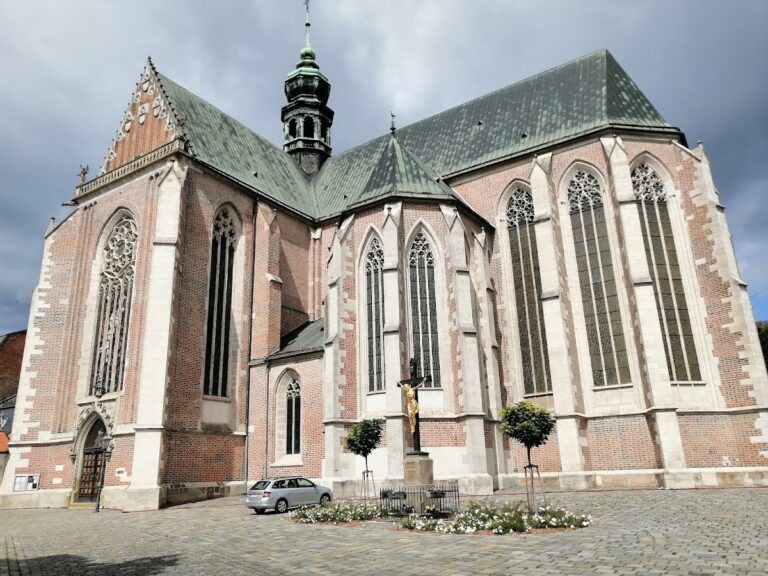
St Thomas’s Abbey in Brno, Czechia, is a former Cistercian convent founded in 1323 by the dowager Queen Elizabeth Ryksa, Queen of Bohemia and Poland. Its central church, the Basilica of the Assumption of the Virgin Mary, belongs to the Gothic period and is built in the Silesian tradition of Gothic brick architecture. The foundation established a royal religious institution at Staré Brno, close to Špilberk Castle, a ford across the Svratka and its channel, and the local market settlement.
Foundation and royal monastery
Elizabeth Ryksa prepared the foundation over several years and endowed it with property in Staré Brno obtained from King John of Luxembourg. The first Cistercian nuns arrived on 15 May 1323, and the queen issued the foundation charter in Brno two weeks later. The convent was also known as the Queen’s Monastery or Königskloster.
The queen was buried at the monastery with Henry of Lipé, the Moravian provincial governor and her companion. After Henry’s death in 1329, Elizabeth probably lived at the monastery until her own death in 1335. A hospital was added in 1333. The royal foundation gave the convent extensive economic resources, while its community included women from prominent noble families.
War, rebuilding, and expansion
The monastery was repeatedly plundered, burned, or devastated during the Hussite Wars, the Bohemian-Hungarian Wars, and the Thirty Years’ War. The Hussite Wars were conflicts associated with the reform movement founded around the teachings of Jan Hus, while the Thirty Years’ War was the major European conflict of 1618 to 1648. After each episode, the monastery was rebuilt, and it also provided financial assistance to nearby Staré Brno.
In 1712, the Cistercian nuns acquired the Oslavany estate. Its castle had originally been a Cistercian convent in the Middle Ages, adding another former monastic property to the community’s possessions.
Transfer to the Augustinians
The Cistercian monastery was dissolved on 18 March 1782 during the Josephine reforms, the ecclesiastical and administrative measures of Emperor Joseph II that suppressed monasteries considered nonessential to state and religious policy. Fifty-eight nuns were living at the convent, including 42 choir nuns, and its property passed to the state.
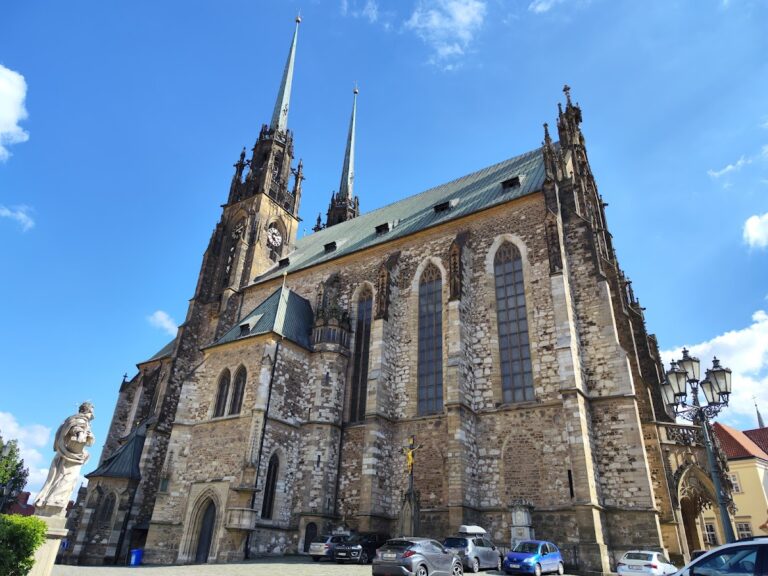
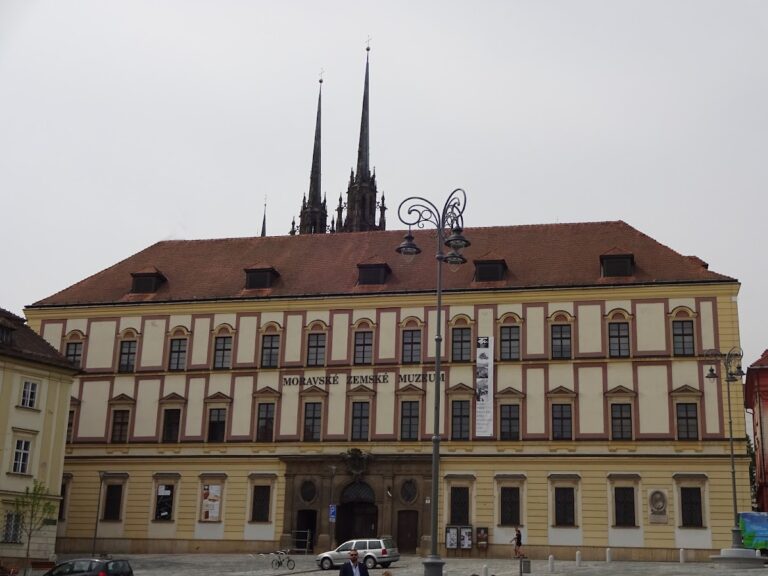
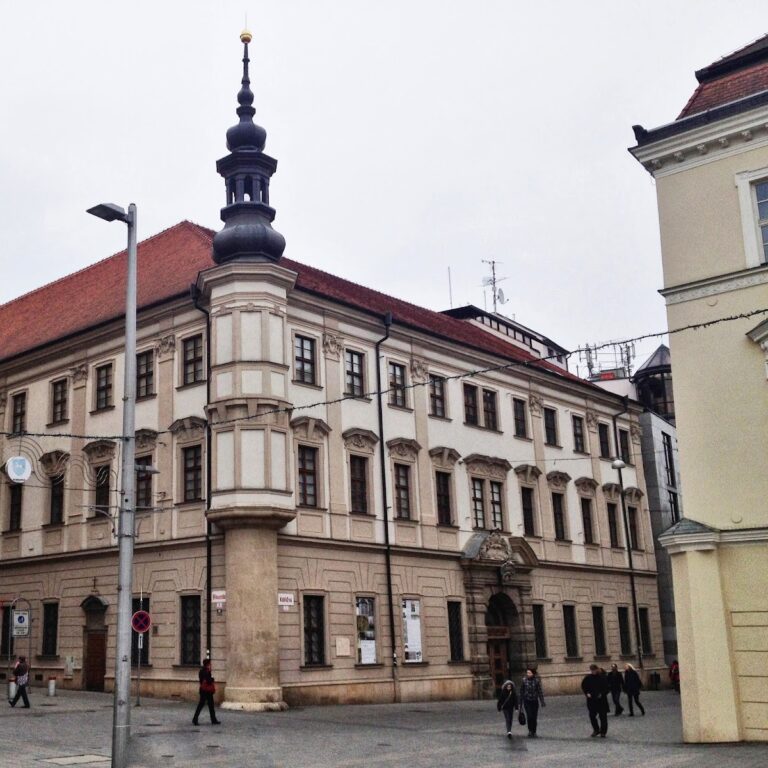
On 15 March 1783, Joseph II transferred the former Cistercian monastery and the Church of the Assumption of the Virgin Mary to the Order of Saint Augustine. The Augustinians received the complex as compensation for their expulsion from their original monastery at the Church of St Thomas on today’s Moravian Square. Their former premises were subsequently used for Moravian political offices.
The Augustinians had settled in Brno in 1344 with the support of John Henry of Luxembourg, Margrave of Moravia. John Henry founded their original monastery and Church of St Thomas in Brno on 2 February 1350, and Pope Innocent VI confirmed the completed chancel in 1356. Following the 1783 transfer, the order established the present Augustinian Abbey of St Thomas at Staré Brno.
The original Augustinian monastery had been conceived as a burial place for the Moravian margraves. Among those buried there was John Henry’s son Jobst of Luxembourg, Margrave of Moravia and King of the Romans. The monastery’s standing was also reflected in an eighteenth-century papal privilege that allowed its superior to use the title of mitred abbot, meaning an abbot permitted to wear episcopal insignia on specified occasions. The Brno abbey is described as the only Augustinian abbey in the world.
Science, music, and modern recognition
The monastery’s brewery later developed into the Starobrno brewery. The abbey also became closely associated with Gregor Johann Mendel, an Augustinian monk and abbot whose pea-plant experiments established principles later known as Mendel’s laws of inheritance. Mendel served as abbot from 1868 to 1884 and carried out his experiments in the monastery garden between 1856 and 1863. The complex now houses the Mendel Museum of Masaryk University, dedicated to his work and the history of genetics.
An Augustinian musical foundation was established in the 1650s. Pavel Křížkovský took monastic vows in Brno and taught liturgical music there from 1848 to 1872. From 1865, he collaborated with the young lay composer Leoš Janáček, who had begun at the monastery as a choirboy and later became director of the monastic choir.
Lukáš Evžen Martinec served as abbot from 1997 until 1 February 2015. After his departure, administration passed to the Augustinian delegate Juan Provecho, while the office of abbot remained vacant. An international community has operated at the abbey since the second half of 2014. The former monastery was declared a national cultural monument in November 2022, with the designation taking effect on 1 July 2023. Pope John Paul II granted the Church of the Assumption of the Virgin Mary the title of minor basilica, an honorary designation for a church of particular religious or historical importance, on 6 October 1987.
Archaeological research carried out by the Brno City Museum during the 1970s, under the archaeologist Dana Cejnková, revealed the complex stratigraphy of the earlier and later churches on the site. A new exhibition on Staré Brno Abbey opened in February 2018.
Remains
St Thomas’s Abbey occupies a complex of two-storey buildings arranged around four rectangular courtyards and surrounding the Basilica of the Assumption of the Virgin Mary. The former monastery lies on today’s Mendlovo Square in Staré Brno, southeast of Špilberk Castle and west of Brno’s old town. Its buildings combine the surviving Gothic church with later monastic construction and Baroque alterations by the architect Moritz Grimm.
Church and earlier ecclesiastical remains
Gothic brick basilica
The Church of the Assumption of the Virgin Mary is built from unplastered fired brick in the Silesian style, a regional form of Gothic brick architecture. Its plan is unusual for Cistercian architecture. At the east end, a three-lobed choir consists of a principal eastern apse and northern and southern chapels, each ending in a five-sided apse. The three chapels meet east of the crossing. The transept is slightly shorter than the choir, while the relatively short nave contains four bays, or sections divided by structural supports.
The design probably drew on Romanesque German churches, including the Basilica of the Holy Apostles and St Maria im Kapitol in Cologne, as well as Gothic buildings such as St Elizabeth’s Church in Marburg and the Collegiate Church of the Holy Cross in Wrocław. The church and abbey buildings were later altered in the Baroque style.
Earlier churches
A church had stood on the site by the tenth century. It was first built as a rotunda and was reconstructed in the twelfth century as a single-nave church with a rectangular presbytery, the part reserved for the clergy around the main altar. A reconstruction at the end of the thirteenth century gave the presbytery its final form, and this earlier structure survived within the monastery complex until its demolition in the 1780s.
An earlier Gothic church on the site had been completed no later than 1300. It served as the parish church for Staré Brno and the surrounding villages, and it was used provisionally by the first Cistercian sisters. In 1333, its dedication passed to the newly built monastic church. Excavation in the 1970s exposed the layered history of these successive buildings.
Royal burial
A tomb beneath the nave floor contains Elizabeth Ryksa and is marked by a crown and the letter E. Henry of Lipé is also buried in the church, preserving the connection between the building and the royal foundation’s principal figures.
Courtyards and conventual buildings
Paradise Court
The northern courtyard, known as the Paradise Court, is a cloister, meaning a covered passage surrounding an open monastery courtyard. Conventual buildings surround it, including the chapter house, where members of the religious community met for governance and discipline. A vaulted passage beside the chapter house leads into the courtyard, and an abbot’s emblem is set above its portal.
Western courtyard
West of the church is the former irregular courtyard. It is enclosed by a two-storey, three-winged building that contains a dormitory and a music gallery, linking the physical layout of the abbey with its long musical tradition.
Southern buildings
South of the church stands a one-storey presbytery with a richly detailed elevation and a buttress on its central axis. A separate two-storey building was added beside it in the 1970s.