Judenhof: A Salzburg Manor Residence in Goldegg, Austria
Site at a Glance
- Popularity
- Low
- Country
- Austria
- Primary era
- Unclassified
- Eras represented
- Unclassified
- Civilizations
- Unclassified
- Site type
- Domestic
- Remains
- Manor House
On this page6 sections
History
Early estate and changing name
Judenhof is a manor residence in March, a locality in the municipality of Goldegg, Austria. It was first recorded in 1429 as a farm called Judendorf and held as an archbishop’s knightly fief, land granted under obligations to a superior lord, by Konrad Prünlinger. Konrad the Elder Pründlinger is named as owner in 1441, and his son inherited the property. The name Judenhof came into use in the seventeenth century.
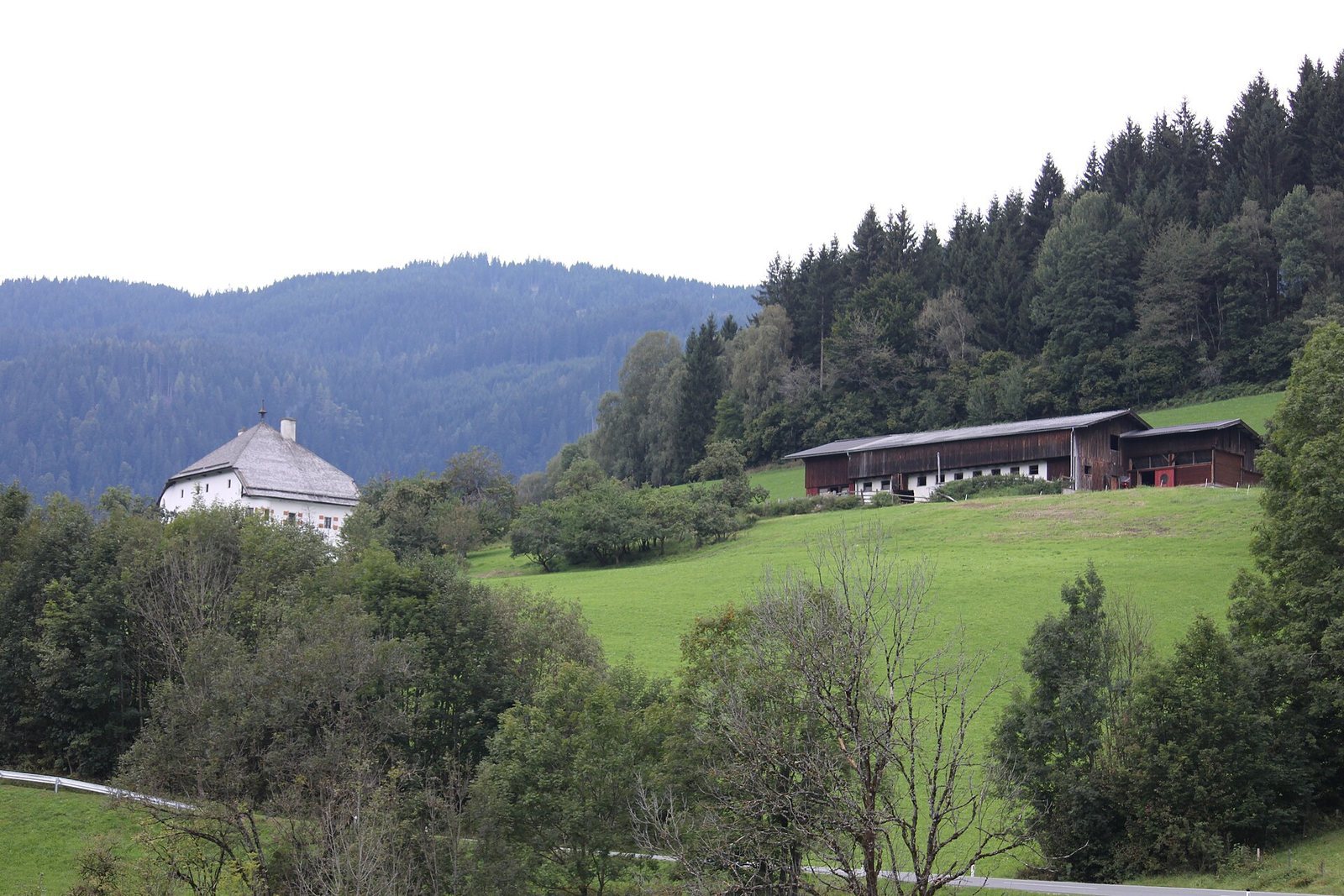
Salzburg places called Judendorf lay along old Alpine trade routes and may have been settlements of Jewish merchants engaged in early medieval trade. A route from Sankt Veit in the Pongau passed near the estate. In 1553, a new road between Schwarzach and Lend, then called Hirschfurt, was built through the Salzach valley, leaving Judenhof far from the new route.
Division, consolidation, and jurisdiction
A marriage brought half the property to Peter Aman von Hundsdorf in 1529. The remaining half passed in 1560 to his cousin Veit Aman von Saal, who had been guardian to the underage heirs. In 1594, Sigmund Aman von Saal und Judendorf brought both halves together under one owner.
Veit Stöckl zu Schwarzegg acquired the estate in 1598. A provost, or senior cleric or administrator, at Berchtesgaden’s Heuberg, he thereafter used the name “von Judendorf.” He sought to convert the fief into property held outright, but Salzburg’s administrative and financial office ruled in 1619 that Judenhof was not a privileged noble residence. In 1628, the estate and its dues came under the jurisdiction of the St. Veit district court. Stöckl’s son Adam sold it to Absalom Mayrhofer in 1632.
Later owners and physical change
Ownership passed to Hans Schattauer in 1638 and Ruprecht Mayr in 1641. The Zwaylinger family held the estate from 1672 to 1746, followed by Johann Paur from 1746, Sebastian Jakober from 1778, Josef Hochleitner from 1803, and Johann Linsinger from 1820. The Hinterlechner family owned it from 1825 to 1922. Peter and Theresia Piberger took ownership that year, and Alois Bründl followed in 1929. After an auction, the Salzburg Mortgage Institution acquired the estate. Hermann von Rautenberg became its owner in 1938 and renamed it Sonnhof; Martha Kaiser took ownership in 1959.
A fire in 1878 destroyed part of the interior. Rebuilding after the fire also altered the manor’s exterior, as described below.
Remains
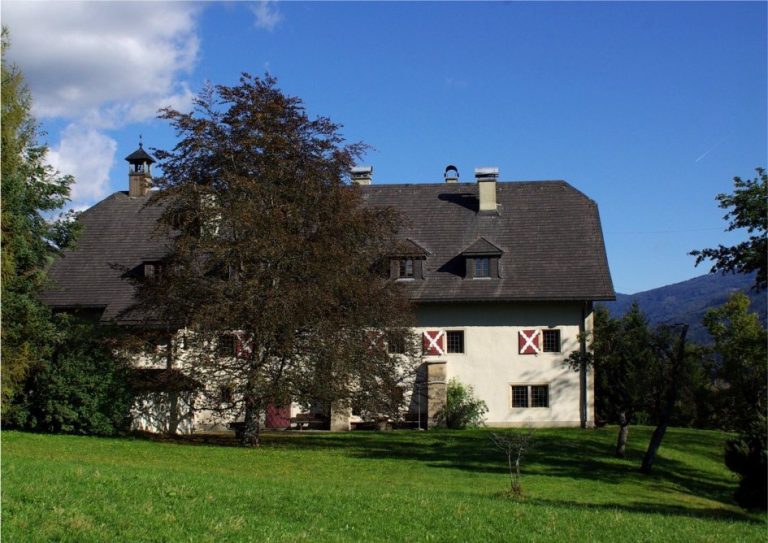
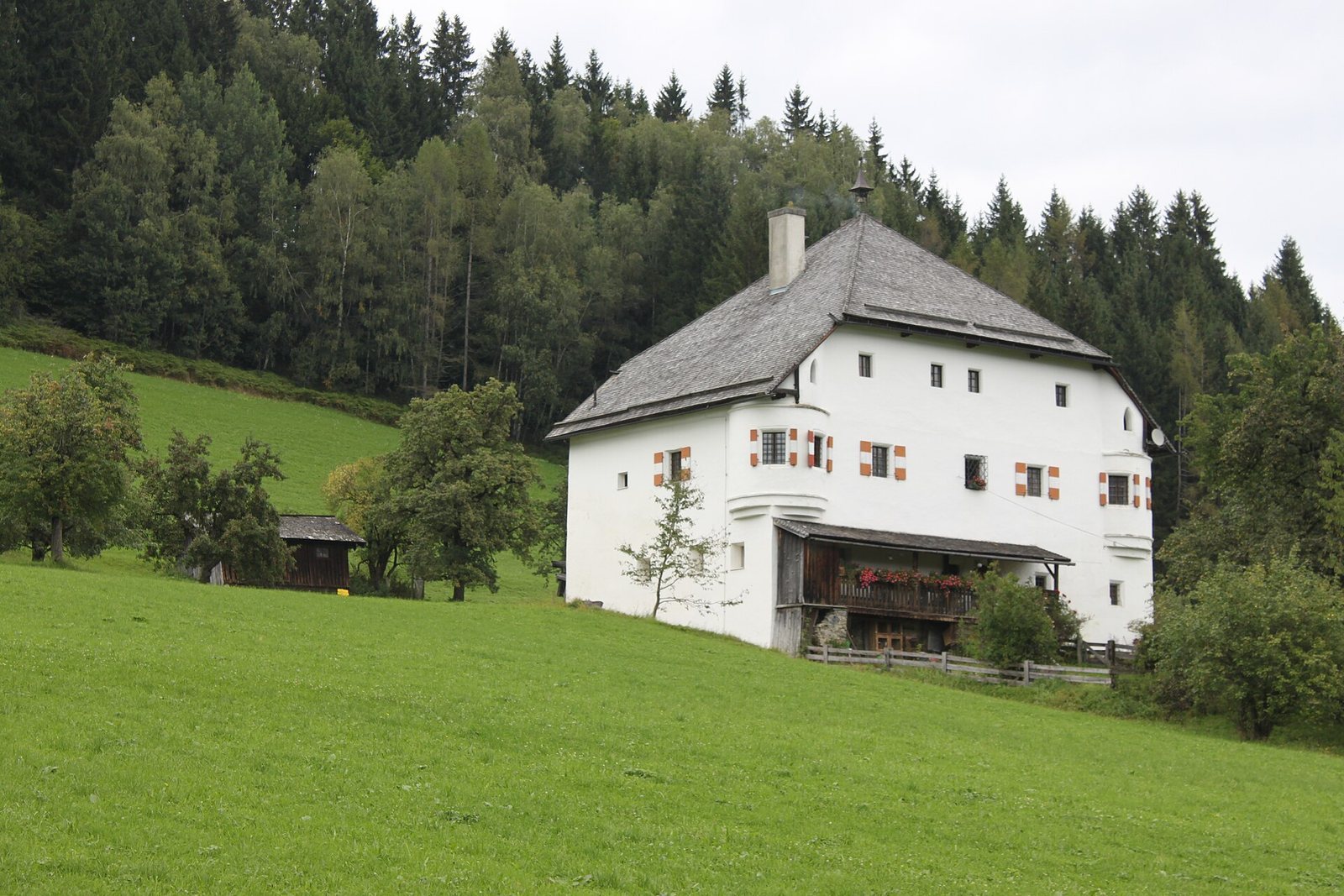
The manor is characteristic of the Salzburg region. Its street-facing side has two round projecting window bays, while a half-hipped roof has shortened sloping sections at the gable ends. The first floor above ground has red-and-white painted shutters and, in some places, wrought-iron window grilles. Vaulted ceilings survive inside.
The Goldegger Stube
The Goldegger Stube is a room paneled in Swiss stone pine, made in 1606 and installed in Judenhof under Veit Stöckl. Measuring 37.5 square metres, it has doors and shallow, column-like wall projections decorated with elaborate inlay. Its furnishings include a table, chests built into the walls, fixed benches, and a tiled stove. A sky-like ceiling, divided into recessed panels, rests on projecting supports carved with angel heads, the Evangelists, and a devil-like figure. The Evangelists are the traditional authors of the four canonical Gospels.
The 1878 rebuilding removed the two conical roofs that had topped the corner bays. In 1883, the Goldegger Stube was transferred to a museum in Salzburg. It remained on public display at the Carolino Augusteum Museum until October 2005, after which it was placed in storage when the old museum building closed. It returned to display in 2016 as part of the state exhibition “Tell Me Salzburg.”