Jōshinzuka Kofun: An Isolated Square Burial Mound in Japan

Site at a Glance
- Rating
- 4
- Popularity
- Very Low
- Country
- Japan
- Primary era
- Medieval
- External website
- Open
- Eras represented
- Medieval
- Civilizations
- Yamato
- Site type
- Burial
- Remains
- Burial Mound
On this page10 sections
History
Jōshinzuka Kofun is a Japanese Kofun-period burial mound in Saito, Miyazaki, Japan, built in the first half of the seventh century during the period’s final phase. Its date falls approximately within the late TK209 stage to the TK217 type phases, archaeological classifications that help date late Kofun-period burials through pottery and related evidence. The monument was constructed as an isolated square mound at a time when keyhole-shaped burial mounds were no longer being built.
Construction in the Terminal Kofun Period
The mound stands on the southwestern edge of the Azukinohara Plateau beside the Sanzai River. Its solitary position contrasts with the large burial clusters found elsewhere in the region. The surrounding area contains groups of underground horizontal-hole tombs dating from the late fifth century to the first half of the seventh century. A connection between those burials and the individual commemorated at Jōshinzuka Kofun has been proposed, but it has not been established.
Jōshinzuka belongs to a rare group of “Ishibutai-type” tombs, which combine a ditch and outer embankment with a side-entry stone chamber. The nearby Oni-no-Iwa Kofun in the Saitobaru Kofun Cluster provides another example, although it is a round mound within a substantial burial cluster rather than an isolated square mound.
Later Tradition and Preservation
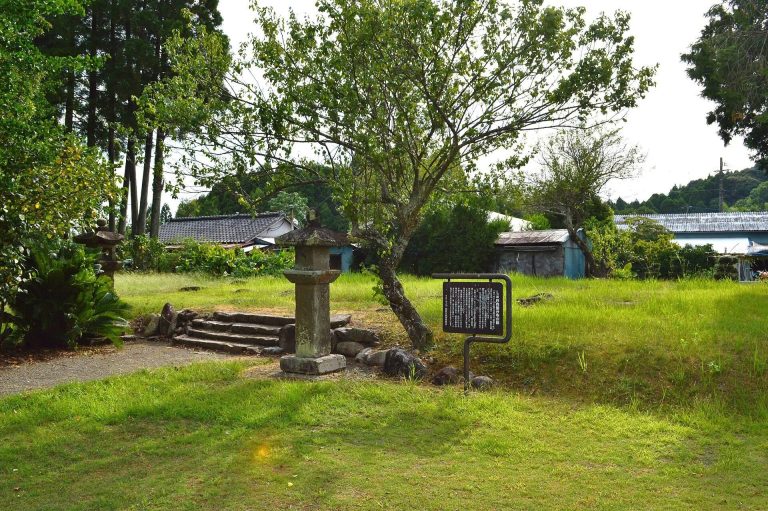
The name Jōshinzuka is linked to a tradition recorded in 1884. According to that tradition, a Buddhist monk named Jōshin entered a chamber cut into the mound, recited sutras, and died there during the Edo period, the early modern period from 1603 to 1868. Villagers reportedly built a small memorial chapel on the mound to commemorate him.
Jōshinzuka Kofun became a prefectural historic site in 1936 and a National Historic Site of Japan on March 24, 1980. A prefectural cultural-property report documented the monument in 1957. In fiscal year 2002, an investigation of the southwestern outer area accompanied improvements to a prefectural farm road, and the results were reported in 2003. The mound itself has not undergone detailed excavation.
Remains
Mound and Enclosure
Square Burial Mound
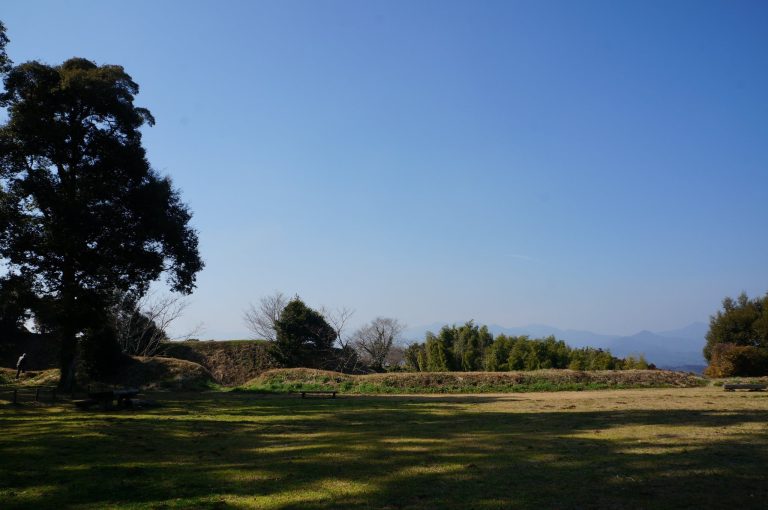
Jōshinzuka Kofun is a square mound, or hōfun, whose principal axis runs approximately along the cardinal directions. It measures about 25 meters from north to south and 23.8 meters from east to west, giving it a plan of roughly 24 meters per side. The mound rises approximately 3.3 meters and appears to have been built in two or three stages.
Moat and Outer Embankment
A moat, outer embankment, and outer ditch create an extensive enclosure around the mound. The outer embankment is almost completely preserved and measures about 40 meters north to south by 37.5 meters east to west. It stands approximately 1 meter high, while the moat is about 2 meters wide. Investigation beyond the embankment revealed the outer ditch, where fragments of Sue ware, a high-fired Japanese ceramic of the Kofun period, were recovered.
Burial Facility and Memorial Structure
Side-Entry Stone Chamber
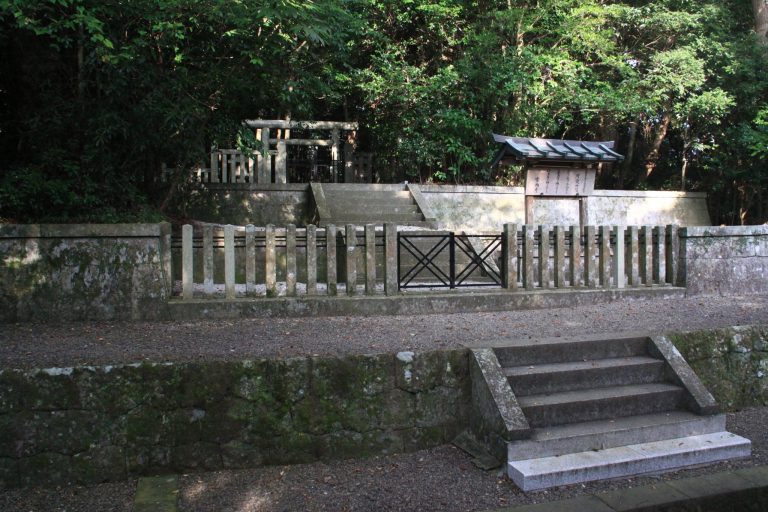
The burial facility is presumed to have been a side-entry stone chamber, reached through a lateral passage rather than from directly above. Stones exposed behind the memorial chapel may form part of this chamber. The combination of the chamber with the surrounding ditch and embankment places the monument within the rare Ishibutai-type tradition.
Jizō Memorial Chapel
A small Jizō chapel stands at the southern end of the summit. Jizō is a Buddhist bodhisattva associated with protection, travelers, children, and the dead. The chapel is connected by local tradition with Jōshin, the monk whose supposed death inside the mound helped give the monument its name.