Mesahozuka Kofun: A Fifth-Century Keyhole Burial Mound in Japan


Site at a Glance
- Rating
- 4.1
- Popularity
- Very Low
- Country
- Japan
- Primary era
- Classical
- External website
- Open
- Eras represented
- Classical
- Civilizations
- Yamato
- Site type
- Burial
- Remains
- Burial Mound
On this page15 sections
History
Mesahozuka Kofun is a large keyhole-shaped burial mound in Saito, Miyazaki, Japan, built during the first half of the fifth century in the middle Kofun period, the era of Japan’s large elite burial mounds. It forms part of the Maruyama branch of the Saitobaru Kofun Group, which occupies the Saitobaru Plateau beside the middle course of the Hitotsuse River and contains more than 320 mounds.
The Saitobaru burial landscape
Before Mesahozuka and its northern neighbor, Osahozuka Kofun, were constructed at the center of the plateau, six chiefly burial-mound lineages had developed in parallel along its margins. The two central mounds appear to represent an attempt to bring these groups together. Later mounds at Saitobaru were substantially smaller, while the principal regional burial mound of southern Kyushu eventually shifted to Yokose Kofun in Osaki, in present-day Kagoshima Prefecture.
Mesahozuka and Osahozuka were built at approximately the same time and were planned at nearly the same length within the limited ground suitable for construction. Their central position may also have allowed the builders to take earth from the tip of a small hill extending from the west. This setting and their paired design distinguish the two mounds within the development of the plateau cemetery.
Identity and modern status
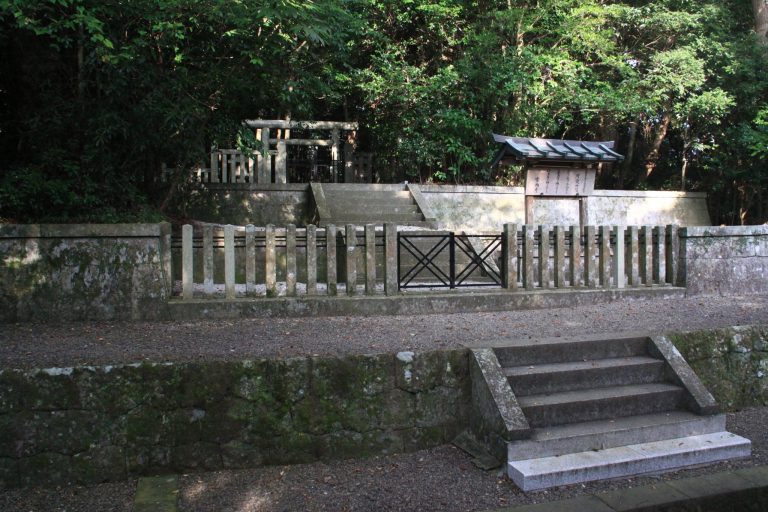
The person buried at Mesahozuka is unknown. In 1895, the Imperial Household Ministry, now represented by the Imperial Household Agency, designated it as the Mesahozuka Mausoleum Reference Site. This status places the mound under Imperial Household Agency management because it is considered a possible imperial or related burial site, even though its occupant has not been conclusively identified. The mound is associated with Konohanasakuya-hime, a Shinto deity linked especially with flowers and cherry blossoms. Osahozuka is similarly associated with her husband, Ninigi-no-Mikoto, who is traditionally described as a descendant of the sun goddess Amaterasu and an ancestor of Japan’s imperial line.
One interpretation identifies Mesahozuka as the burial place of Himuka no Kaminaga-hime, described as a consort of Emperor Nintoku, and identifies her father, Morokata no Kimi Ushimoro, with Osahozuka. Emperor Nintoku is traditionally regarded as the sixteenth emperor in Japan’s imperial succession, while kimi was an ancient title connected with regional ruling lineages or chiefly status. This interpretation relates the pair to the design of Nakatsuyama Kofun, but the proposed identities remain interpretations rather than established identifications.
The Saitobaru Kofun Group became a national historic site in 1934 and a special historic site in 1952. The precincts of Mesahozuka and Osahozuka were excluded from those designations because they were already managed as Mausoleum Reference Sites.
Surveys and changing interpretations
A survey undertaken in 1926 was drafted in 1929. Later, the Miyazaki Prefectural Board of Education carried out an on-site topographic survey in fiscal year 1997, followed by ground-penetrating-radar investigations during fiscal years 2004–2006 and 2009–2010. These investigations did not examine the interiors of the mounds.
Earlier interpretations proposed that one of the two central mounds had been built before the other and that its construction had damaged or halted the forward section of its neighbor. The radar investigations found no structural overlap between them, supporting the view that Mesahozuka and Osahozuka were constructed as separate mounds.
Remains
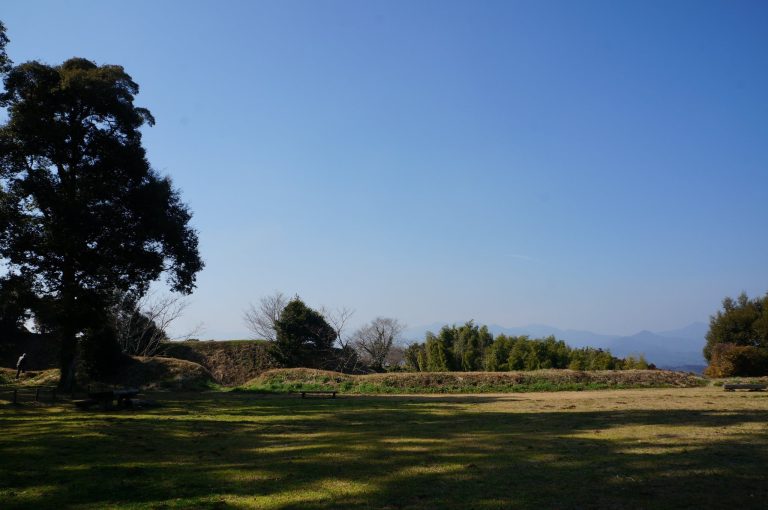
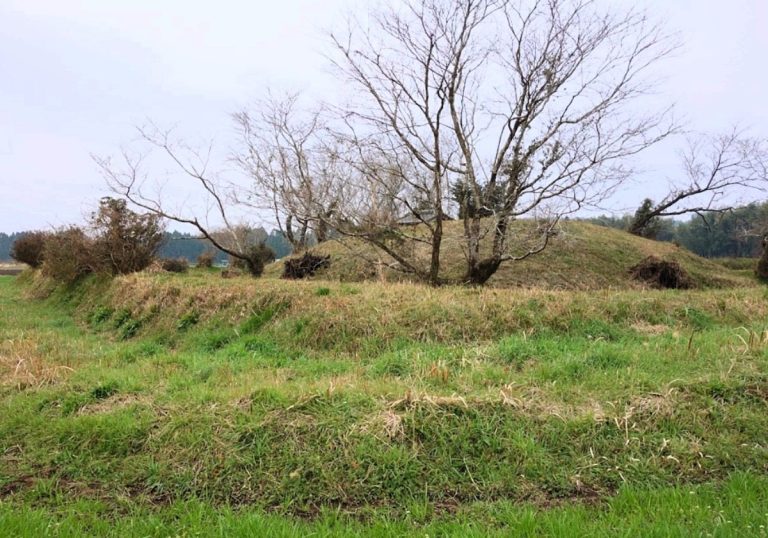
Mesahozuka is a three-tiered keyhole mound, a form that combines a circular rear section with a square-front section. Its front points southeast. An inner moat and intervening embankment surround the mound, while a second moat runs only along the western and southern sides, following the original terrain rather than forming a complete circuit. Haniwa, clay funerary objects placed on or around burial mounds, were arranged around the exterior, and nearby satellite mounds formed part of the wider burial complex.
Principal mound and surrounding earthworks
Keyhole-shaped mound
The mound measures 176.3 meters in total length. Its rear circular section is 96.1 meters in diameter and rises 14.6 meters high. The connecting neck is 71.1 meters wide, and the square-front section measures 109.5 meters across and 12.8 meters high. The front section also has three terraces. With a length of about 176 meters, Mesahozuka is among the largest kofun in Kyushu and is approximately equal in size to the nearby scallop-shell-shaped Osahozuka Kofun. It is considerably longer than the later Tōjin Ōtsuka Kofun, which measures 154 meters.
Moats and embankments
The inner moat is approximately 14 to 18 meters wide, while the embankment between the mound and this water-filled boundary measures approximately 15 to 18 meters across. A second outer moat extends around the western and southern sides. Its incomplete circuit is interpreted as a way of defining the mound in relation to the pre-existing shape of the land. The burial facility inside Mesahozuka has not been identified.
Haniwa and associated mound series
Figural and cylindrical haniwa
Cylindrical and figural haniwa were found on the mound’s exterior. The figural pieces represent houses, chickens, shields, helmets, shoulder guards, cuirasses, and kusazuri, a form of skirt armor. The cylindrical examples have thick walls, pronounced heavy-looking edges on their projecting bands, and a pale brown or beige surface marked by black firing traces. Their appearance indicates open firing rather than production in enclosed kilns.
Mesahozuka and Osahozuka traditions
The haniwa from Mesahozuka and Osahozuka belong to closely related dates but were made using different firing techniques. Mesahozuka’s examples are associated with the Mesahozuka series and were fired in the open, while the Osahozuka examples belong to a series made in a covered chamber kiln. In archaeological classification, the Osahozuka series is described as non-Kinki, meaning outside the tradition of the Kinki region around modern Nara and Kyoto. The Mesahozuka series is described as Kinki-style.
Within the Maruyama branch, haniwa from Mound 170 belong to the Osahozuka series, while those from Mounds 169 and 171 belong to the Mesahozuka series. The Mesahozuka series is also represented at Mound 101, Terahara Kofun, and Mound 212. The Osahozuka series occurs on other large keyhole-shaped mounds in the surrounding area.
Satellite mounds
Saitobaru Mound 169
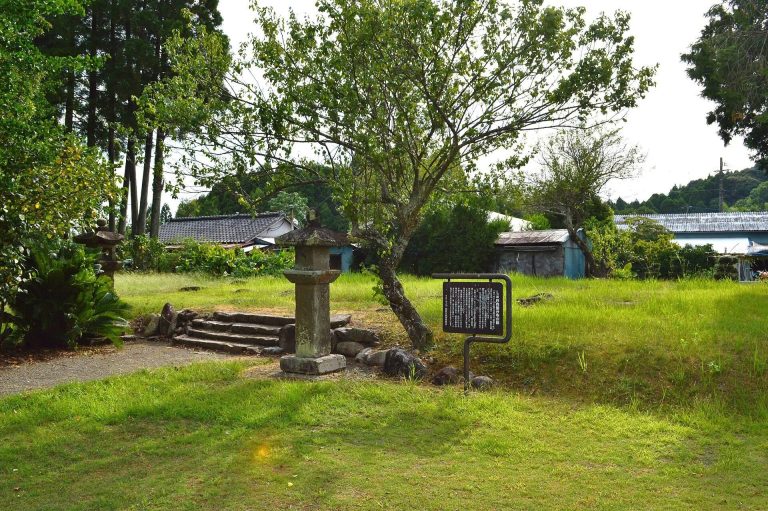
Saitobaru Mound 169 is a round satellite mound associated with either Mesahozuka or Osahozuka and is regarded as especially closely connected with Mesahozuka. It measures 49 meters in diameter and 6.5 meters high, with a surrounding moat between 7.5 and 10 meters wide. It lies outside the Mausoleum Reference Site designation. Excavated in 1912, it was reinvestigated by the Miyazaki Prefectural Board of Education between 1998 and 2003.
Saitobaru Mound 171
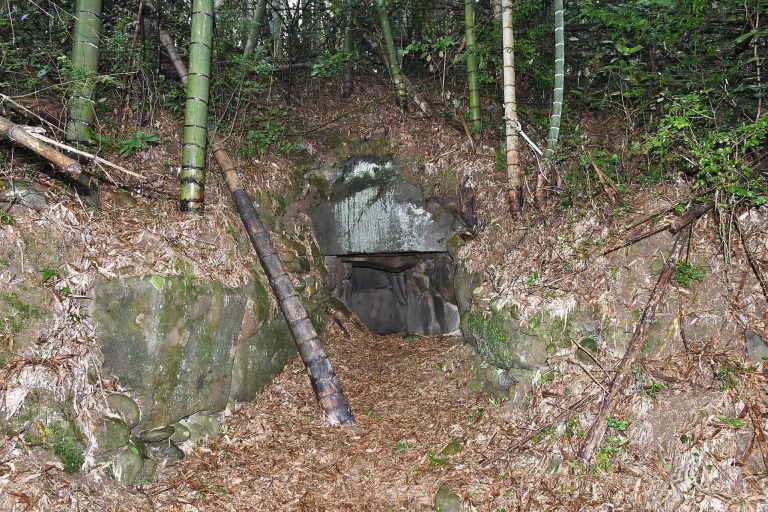
Saitobaru Mound 171 is a square satellite mound measuring approximately 20.8 meters on each side. Like Mound 169, it is considered particularly closely connected with Mesahozuka and lies outside the Mausoleum Reference Site area. It was excavated in 1912 and reinvestigated between 1998 and 2001.
Saitobaru Mound 170
Saitobaru Mound 170 is a round satellite mound associated with either of the two central mounds. Its haniwa belong to the Osahozuka series, distinguishing its material tradition from the Mesahozuka series represented by Mounds 169 and 171.