Hyūga Kokubun-ji Temple: A Provincial Buddhist Temple of Eighth-Century Japan
Site at a Glance
- Rating
- 4.3
- Popularity
- Very Low
- Country
- Japan
- Primary era
- Medieval
- External website
- Open
- Eras represented
- Medieval
- Civilizations
- Yamato
- Site type
- Religious
- Remains
- Monastery
On this page12 sections
History
Hyūga Kokubun-ji is the site of a Buddhist temple in Saito, Japan, established under Emperor Shōmu’s eighth-century program of provincial temples. The kokubunji system created a Buddhist temple in each province to promote religious orthodoxy and strengthen the centralized Nara-period government organized under the Ritsuryō system, a system of formal administration, taxation, offices, and law codes.
Foundation under the Nara government
The temple’s precise construction date is unknown, but it was established between the imperial order of 741 and 756. In 756, the imperial chronicle Shoku Nihongi listed Hyūga among 26 provinces with established provincial temples. Roof tiles recovered from the site indicate construction during the latter half of the eighth century. The temple later declined, with its fortunes falling by the end of the ninth century.
In its final historical phase, Hyūga Kokubun-ji belonged to the Shingon school of Buddhism, an esoteric tradition centered on ritual practice, sacred diagrams, and mantras. Its mountain name was Gochizan, and its principal objects of worship were the Five Tathāgatas, five Buddhas representing distinct aspects of enlightened wisdom. The temple received a fiscal provision of 10,000 bundles, recorded in the early ninth-century Kōnin Code of administrative regulations.
Revival under Mokujiki
In 1788, Mokujiki, an itinerant monk and sculptor, visited the declining temple during a pilgrimage across Japan. Local residents asked him to become its chief priest, and he accepted the position. A fire destroyed the temple buildings in 1791. Mokujiki then promoted reconstruction, established a new temple complex, and carved five wooden seated statues representing the Five Tathāgatas. These images became the temple’s principal icons. He remained there until 1797.
Demolition and archaeological investigation
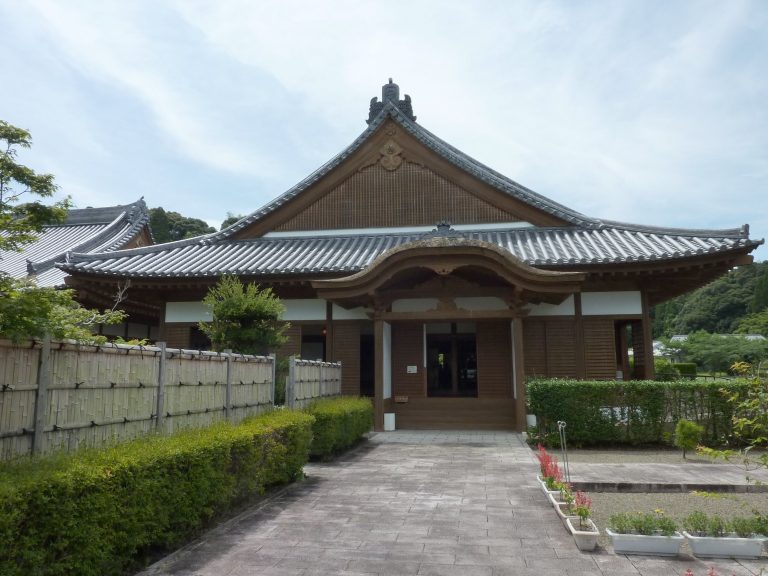
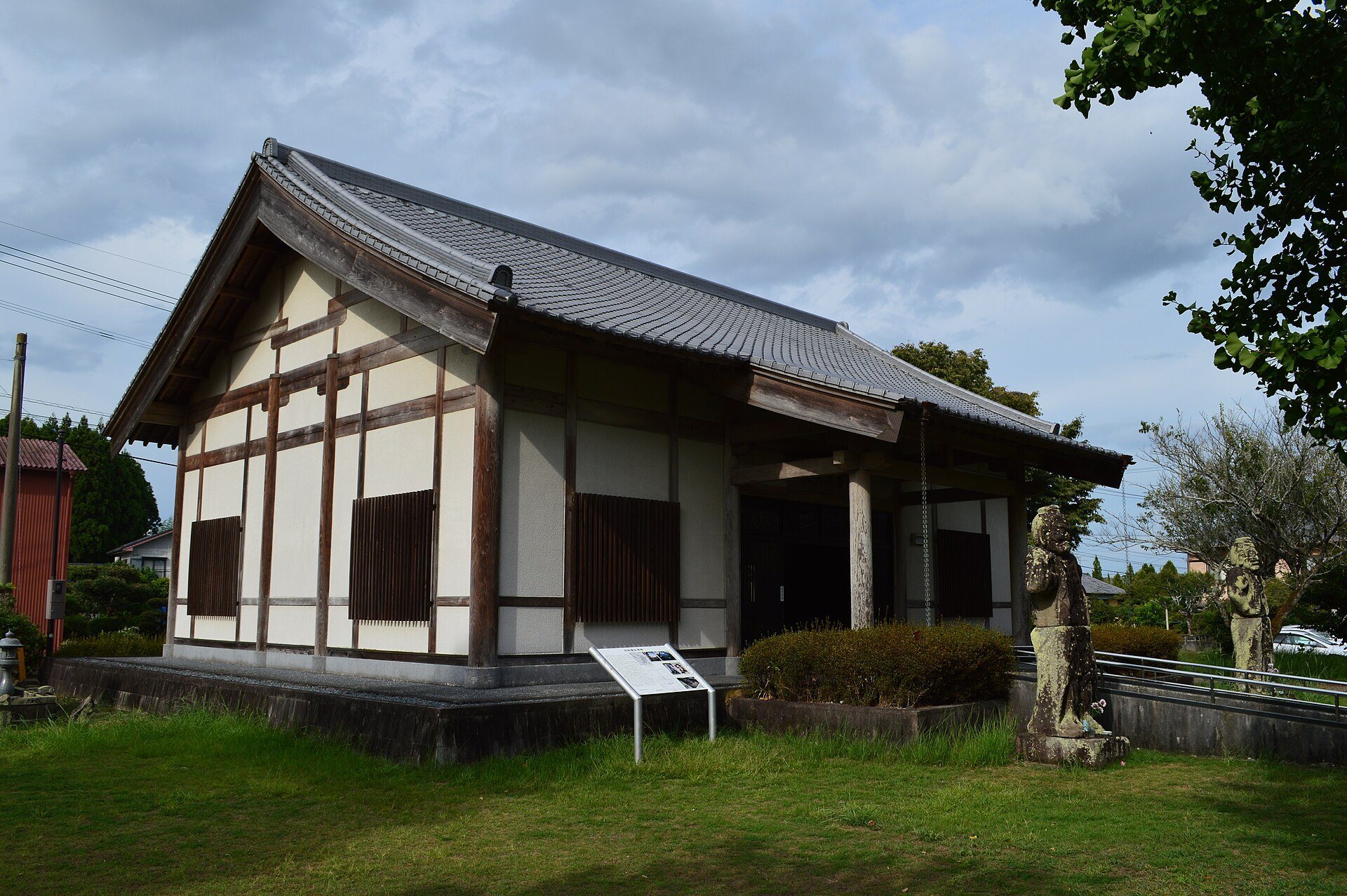
The temple declined once more and was demolished in 1871 during the early Meiji movement against Buddhism. Local believers protected Mokujiki’s five statues. A chapel was later rebuilt to house them, but it collapsed in a typhoon soon after the Second World War. A second chapel followed and was eventually demolished when a new facility for enshrining the statues was constructed.
Archaeological work began with an investigation by the Hyūga Archaeological Survey Team in 1948. Further investigations by the Miyazaki Prefectural Board of Education in 1961 and 1989, followed by a Saito City Board of Education investigation in 1995, progressively clarified the temple complex and related buildings. The ruins became a prefectural historic site in 1934 and received designation as a National Historic Site of Japan in 2011. The five statues are designated a Miyazaki Prefectural Tangible Cultural Property.
Remains
Precinct and principal layout
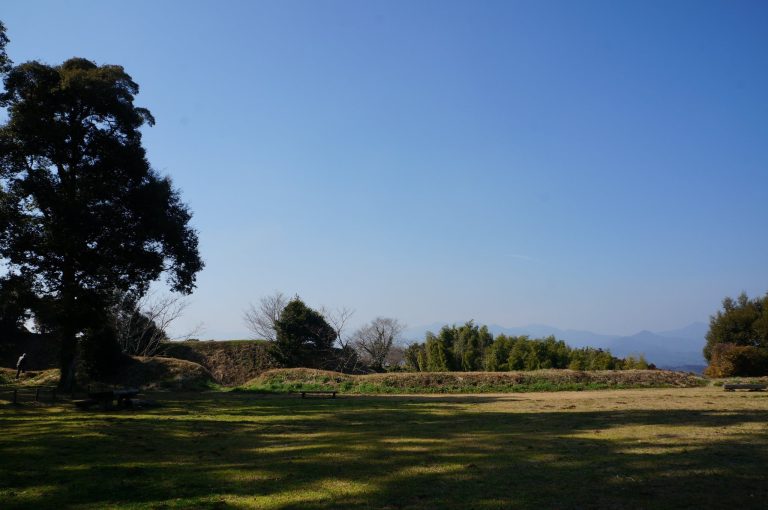
Hyūga Kokubun-ji stood on the southern part of the Saitobaru Plateau, on lower ground beside the plateau and on the right bank of the Hitotsuse River, which flows east toward the Hyūga Sea. The temple lay approximately 2.6 kilometers south of the Saitobaru Kofun Cluster, a group of ancient Japanese burial mounds. Its precinct is reconstructed as approximately 150 meters from east to west and 190 meters from north to south. The northern and eastern edges are only partly defined.
Main Hall and Central Gate
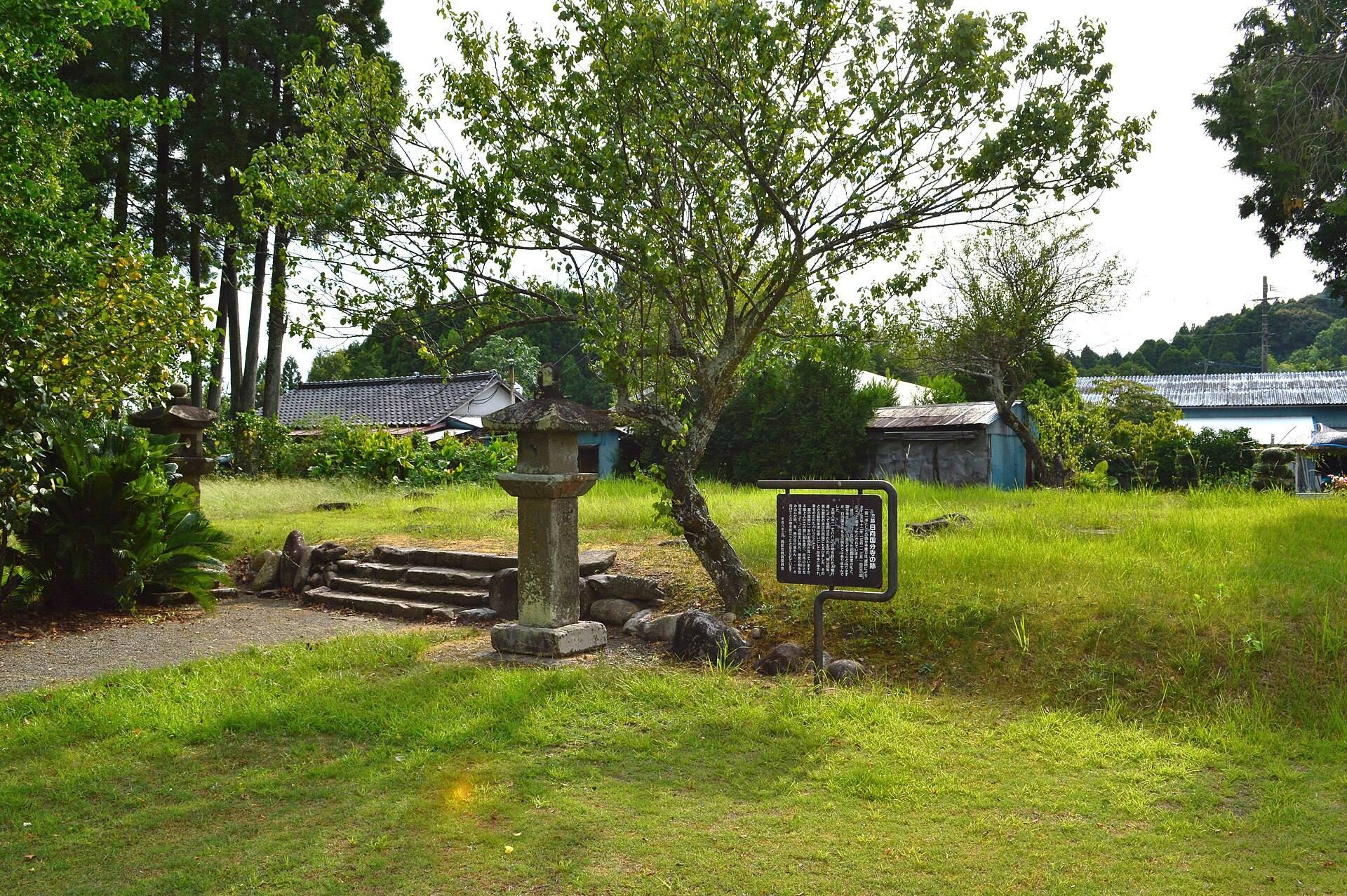
Excavations confirmed or identified probable foundation remains for the Main Hall and Central Gate. The 1995 investigation revealed the Main Hall foundation, additional remains of the Central Gate, and a corridor connected with the principal temple area. A ditch interpreted as an enclosure around the complex lay outside the corridor. Together, these remains provide the basis for reconstructing the temple’s central arrangement, although the complete plan is not established.
Lecture Hall, West Gate, and corridor
Probable foundations of the Lecture Hall and West Gate were also identified, along with further corridor remains. The buildings formed part of the temple’s organized precinct, while a structure interpreted as monks’ accommodation was detected among the associated remains. East of the main area, archaeologists found a group of buildings with dug-pillar foundations, where wooden posts had been set directly into excavated holes rather than placed on stone bases.
Archaeological materials
Excavated materials include Haji ware, an unglazed ancient Japanese earthenware, pottery carrying ink inscriptions, and numerous roof tiles. The tiles help place the temple’s construction in the latter half of the eighth century and its decline toward the end of the ninth. Roof tiles from the associated nunnery appear to have been made during the same period as tiles from the Hyūga provincial-capital site and Hyūga Kokubun-ji.
Associated nunnery and surviving statues
Hyūga Kokubun-niji
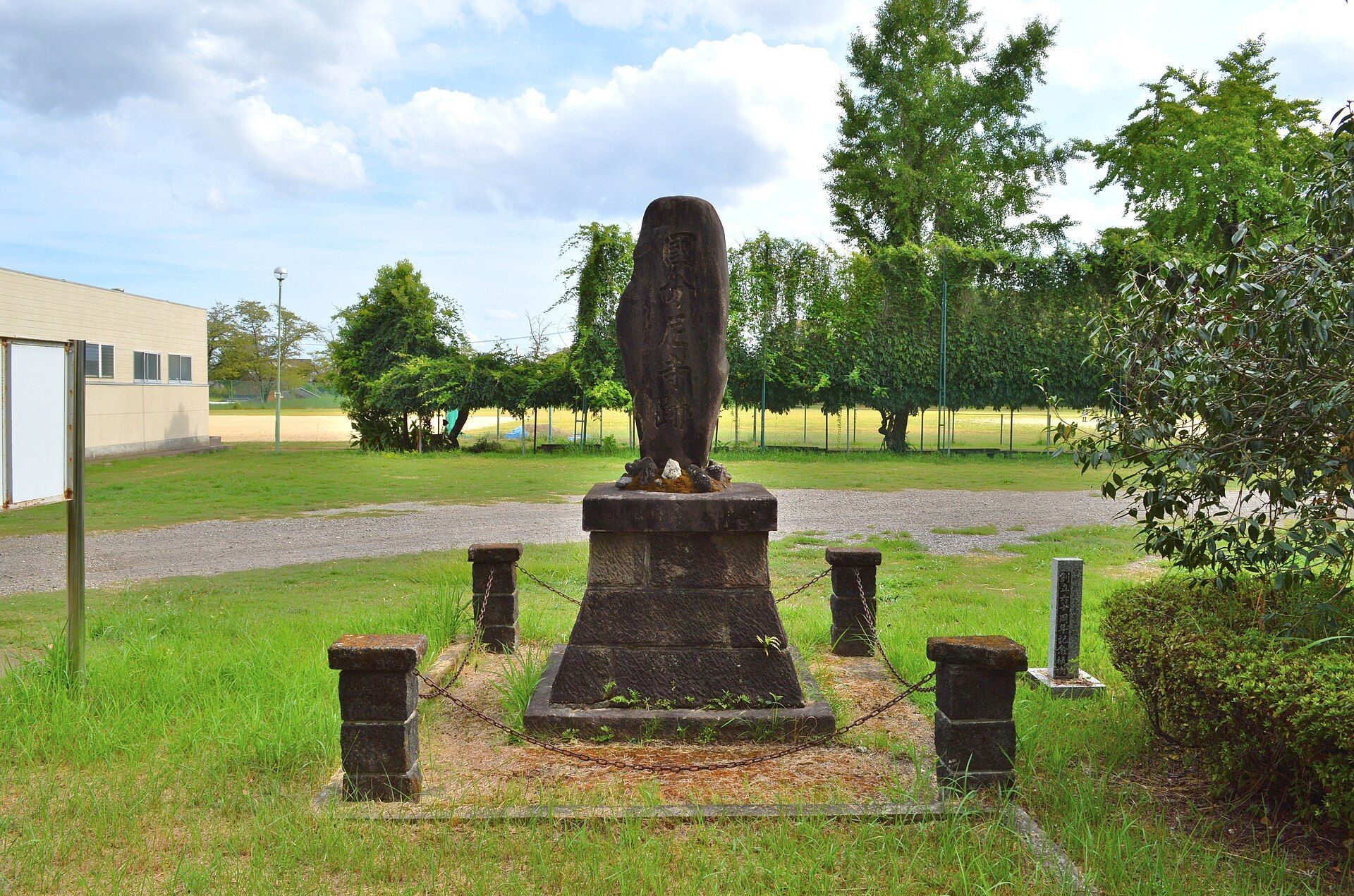
The associated Hyūga Kokubun-niji nunnery, the provincial Buddhist nunnery paired with a kokubunji, is estimated to have stood about 600 meters north of the temple, on the grounds of present-day Miyazaki Prefectural Tsuma High School. Its remains include a ditch, while its original arrangement is still unclear. The nunnery lies outside the present National Historic Site designation.
Five Tathāgatas
The surviving sculptural group consists of five wooden seated statues carved by Mokujiki during his late eighteenth-century association with the temple. They represent the Five Tathāgatas and are now enshrined in the facility built for them. Their survival preserves the principal religious focus of the temple’s final historical phase and connects the excavated site with its later revival.