Jewish Cemetery in Stráž u Tachova: A Historic Burial Ground in Czechia
Site at a Glance
- Popularity
- Very Low
- Country
- Czechia
- Primary era
- Early Modern
- Eras represented
- Early Modern
- Civilizations
- Holy Roman Empire, Kingdom of Bohemia
- Site type
- Burial
- Remains
- Necropolis
On this page4 sections
History
The Jewish cemetery in Stráž u Tachova is a historic Jewish burial ground in Czechia, believed to have been founded in 1330. It served Jewish residents of Stráž and surrounding villages, and its use is documented by 1450. The cemetery was enlarged for the last time in 1860.
Repairs and wartime damage
Repairs took place between 1923 and 1928. During the Nazi occupation, the cemetery suffered severe damage, and many historically valuable headstones were removed and used as building material.
Decline and restoration
Around 50 headstones remained during the 1960s and 1970s. Several years later, only 14 could still be found, and fewer than 20 remained in 2007. In 2009, Aktion Sühnezeichen, also known as the Action Reconciliation Service for Peace, cleaned the grounds and carried out a partial restoration. The work also led to the rediscovery of some headstones; 34 upright stones and fragments were then counted. The cemetery is protected as a cultural monument of the Czech Republic.
Remains
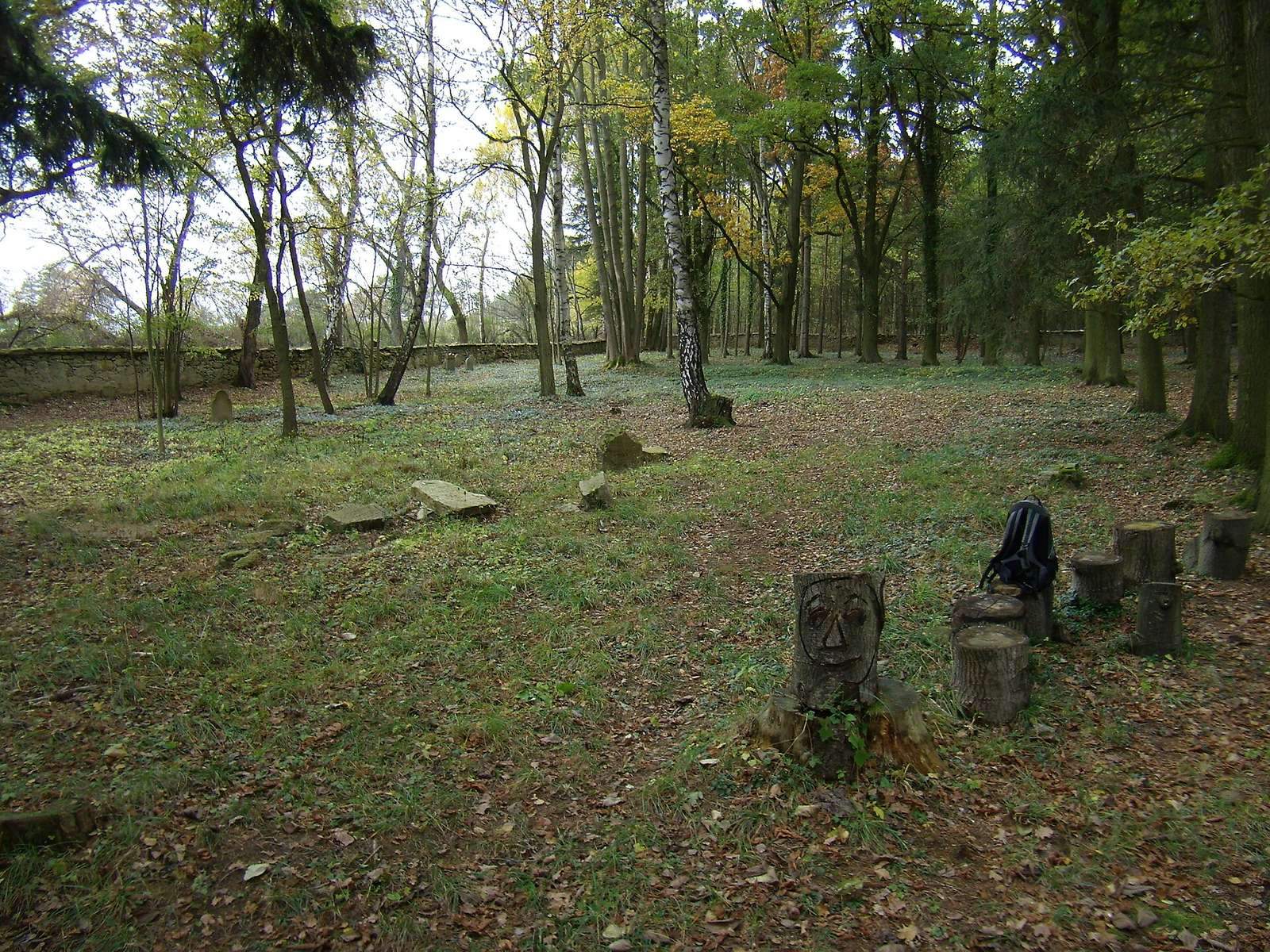
The cemetery occupies a wooded hill northwest of Stráž, about one kilometre from the settlement. It is estimated to have held more than 1,000 graves. Its enclosing wall and entrance pillars remain well preserved.
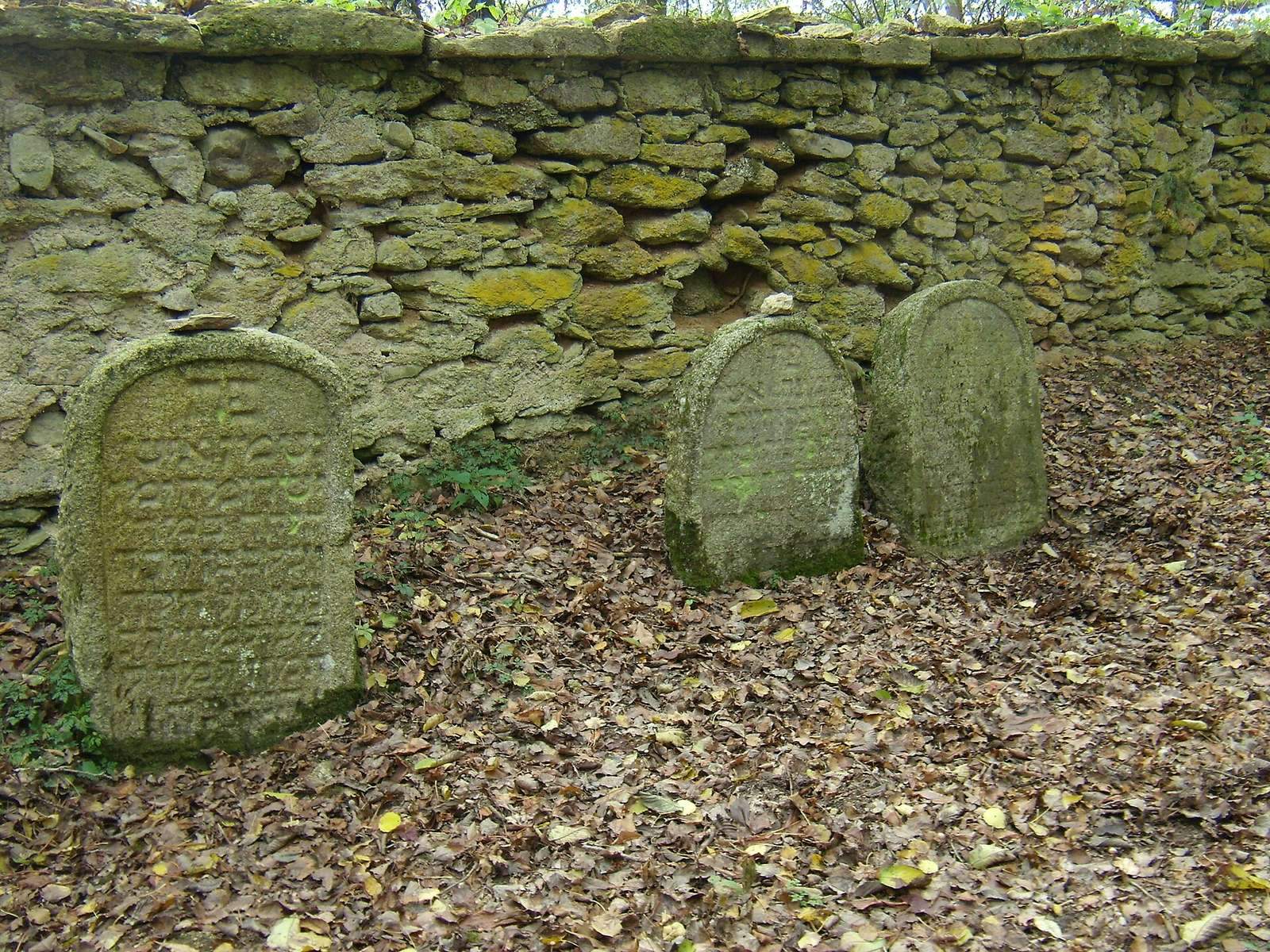
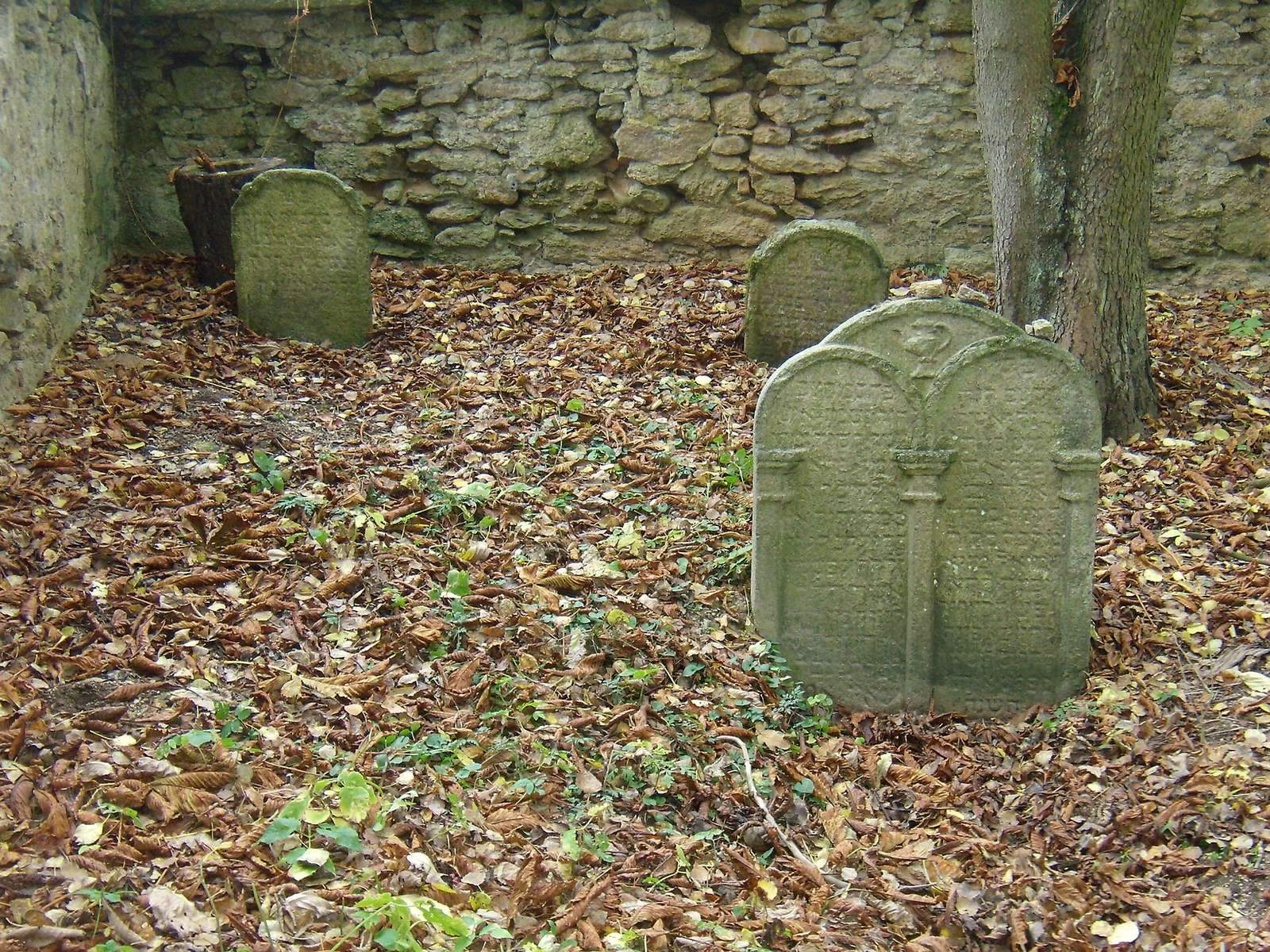
In the old section, separate rows were set aside for Kohanim, members of the hereditary Jewish priestly lineage, and Levites, members of the tribe of Levi traditionally associated with religious service. This arrangement was unusual in the region. Headstones bore paired-hand reliefs associated with Kohanim and pitcher reliefs associated with Levites; other carved images included deer, geese, roses, and wolves. The oldest surviving headstone was dated to 1579 in 2015, while the oldest legible stone bears the date 1601.