Castle Bor: A Medieval Castle and Late-Gothic Residence
Site at a Glance
- Rating
- 4.6
- Popularity
- Low
- Country
- Czechia
- Primary era
- Early Modern
- External website
- Open
- Eras represented
- Medieval, Early Modern, Modern
- Civilizations
- Habsburg, Holy Roman Empire, Kingdom of Bohemia
- Site type
- Military
- Remains
- Castle
On this page10 sections
History
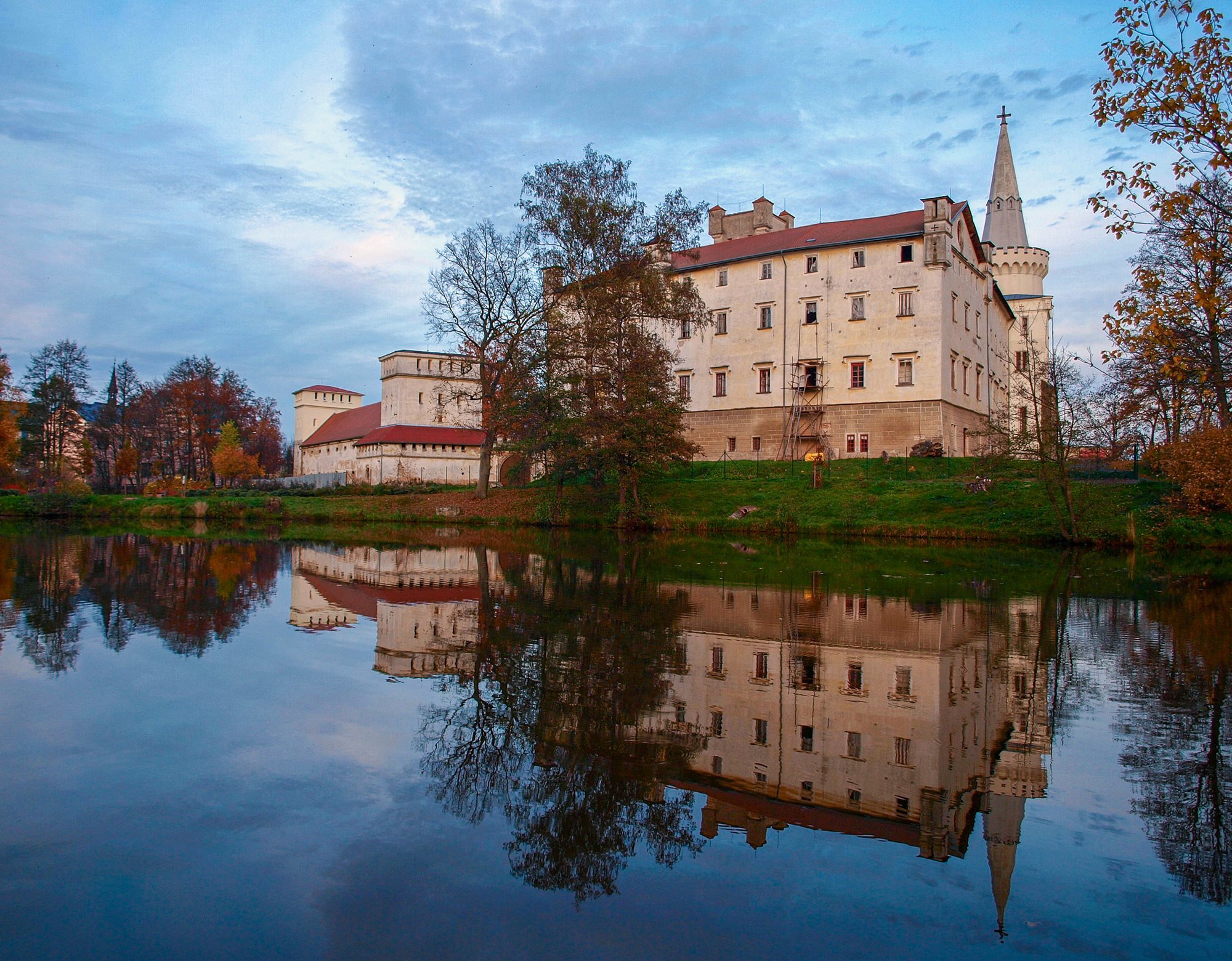
Castle Bor in Czechia is a medieval castle in the town of Bor, first mentioned in 1263 after its foundation by Ratmír of Skviřín and his son Bohuslav. The estate came to Ratmír, a burgrave of Přimda, between 1224 and 1247. Bohuslav used the designation “of Bor” between 1285 and 1291, establishing the castle within the territorial and dynastic history of a Bohemian noble family.
The Lords of Švamberk
Bohuslav’s son Bušek, a judge of the Plzeň region, was the first member of the family to use the name “of Švamberk.” The family’s principal seat had moved to the newly established Švamberk Castle, but the Lords of Švamberk retained Bor until 1650. Bohuslav I of Švamberk held both castles from 1342 to 1379. In 1361 he began the Chapel of Saint Lawrence, and in 1369 he raised the settlement below the castle to the status of a town.
After Bohuslav I died, Bor passed to his sons Bohuslav V and Bušek of Švamberk. Their younger brother Jan held the estate from 1401 and also acquired the royal town of Tachov as a pledge. Following a dispute with King Wenceslas IV, Jan was imprisoned in Prague and beheaded in 1410.
Bor during the Hussite wars
The estate then passed to the sons of Jan’s brother Bohuslav. Bohuslav VI of Švamberk was captured by the Hussites at Švamberk Castle in 1421. The Hussites followed the Bohemian religious reform movement associated with Jan Hus. Bohuslav joined the Utraquists, the moderate Hussite branch, and later became a Hussite commander. He died in Austria in 1425 while leading Taborite forces, the more radical Hussite faction.
In 1430 Hussite forces unsuccessfully besieged Bor, which was administered by Bohuslav VI’s younger brother, Hynek Krušina of Švamberk, the captain of Plzeň. Hynek remained opposed to the Hussite movement until his death after 1454. A document from that year described the castle as deserted, probably indicating damage caused during the Hussite conflicts.
Rebuilding and later ownership
Bor passed to Hynek Krušina’s son, Bohuslav VII of Švamberk, who died in 1490, and then to his sons Hynek and Jindřich. After Jindřich’s death in 1505, the inheritance was divided and Bor went to Jan of Švamberk.
In 1506 Jan was captured by Jindřich of Gutštejn and taken to the Upper Palatinate as a hostage. The seizure formed part of a dispute connected with the planned execution of Jindřich’s brother, Jan of Gutštejn, for arson. The conflict was settled, and Jan of Švamberk was released after a ransom was paid the following year. He lived at Bor until his death in 1533.
Jan began the late-Gothic rebuilding of the deteriorated castle and is regarded as the effective founder of the Bor branch of the Lords of Švamberk. The castle again became the family’s residential estate for almost two centuries. In 1650 Zikmund Bedřich von Götzen purchased it. With his wife, Isabela, he established a Catholic pilgrimage site known as a Loreto opposite the castle. A Loreto is a shrine associated with the Holy House of Loreto.
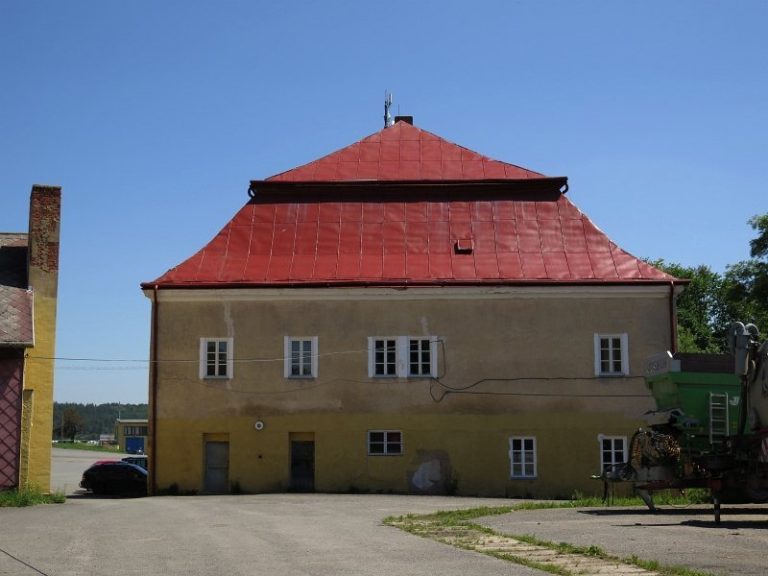
In 1720 the castle passed to Dominik Markvart of Löwenstein-Wertheim-Rosenberg. The Löwenstein family held the estate until 1945. After the Second World War, the building was used by the army, then as a dormitory for an agricultural vocational school, a workplace canteen, and a cultural centre with a library. The town acquired the property in 1989. Reconstruction took place between 2000 and 2012, and the castle has been protected as a cultural monument since 1958.
Remains
The medieval castle core
The original outer bailey cannot be reconstructed from the surviving evidence. The central castle belonged to the bergfried type, in which a fortified tower formed the principal defensive element, and had an approximately quarter-circular plan. Its arrangement placed a round tower at the southeastern corner and the first palace in the opposite corner.
Round bergfried
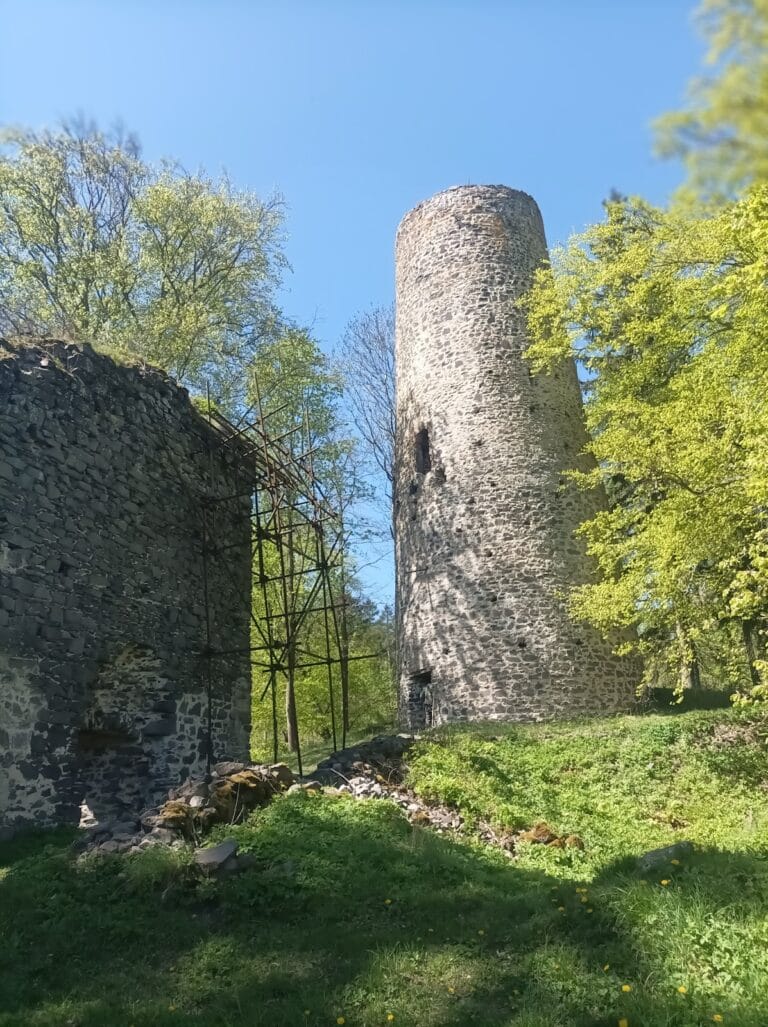
The round bergfried occupies the southeastern corner of the castle core. Its walls reach up to 3.5 metres in thickness, reflecting its defensive purpose. During the late-Gothic rebuilding, the tower received a masonry spire and a battlemented walkway carried on projecting stone supports.
Late-Gothic residence and chapel
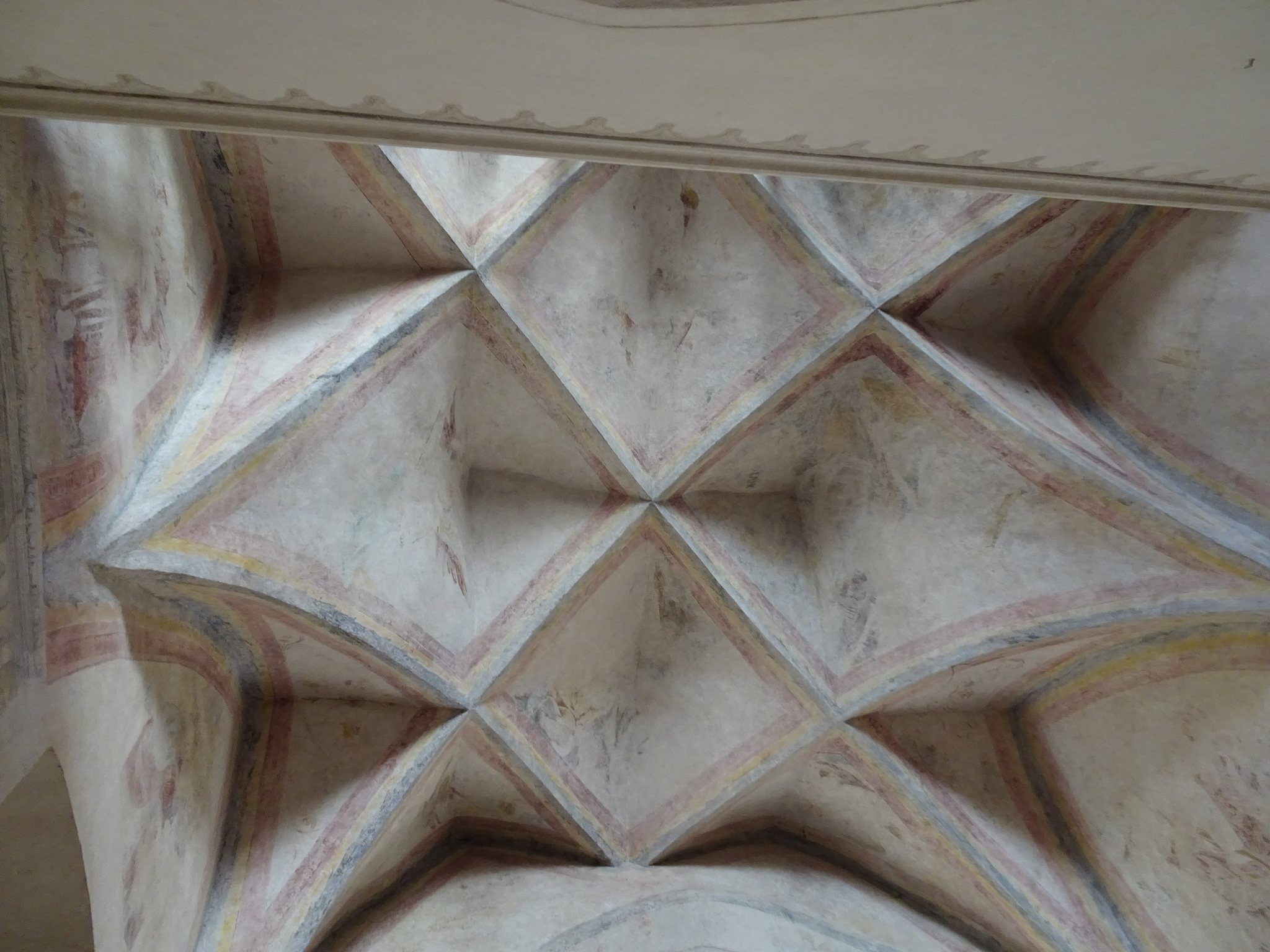
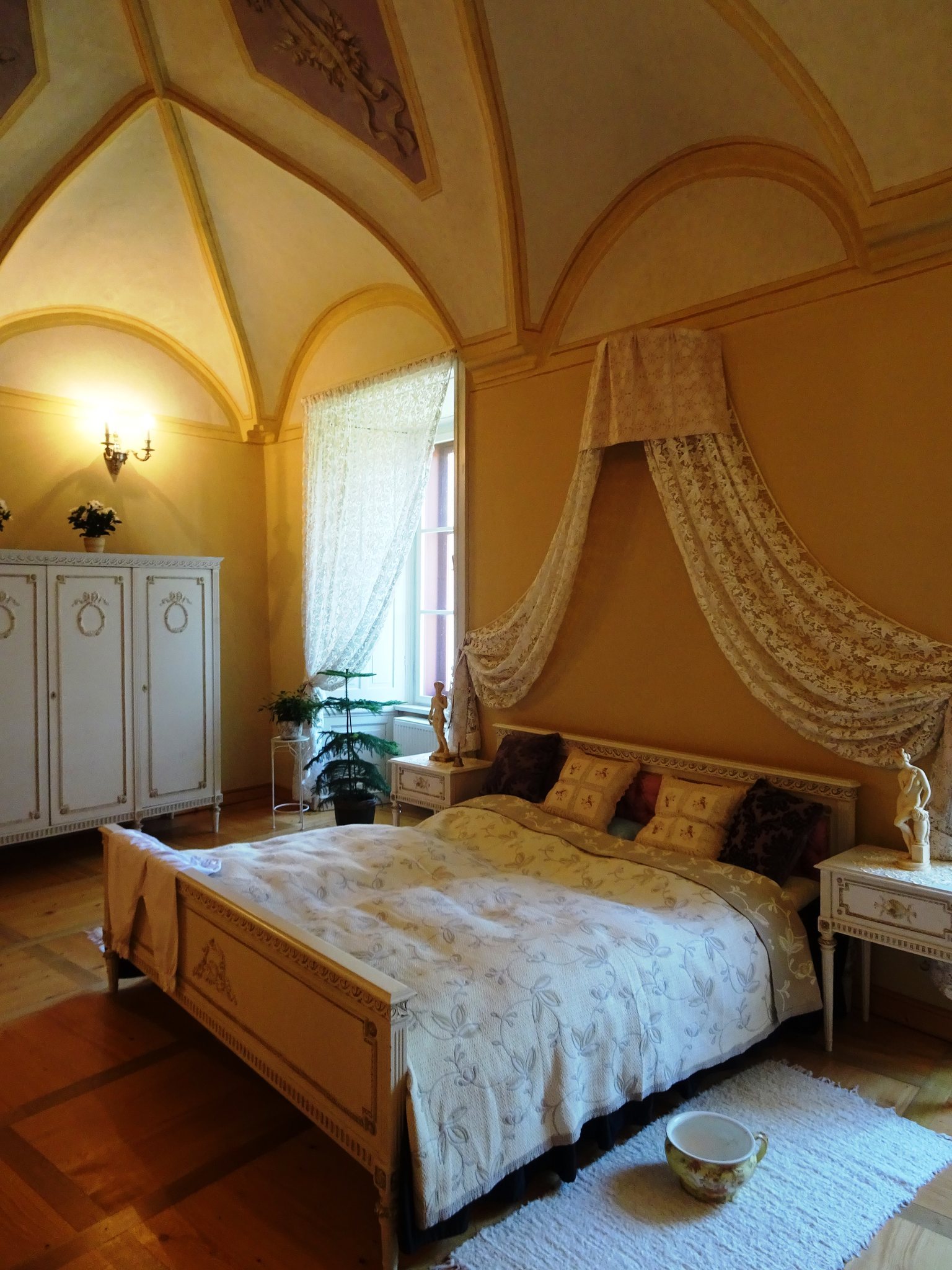
The late-Gothic rebuilding transformed the earlier stronghold into a more substantial residential complex. The palace was enlarged by two wings containing cell vaults, late-medieval vaults made from intersecting concave panels, together with elaborate windows and a spiral staircase. Despite later alterations, the palace remains among the best-preserved late-Gothic palaces in the Czech lands.
Chapel of Saint Lawrence
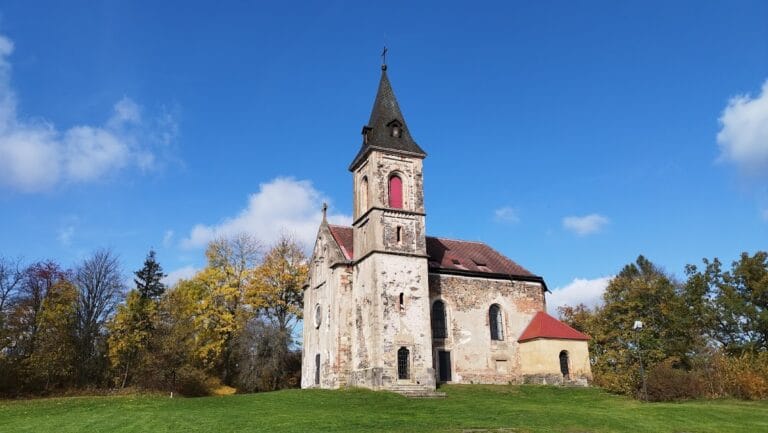
The Chapel of Saint Lawrence, established in 1361 or before 1362, was altered during the rebuilding and incorporated into the new southern palace wing. Its wall preserves the imprints of two palms in Renaissance plaster, linking the surviving fabric to a later phase of interior work.
Nineteenth-century appearance and interior monument
The castle acquired its Romantic historicist, neo-Gothic appearance during the nineteenth century. A figurative tomb monument stands in the entrance hall. It was probably made for a daughter of Jan of Švamberk, who died in 1533, and remains associated with the family’s period of residence at Bor.