Svojšín Chateau: A Baroque Residence in Czechia
Site at a Glance
- Rating
- 4.6
- Popularity
- Low
- Country
- Czechia
- Primary era
- Early Modern
- External website
- Open
- Eras represented
- Medieval, Early Modern, Modern
- Civilizations
- Habsburg, Holy Roman Empire, Kingdom of Bohemia
- Site type
- Domestic
- Remains
- Castle
On this page7 sections
History
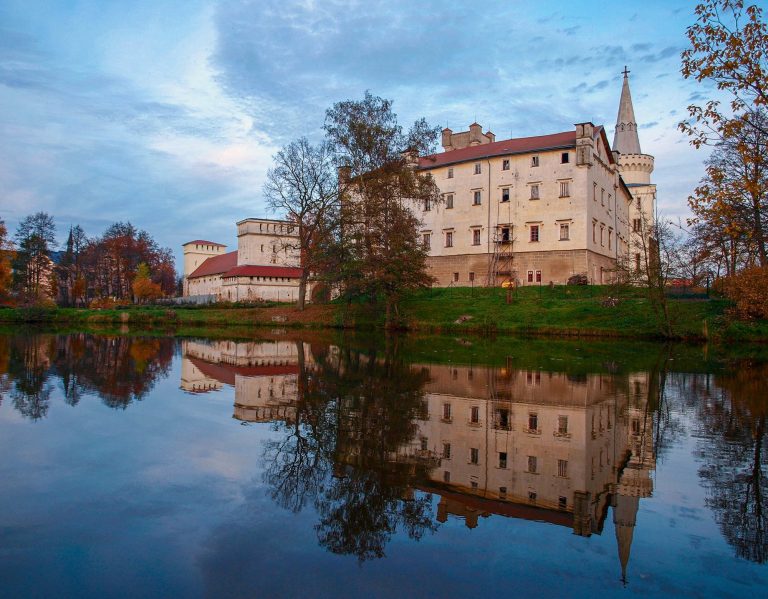
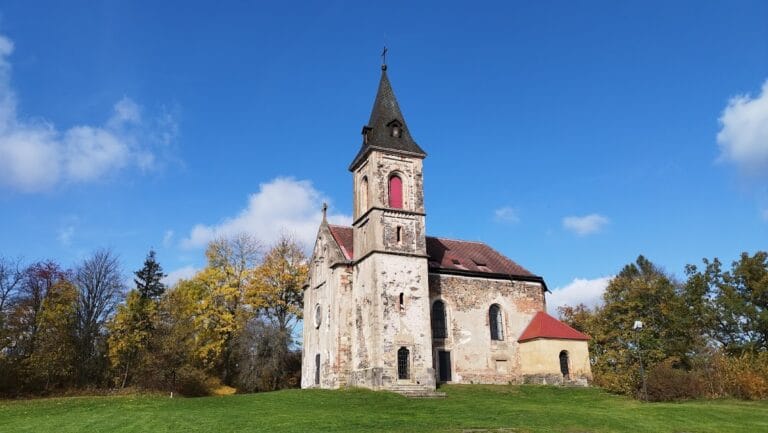
Svojšín Chateau is a Baroque residence in Czechia that developed from a medieval fortress beside the Church of Saint Peter and Paul. Its present form was commissioned in 1723, and the chateau, farmyard, gardens, and park form a Baroque complex of supra-regional importance.
Medieval origins
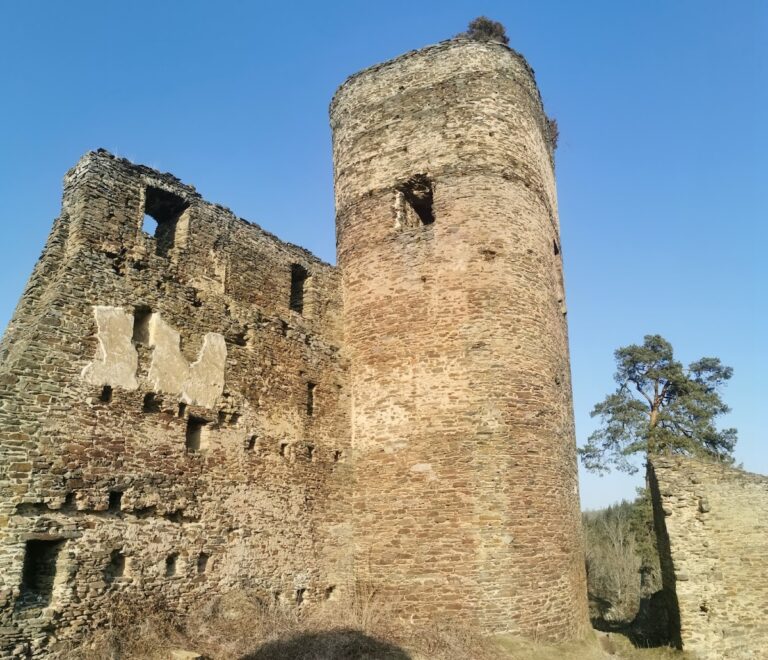
The site probably began as a manorial residence beside the church as early as the twelfth century. Archaeological research carried out between 2008 and 2010 uncovered masonry from a fortress dating from the fourteenth to fifteenth centuries, providing physical evidence for the earlier fortified phase.
The Příchovský estate
In 1554, Jiří Příchovský of Příchovice acquired Svojšín as the dowry of his wife, Anna Svojšínská of Nalžov. The Příchovský family retained the estate until 1795. Judita Příchovská commissioned the Baroque chateau in 1723. Her son, Count Jan Václav Příchovský, inherited it and owned it until 1781.
Jan Václav’s son, František Příchovský, was forced to sell the estate at public auction. It was purchased by Josef Bigatto, a knight from Cheb. Because Bigatto was childless, he left his property to Lieutenant General Karel Antonín Juncker on the condition that Juncker permanently add Bigatto to his surname. Juncker’s descendants retained the combined name.
Later ownership and modern history
The chateau remained with Karel Antonín Juncker’s descendants until 1935, when the death of Amálie Junckerová-Bigattová transferred it by inheritance to Klement Podeville. The chateau was lost at the end of the Second World War.
During the second half of the twentieth century, the local national committee used the property. It first served as a recreational facility operated by the Veleobec baráčníků, a Czech civic association. After 1965, the buildings housed a kindergarten and a school dining hall. The Municipality of Svojšín acquired the chateau in 1990 and restored it between 2003 and 2015. The complex has been protected as a cultural monument since 1964.
Remains
Chateau building
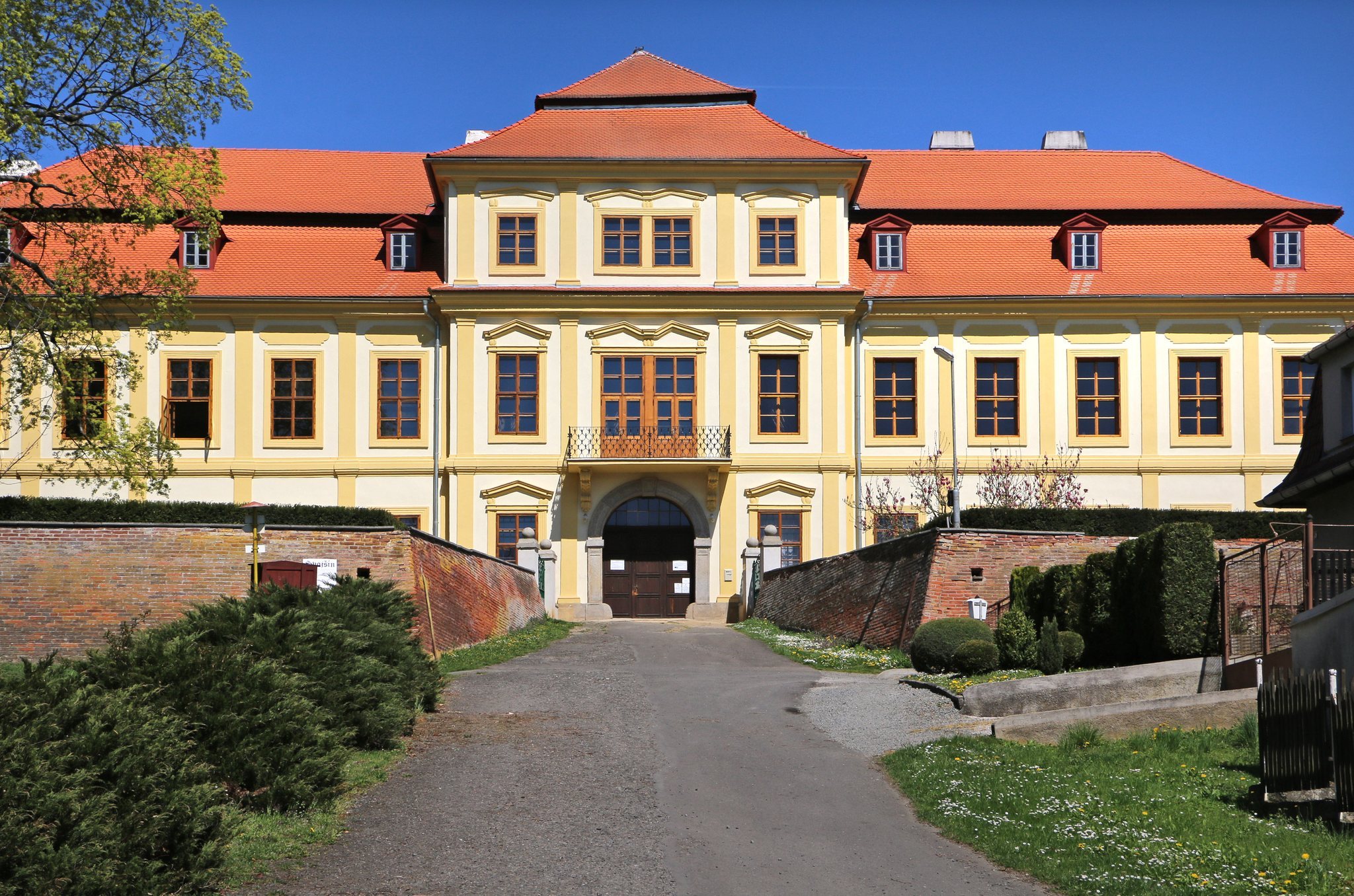
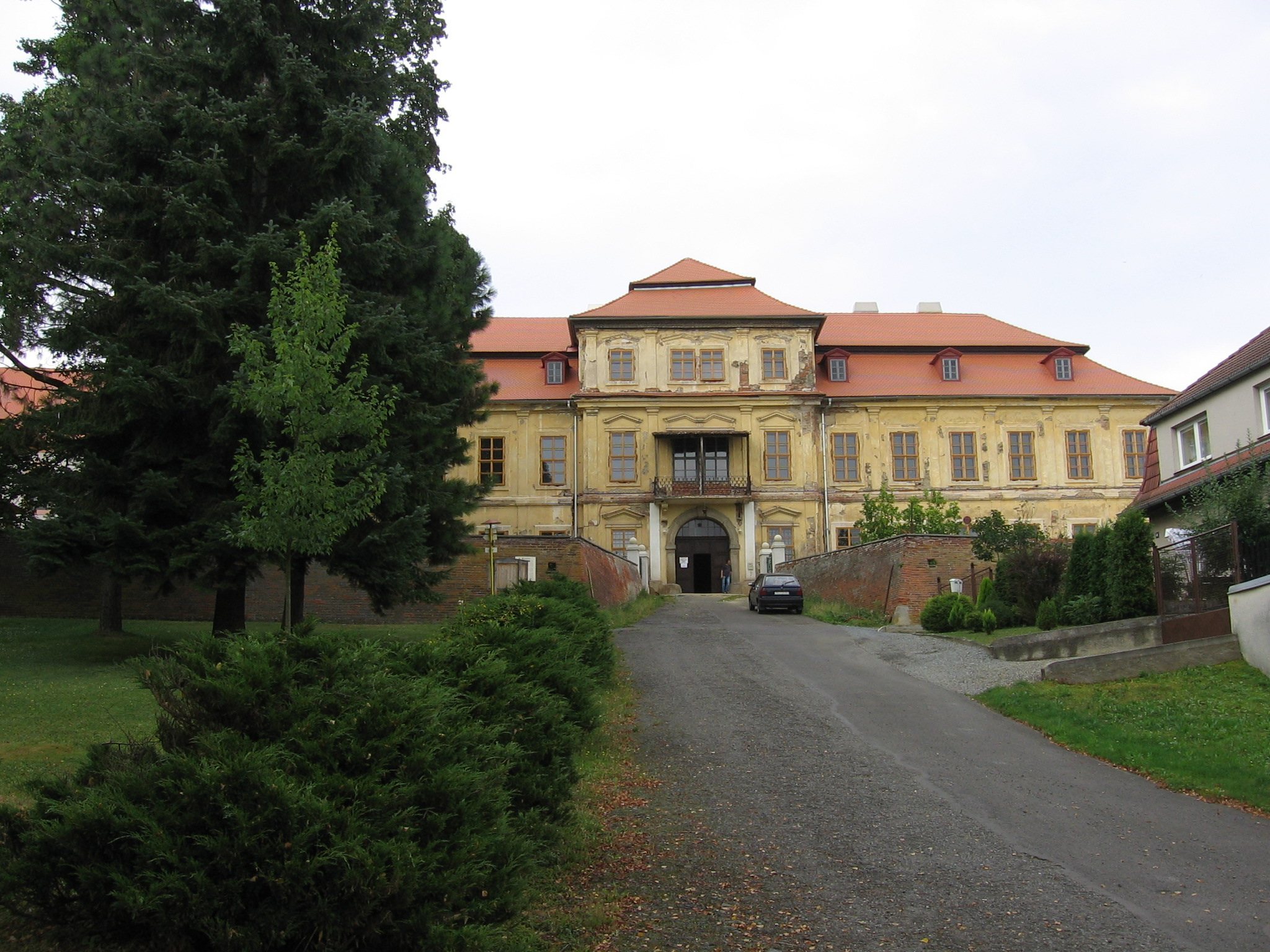
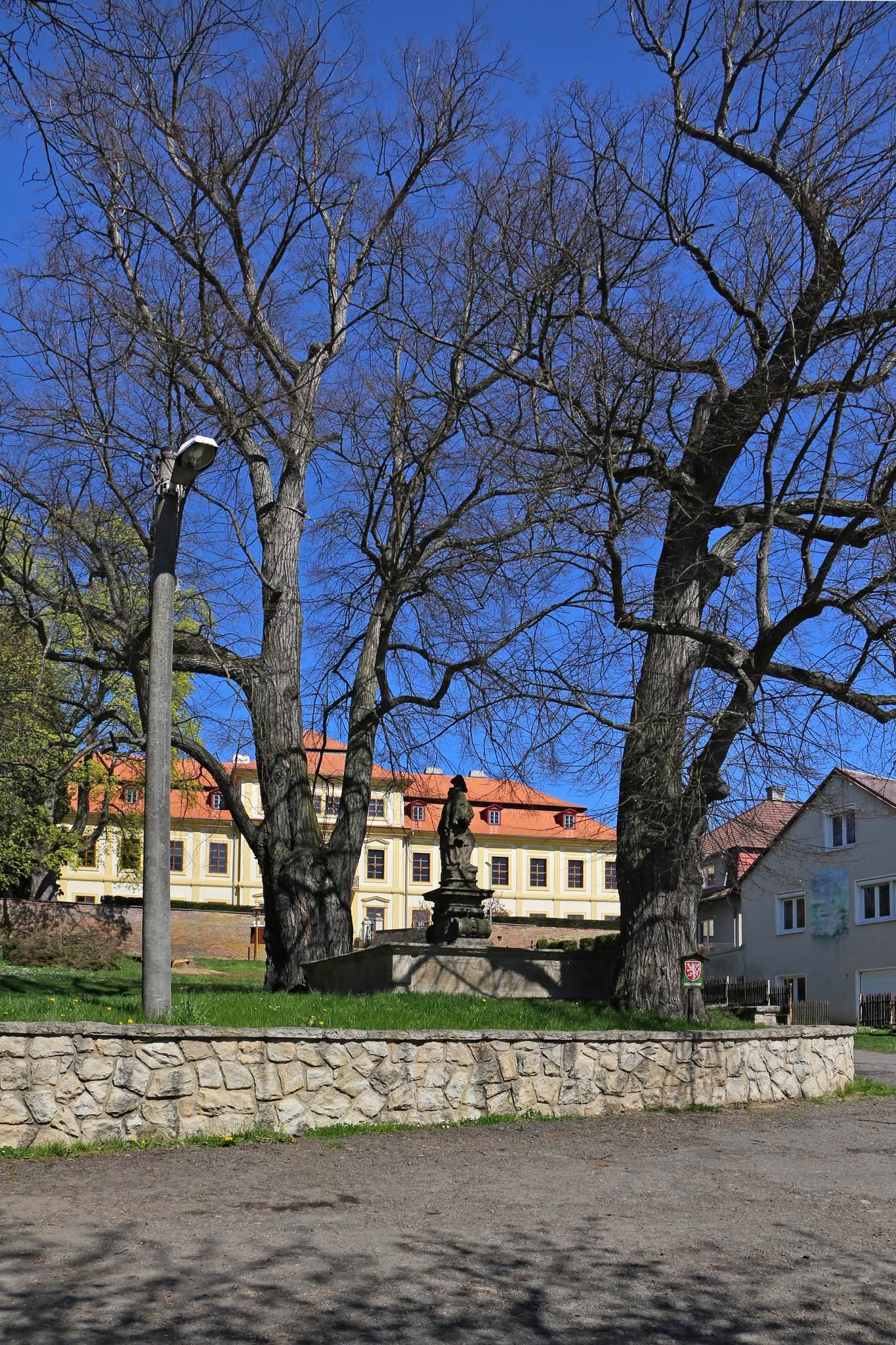
The principal building is a Baroque chateau with one upper floor and fifteen window bays. A two-storey central projection, or risalit, extends from the main facade. Pilasters, which are shallow wall elements resembling columns, divide the projection, while the windows are topped by triangular cornices. Its central entrance portal opens into a passage covered by barrel vaults, continuous vaulted ceilings formed by extending an arch along the length of the space. A similar projection stands on the courtyard side.
At the beginning of the nineteenth century, a Classicist summerhouse was added to the eastern side of the chateau. Classicism revived forms derived from ancient Greek and Roman architecture, following the earlier Baroque design of the main residence.
Estate complex and park
The protected complex includes a connecting corridor to the Church of Saint Peter and Paul, an administrative building, house no. 68, a farmyard, house no. 69, a coach house, terraces, and the chateau park. Together, these elements form the physical setting of the residence and its agricultural and administrative functions.
The park lies within the built-up area of Svojšín and covers one hectare. It was established during the first half of the eighteenth century and contains the Svojšín lime tree, a protected memorial tree. The complex now also includes a café and exhibition hall, while cultural events are held within the chateau grounds.