San Giovanni Calibita: A Baroque Roman Catholic Church on Tiber Island
Site at a Glance
- Popularity
- Medium
- Country
- Italy
- Primary era
- Early Modern
- Eras represented
- Early Modern
- Civilizations
- Papal States
- Site type
- Religious
- Remains
- Church
On this page11 sections
History
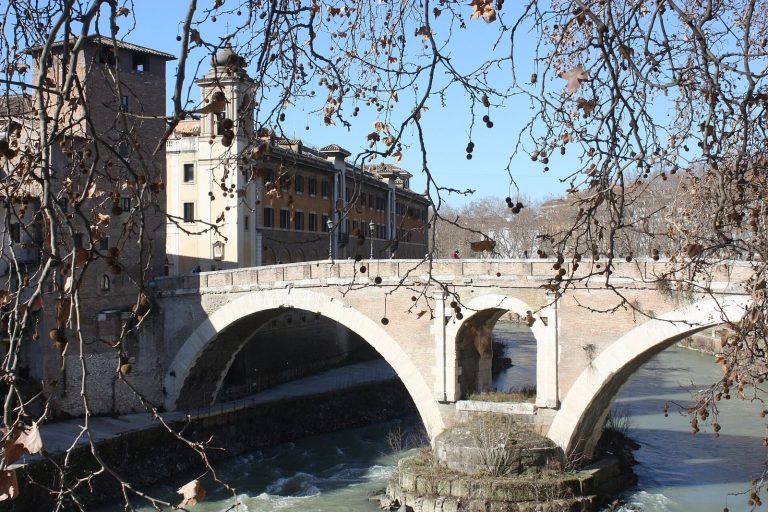
San Giovanni Calibita is a Roman Catholic church on Tiber Island in Rome, Italy. Its present building, begun in 1584, is Baroque, an artistic and architectural style that flourished in Europe from the seventeenth into the eighteenth century. The church is part of the Diocese of Rome and the parish of Santa Maria in Campitelli, and serves the adjacent Fatebenefratelli hospital. The site is thought to have held a temple of Jupiter Iurarius, a title of Jupiter, the principal god of ancient Roman religion.
Origins and medieval use
It is uncertain whether soldiers of Genseric, king of the Vandals, burned an early church and Peter, bishop of Porto, rebuilt it in 464. A separate foundation legend places a church at the family home of St John Calibita, with its consecration around 870. In the story, John left his wealthy family at twelve to become a monk. Six years later he returned as a beggar, but his changed appearance kept his parents from recognizing him. He lived in a small hut, eventually revealed who he was, and was buried beneath it after his death. The name Calibita is linked to a Greek word for a small hut, and the legend says a church was later built there.
The church’s earliest certain written reference is a papal bull of 1018. By the fourteenth century it was known by names including Sancti Ioannis de insula and Sancti Ioannis Cantofiume. Benedictine nuns cared for the church and its attached monastery for centuries. From the eleventh to the thirteenth century, the church also served as a residence for the bishops of Porto.
The present church and hospital
Work on the present church began in 1584 over the ruins of its predecessor. During construction, remains believed to belong to St John Calibita, along with relics associated with other saints of Porto, were thought to have been found beneath the high altar. The church venerates relics attributed to John there. In the same year, the Brothers Hospitallers of St John of God, also known as the Fatebenefratelli, founded a hospital on the island. Named for St John of God, a Portuguese-born Catholic saint distinct from St John Calibita, the hospital is now called Ospedale San Giovanni Calibita Fatebenefratelli.
Baroque changes and later work
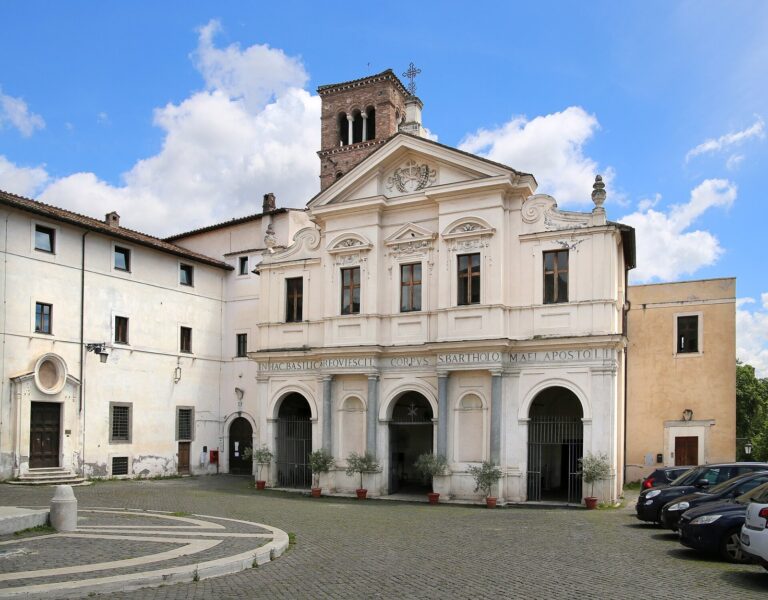
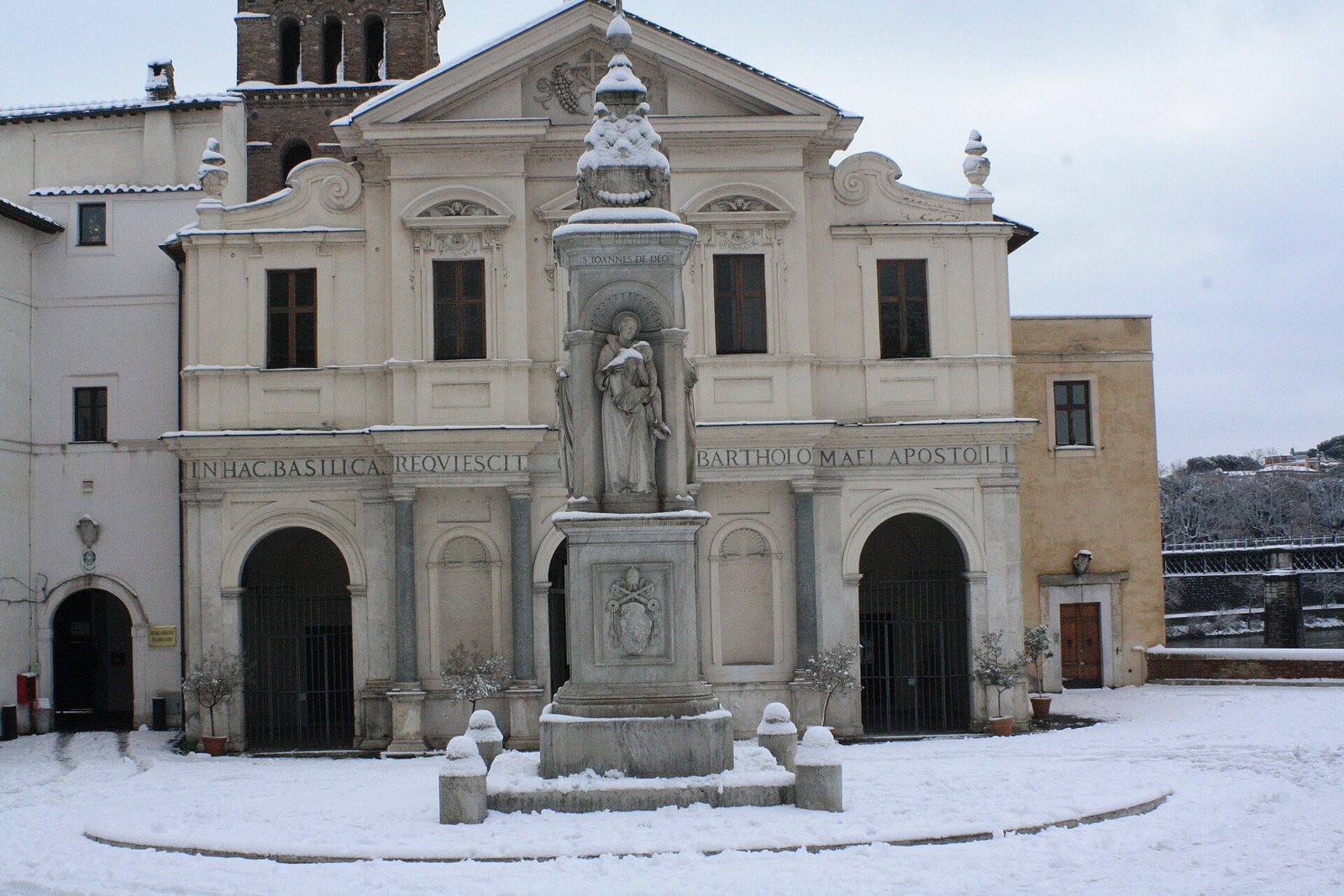
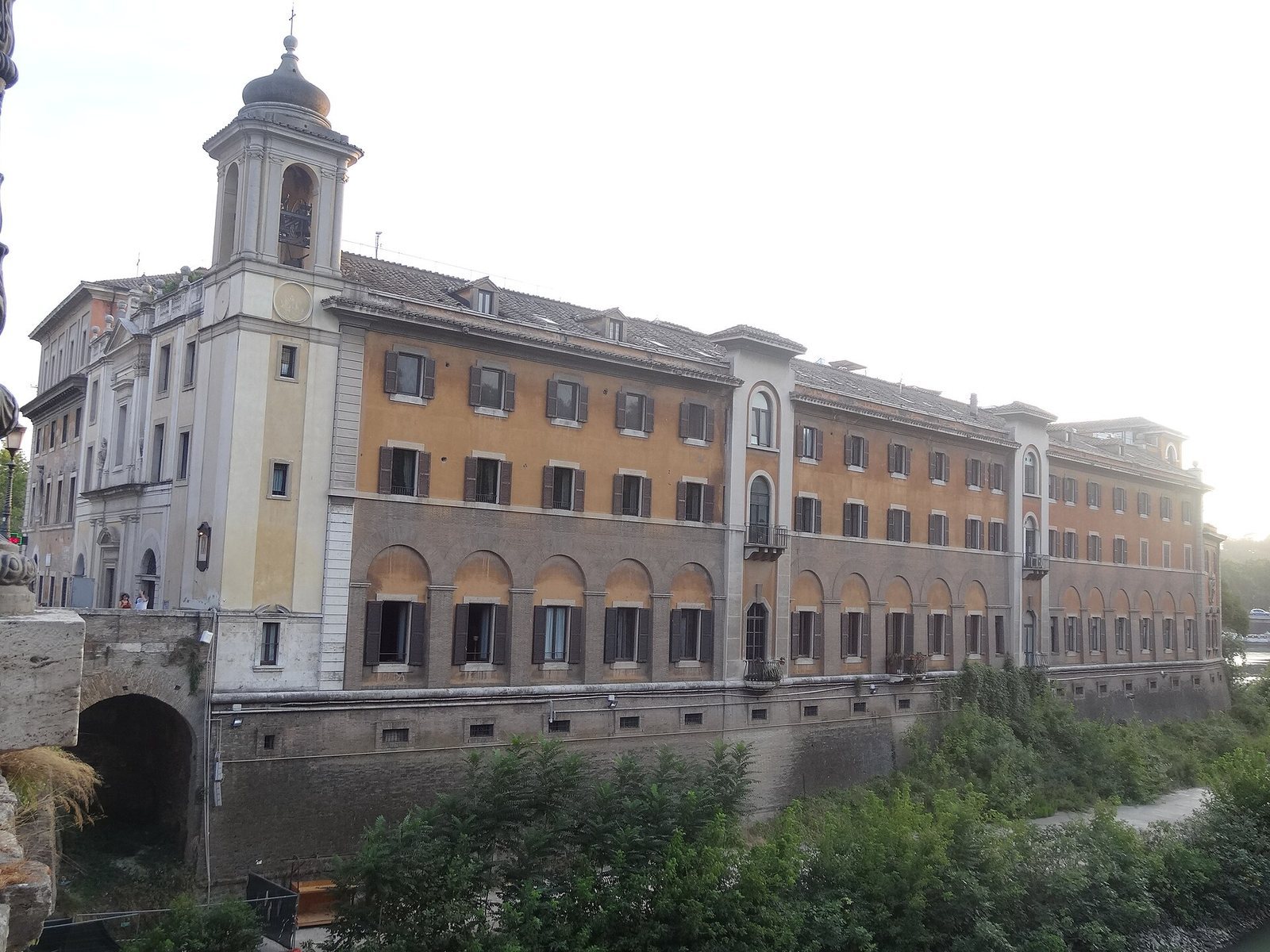
A renovation took place in 1640. Francesco Borromini was invited to design a new façade, and another proposal followed in 1644, but neither design was built. The façade was completed in 1711. A bell tower constructed at the church’s eastern corner in 1676 was demolished in the eighteenth century; the present tower is a reconstruction dating to the 1930s.
Extensive work on the interior took place from 1736 to 1742, and its decoration was complete by the end of that period. The church preserves the image of the Madonna della Lampada, which is associated with a local legend of the flood of 1557.
Remains
Architecture and artworks
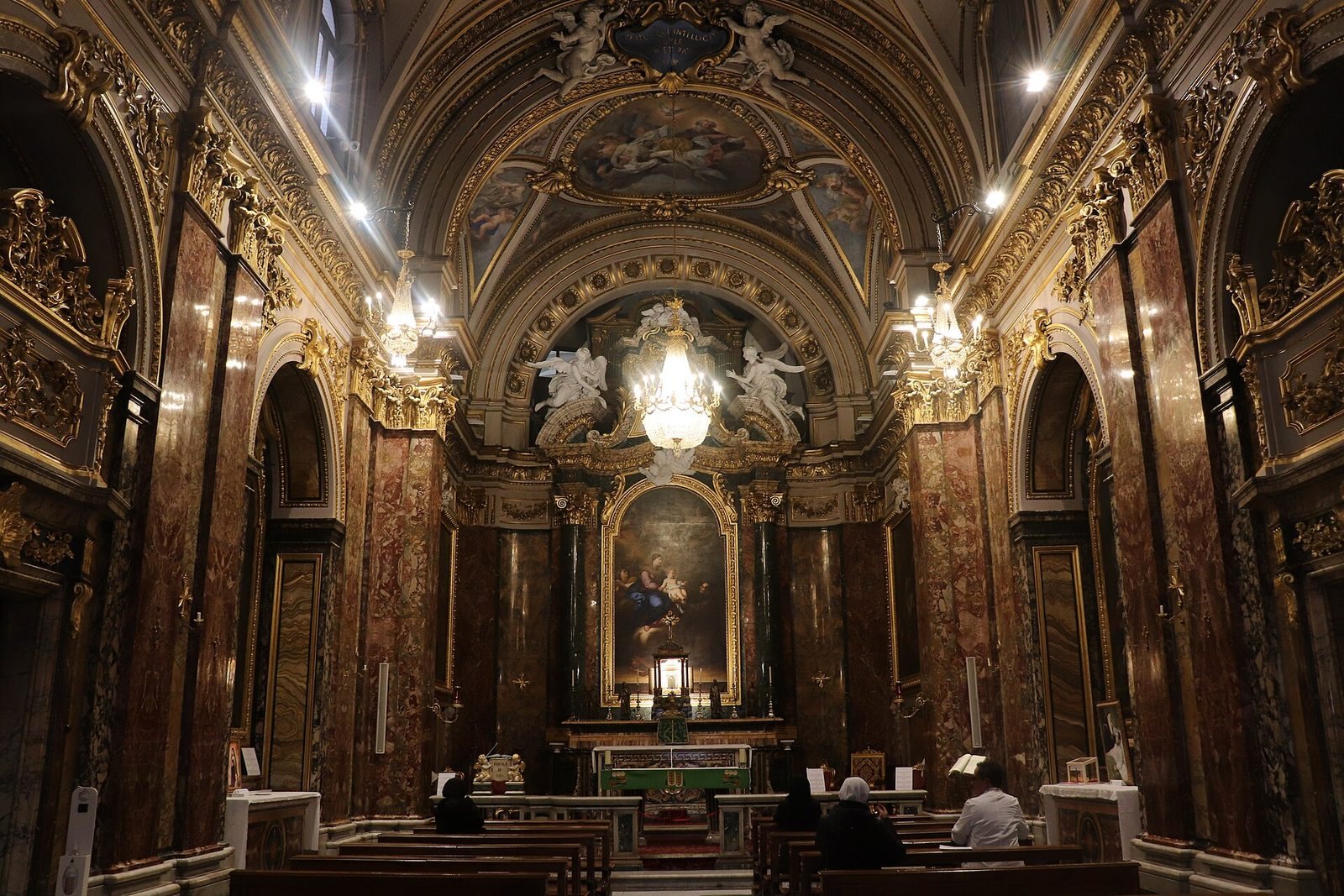
The Baroque church has a single nave, the main body of a church, with four side chapels, two on each side. Its bell tower is incorporated into the building at the eastern corner. Marble decoration forms part of the interior.
Façade and tower
The façade, completed in 1711, carries an inscription on a decorative horizontal band known as a frieze. The integrated tower stands at the church’s eastern corner.
Nave and high altar
Corrado Giaquinto’s ceiling fresco, a painting made on wet plaster, depicts the glorification of St John of God. Other paintings by Giaquinto include The Martyrdom of St Martha, dated 1740 to 1742; St Herculanus, St Hippolytus and St Taurinus, dated 1741; and St Anthony Abbot in Adoration, dated 1736 to 1742. His frescoes include Charity, The Assumption of St John of God, and The Trinity in Glory, dated 1740 to 1741. The high altar bears Andrea Gennaroli’s 1640 painting The Madonna and Child Appearing to St John of God.
Right-hand chapels
The first chapel on the right holds the Madonna della Lampada, or Madonna of the Lamp, a thirteenth-century icon, meaning a devotional image. Two gilded plaster angels by Cavalier d’Arpino support it. A legend says the image once stood beside the Tiber with a votive lamp, a light kept burning as a religious offering. During the flood of 1557, both were submerged, but the lamp continued to burn, inspiring devotion to the image. The second chapel contains Giovanni Battista Lenardi’s altar painting of the death of St John Calibita.
Left-hand chapels
The first chapel on the left is dedicated to the Passion of Christ, the events of his suffering and death. The second is dedicated to St Anthony the Hermit, an early Egyptian monk associated with the development of Christian monasticism. Its altar painting by Giaquinto depicts the saint’s death.
Chapter hall
The chapter hall, a meeting room for a religious community, contains Mattia Preti’s painting The Flagellation of Christ.